Key facts
- Type
- Competition
- Deadline
- 1/31/2027
In short
The Rice Business Plan Competition is the world's largest and richest student startup competition, offering over $1 million in cash, investments, and prizes for collegiate entrepreneurs to pitch their ventures.
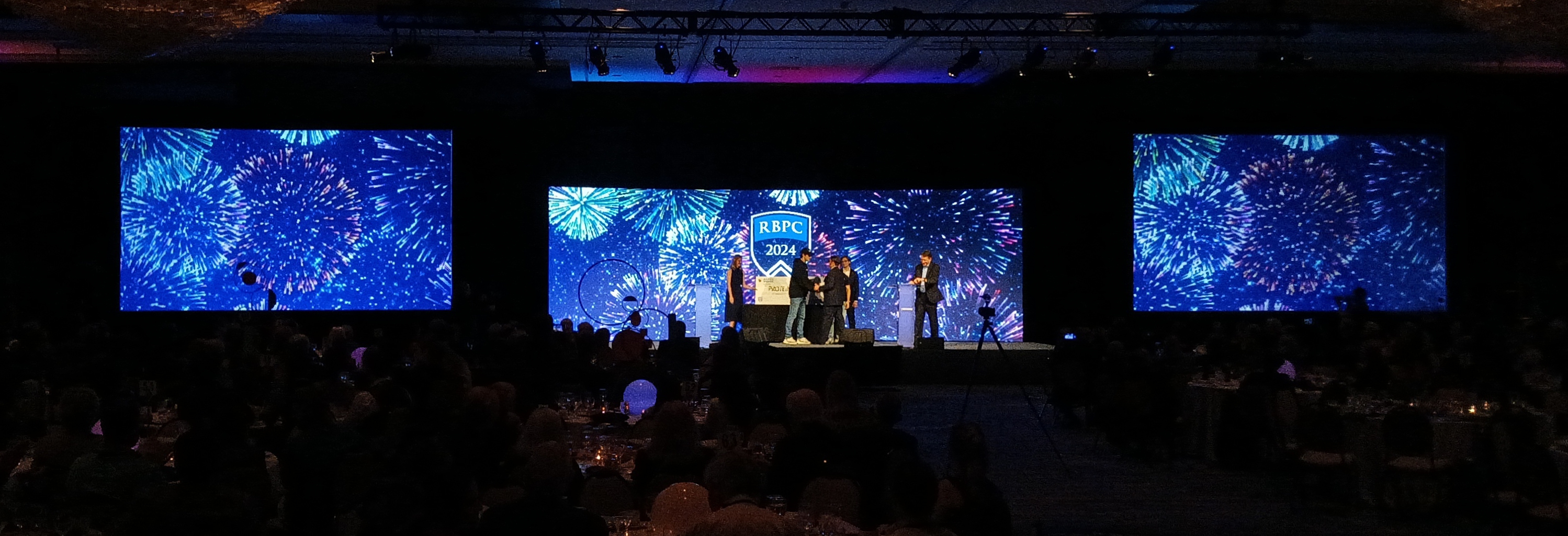
Rice Business Plan Competition
CompetitionAccepting applications nowApply by 1/31/2027137 days left
April 9-11, 2026
Dates
$1 Million+
Total Prizes
42
Teams Competing
$200,000
Grand Prize Investment
Graduate-level students
Key Participants
Overview
The Rice Business Plan Competition (RBPC) offers collegiate entrepreneurs real-world experience to pitch their startups, enhance business strategy, and learn to launch successful companies. Hosted by the Rice Alliance for Technology and Entrepreneurship, it is the world's largest and richest student startup competition. For its 26th year, the RBPC, presented by Rice Business, will host 42 teams competing for more than $1 million in cash, investments, and prizes. Rice Business is recognized for its No. 1 Graduate Entrepreneurship Program, aligning with the competition's mission to empower the next generation of entrepreneurial leaders. The competition provides an intense, immersive three-day experience for student founders to pitch to investors, receive multiple rounds of feedback, and advance their startups. All 42 participating teams are guaranteed to win cash prizes, with the minimum prize currently $950. RBPC alumni companies have collectively raised over $6.9 billion in funding, with 307 companies still in business or having had successful exits, and over 6,900 jobs created. This demonstrates the competition's significant impact on fostering successful ventures.
What to build
Participants must present a new, independent for-profit startup venture in the seed, start-up, or early growth stages. The venture should be student-driven, student-created, and/or student-managed, seeking outside equity capital, and fall into one of five sectors: Energy/Cleantech/Sustainability, Hard Tech, Life Sciences and Healthcare Solutions, Digital Enterprise, or Consumer Products and Services.
Prizes
1st Place Overall
Investment Prize sponsored by Goose Capital. Structured as a convertible note with an 8% interest rate, 20% discount rate, and no valuation cap. Expected to close within one month of RBPC.
$200,000
2nd Place Overall
Investment Prize given by Rice University, sponsored by Finger Interests, Anderson Family Fund at Greater Houston Community Foundation, and Nancy Chang. Structured as a convertible note with an 8% interest rate, 20% discount rate, no valuation cap, and no board seat.
$100,000
3rd Place Overall
Investment Prize given by Rice University, sponsored by Finger Interests, Anderson Family Fund at Greater Houston Community Foundation, and Nancy Chang. Structured as a convertible note with an 8% interest rate, 20% discount rate, no valuation cap, and no board seat.
$50,000
4th Place Overall
Non-dilutive cash prize sponsored by Norton Rose Fulbright.
$5,000
5th Place Overall
Non-dilutive cash prize sponsored by Chevron Technology Ventures.
$5,000
6th Place Overall
Non-dilutive cash prize sponsored by ExxonMobil.
$5,000
7th Place Overall
Non-dilutive cash prize sponsored by Shell Ventures.
$5,000
Semi-Final Round – Flight 1, 3rd Place
Cash prize for teams that do not advance to the finals.
$2,000
Semi-Final Round – Flight 1, 4th Place
Cash prize for teams that do not advance to the finals.
$1,500
Semi-Final Round – Flight 1, 5th Place
Cash prize for teams that do not advance to the finals.
$1,250
Semi-Final Round – Flight 2, 3rd Place
Cash prize for teams that do not advance to the finals.
$2,000
Semi-Final Round – Flight 2, 4th Place
Cash prize for teams that do not advance to the finals.
$1,500
Semi-Final Round – Flight 2, 5th Place
Cash prize for teams that do not advance to the finals.
$1,250
Semi-Final Round – Flight 3, 3rd Place
Cash prize for teams that do not advance to the finals.
$2,000
Semi-Final Round – Flight 3, 4th Place
Cash prize for teams that do not advance to the finals.
$1,500
Semi-Final Round – Flight 3, 5th Place
Cash prize for teams that do not advance to the finals.
$1,250
Wildcard Round Flight 1st Place
Cash prize for all teams competing in Wildcard Round.
$1,000
Wildcard Round Flight 2nd Place
Cash prize for all teams competing in Wildcard Round.
$975
Wildcard Round Flight 3rd-5th Place
Cash prize for all teams competing in Wildcard Round.
$950
Wildcard Round Winner (Overall)
Ed Molter Memorial Prize sponsored by Egan Nelson, also advances to Finals.
$2,000
Wildcard Round Runner-up (2nd Place Overall)
Ed Molter Memorial Prize sponsored by Egan Nelson.
$1,200
Wildcard Round Third Place (3rd Place Overall)
Ed Molter Memorial Prize sponsored by Egan Nelson.
$1,100
Mercury Elevator Pitch Competition First Place Overall
Cash prize for best elevator pitch.
$1,000
Mercury Elevator Pitch Competition Runner Up in Each Sector
Cash prize for best elevator pitch in each sector (5 sectors total).
$500
Anbarci Family Company Showcase Prize
Five cash prizes awarded based on audience voting at the Company Showcase & Networking Reception.
$1,000 each
Pearland Economic Development Corporation (EDC) Spirit of Entrepreneurship Prize
Two non-dilutive cash prizes for teams exemplifying the spirit of entrepreneurship, determined by Pearland EDC judges. All 42 teams are eligible.
$25,000 each
Aramco Innovator Prize
For startups in the Energy, Cleantech and Sustainability sector and the Hard Tech sector.
$40,000
Pediatric Device Prize by the Southwest National Pediatric Device Innovation Consortium
Cash awards (up to $25,000 total) for FDA-regulated medical devices with a pediatric indication (0-21 years). Up to two startups may be awarded ($12,500 each if two are chosen).
$25,000
Amentum – Rising Stars Space Technology and Commercial Aerospace Prize
Cash prize with additional in-kind services (up to $25,000 value). For companies with potential to offer beneficial work related to JETS II contract, advancing NASA missions, aligning with JSC focus areas, or supporting low Earth orbit/lunar-based economy.
$25,000
All other startups not making semi-finals
Each team will receive at least this amount.
$950
Key dates
- Applications OpenNovember 3, 2025
- Applications CloseJanuary 31, 2026
- 42 Teams Invited to Compete AnnouncedFebruary 17, 2026
- Invited Teams Confirm Commitment to CompeteFebruary 23, 2026
- Deadline to Submit Required DocumentsMarch 19, 2026
- Deadline to Submit Revised Business Plans (Optional)April 10, 2026
- Competition Day 1 (Registration, Orientation, Practice Pitches, Elevator Pitch Competition, Company Showcase)April 9, 2026
- Competition Day 2 (Round 1 + Feedback Sessions, Semi-Finalist Announcement)April 10, 2026
- Competition Day 3 (Semi-Finals + Wildcard, Finalists Announcement, Final Round, Awards Ceremony)April 11, 2026
Eligibility
Startups are eligible if they are student-driven, student-created, and/or student-managed. The team must include at least two current student founders or management team members, with at least one being a current graduate degree-seeking student. Students must be currently enrolled on a full- or part-time basis from July 1, 2025, through June 30, 2026, or have graduated after August 1, 2025. Startups can be from any college or university worldwide. They must not have raised more than $250,000 in equity capital prior to July 1, 2025, or generated revenue exceeding $100,000 in any 12-month period prior to July 1, 2025. Equity funding from accelerator/incubator programs counts towards funding limits, while grants, competition winnings, loans, and friends & family funding do not. Startups must be for-profit entities, seeking funding or capital within the next 12 months, and represent a potentially viable investment opportunity. They must also fall into one of the five specified sectors: Energy/Cleantech/Sustainability, Hard Tech, Life Sciences and Healthcare Solutions, Digital Enterprise, or Consumer Products and Services. Startups based on research or technology that have competed in prior Rice Business Plan Competitions are not eligible. A faculty or staff advisor endorsement is required.
How to enter
- Confirm your startup meets all eligibility requirements, especially regarding student status, funding limits, and revenue thresholds.
- Starting November 3, 2025, complete the online application via the competition portal.
- Answer all survey questions in the application.
- Attach an Executive Summary in PDF format (maximum 5 pages) to your application.
- Optional: Provide a link to a Video Elevator Pitch (maximum 2 minutes).
- Ensure the application is submitted by January 31, 2026, at 11:59 PM CST.
- If invited on February 17, 2026, confirm your commitment to compete via the application's Phase 2 by February 23, 2026, 5:00 PM CST.
- Submit all remaining required documents (business plan, media materials) by March 19, 2026, 5:00 PM CST.
- Attend the entire in-person event in Houston, Texas, from April 9-11, 2026, from Thursday noon until Saturday night after the Awards Banquet.
Submission requirements
- Attend the entire RBPC in Houston, Texas, from Thursday, April 9, 2026, at Noon CDT, until Saturday, April 11, 2026, ending at 9:30 PM after the Awards Banquet.
- Minimum of two student team members and a maximum of four student team members must be present. All must be current students, and at least one must be a current graduate-level student.
- For all full-length investor pitches (10 minutes), at least two student members (and up to four) must verbally participate, with at least one being a graduate student. Each speaking student must present at least 20-30% of the presentation time.
- For the Elevator Pitch Competition (60 seconds), one student team member must present.
- Submit a detailed Business Plan in PDF format (maximum 10 pages for text, or 35 slides for slide-based plans, plus an optional 6-page/slide appendix). It should include company summary, customer/market analysis, product/service details, IP status, competitive differentiation, sales/marketing plan, team bios, 3-5 year financial projections, amount of investment sought, and use of funds.
- Submit media materials including startup/member headshots, company logo, fast facts, and an updated company description (under 100 words).
- All pitches must be 10 minutes (investor pitches) or 60 seconds (elevator pitch).
- Bring your pitch deck/presentation slides on your laptop (for Thursday practice pitch) and on a memory stick/flash drive/online drive (for Friday/Saturday). Also bring a backup.
- Bring Company Showcase materials, including anything needed to display technology (easel, props, brochures, small banner, prototype/model). Note: No electrical power on Thursday for showcases; power is available Saturday.
- Bring all necessary batteries, chargers, power cords, cables, and dongles for your devices.
- Mac users must bring their own HDMI to USB-C adapter (or any other necessary adapter) for Friday and Saturday presentations.
- Networking materials such as business cards, company brochures, and social media addresses are recommended.
Judging criteria
- Startups will be judged primarily on their investment potential, as if judges are early-stage investors.
- Judges will rank startups in order of investability from 1 (excellent, best investment potential) to 6 or 7 (poor, least investment potential) depending on the round.
- For the Elevator Pitch Competition, judges rate each startup on presentation effectiveness and persuasiveness from 1 (excellent) to 5 (poor). This score does not count towards overall ranking.
- Key questions for judges include: Is the problem significant enough to build a company around? Is there a real market need? Does the management team understand its strengths and gaps, and are they coachable?
- Judges will consider how long it will take to generate revenue, the investment needed to reach breakeven cash flow, and the startup's understanding of key milestones.
- Evaluation includes the fundraising strategy tied to milestones and value inflection points, the credibility of an exit within a reasonable timeframe, and significant, sustainable competitive differentiation.
- Startups are not required to provide a company valuation during pitches, but should be prepared to address questions about terms and valuation.
- Early-stage deals may not have detailed financial projections; most companies are pre-revenue and pre-funding.
Sponsors & partners
Rice BusinessGoose CapitalThe OwlMercury FundHouston Angel NetworkFinger Interests, LTD.Anderson Family Fund, Greg Novak, Tracy DruceSWPDCpoetic|TiE HoustonBaker BottsNorton Rose FulbrightWells FargoGreater Houston PartnershipChevron Technology VenturesExxonMobilShell VenturesEgan NelsonAnbarci FamilyPearland Economic Development Corporation (PEDC)Aramco VenturesSouthwest National Pediatric Device Innovation Consortium (SWPDC)AmentumIntuitive MachinesWRXNancy Chang
Frequently asked questions
Answers below are best-effort estimates from the most recent application cycle. Values marked ~ or (est.) may shift year-to-year — confirm specifics on the official scholarship page.
When are applications for RBPC 2026 due?
+
Applications for RBPC 2026 are due Saturday, January 31, 2026 by 11:59 PM CST. You can start and save your application to finish later. Once submitted, no changes can be made. Apply at https://rbpc.poetic.io/sign-in.
What's in the application?
+
The application includes about 20 questions and requires an executive summary. You can preview questions at https://rbpc.rice.edu/application-preview. An executive summary template is available at http://rbpc.rice.edu/sites/rbpc/files/2021-02/Executive_summary_template.pdf.
What should I put in the executive summary?
+
Tips for the executive summary are on page 7 of the Eligibility and How to Apply document on the Eligibility page. A template is available, though most any format is acceptable. It should be detailed enough for early due diligence by investors.
Do startups have to be student run?
+
Yes, startups must be student-driven, student-created, and/or student-managed. They must have at least two current student founders or management team members, with at least one being a current graduate degree-seeking student. Student members should have equity in the startup.
My startup is looking for capital or funding. Am I eligible to compete?
+
Yes, all participating startups are judged on their investability. To be eligible, you should be seeking funding or capital (currently or in the next 12 months).
Is the competition open to any student startup?
+
Yes, as long as you meet the eligibility requirements. The Rice Business Plan Competition is a global competition open to startups from universities worldwide.
Will the 2026 Competition be held in-person?
+
Yes, the 2026 Rice Business Plan Competition will be held in person at Rice University in Houston, Texas, on April 9-11, 2026. Efforts will be made to maintain an in-person event.
How many startup team members participate in each round of the competition?
+
A pitching team must have at least two and up to four current student members, with at least one being a graduate student, to travel to Rice University and compete. At least two student members (one graduate student) must participate verbally in every pitch round, sharing speaking duties. The exception is the Elevator Pitch Competition, where only one student presents.
Are there limits on funding a startup receives before the competition?
+
Yes. Startups cannot have raised more than $250,000 in equity capital prior to July 1, 2025, or generated revenue exceeding $100,000 in any 12-month period prior to July 1, 2025. Equity funding from accelerators/incubators counts. Unlimited non-equity funding (grants, competition winnings, loans, friends & family) is allowed.
Is the business plan scored or judged at the RBPC? Why do I submit one?
+
No, the business plan is not scored for advancement or placing. It is used for mentoring and due diligence by judges and prize sponsors. Judges will provide feedback on it before the competition to help guide your presentation.
Do I submit a pitch deck AND a business plan?
+
No, only a business plan needs to be attached to the application. The business plan should be a detailed document for due diligence, not your presentation deck.
Can I submit a pitch deck instead of a business plan in the application?
+
You can submit a full-stack pitch deck for the business plan submission if it is detailed enough for judges/investors to perform early due diligence and provide meaningful feedback. It should be comprehensive, not just graphics and minimal text.
How long is our pitch at the RBPC?
+
All investor pitches are 10 minutes long, followed by a Q&A. The Elevator Pitch is 60 seconds long. Each startup will give at least two full-length investor pitches and one elevator pitch.
When do we need to arrive on Thursday, April 9?
+
Arrive at The Ion around noon for lunch, and by 1:00 PM for panel presentations and practice pitch sessions. Be sure to arrive in time for the Elevator Pitch Competition.
How can I prepare for the RBPC?
+
A 'What to Expect' document provides detailed guidance on preparation and expectations for the competition.
How many times will I pitch at the RBPC?
+
All startup teams will deliver one 60-second elevator pitch and at least two 10-minute full-length investor pitches.
Who will judge at the RBPC?
+
Over 300 judges will be present throughout the 3-day competition, with well over half being investors.
What can I win at the RBPC?
+
Each startup team is guaranteed to win at least $950 cash. A full prize list details other available prizes, which teams may tailor their pitches to be eligible for.
What do I need to bring to the RBPC?
+
Bring your team (2-4 students, at least one grad student), verbal investor pitch (10 min), verbal elevator pitch (60 sec), pitch deck (on laptop, memory stick, and backup), and Company Showcase materials (display items; no power on Thursday, power on Saturday). Also, bring chargers, cables, and a Mac adapter if applicable.
What a/v and tech is available for the pitches?
+
Round 1 and Semi-Final/Wildcard Rounds are in Rice Business school classrooms. The Final Round is in the Shell Auditorium. Information on available tech and a/v can be found at https://business.rice.edu/AV.
When is my pitch at the RBPC?
+
The schedule for Practice Pitches and Round 1 pitches will be posted on the website. A detailed 3-day schedule will also be available at check-in.
What should I wear at the RBPC?
+
There is no formal dress code. Competitors should look the part of a startup pitching for investment. Basic, classic, comfortable clothing, or team shirts are suggested. Focus should be on the technology and company, not clothing.
Do I need a company valuation?
+
No, startups are not expected to provide a company valuation during pitches. While investors may ask, it's up to the team to decide how to answer or if they prefer to negotiate privately later.
Do all attending team members pitch? Can just one of us do the talking?
+
For 10-minute pitches, at least two student members (up to four) must verbally participate, with one being a graduate student, sharing at least 20-30% of the presentation. For the 60-second Elevator Pitch, only one member presents.
Resources
- 2026 RBPC Eligibility and How to Apply document
- Application Portal
- 2026 Competing Startups
- 2026 Winners Press Release
- Rice Alliance for Technology and Entrepreneurship
- 2026 Competition Livestream Recap (Elevator Pitch)
- Learn more about judging
- RBPC Prizes page
- Featured Alumni (Success Stories)
- Past Competitions and Alumni
- LinkedIn (Rice Alliance for Technology and Entrepreneurship)
- Facebook (Rice Alliance)
- YouTube (Rice Alliance)
- Pearland Economic Development Corporation
- Southwest National Pediatric Device Innovation Consortium
- Application Questions Preview
- Executive Summary Template
- Competition Rules and Format (2026)
- What To Expect & Judging Criteria (2026)
- Rice Business AV Information
- Detailed 3-Day Schedule for Competing Startups (2026)