Key facts
- Type
- Competition
- Deadline
- 9/18/2026
In short
The SCAR Visiting Scholar Fellowship and Award 2026 offers up to $5,000 to scientists and academics with over five years post-PhD experience for short-term collaborative research visits in Antarctic studies.
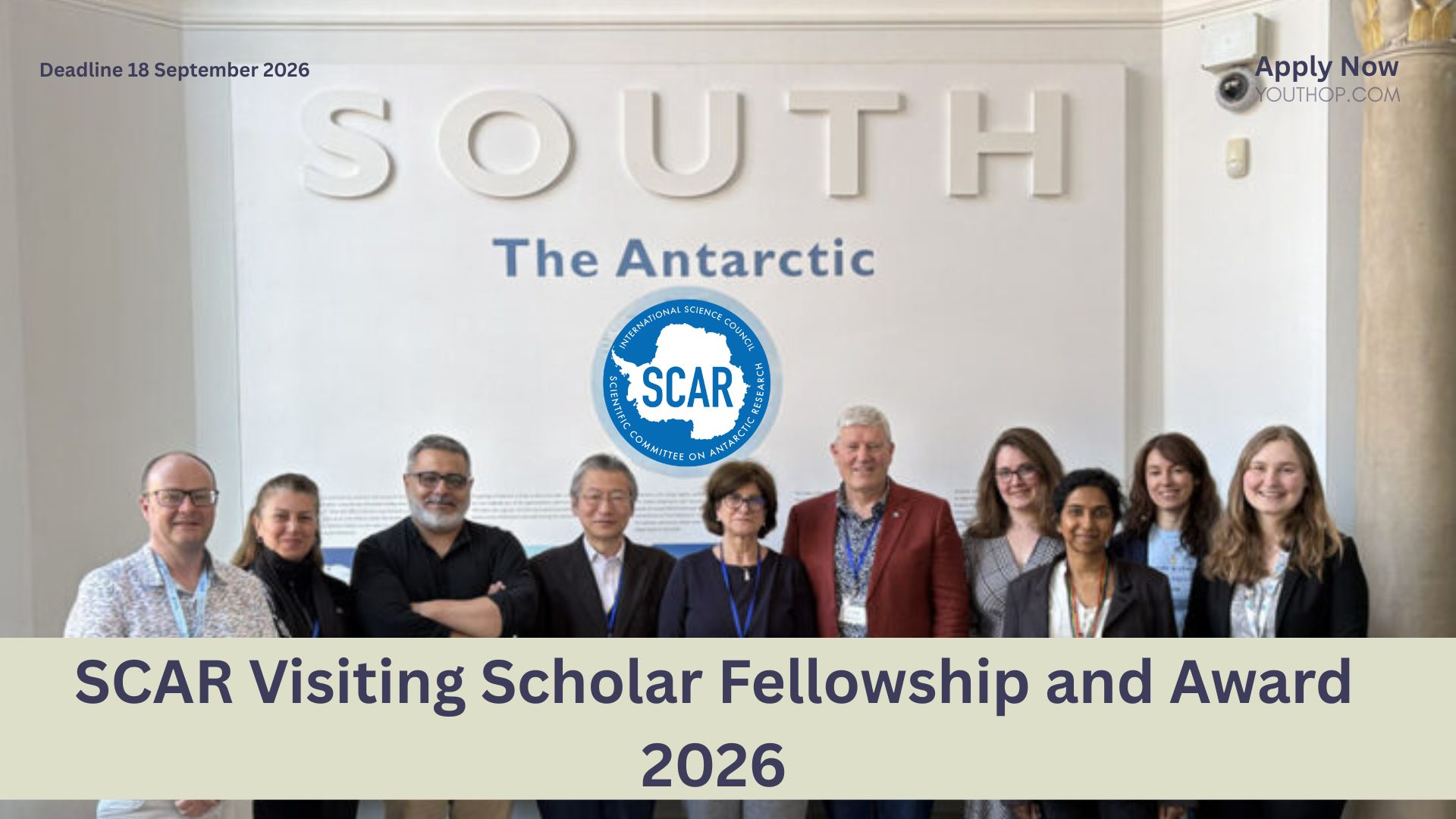
SCAR Visiting Scholar Fellowship and Award 2026
CompetitionAccepting applications nowApply by 9/18/20263 days left
Up to $5,000
Funding per award
1-4 weeks
Visit duration
Post-PhD scientists
Eligible participants
Global
Eligible regions
Collaborative research
Focus
Overview
The Scientific Committee on Antarctic Research (SCAR), under the International Science Council, provides the Visiting Scholar Scheme to enhance global research capabilities in Antarctic studies. This program supports scientists and academics in developing collaborative research and exchanging knowledge between institutions, particularly emphasizing those in countries with smaller or less-developed Antarctic research programs. Selected scholars undertake short-term visits, typically one to four weeks, to institutions in SCAR member countries. These visits focus on training, mentoring, and capacity-building, allowing participants to share expertise or gain specialized knowledge. The scheme encourages long-term academic partnerships to advance Antarctic research and its contribution to understanding the Earth system. Applicants must align their proposals with SCAR’s scientific objectives, including research within its Science Groups and interdisciplinary programs. The competitive selection process evaluates the proposed visit's potential to enhance research capabilities, strengthen institutional connections, and contribute to global scientific knowledge, considering research excellence, relevance to SCAR’s mission, and the applicant’s career stage. In addition to physical visits, the scheme supports virtual engagements, offering flexibility and continuity. The ultimate goal is to foster a more inclusive and interconnected global research community, supporting both host and home institutions in building sustainable scientific capacity in Antarctic research.
Prizes
Award
Covers international return airfare and contributes toward living expenses during the visit. Includes opportunity for short-term research collaboration (1–4 weeks), access to international Antarctic research networks and institutions, and supports both physical and virtual research visits.
Up to USD $5,000
Key dates
- Application DeadlineSeptember 18, 2026
Eligibility
The fellowship is open to scientists and academics with more than five years post-PhD experience. Applicants' research must align with SCAR’s scientific objectives. Applicants must secure a host institution in a SCAR member country, with the host country differing from the applicant’s current country of work. Both home and host institutions must agree to participate, and the proposal must clearly demonstrate capacity-building impact. This opportunity is open for all eligible regions.
How to enter
- Prepare the Proposal Document (maximum one-page description of the proposed visit and intended capacity-building activities) in PDF format.
- Prepare the applicant’s CV (maximum 3 pages) in PDF format.
- Complete the online application form.
- Upload the Proposal Document and CV.
- Optionally, upload a portrait image for announcement purposes if successful.
Submission requirements
- Proposal Document (maximum one-page description of proposed visit and capacity-building activities, PDF format)
- Applicant's CV (maximum 3 pages, PDF format)
- Online Application completion
- Optional: Portrait image for announcement
Judging criteria
- Potential impact of the proposed visit in enhancing research capabilities
- Strengthening of institutional linkages
- Contribution to global scientific knowledge
- Research excellence
- Relevance to SCAR’s mission
- Applicant’s career stage
Sponsors & partners
Scientific Committee on Antarctic Research (SCAR)International Science Council