Key facts
- Type
- Competition
- Provider
- HackerEarth
- Deadline
- 10/4/2026
In short
The Yuva Yodha Energy Tech Hackathon by Schneider Electric invites Indian students to submit ideas for sustainable energy solutions. Teams of 1-4 can compete for a total prize pool of ₹45,00,000, with top teams getting exposure to SE Ventures, mentorship, and PPOs. Idea submission closes October 4, 2026.
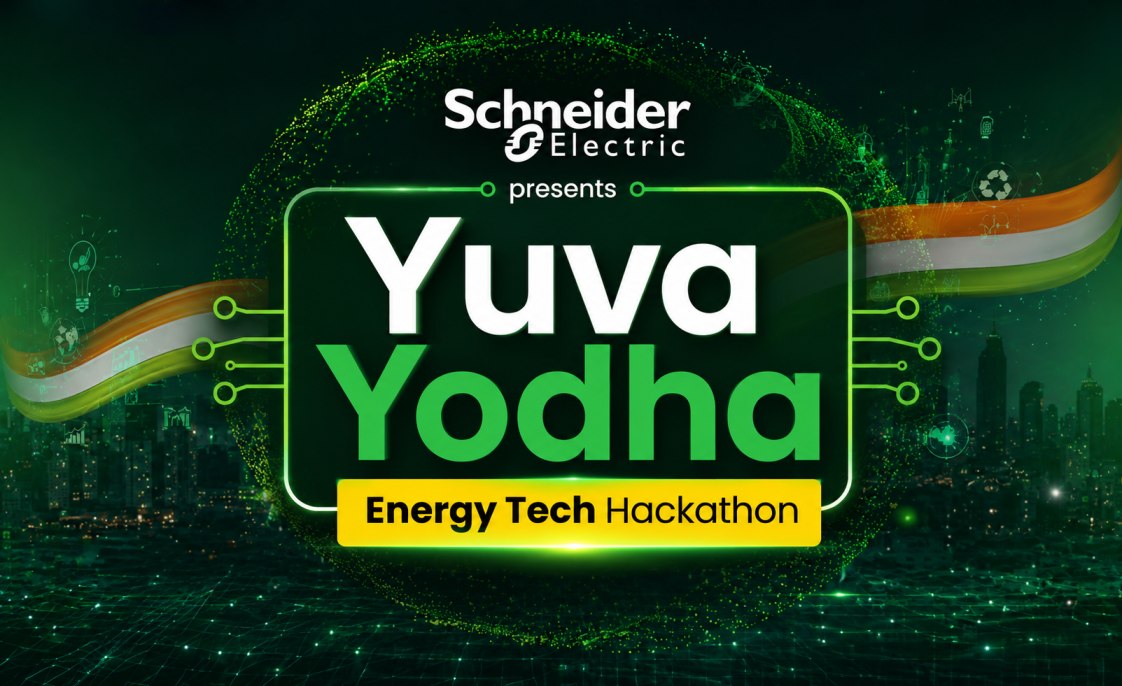
Yuva Yodha Energy Tech Hackathon
By HackerEarth
CompetitionAccepting applications nowApply by 10/4/202618 days left
₹45,00,000
Total Prize Pool
Exposure to SE Ventures
Opportunity
Opportunity for Pre-Placement Interviews
Career Opportunity
Mentorship from Industry Experts
Benefit
1-4
Team Size
Top 10 ideas present at Schneider Electric India corporate office
Finalist Opportunity
Overview
The Yuva Yodha Energy Tech Hackathon, organized by Schneider Electric, is designed to engage innovative young minds from India in developing solutions for the country's evolving energy ecosystem. Participants are invited to tackle real-world sustainability challenges, contributing to a smarter and greener India. The hackathon aims to foster innovation, create impact, and accelerate participants' careers within the energy technology sector. The competition welcomes individual participants and teams of up to four members. Eligible participants must be Indian citizens or residents, at least 18 years old, and currently enrolled full-time in an undergraduate, postgraduate, or other STEM program in India. Participants will address challenges related to sustainable agriculture, smart buildings, grid reliability and renewable intermittency, and smart manufacturing. The hackathon progresses through several stages, from idea submission and prototype development to judging and a final event. The total prize pool for the hackathon is ₹45,00,000, distributed among the top three teams. In addition to monetary prizes, the top 10 teams will have the opportunity to present at Schneider Electric's India corporate office, receive mentorship from industry experts, gain exposure to SE Ventures, and be considered for Pre-Placement Interviews (PPIs).
What to build
Solutions addressing challenges in sustainable agriculture (energy, water & productivity), smart buildings (energy efficiency & occupant experience), grid reliability & renewable intermittency, or smart manufacturing (industrial energy & process efficiency).
Prizes
Grand Prize
₹20,00,000
Runner-up
₹15,00,000
3rd Place
₹10,00,000
Key dates
- Registration & Idea Submission2026-08-15 - 2026-10-04
- Prototype & Judging2026-10-11 - 2026-11-22
- Top Teams Announcement2026-12-06
- Hackathon Finale2027-01-XX
Eligibility
Must be an Indian citizen or resident. Must be 18 years or above. Must be currently enrolled as a full-time student in India. Open to students currently enrolled in undergraduate (UG), postgraduate (PG), or other STEM programs.
How to enter
- Apply today
Sponsors & partners
Schneider Electric