- Tuition + stipend + mentorSupport
- PhD (CS & related)Field & level
- Up to 2–3 yearsDuration
- University-nominatedApplication route
- Worldwide (by region)Reach
- Google Research mentorAdded benefit
At a glance
full
Funding
€60k
Max amount
May 1, 2027
Deadline
Worldwide (organised by region)
Country
Google Research
Provider
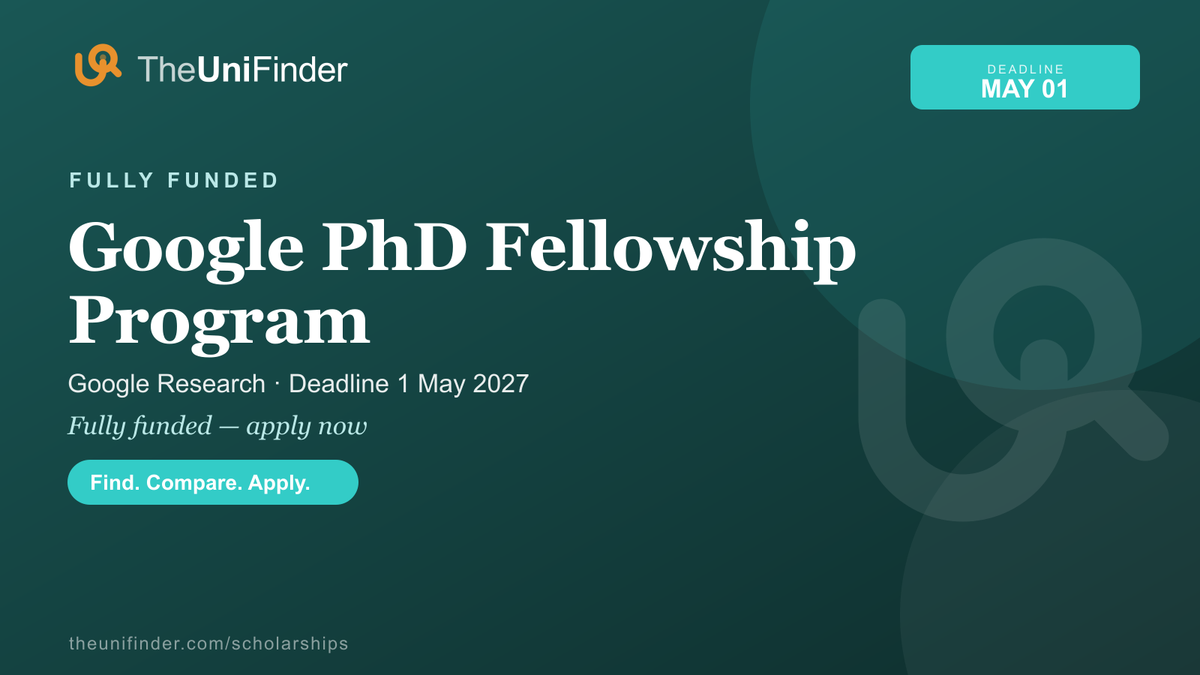
The Google PhD Fellowship Program recognises and supports outstanding graduate students doing exceptional research in computer science and related fields. Launched in 2009, it operates across regions worldwide (the Americas, Europe, Africa, India, Australia/New Zealand, East Asia, and Southeast Asia), each with its own set of research topics and awards. The fellowship covers full tuition and fees, provides a yearly stipend toward living expenses, and pairs each Fellow with a Google Research Mentor. Support typically runs for up to 2–3 years of the PhD (varying by region), giving students the freedom to focus on ambitious research. Students do not apply directly: each eligible university may nominate a limited number of PhD students (commonly up to 2–4, depending on region and rules) by the annual deadline. Nominees are then evaluated by Google on the strength of their research and record. The fields covered span areas such as machine learning, systems, algorithms, human-computer interaction, natural language processing, and more.
What's covered
- Tuition & fees — Full tuition and mandatory fees for the covered period.
- Annual stipend — A yearly stipend toward living expenses (amount varies by region).
- Google Research Mentor — A dedicated Google researcher as a mentor for the Fellow.
- Duration — Support for up to ~2–3 years of the PhD, depending on the region.
How to apply
Your university nominates you. Connect with your department early; the university submits nominations to Google by the annual deadline for your region.
- Check your region's rules — Review the Google PhD Fellowship topics, eligibility stage, and deadline for your region.
- Engage your department — Express interest to your PhD department, which manages nominations.
- Prepare materials — Assemble your research summary, CV, transcripts, and references for the nomination package.
- University nominates — Your university submits its limited nominations to Google by the deadline.
- Evaluation — Google evaluates nominees on research strength and record.
- Award — Selected Fellows receive funding and are paired with a Google Research Mentor.
Eligibility
Level & fieldPhD students in computer science or a closely related research area.
NominationNominated by your university (each may nominate a limited number of students).
StageTypically have completed some graduate coursework and be engaged in active research (stage rules vary by region).
Research fitResearch aligned with the fellowship's listed topics/areas for your region.
RecordAn outstanding academic and research record.
You cannot apply directly — work with your department/university, which nominates students. Eligible stage, number of nominations, and exact benefits vary by region.
Eligible countries
Worldwide (organised by region)
Deadlines
Annual (region-dependent)2027-05-01
Selection
Google evaluates university nominees on the quality and impact of their research, academic record, and leadership/community contributions. Because nominations are capped per university and assessed by Google researchers, the bar is high and research excellence is decisive.
Verified sources
- Google PhD Fellowship Programresearch.googleofficial
About the provider
Google Research supports the academic community through programs including the Google PhD Fellowship, which recognises exceptional doctoral students in computer science and related fields. The program reflects Google's commitment to fostering research talent and building long-term relationships with universities worldwide.
Frequently asked questions
Answers below are best-effort estimates from the most recent application cycle. Values marked ~ or (est.) may shift year-to-year — confirm specifics on the official scholarship page.
What is the Google PhD Fellowship Program?
+
A program launched in 2009 that recognises and supports outstanding PhD students in computer science and related fields worldwide, providing tuition, a stipend, and a Google Research Mentor.
Who is eligible?
+
PhD students in computer science or closely related areas, nominated by their university, with an outstanding research record and research aligned with the fellowship's topics for their region.
What does it cover?
+
Full tuition and fees, a yearly stipend toward living expenses, and a dedicated Google Research Mentor, typically for up to 2–3 years of the PhD (varying by region).
Can I apply directly?
+
No — students cannot apply directly. Each eligible university nominates a limited number of PhD students, so you work through your department.
When is the deadline?
+
Nomination windows vary by region, with many in ~spring. Check the Google PhD Fellowship page for your region's exact dates and topics.
Which fields are covered?
+
Computer science research areas such as machine learning, systems and networking, algorithms and theory, human-computer interaction, and natural language processing, among others.
How many students can a university nominate?
+
A limited number — commonly up to ~2–4 depending on the region and the university's eligibility. Your department manages and prioritises nominations.
How long does the funding last?
+
Typically up to ~2–3 years of the PhD, with the exact duration and benefits depending on your region.
What is the Google Research Mentor?
+
Each Fellow is paired with a Google researcher who serves as a mentor, offering guidance and connection to Google's research community alongside the financial support.
How competitive is it?
+
Highly — nominations are capped per university and evaluated by Google researchers, so only the strongest research records are selected.
Does receiving it require working at Google?
+
No — it is a fellowship for your PhD research, not an employment offer. The mentorship connects you to Google Research, but you remain a student at your university.
What stage of the PhD should I be in?
+
Generally you should have completed some graduate coursework and be engaged in active research; exact stage requirements vary by region.