Aerospace Engineering in Canada
Canada offers 5 Aerospace Engineering programmes across 3 universities, providing pathways into one of the country's most strategically important industrial sectors. The University of Toronto, Seneca College, and Acadia University are among the institutions in this listing, offering a range from research-intensive university degrees to more applied technology programmes suited to students targeting direct industry entry.
Tuition for Aerospace Engineering programmes in Canada is approximately €46k per year in this listing. While costs are significant, Canada's aerospace industry — anchored by companies in Montreal, Toronto, and Vancouver — offers strong graduate employment prospects, and the post-graduation work permit pathway allows international graduates to gain Canadian work experience after completing their degree.
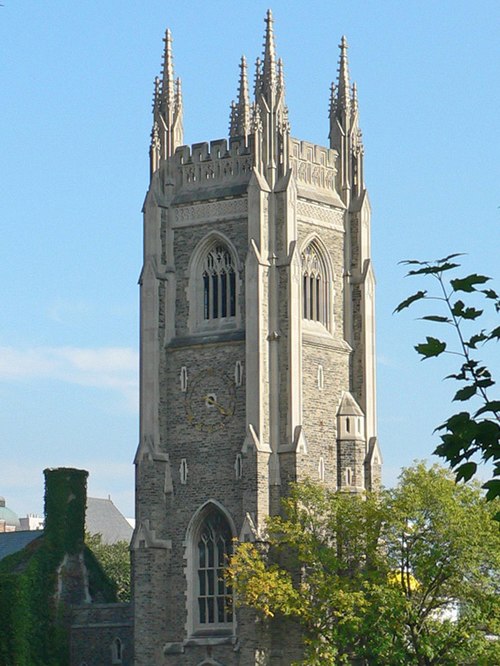
Aerospace Engineering
Aerospace Engineering focuses on the science, design, manufacturing, and operation of aircraft, spacecraft, and robotic systems. This field is crucial for space exploration, satellite communications, rocketry, and increasingly, for innovative applications like urban air mobility and wind turbines for sustainable energy. This program offers a comprehensive and multidisciplinary curriculum with a strong emphasis on theoretical foundations, covering aerodynamics, dynamics and control systems, structures and materials, and propulsion. It prepares students for impactful roles in leading aerospace companies and research institutions globally. Students benefit from instruction by professors at the University of Toronto Institute for Aerospace Studies (UTIAS), a renowned hub for aerospace research in Canada. This provides access to cutting-edge facilities, industry partnerships, and opportunities for design experience.

Aviation Programs at Seneca College
Seneca College is a leading institution in aviation education in Canada, recognized internationally for producing highly skilled graduates and maintaining strong ties with the aviation industry. Whether your career aspirations lie in flight operations, airline management, safety, or quality assurance, Seneca provides the foundational knowledge and practical skills needed to excel as a professional in the diverse field of aviation. The college offers a range of programs designed to meet the evolving demands of the global aviation sector.
Aviation Safety (ASE)
This three-year Ontario College Advanced Diploma program provides a comprehensive education in aviation safety techniques. You will gain knowledge of Canadian aviation industry regulations, along with business, leadership, and technical skills necessary to implement safety policies and procedures. This program prepares you for a career in various aviation sectors, including commercial airlines, flight schools, insurance companies, and airports.

Engineering
Acadia University offers a foundational engineering program designed to provide students with a strong start to their engineering education. The program emphasizes small class sizes, accessible professors, and hands-on learning experiences in design and prototyping, fostering an environment where students can develop confidence and excel. After completing the first two years, students typically transfer to a larger engineering school, such as Dalhousie University, to specialize in one of seven disciplines, including Chemical, Civil, Computer, Environmental, Electrical, Industrial, or Mechanical Engineering. Acadia provides flexible pathways to meet individual career goals. Students can pursue a two-year Certificate of Applied Science (23 courses), a three-year Bachelor of Applied Science (30 courses), or combined programs that integrate engineering studies with a BSc in biology, chemistry, mathematics, or physics. Graduates of the BASc program may also apply to Acadia’s School of Education. The program thoroughly prepares students for their next steps toward becoming a professional engineer (P.Eng.).
University of Toronto Institute for Aerospace Studies (UTIAS) Graduate Programs
The University of Toronto Institute for Aerospace Studies (UTIAS) is a world-class hub for aerospace research, celebrating over 75 years of innovation. As a graduate student, you will join a community of exceptional students, researchers, and industry leaders, focusing on cutting-edge technologies in areas like autonomous drones, sustainable aviation, space robotics, and microsatellites. UTIAS is home to leading research centres in Sustainable Aviation and Aerial Robotics, offering unique educational and research opportunities. The institute fosters a rich academic environment with industrial partnerships and international collaborations, providing avenues for student exchange and entrepreneurship.
Frequently asked questions
How many Aerospace Engineering programmes are available in Canada?
+
There are 5 Aerospace Engineering programmes available at 3 universities in Canada.
Which universities in Canada offer Aerospace Engineering?
+
The University of Toronto, Seneca College, and Acadia University are among the institutions offering Aerospace Engineering programmes.
How much does it cost to study Aerospace Engineering in Canada?
+
Tuition is approximately €46k per year for the programmes in this listing; students should verify current fees directly with each institution.
Can international students apply for Aerospace Engineering programmes in Canada?
+
Yes, all listed institutions accept international applicants, and Canada's post-graduation work permit allows graduates to work in Canada for up to three years after their studies.
What are typical entry requirements for Aerospace Engineering in Canada?
+
Applicants typically need strong secondary school grades in physics and mathematics for undergraduate entry, or a relevant engineering bachelor's degree for graduate programmes, along with English language proficiency such as IELTS or TOEFL.