Economics in Canada
12 Economics programmes are available across 8 universities in Canada, with all listed options currently shown as tuition-free. Institutions represented include the University of Toronto, University of Waterloo, École des Hautes Études Commerciales, and Brock University, spanning both English- and French-language institutions.
Canadian economics departments blend quantitative methods with policy-oriented research, and graduates enter fields from finance and government to international development. International students should verify whether the tuition-free status applies to their specific fee category, as domestic and international tuition schedules can differ substantially at Canadian universities.

Canadian Studies
The Canadian Studies program at Acadia University offers a comprehensive, interdisciplinary approach to understanding Canadian society. You will explore Canada's social, cultural, and political trends, tracing their historical roots. This program draws from both the humanities (Art, English and Theatre, French, History) and social sciences (Economics, Politics, Sociology), equipping you with strong research, reading, and writing skills essential for contributing to Canadian society. The program emphasizes a personalized education experience within small classes, fostering close interaction with professors and fellow students. You can tailor your studies to focus on areas like Atlantic Canada, Canadian culture, or contemporary issues. Students can pursue a major in Canadian Studies alone or combine it with another discipline for a double major. An Honours program is also available, particularly recommended for those intending to pursue graduate studies in Canadian Studies.

Doctor of Business Administration (Ph.D.) – Applied Economics
This PhD program in Applied Economics is designed for students aiming for academic careers focused on advanced research in applied economics. You will join a community of professors with strong expertise in applied macroeconomics (including finance applications) and applied microeconomics (including industrial organization, labor economics, and health economics). The program offers an intensive environment with excellent resources and supervision. HEC Montréal provides a robust research environment for doctoral students in applied economics, featuring research chairs and professorships. Researchers in this specialization collaborate closely with various research groups and knowledge transfer centers. The program structure includes three phases: preparation, specialization, and dissertation writing. Students benefit from a full-time commitment to complete the program in 4 to 5 years, with a tuition exemption and competitive funding for the first four years.

Economics
Explore what makes economies tick, from local markets to global finance. In this program, you'll grapple with complex questions like how to foster economic growth, prevent financial crises, and stimulate new industries. You'll start with the fundamentals of micro- and macro-economics in your first year, then delve into specialized areas such as public policy, labor economics, health economics, and finance in upper years. This degree will equip you with the analytical skills and knowledge needed for careers in the public sector, private sector, or academia.

Economics
Economics is the study of how individuals, businesses, and governments make decisions when faced with limited resources. Understanding economics helps in making better choices in various aspects of life, from personal finance to public policy. Its principles are crucial for managing scarcity, a fundamental constraint in all aspects of society and the environment. An economics education is valuable across a wide range of fields, as decision-making is a core component of nearly every profession. This makes economics a versatile discipline for students aiming for diverse career paths.

Economics at St. Francis Xavier University
The study of Economics at St. Francis Xavier University (StFX) equips you with a powerful toolkit to understand the complexities of our changing world. Combining data analysis, analytical intuition, and mathematical modeling, economics helps improve policy and societal progress. At StFX, you will explore diverse topics from inflation and inequality to environmental change and healthcare. Our department is known for its vibrant community, offering a wide array of courses and research opportunities with award-winning faculty. As one of Canada's largest economics departments at a primarily undergraduate university, we provide the academic breadth of a larger institution with the personal experience of a smaller one. Our faculty are actively involved in international research, publishing in respected journals and offering students summer research positions that have led to student publications.
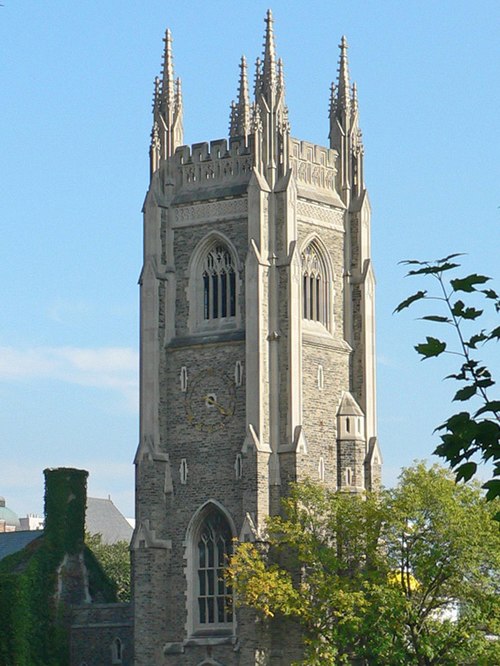
Economics MA and PhD
The University of Toronto's Department of Economics is a highly-ranked institution with a broad scope of research and teaching interests, covering economic theory, applied data analysis, and econometric methodology. The department offers both Master of Arts (MA) and Doctor of Philosophy (PhD) programs designed to enhance students' analytical capabilities through rigorous instruction. The MA program, a coursework-only degree, is suitable for those aiming for careers in the public, private, or not-for-profit sectors, as well as for students planning to pursue a PhD. The PhD program offers direct entry for undergraduates and regular entry for those with a Master's degree, focusing on advanced economic theory and research. Both programs attract a diverse cohort of students globally. Graduates from the MA program often find employment in various sectors or proceed to doctoral studies. PhD graduates typically secure academic positions or employment in the public and private sectors. The department also benefits from collaborations with the Rotman School of Management and UofT's extensive library resources.
Economics MA/PhD
The University of Toronto's Department of Economics is a leading institution for economic study and research, recognized both nationally and internationally. The department's faculty engage in a wide range of research, covering economic theory, applied data analysis, and econometric methodologies. The graduate programs aim to enhance students' analytical capabilities through rigorous training in theory, econometrics, and various specialized fields. Students have the flexibility to concentrate on almost any area of interest, with opportunities to take elective courses in related disciplines like statistics, mathematics, and computer science, as well as collaborate with faculty from the Rotman School of Management. The university's extensive resources, including one of Canada's largest libraries, further enrich the learning experience. The program attracts a diverse group of students from around the world, with approximately 65 MA and 15-20 PhD students enrolling annually. Graduates of the MA program find successful careers in public, private, and not-for-profit sectors, with many also pursuing further doctoral studies. PhD graduates secure academic positions or roles in the public and private sectors.
MA in Economics
The MA in Economics program at the University of Waterloo is designed to enhance your analytical and problem-solving abilities through a combination of rigorous coursework, research, and practical application. You will develop a strong foundation in economic theory and econometrics. This program offers a renowned co-op option, providing 8 months of paid work experience. This hands-on experience is invaluable for career development and allows you to apply your academic knowledge in a professional setting. Graduates are well-prepared for prestigious positions in various sectors.
Master of Arts in Economics
The University of Toronto's Department of Economics offers a Master of Arts (MA) program designed to provide students with advanced training in economic theory and econometrics. This program is suitable for students who intend to pursue a PhD in Economics or seek careers in research, policy, or the private sector requiring strong analytical and quantitative skills. The MA program focuses on developing a rigorous understanding of economic principles and their application.

Master of Business Economics (MBE)
The Master of Business Economics (MBE) at Brock University is an interdisciplinary program designed to provide students with a strong foundation in both economic theory and practical business knowledge. Offered jointly by the Department of Economics and the Goodman School of Business, this program prepares you for a range of careers by combining rigorous academic study with valuable professional experience. Students can choose between a non-co-op option for focused academic work or a co-op option that includes two work terms for hands-on industry experience. The curriculum covers essential areas such as economic theory, econometrics, international payments, industrial organization, finance, business strategy, marketing, and human resource management. This comprehensive approach ensures graduates are well-equipped with the analytical and decision-making skills needed in today's dynamic business environment. The program is ideal for students seeking to deepen their understanding of economic principles and their application in business contexts.
Master of Science (M.Sc.) in Applied Economics
This Master of Science (M.Sc.) program equips you with the skills to apply economic theory to real-world challenges, preparing you to make a difference in society in Canada or internationally. You will gain a deep understanding of economic and financial trends, their impact on markets and society, and how public and macroeconomic policies affect them. The program focuses on constructing indicators for market structure, business performance, and competitive environments, and utilizes advanced econometric techniques and machine learning for forecasting. You will also learn key programming languages for data analysis and benefit from personalized guidance from expert faculty with strong industry connections.
Frequently asked questions
How many Economics programmes are available in Canada?
+
There are 12 Economics programmes listed across 8 universities in Canada.
Which universities in Canada offer Economics programmes?
+
Universities offering Economics programmes in Canada include University of Toronto, Brock University, St. Francis Xavier University, École des Hautes Études Commerciales, among others.
How much does it cost to study Economics in Canada?
+
All listed programmes are tuition-free.
Can international students apply to Economics programmes in Canada?
+
Yes, international students are generally eligible to apply. Requirements vary by institution — check each programme page for language proficiency standards, entry qualifications, and any country-specific admissions conditions.
What are the typical entry requirements for Economics programmes in Canada?
+
Entry requirements vary by programme and level. Most master's programmes expect a relevant bachelor's degree; bachelor's programmes typically require secondary school qualifications in related subjects. Evidence of language proficiency (e.g. IELTS or TOEFL) is usually required for English-taught programmes.