Engineering & Technology in China
China offers 51 Engineering & Technology programmes across 12 universities, combining globally ranked research institutions with rapidly expanding science and technology campuses. Shanghai Jiao Tong University, Tongji University, and the University of Science and Technology of China are among Asia's most prestigious engineering schools, offering programmes in electrical engineering, civil engineering, materials science, and computer engineering taught increasingly in English for international students.
Tuition ranges from roughly €4,000 to €6,000 per year, making China one of the most cost-effective destinations in the world for high-quality engineering education. The Southern University of Science and Technology and Northwestern Polytechnical University round out the offer, and Nankai University adds further breadth with interdisciplinary engineering and science programmes. Chinese government scholarships are available to eligible international students and can cover tuition and living costs.

Computer Front-End Technology

Computer Information Engineering

Electrical and Computer Engineering
The Bachelor of Engineering in Electrical and Computer Engineering at Shanghai Jiao Tong University's Pujiang International College is an interdisciplinary program designed to meet the growing global demand for professionals skilled in electrical engineering, computer engineering, and computer science. This program emphasizes both hardware and software technologies, equipping students with the ability to apply their classroom knowledge to solve real-world problems. The curriculum is jointly supported by the University of Michigan's EECS department and SJTU's School of Electronic Information and Electrical Engineering, and has received ABET accreditation. Students begin with a strong foundation in mathematics, physics, chemistry, engineering fundamentals, and computer programming during the first two semesters. These foundational courses are recognized and have credit equivalency with the University of Michigan's College of Engineering. After the second semester, students can specialize in Electrical and Computer Engineering. The program covers all core requirements of the University of Michigan's Electrical Engineering and Computer Engineering programs, including professional subjects, core courses, and advanced electives. The program provides students with fundamental theoretical concepts and technical principles in modern electrical and computer engineering. The flexible curriculum allows students to focus on various sub-disciplines such as analog and digital circuits, communication systems, control systems, integrated circuit design, micro-electromechanical systems, signal processing, computer architecture, computer networks, and embedded systems. Graduates are prepared for a wide range of career opportunities in fields like automotive applications, wireless communication, remote sensing, and the design and manufacturing of microprocessors and integrated circuits.

Electronic Information Engineering
The Electronic Information Engineering program at Nankai University provides a comprehensive education in the rapidly evolving field of electronic information science and technology. This program aims to equip students with a strong foundation in theoretical knowledge and practical skills, preparing them for careers in research, development, and innovation within the global electronics industry. Students will engage with core concepts in microelectronics, communications, and optoelectronics, fostering a deep understanding of modern electronic systems. The curriculum is designed to bridge fundamental principles with cutting-edge applications. Through a combination of lectures, laboratory work, and project-based learning, students will develop expertise in areas such as signal processing, integrated circuit design, optical communication, and electronic device technology. The program emphasizes critical thinking, problem-solving, and collaborative work, essential attributes for success in this dynamic field. Graduates will be well-prepared to contribute to advancements in telecommunications, computer engineering, and various other technology-driven sectors.
Electronic Information Engineering
Electronics and Engineering
M.Eng/Ph.D. in Engineering Programs
Shanghai Jiao Tong University's National Academy of Excellence in Engineering offers specialized Master of Engineering and Ph.D. programs designed to cultivate top-tier engineers. These programs are part of a national initiative to transform engineering education by focusing on practical innovation and solving real-world industry problems. The academy collaborates closely with leading enterprises to create a unique "company-listed problems, university-solved" model. This approach aims to develop engineers who are not only technically skilled but also possess strategic thinking capabilities and a commitment to national development. Students will be equipped to tackle complex engineering challenges and contribute to technological advancements.

Materials Science and Engineering
The Materials Science and Engineering program at Fudan University offers advanced study in the field, focusing on research and development of new materials. The department is dedicated to pushing the boundaries of materials science, with a strong emphasis on practical applications and technological innovation. Students engage with cutting-edge research in areas such as semiconductor materials, energy storage, and nanotechnology.
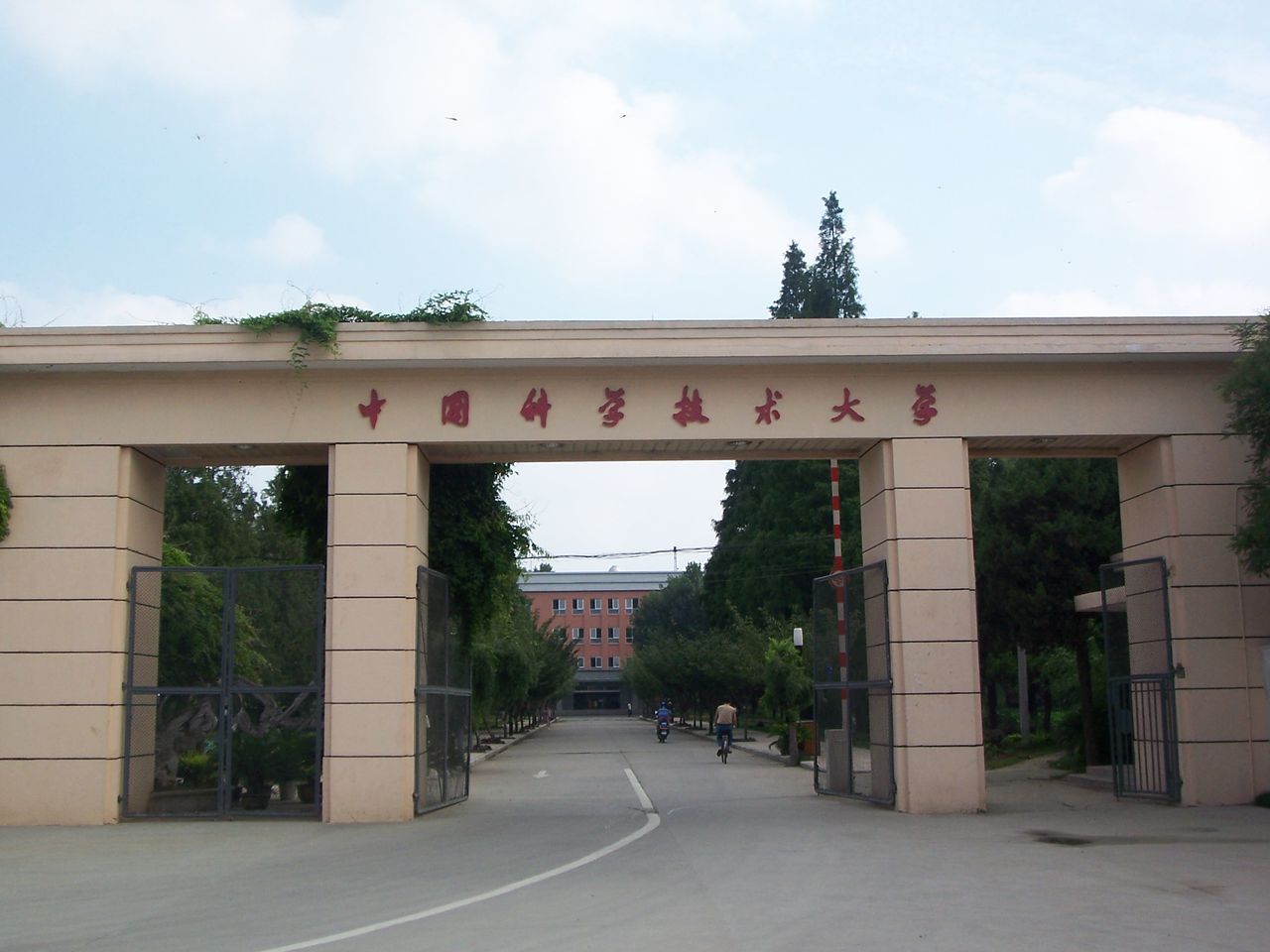
Technology Talents Program (Elite Class)
The Technology Talents Program (Elite Class) at the University of Science and Technology of China (USTC) offers specialized, advanced learning opportunities for incoming freshmen. This program aims to identify and nurture students with exceptional potential in science and technology. Students admitted into these elite classes will have their administrative school affiliation transferred to the elite class's respective school, indicating a focused academic path.
Undergraduate Engineering Cluster Program
Shanghai Jiao Tong University (SJTU) offers an Undergraduate Engineering Cluster Program designed for international students, taught entirely in English. This program integrates strengths from various engineering fields across the university, including the Joint Institute (JI), School of Materials Science and Engineering, School of Electronic Information and Electrical Engineering, School of Naval Architecture, Ocean and Civil Engineering, and School of Mechanical Engineering. Students will gain a broad foundation in engineering during their first 1.5 years at the Joint Institute before specializing in areas like Mechanical Engineering, Electrical and Computer Engineering, Materials Science and Engineering, or Computer Science. Upon completion of introductory courses, students can choose to continue at the Joint Institute or transfer to another engineering school to finish their degree. All students are required to take Chinese language and culture courses and meet HSK 4 for graduation, unless enrolled in specific international programs.
Undergraduate Engineering Cluster Program (English-Taught)
Shanghai Jiao Tong University (SJTU), founded in 1896, is a leading research university in China with a strong international reputation. The university offers various programs for international students, including English-taught undergraduate degrees focused on engineering disciplines. These programs aim to nurture future leaders with innovative capabilities and a strong foundation in engineering principles. SJTU is committed to providing a high-quality educational experience within a vibrant academic environment.
Undergraduate Programs at the University of Science and Technology of China (USTC)
The University of Science and Technology of China (USTC) is a national key university under the direct leadership of the Chinese Academy of Sciences (CAS). USTC is renowned for its strengths in advanced science and high technology, alongside unique management studies and well-developed humanities disciplines. USTC offers 33 undergraduate programs across 12 subject areas, providing a comprehensive educational experience for international students. These are typically four-year full-time study programs, with degrees and certificates awarded upon successful completion of coursework and thesis defense.
Undergraduate Programs in Science and Technology
The University of Science and Technology of China (USTC) offers a variety of 4-year undergraduate programs designed for international students. These programs cover 12 key subject areas, including Mathematics, Physics, Chemistry, Materials Science, Life Sciences, Engineering, Electronic Information, Computer Science, Geophysics, Environmental Science, Economic Management, and Nuclear Engineering. While most classes are taught in Chinese, some courses may be delivered in English or bilingually. Upon successful completion of all coursework and a thesis defense, students will be awarded a Bachelor's degree and a graduation certificate. USTC is a national key university recognized for its strengths in science and technology, managed under the Chinese Academy of Sciences.
USTC "Elite Science and Technology Program" (Undergraduate)
The University of Science and Technology of China (USTC) offers specialized undergraduate programs known as "Elite Science and Technology Programs" (科技英才班). These programs are designed to foster talent in advanced science and high technology fields, often in collaboration with institutes of the Chinese Academy of Sciences (CAS) and leading technology companies. Students benefit from USTC's strong foundation in science, technology, and management studies. The undergraduate programs are typically four-year full-time studies, leading to a Bachelor's degree and a graduation certificate upon successful completion of coursework and thesis defense. While classes are primarily taught in Chinese, some courses may be offered in English or bilingually.
Frequently asked questions
How much does Engineering & Technology study cost in China?
+
Tuition ranges from roughly €4,000 to €6,000 per year, making China one of the most affordable destinations globally for engineering education at research-intensive universities.
Which universities in China offer Engineering & Technology programmes?
+
12 universities offer these programmes, including Shanghai Jiao Tong University, Tongji University, the University of Science and Technology of China, the Southern University of Science and Technology, Nankai University, and Northwestern Polytechnical University.
Can international students study Engineering in China?
+
Yes, Chinese universities actively recruit international students for engineering programmes; many offer English-taught tracks, and the Chinese Government Scholarship (CSC) can cover tuition and living allowances for eligible candidates.
What are the entry requirements for Engineering programmes in China?
+
Requirements typically include a relevant secondary or undergraduate qualification, English or Chinese language proficiency depending on the programme's language of instruction, and sometimes a statement of purpose or recommendation letters.
How do I apply for an Engineering programme in China?
+
Apply directly through each university's international admissions office. If applying for the Chinese Government Scholarship, submit your application through the CSC portal. Prepare academic transcripts, language proficiency documents, and a passport-standard photo.