Medicine & Health Sciences in France
12 Medicine & Health Sciences programmes are offered across 4 universities in France, including Sorbonne University, University of Strasbourg, University of Bordeaux, and Paris 1 Panthéon-Sorbonne University. Tuition varies by programme — check each listing for the exact fee.
France's undergraduate medical programmes are integrated into public universities and entry is governed by national competitive examinations, making them difficult to access for most international applicants. Allied health, public health, and postgraduate medical specialisation programmes are generally more accessible to students from abroad, with some courses available in English.

Certificat de capacité d'orthophoniste (CCO)
This program leads to the Certificat de capacité d'orthophoniste (CCO), equivalent to a Master's degree, preparing you for a career as a speech therapist. The five-year curriculum is structured into 300 ECTS credits, comprising a 3-year bachelor's cycle and a 2-year master's cycle. It combines theoretical coursework with extensive clinical practice through internships in various settings like nurseries, schools, private practices, institutions, and hospitals.
Certificat de capacité d'orthoptiste
This program trains students to become orthoptists, paramedical professionals specializing in the assessment, rehabilitation, and examination of functional visual disorders. Orthoptists work with patients of all ages, from infants to the elderly, on medical prescription. They are skilled in detecting, analyzing, and treating visual anomalies such as strabismus, amblyopia, oculomotor imbalances, neuro-ophthalmological conditions, and low vision. The training also covers performing exploration examinations like perimetry, corneal topography, or OCT under ophthalmologist supervision. Graduates can work in various settings including private practice, hospitals, medical-social structures, or ophthalmology clinics.
Diplôme d'État de masseur-kinésithérapeute
This program prepares you to become a certified state physiotherapist (masseur-kinésithérapeute). You will learn to assess patients, establish a physiotherapy diagnosis, and develop personalized treatment plans. The curriculum focuses on both manual and instrumental therapeutic techniques, as well as preventive healthcare and patient education. The role of a physiotherapist extends to promoting health, educating patients, and preventing functional decline. You will also gain skills in therapeutic exercise, rehabilitation, and potentially sports physiotherapy and wellness practices like balneotherapy. Graduates will be equipped to analyze and evaluate patient conditions, design and implement therapeutic projects, and foster therapeutic relationships. The program also emphasizes professional development, research skills, and the ability to manage or organize within a healthcare setting, collaborating with other professionals.
General Diploma in Midwifery Sciences (DFGSMa)
The University of Strasbourg, through its Faculty of Medicine, Midwifery, and Health Sciences, offers the General Diploma in Midwifery Sciences (DFGSMa). This program is designed to equip students with a high level of knowledge and skills essential for the practice of midwifery. The curriculum is structured around acquiring foundational scientific knowledge, engaging in research, understanding human physiology and pharmacology, and developing a fundamental understanding of the human being. The program aims to foster autonomous, responsible, and reflective professionals.
Licence Sciences pour la Santé (Bachelor of Science in Health Sciences)
The Licence Sciences pour la Santé (Bachelor of Science in Health Sciences) at the University of Strasbourg is a three-year program designed to provide a pathway to further health studies in fields like medicine, maïeutique (midwifery), dentistry, and pharmacy. The first year is structured around three core components: health sciences, transversal skills, and a specialized discipline outside of health. The health sciences component includes biology, mathematics, physics, and chemistry. The transversal component focuses on academic methodology, social sciences related to health, and a foreign language to prepare students for health program admissions. The third component allows students to delve into a specific discipline based on their chosen track. This program offers 11 different specializations, allowing students to combine health sciences with other fields such as Chemistry, Law, Economics, Mathematics, Physics, Psychology, Earth Sciences, Life Sciences, Sports Science, and Social Sciences. This multidisciplinary approach ensures that even if a student is not admitted to a second-year health program, they can still pursue a Bachelor's degree in a related field upon successful completion of their first year and achieving a minimum average grade of 10/20 in their chosen discipline. The curriculum is developed in partnership with various research institutions and university hospitals in Strasbourg, offering a robust academic foundation. While the program is primarily taught in French, it prepares students for advanced studies within the French healthcare system.
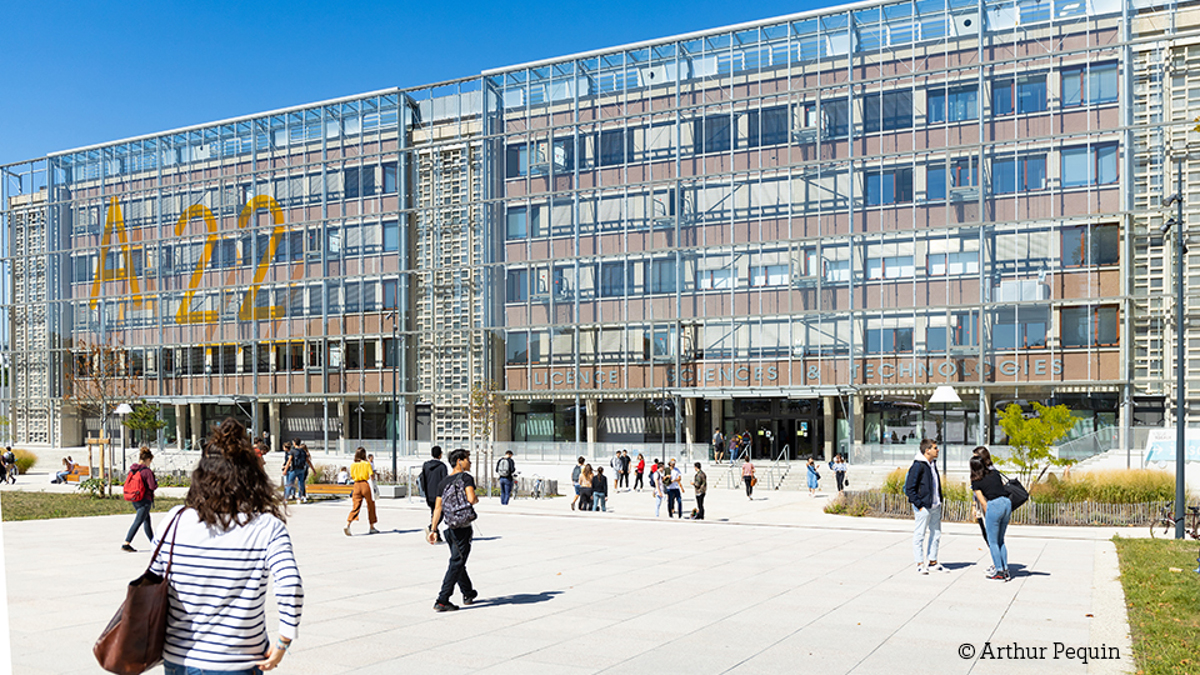
Master in Health Engineering
The Master's in Health Engineering at the University of Bordeaux provides students with scientific and technical tools to specialize in health engineering. The program offers two tracks: Biomaterials and Medical Devices (BiDiM) and Biomedical MRI (SiTh). This multidisciplinary training aims to equip graduates for professional careers in both public and private sectors within the health industry. The program emphasizes critical thinking, advanced scientific knowledge, and practical application in areas such as biomaterials, medical devices, and MRI technology.
Occupational Therapy
The Occupational Therapy program, integrated within the Faculty of Medicine of Strasbourg since January 2021, offers a three-year course of study leading to a Licence degree. This program prepares students for a career as occupational therapists, enabling individuals to participate in daily life activities. The university registration is mandatory for all students and grants access to university resources, including an ERNEST account, the MOODLE platform, student email, a student ID card (Pass campus), libraries, university restaurants, and cultural and sports activities. Upon successful completion of the three years, students receive a Licence degree from the university and a state diploma from the institute.

Orthoptics
This degree course in Orthoptics trains you to become a specialist in vision disorders. Orthoptists play a crucial role in preventing, detecting, and rehabilitating visual impairments across all age groups, from infants to the elderly. The program is designed to equip you with the necessary theoretical knowledge and practical skills through a combination of classroom learning and extensive clinical placements. The curriculum is structured over six semesters, leading to the award of 180 European credits, equivalent to a Bachelor's degree. The qualification is a national diploma under the authority of the Ministry of Higher Education and Research. The course is taught in person at the Pitié-Salpêrière Campus and the Pierre et Marie Curie Campus, with placements at the CHNO 15-20 Hospital.
State Diploma in Chiropody (Pédicure-Podologue)
The State Diploma in Chiropody (Diplôme d’Etat de pédicure-podologue) qualifies you to practice as a chiropodist (podiatrist) in France. This is a paramedical profession within the rehabilitation field. To practice, you must hold this diploma, which is issued by the Ministry of Health, and be registered with the National Order of Chiropodists. Studies for this diploma take place in specialized training institutes and last for three years. Admission to these institutes is typically through a competitive examination, with some exceptions that may use regional recruitment pathways based on health studies.
State Diploma of Dental Surgeon
The Faculty of Odontology at the University of Bordeaux offers the State Diploma of Dental Surgeon. This program is designed to train future dental surgeons, with a focus on initial education, continuing professional development, and research. The curriculum is delivered within the Dental, Teaching, and Research Care Center (CSERD), providing students with clinical experience across three medical units at Pellegrin, Saint André, and Xavier Arnozan hospitals, which form the Dentistry and Oral Health Center.
University of Strasbourg
The University of Strasbourg is a comprehensive public research university located in Strasbourg, France. It is one of the oldest universities in the world, founded in 1538. The university offers a wide range of academic programs across various disciplines, serving a diverse student body including high school students, undergraduates, doctoral candidates, and alumni. It is committed to excellence in education, research, and innovation.
Frequently asked questions
How many Medicine & Health Sciences programmes are available in France?
+
There are 12 Medicine & Health Sciences programmes listed across 4 universities in France.
Which universities in France offer Medicine & Health Sciences programmes?
+
Universities offering Medicine & Health Sciences programmes in France include University of Strasbourg, University of Bordeaux, Sorbonne University, Paris 1 Panthéon-Sorbonne University.
How much does it cost to study Medicine & Health Sciences in France?
+
Tuition varies by programme — check each listing for the exact fee.
Can international students apply to Medicine & Health Sciences programmes in France?
+
Yes, international students are generally eligible to apply. Requirements vary by institution — check each programme page for language proficiency standards, entry qualifications, and any country-specific admissions conditions.
What are the typical entry requirements for Medicine & Health Sciences programmes in France?
+
Entry requirements vary by programme and level. Most master's programmes expect a relevant bachelor's degree; bachelor's programmes typically require secondary school qualifications in related subjects. Evidence of language proficiency (e.g. IELTS or TOEFL) is usually required for English-taught programmes.