Bachelor's in Arts & Humanities in Germany
Germany offers 15 Bachelor's programmes in Arts & Humanities across 8 universities, all of them tuition-free. Freie Kunst-Studienstätte Ottersberg, Technische Universität Berlin, Fachhochschule Potsdam, Europa-Universität Viadrina Frankfurt (Oder), and Fachhochschule Gelsenkirchen are among the institutions providing these undergraduate pathways.
With no tuition fees charged at any of these 8 institutions, Germany stands out as an exceptionally affordable destination for humanities study in Europe — students typically pay only a nominal semester contribution. Programmes span fine arts, design, cultural studies, linguistics, history, and interdisciplinary humanities, often combining academic rigour with creative practice.
Archival Studies (BA)
Archives serve as the memory of society, preserving and making accessible important historical and digital records. The Archival Studies bachelor's program equips you with the skills to evaluate analogue and digital materials for their future relevance and to present them effectively to diverse audiences. This program emphasizes practical application, providing a realistic understanding of your future professional field. Graduates are well-prepared for a variety of roles in public archives, private companies, and other institutions, leveraging their specialized knowledge and learned methodologies in high demand on the job market.
Conservation and Restoration (BA)
This Bachelor's program in Conservation and Restoration focuses on preserving and restoring historical art and cultural assets, with a primary emphasis on building monument conservation and also including the museum sector. You will gain foundational knowledge in the conservation of wood, stone, and mural painting, while also learning to think and work interdisciplinarily by studying architecture, urban planning, and civil engineering. The program aims to equip future conservators with the skills to maintain diverse historical objects such as monuments, buildings, sculptures, furniture, and wall paintings for future generations, utilizing environmentally friendly and sustainable practices. The curriculum includes essential scientific methods and in-depth knowledge of art and restoration history. Students will complete a mandatory mid-study internship at institutions or workshops outside the university to apply and critically evaluate their acquired knowledge. The program offers specializations in Wood, Stone, or Mural Painting, allowing students to deepen their expertise in their chosen field.
Creative Writing as Social Practice (B.A.)
This Bachelor's program focuses on Creative Writing as a Social Practice, blending artistic expression with social engagement. You will learn to see writing not just as an individual act, but as a powerful tool for shaping identities, fostering relationships, and critically examining societal dynamics. The program emphasizes collaborative writing processes, community building, and the development of inclusive narratives. Through workshops, artistic projects, and collective writing, you will gain practical experience in initiating, guiding, and facilitating writing processes. The curriculum combines foundational knowledge in community building, collaborative creativity, and critical language use with in-depth studies of creative writing methods, theories, and research. This interdisciplinary approach ensures a dynamic dialogue between academic learning and the practice of writing as a social art form. Graduates are prepared for diverse career paths where writing brings people together. This includes developing and leading collaborative writing projects, facilitating workshops in social institutions like schools or senior centers, engaging in cultural work, and applying creative writing in therapeutic or rehabilitative settings.
Cultural and Social Studies (BA)
The Bachelor's programme in Cultural and Social Studies at Europa-Universität Viadrina Frankfurt (Oder) offers a unique interdisciplinary approach to understanding contemporary society and culture. Taught primarily in English, with a progressive introduction to German, the program equips students with theoretical and methodological tools from cultural history, literary studies, language and media studies, and comparative social sciences. It focuses on key thematic areas like Europe's history and culture, media and communication, and issues of migration, gender, and diversity. The curriculum is designed to foster an understanding of historical interconnections and intersectional structures within global contexts.

Culture and Technology - Art History, B.A.
This Bachelor of Arts program explores the intricate connections between culture and technology, with a core focus on Art History. You will gain a deep understanding of artistic works from the Middle Ages to the modern era, examining their design, technological context, and historical influences. The program equips you with broad scientific methods to analyze artifacts from various perspectives and formulate further research questions. You'll investigate the cultural, material, and technological foundations of artistic creation, as well as art's dissemination and institutionalization. This includes understanding processes, material iconography, artist training, cultural exchange, museum history, and the history of science. The general studies component develops professional, methodological, and social skills to comprehend the intellectual, social, and material dimensions of the modern world and their interrelations, bridging humanities and cultural studies with natural and technical sciences.

European Culture and Ideas History (B.A.)
The Bachelor of Arts program in European Culture and Ideas History offers a comprehensive exploration of the intellectual, cultural, and political developments that have shaped Europe. It delves into the history of ideas, philosophy, literature, art, and social sciences to provide students with a nuanced understanding of European identity and its evolution. This interdisciplinary program encourages critical thinking and analytical skills, enabling students to examine complex historical and cultural phenomena. Graduates will be equipped with a broad knowledge base and the ability to engage with diverse perspectives on European history and thought.

Film & Sound - Bachelor of Arts
The Bachelor's program in Film & Sound explores the dynamic interplay between audio and visual elements in filmmaking. This program is designed for students passionate about storytelling through moving images and sound, aiming to equip them with a comprehensive understanding of both creative levels. You'll learn to enhance, expand, and counterpoint a film's message through sound design, fostering a deep appreciation for how image and sound work together professionally. This unique, practice-oriented, and career-focused seven-semester program uniquely brings together students from film and sound design specializations. You will collaborate on various film projects, gaining essential experience in audiovisual storytelling. The curriculum includes fictional, documentary, and experimental film projects, preparing you for diverse roles in the industry.
German Studies B.A. (Germanistik B.A.)
This Bachelor of Arts (B.A.) program in German Studies (Germanistik) focuses on the German language, literature, and communication. You will delve deeply into the structure and evolution of the German language, analyze literature from various historical periods, and examine media and texts from a cultural perspective. The program aims to provide a broad academic foundation with versatile application possibilities, increasingly incorporating cultural studies and other media. The curriculum is structured around a major in German Studies, which includes compulsory and elective modules, and a minor subject. You will gain fundamental knowledge in German literature (from the 16th century to the present, and medieval literature), linguistics, and language history. The program also emphasizes interdisciplinary connections, allowing you to combine German Studies with subjects like Sociology, History, Philosophy, Pedagogy, Art History, Media Culture, or Technology Assessment.
Künste im Sozialen (Arts in Social Professions) - Bachelor of Arts / Bachelor of Fine Arts
Freie Kunst-Studienstätte Ottersberg offers a Bachelor of Arts/Bachelor of Fine Arts degree in Künste im Sozialen (Arts in Social Professions). This program is designed for students interested in creatively engaging with social issues. The university is located in a region that values both creativity and social responsibility, providing a unique environment for artistic and personal development. The program emphasizes hands-on learning and provides individualized support to help students explore their artistic potential and prepare for careers where art and social engagement intersect. Students will have the opportunity to develop their skills through various focus areas within the broader field of arts in social professions.
Künste im Sozialen (B.A./B.F.A.)
The Bachelor of Arts/Bachelor of Fine Arts program in Arts in Social Contexts (Künste im Sozialen) at the Hochschule für Künste im Sozialen Ottersberg offers a unique interdisciplinary approach, combining artistic practice with social engagement. Students can specialize in various fields, including Fine Arts, Art Therapy, Creative Writing as a Social Practice, Social Work, and Performing Arts (Dance and Theater Education). This program is designed for individuals who wish to use artistic methods to address social issues, promote personal development, and facilitate community engagement. The curriculum emphasizes practical application, critical reflection, and the development of individual artistic and professional profiles within social contexts.
Kunstgeschichte Bachelor of Arts (B.A.)
The Bachelor of Arts (B.A.) program in Art History at KIT offers a comprehensive study of visual art and cultural production from late antiquity to the present day. Students will learn to analyze, describe, and contextualize art across various epochs and media, including painting, sculpture, photography, design, and modern multimedia forms from historical and visual culture perspectives. The curriculum begins with foundational art historical knowledge, combined with training in academic research methods through lectures, seminars, and practical exercises. Later semesters focus on developing critical analysis skills and effective presentation techniques. The program also includes insights into heritage conservation, archival, and museum studies, preparing students for professional roles with internship opportunities. Students can specialize by choosing an elective minor subject and deepening their knowledge in advanced fields. The program emphasizes practical application through a mandatory internship and encourages international experience through various exchange programs.
Kunsttherapie (B.A.)
Performative Künste – Tanz- und Theaterpädagogik (B.A.)
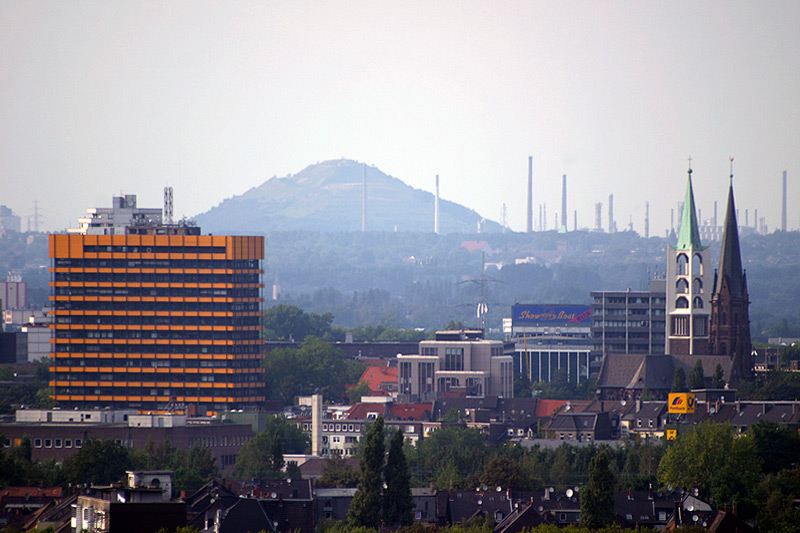
Westfälische Hochschule Gelsenkirchen
The Westfälische Hochschule (WH) is a university of applied sciences located in Germany, with campuses in Gelsenkirchen, Bocholt, and Recklinghausen. It focuses on providing practical, application-oriented education in a range of engineering, business, and social science fields. The university emphasizes strong connections with industry and aims to equip students with the skills needed for successful careers in their chosen fields. WH offers a variety of Bachelor's and Master's programs, often with a focus on innovation, sustainability, and digitalization. Many programs are designed in collaboration with regional businesses, ensuring that the curriculum remains relevant to current industry demands. The university is committed to fostering a dynamic learning environment that encourages research, development, and entrepreneurial thinking among its students.
Wirtschaftsingenieurwesen (Industrial Engineering and Management) - Bachelor of Science / Bachelor of Engineering
This distance learning Bachelor's program in Industrial Engineering and Management (Wirtschaftsingenieurwesen) at HFH Hamburger Fern-Hochschule is designed for individuals seeking to combine technical expertise with business acumen. It prepares students for complex interdisciplinary challenges in areas like digitalization, global supply chains, and sustainability. The program emphasizes flexibility, allowing you to study at your own pace and schedule, balancing your studies with professional and personal commitments. You can earn either a Bachelor of Science (B.Sc.) or a Bachelor of Engineering (B.Eng.) degree. The curriculum integrates knowledge from engineering, natural sciences, and economics, fostering critical thinking and problem-solving skills applicable to leadership roles in various industries. HFH is a state-recognized university with a strong reputation for quality, practical relevance, and excellent student support.
Frequently asked questions
How much does a Bachelor's in Arts & Humanities cost in Germany?
+
Tuition is free at all 8 universities offering these programmes; students generally pay only a nominal semester contribution covering administration and public transport.
Which universities offer a Bachelor's in Arts & Humanities in Germany?
+
Among the 8 universities are Freie Kunst-Studienstätte Ottersberg, Technische Universität Berlin, Fachhochschule Potsdam, Europa-Universität Viadrina Frankfurt (Oder), Fern-Fachhochschule Hamburg, and Fachhochschule Gelsenkirchen.
Can international students apply to Arts & Humanities bachelor's programmes in Germany?
+
Yes, German universities welcome international students; most programmes are taught in German, so B2–C1 German proficiency is typically required, and non-EU students need a student visa.
What are typical entry requirements for a Bachelor's in Arts & Humanities in Germany?
+
Applicants need a recognised upper-secondary qualification (Hochschulzugangsberechtigung or equivalent) and, for arts-focused programmes, may need to submit a portfolio or pass an aptitude test.
How do I apply for a Bachelor's in Arts & Humanities in Germany?
+
Apply through uni-assist or directly to each university; the main intake is October (winter semester), with application deadlines typically between May and July for non-EU applicants.