Civil Engineering in Germany
Germany offers 21 Civil Engineering programmes across 10 universities, and all listed programmes are tuition-free — a major advantage for budget-conscious international students. Institutions include Technische Universität Berlin, Fachhochschule Potsdam, Fachhochschule Lippe, Fachhochschule Konstanz, Fachhochschule Aachen, and IU Internationale Hochschule GmbH, spanning both technical universities and applied-sciences institutions (Fachhochschulen).
Civil Engineering in Germany covers structural engineering, geotechnics, hydraulics, transport infrastructure, and related fields. German engineering qualifications are held in high esteem globally, and the country's extensive infrastructure investment creates strong employment prospects for graduates. Note that many programmes are taught in German, so language preparation is an essential step for international applicants.
Bauingenieurwesen

Bauingenieurwesen
Bauingenieurwesen (Civil Engineering)
The Civil Engineering Bachelor of Engineering (B.Eng.) program offers a practical and comprehensive education for aspiring engineers. You will gain essential technical, methodological, and practical skills needed to contribute to the sustainable design and construction of our living environment. The program covers planning, construction, project coordination, and team management, preparing you for a versatile career. You will develop the flexibility, willingness to learn, and reliability required for interdisciplinary collaboration and tackling future challenges. This program is delivered collaboratively between Hochschule Neubrandenburg and Hochschule Wismar, providing you with exposure to two different academic environments. Upon graduation, you will be qualified for various roles in the civil engineering sector and eligible to pursue a Master's degree for further specialization.
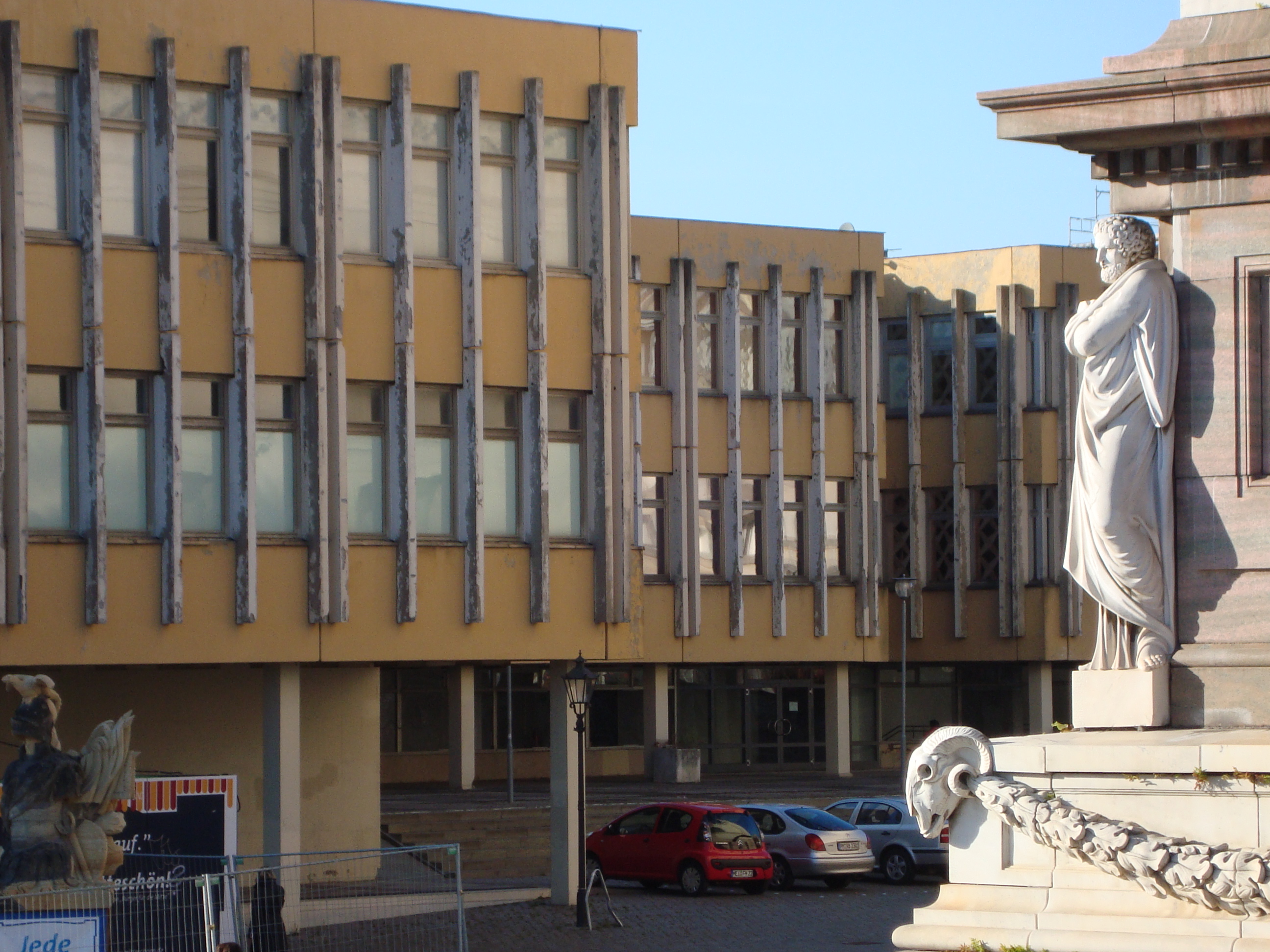
Building Conservation and Construction Work on Existing Buildings (MEng)
This Master's program focuses on the responsible treatment of existing buildings, covering their preservation, renovation, and restoration. It equips graduates with specialized knowledge of historical building structures and materials, emphasizing the technical aspects of conservation. The program prepares you to manage and implement conversion and reuse projects, bridging the gap between monument preservation goals and modern usage requirements. It fosters interdisciplinary collaboration between civil engineers and architects, promoting essential teamwork and communication skills.
Civil Engineering – Infrastructure Systems (BEng)
Civil Engineering – Infrastructure Systems dual (BEng)
The Civil Engineering – Infrastructure Systems dual (BEng) program focuses on the planning, construction, and operation of essential technical infrastructure. This includes transportation networks like roads and railways, as well as systems for energy, water supply, and wastewater disposal. The field is closely linked to energy and environmental considerations. This dual study program combines university semesters with practical training periods at a partner company, ensuring that theoretical knowledge is directly applied and coordinated with practical experience. The program aims to equip students with the skills to plan and manage resource-efficient infrastructure for future cities, integrating solutions from civil engineering, business, computer science, and mechanical engineering.
Civil Engineering – Urban Water Management dual (BEng)

Civil Engineering (B.Sc.)
The Bachelor of Science in Civil Engineering at Karlsruhe Institute of Technology (KIT) focuses on the conception, planning, design, construction, calculation, manufacturing, and operation of all types of structures relevant to society. This includes buildings, transportation infrastructure, and water management systems. During your studies, you will learn to design and calculate these structures efficiently and sustainably, considering resource and energy use, as well as safety and environmental impact. The program provides a comprehensive overview of the entire lifecycle of a structure, from initial planning through construction to maintenance. You will gain knowledge in various building materials, construction techniques, and structural analysis. The curriculum also addresses social, ecological, and economic aspects of construction, preparing you for a responsible role in the field.

Civil Engineering (Bachelor of Engineering)
The Civil Engineering Bachelor's program equips you with the skills to design, calculate, and construct buildings, bridges, tunnels, and waterways. You will learn to manage construction processes and develop traffic models, gaining fundamental knowledge and methods specific to civil engineering. The program is offered by the Faculty of Civil Engineering and Environmental Technology. In the main study phase, you can specialize in one of five areas: Construction Management, Geotechnics, Structural Engineering, Transportation Engineering, or Water Management. The Cologne metropolitan area provides a vibrant environment with opportunities for internships and part-time work in construction companies and engineering firms, allowing you to gain practical experience during your studies. A unique feature of this program is the option to pursue it as a dual study program, integrating vocational training.
Civil Engineering (BEng)
The Civil Engineering Bachelor of Engineering (BEng) program focuses on the planning, construction, and operation of structures, with a specialization in structural and civil engineering. This includes designing and calculating residential, commercial, and industrial buildings, as well as infrastructure like bridges. The curriculum integrates mathematical, technical, and scientific knowledge to address structural integrity, material selection, and foundation analysis. Additionally, the program emphasizes construction management, covering project planning, execution, economic efficiency, and collaboration with stakeholders while adhering to legal regulations. A significant aspect of the program also includes the preservation and modernization of existing buildings.
Civil Engineering (Dual Study)
The Dual Study Civil Engineering program at TH OWL offers a unique combination of academic learning and practical experience. You'll gain hands-on skills in a construction company, engineering firm, or public administration while pursuing your degree. This program bridges the gap between theory and practice, preparing you for a successful career in the diverse field of civil engineering. In the initial semesters, you'll study full-time. From the third semester onwards, lectures are concentrated on three days a week, leaving two days for practical work within your partner company. This structure ensures you build a strong theoretical foundation while continuously applying your knowledge in a real-world setting.

Civil Engineering (Teacher Training), B.Sc.
This Bachelor of Science program prepares you for a career as a vocational school teacher in Civil Engineering. It combines fundamental knowledge of civil engineering with pedagogical sciences and teaching methodology. You will gain expertise in areas like structural physics, statics, building chemistry, and structural design, alongside learning how to effectively convey this content to students. The program also focuses on educational theories, learning processes, and practical teaching experience through a compulsory six-week school internship. This degree is specifically designed for those aiming for a teaching qualification and is not suitable for students seeking a purely technical engineering degree. The program is taught in German and requires a supplementary secondary subject studied at Freie Universität Berlin or Humboldt-Universität zu Berlin.

Civil Engineering B.Eng.
Civil Engineering dual (BEng)
The Civil Engineering dual (BEng) program focuses on the planning, construction, and operation of structures, with a specialization in structural and civil engineering. This includes residential, commercial, industrial, and infrastructure projects like bridges. You will gain theoretical knowledge and practical experience in design, calculation, and construction process management, often in collaboration with a partner company. The program emphasizes both new construction and the preservation of existing buildings, incorporating digital solutions and requiring strong organizational and communication skills.
Civil Engineering M.Eng.
Geodesy and Geoinformation Science, M.Sc.
Geodesy is an extensive engineering field grounded in mathematics and natural sciences, focusing on collecting, modeling, and processing spatial measurement data. Analyzing and visualizing this geo-data is crucial for understanding and shaping our environment. The field's applications range from microscopic medical uses and navigation to planning space missions and mapping other planets. This English-language master's program equips you with the skills to develop and apply advanced methods in engineering measurement, satellite geodesy, planetary and Earth system research, computer vision, and 3D/4D modeling using geographic information systems. You will gain expertise in core methods related to Earth and planet research using geodetic techniques, precision navigation and positioning (including satellite and inertial systems), geodetic sensors, measurement data analysis, and the study of object movements. Additionally, the program covers digital image processing, automated image analysis, and remote sensing. The program emphasizes independent scientific research and involves working on current research projects, often in collaboration with leading institutions like the German Research Centre for Geosciences (GFZ) and the German Aerospace Center (DLR).
Hochschule Konstanz University of Applied Sciences (HTWG) - Programs for International Students
Hochschule Konstanz University of Applied Sciences (HTWG) offers a diverse range of Bachelor's and Master's programs, many with an international focus. Situated in Konstanz, Germany, the university is committed to providing high-quality education in technical, business, and design fields. Students can choose from programs offered in German and English, with options for both winter and summer semester start dates. The university emphasizes practical application and aims to prepare students for successful careers in a globalized world. Information for prospective students covers degree programs, campus life, and introductory events.
Infrastructure Management – Water and Traffic
This Master's program focuses on complex infrastructure projects, addressing challenges like climate change, demographic shifts, and digitalization within the water and traffic sectors. It aims to deepen and connect your knowledge, enhancing your management skills for future leadership roles. The program emphasizes a holistic approach to infrastructure management, preparing you for evolving professional demands. You will benefit from interdisciplinary exchange, gaining competencies for management tasks in infrastructure projects. The curriculum includes methodological skills, specialized knowledge in water and traffic, and an understanding of economics, law, and foreign languages (English). A significant project work on current infrastructure challenges is a core component, developing both technical and key qualifications.

International Master of Research and Innovation
The International Master of Research and Innovation is a research-focused master's program at the Technical University of Applied Sciences Augsburg. It offers an interdisciplinary and international approach, combining Business Psychology and Business Information Systems. Students can choose to specialize in one of these core areas or focus on the intersection of human and technology, allowing for the development of a unique academic profile.
Konstruktiver Ingenieurbau und digitale Bauprozesse
Transport Systems, B.Sc.
The Bachelor of Science in Transport Systems at Technische Universität Berlin offers a unique program in Germany that combines fundamental scientific principles with specialized, application-oriented knowledge. You will learn to design transport means, analyze accidents, and simulate complex systems. The curriculum provides a strong foundation in natural sciences, mathematics, and engineering, alongside in-depth knowledge of transport development, operations, route construction, and the interconnectedness of various transportation systems. This program prepares you to understand and address transportation issues from a holistic engineering perspective.
Frequently asked questions
How many Civil Engineering programmes are available in Germany?
+
There are 21 Civil Engineering programmes listed across 10 German universities.
How much does Civil Engineering study cost in Germany?
+
All listed programmes are tuition-free, though students may still pay semester administrative fees.
Which universities offer Civil Engineering in Germany?
+
Among others, Technische Universität Berlin, Fachhochschule Potsdam, Fachhochschule Lippe, Fachhochschule Konstanz, Fachhochschule Aachen, and IU Internationale Hochschule GmbH offer Civil Engineering programmes.
Can international students apply for Civil Engineering programmes in Germany?
+
Yes, Germany welcomes international students; applicants typically need a recognised secondary or university qualification, German (or in some cases English) language proficiency, and subject-specific academic prerequisites.
What are typical entry requirements for Civil Engineering in Germany?
+
Requirements usually include an Abitur or equivalent school certificate with strong mathematics and physics grades, German language certification (B2 or C1) for German-taught programmes, and an engineering entrance qualification for some institutions.