Master's in Arts & Humanities in Netherlands
The Netherlands offers 31 Master's programmes in Arts and Humanities across 8 universities, encompassing disciplines such as history, philosophy, languages, cultural studies, and religious studies in a country known for its open intellectual culture. Universiteit Leiden, Utrecht University, Tilburg University, and Hogeschool voor de Kunsten Utrecht (HKU) are among the listed institutions, offering programmes with strong research traditions and a high proportion of English-taught options.
All 31 listed programmes are tuition-free, making the Netherlands an exceptionally attractive destination for postgraduate Arts and Humanities study. EU/EEA students pay statutory fees while non-EU students pay institutional fees; the listing indicates no tuition charge, so applicants should confirm the current fee structure with each university.
African Studies (MA)
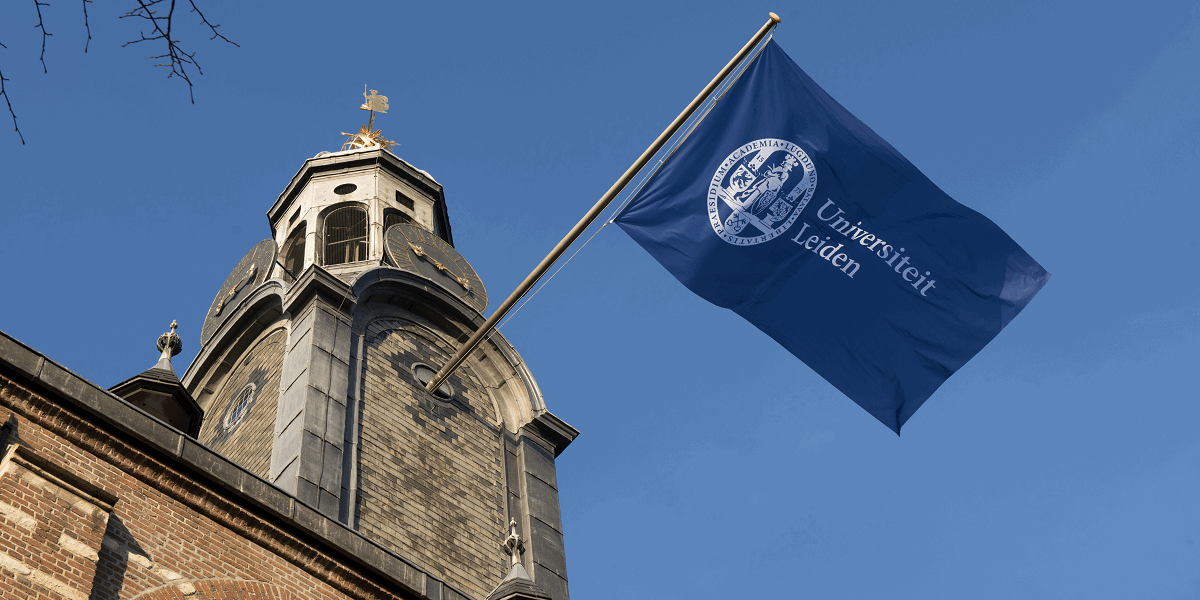
The Master's in African Studies at Leiden University offers a comprehensive exploration of Africa's diverse cultures and societies. This one-year program combines in-depth academic study with practical, research-based learning. You will engage with Africa from multiple disciplinary perspectives, including history, anthropology, literature, politics, and economics, developing a strong methodological foundation. The curriculum is structured around six cross-cutting themes designed to foster critical analysis of current events from a global viewpoint, alongside an introduction to various research methods.
Ancient History: Empires, Societies and Cultures (MA)
This Master's program delves into the political, social, and cultural dynamics of the Graeco-Roman world, specifically between 400 BC and AD 400. You will explore the development of empires, from the Hellenistic kingdoms to the Roman Empire, and understand how imperial rule influenced local cultures, religions, and identities. A unique aspect of this program is its focus on documentary and artefactual evidence, such as inscriptions, papyri, coins, and material culture. This approach allows you to access perspectives beyond elite narratives and examine how empires both shaped and were shaped by diverse societies, leading to outcomes of unification and cultural diversity.
Ancient History: Empires, Societies and Cultures (MA)
Ancient Near East Studies
Leiden University offers Master's and PhD programs focused on the Ancient Near East, building on a long tradition in the field within the Netherlands. These programs provide in-depth training in ancient languages, scripts, history, and archaeology of regions including Mesopotamia, Anatolia, Egypt, and the Levant. Students benefit from close collaboration with the Netherlands Institute for the Near East (NINO) and the Faculty of Archaeology, renowned worldwide. The MA in Assyriology, taught in English, is a one-year program within the Classics and Ancient Civilizations framework, offering foundational and advanced training. The Research MA in Assyriology prepares students for academic careers. PhD candidates can pursue research in Assyriology or related area studies through the Faculty of Humanities' graduate school. The Faculty of Archaeology offers specializations in Western Asia, with a strong track record in fieldwork across the region. Students can engage in archaeological heritage, sciences, and area studies through Bachelor's, MA Global Archaeology, and Research MA programs. Collaboration with NINO and the National Museum of Antiquities (RMO) enhances the student experience.
Applied Archaeology (MA)
The Master's specialisation in Applied Archaeology at Leiden University is designed to provide a strong foundation for a professional career in archaeology. This program is a collaborative effort between Leiden University and Saxion University of Applied Sciences, offering a unique blend of theoretical knowledge and practical application. You will learn to conduct critical and reflective research within a professional context, understand the relationship between archaeology and heritage management, and apply various research and excavation methods. The program emphasizes developing professional advice based on research findings, considering academic, societal, ethical, and financial aspects of projects, and effectively communicating archaeological information to diverse stakeholders. It also aims to equip you to contribute to societal discussions and the future of the field. This specialisation allows you to tailor your studies to your personal interests, choosing a career profile and regional focus that aligns with your goals. You can choose to complete assignments and your graduation project in either English or Dutch. The program offers a flexible path, enabling you to focus on fieldwork, policy-making, public archaeology, or heritage management, with an obligatory internship included in the Applied Archaeology profile.
Archaeology (MA/MSc)
Archaeology (Research MA)
The Archaeology (Research MA) is a two-year master's program at Leiden University designed for students aiming for an academic career. It is highly research-oriented, allowing you to develop a personal study plan with a dedicated supervisor who will act as your coach. The program leverages Leiden's international reputation in archaeological research, offering courses that deepen and broaden your knowledge while developing essential research and publication skills. You will be encouraged to engage with cutting-edge research, attend conferences, and take courses outside the department to enhance your expertise.
Archaeology (Research MA)
Art History (MA)
The Master's programme in Art History at Leiden University offers a critical perspective on visual arts, decorative arts, and architecture, examining their connection to collecting and presentation practices. Taught by research-active faculty and museum professionals, this interdisciplinary program delves into art from the Middle Ages to the present day, considering its social, political, and global context. You will explore the challenges facing art museums today and gain insights into the diverse meanings of art. This program is ideal for students interested in art history and museum studies, who want to understand art from multiple perspectives. You'll study the history of art within its broader context of visual culture, with opportunities for excursions to experience artworks firsthand and test your research. The curriculum is designed to provide a strong academic foundation for diverse careers in the cultural sector and beyond.
Arts and Culture (MA)
The MA Arts and Culture program at Leiden University offers two distinct specializations: Art History and Museum Studies. This interdisciplinary program provides a comprehensive grounding in the theories and methods of art history and museology, while also engaging with contemporary practices. Students can tailor their studies through a wide range of electives, focusing on areas like object study, critical theory, world art studies, and museum/collection studies. The program encourages students to explore diverse historical periods and cultural contexts, from medieval art to the digital age. Learning is facilitated by internationally respected researchers and scholars from institutions connected to Leiden University. This network provides opportunities for internships, exchange programs, and exposure to visiting speakers. The program emphasizes academic rigor, critical thinking, and the integration of current issues, attracting motivated students globally who seek strong knowledge, skills, and career prospects. Teaching is conducted in small-scale lectures, fostering active participation and personalized attention from instructors.

Arts and Society MA
The Master of Arts and Society program at Utrecht University prepares you for a dynamic future in the cultural sector. This program acknowledges the constant changes driven by technology, migration, social movements, and funding shifts. You will develop rigorous theoretical and research skills alongside practical abilities, with a keen understanding of the arts, media, and cultural sectors at local and global levels. The curriculum encourages exploration of established cultural institutions and alternative practices, offering insights into diverse creative production modes through the Dutch cultural scene. Students are encouraged to learn from the surrounding cultural environment and immerse themselves in the Netherlands' cultural ecologies. The university provides a strong academic foundation, while students are expected to drive their own learning and growth.
Hanze University of Applied Sciences - Degree Programmes
Hanze University of Applied Sciences offers a range of English-taught degree programs for international students. Located in Groningen, a vibrant student city in the Netherlands, Hanze provides a supportive environment for academic and personal growth. The university is committed to practical, hands-on learning and preparing students for their future careers. Explore various study options and discover what Groningen has to offer as a student city.
Japanese Studies (MA)
The two-year Master of Arts (MA) in Japanese Studies at Leiden University is a research-focused program offering a deep dive into modern and pre-modern Japan. Taught by leading academics, the multidisciplinary curriculum is designed for motivated students interested in specialized research areas such as contemporary society, politics, art history, classical and contemporary texts, and linguistics. A distinctive feature of the program is a mandatory full academic year spent studying at a university in Japan, providing an unparalleled opportunity for cultural immersion, advanced language acquisition, and on-site thesis research.
MA Arabic and Islamic Studies
The MA Arabic and Islamic Studies program offers a semester-long immersion into Arabic language and culture, designed to enhance language fluency and develop the four core language skills: speaking, listening, reading, and writing. For university students, this is complemented by a cultural component, providing deeper insights into Egyptian society, politics, history, and culture. This program is an integral part of the curriculum for students at partner universities in the Netherlands and Flanders, but can also be pursued as an additional semester by graduates. The program is offered during the Fall semester and includes a comprehensive outline of eligibility and program details.
MA Programme Scenography
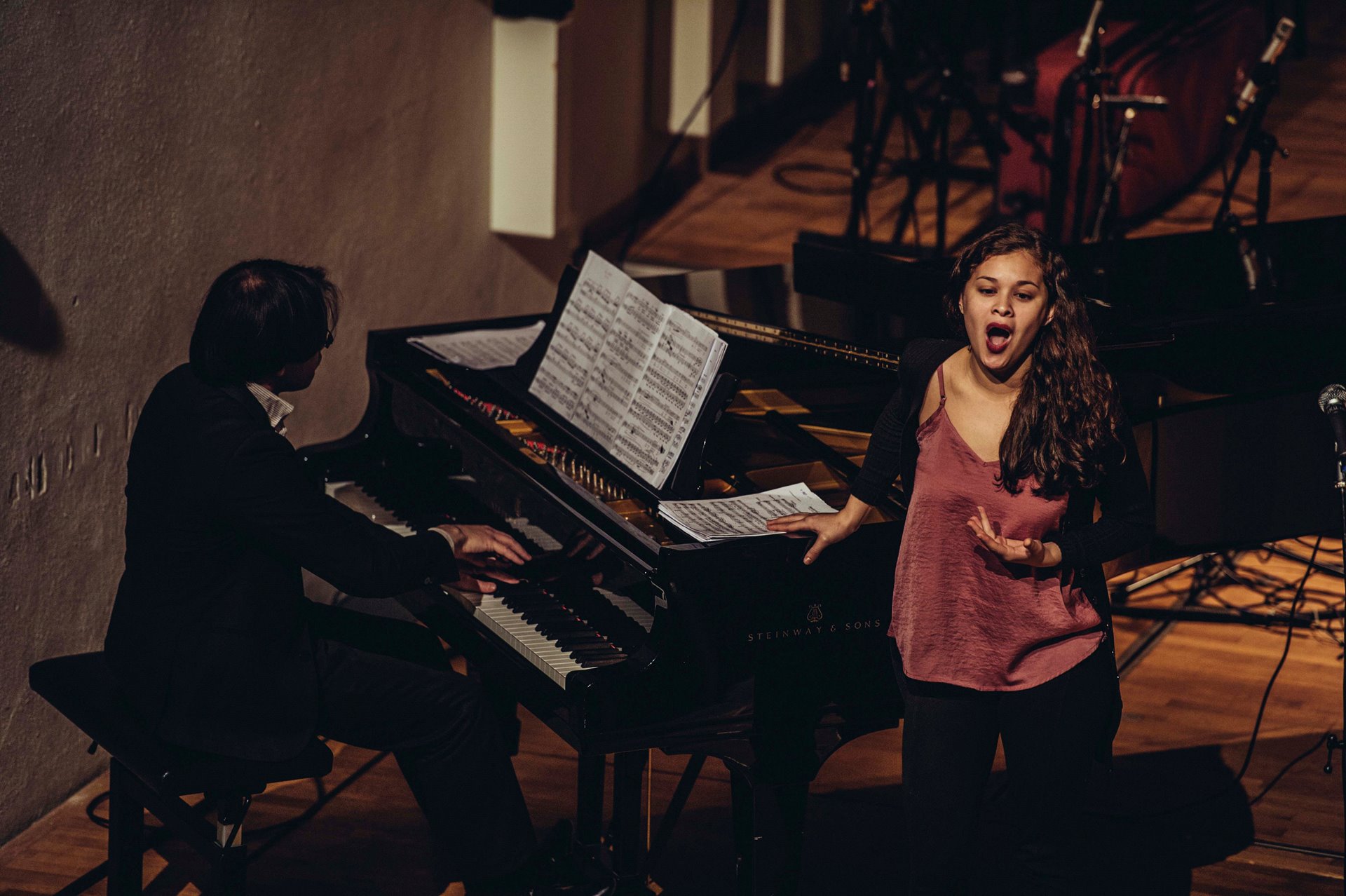
The Master of Arts in Fine Art and Design, with a specialisation in Scenography, trains students to transform any environment into a theatrical space. This programme focuses on developing creative and intellectual capabilities within an international context. Key principles include making, thinking, and sharing work, with an emphasis on context, disciplinarity, research, and self-direction. It offers an open and inclusive learning environment that integrates theory and practice, encouraging individual responsibility and personal development. The curriculum strongly focuses on scenographic practice through the performativity of material, light, sound, and various technological tools and media, fostering a collaborative community in a dedicated studio space and utilizing performance spaces.
Master African Studies (MA)
Master Applied Archaeology (MA)
Master Archaeology (Research MA)
Master Art History (MA)
Master Arts and Culture (MA)
Master Crossover Creativity (part-time)
The Master Crossover Creativity is a part-time master's program designed for individuals who want to use their creative skills to develop innovative solutions for complex societal challenges. The program focuses on fostering crossover collaboration, integrating creativity and entrepreneurship to address multi-stakeholder issues across various fields such as social inclusion, public space planning, and health. Students will work on their own chosen themes, conducting research and bringing people together. The curriculum emphasizes an iterative approach, developing knowledge, methods, and solutions through co-creation. Graduates are equipped to make a significant societal, socio-economic, and cultural impact, often pursuing careers as innovative designers, environment managers, or social designers.
Master of Arts in Fine Art and Design (iRAP)
The Master of Arts in Fine Art and Design (iRAP) programme focuses on interrelational artistic practices within social contexts. It encourages students to bring their own artistic practices and social issues into the programme. In a world often driven by quick results and external demands, this programme emphasizes the human scale, an open artistic attitude, and a critical, open-ended approach to working. Students will explore the meaning, value, methods, and potential of interrelational artistic practices in non-artistic settings, developing methodologies that are process-oriented rather than solely focused on final outputs. The aim is to create practices that are deeply embedded within and critically engage with their context, offering new possibilities for life and interaction.
Master of Business Management (MSc) - Specialisation in Logistics & Trade
This Master of Business Management (MSc) program with a specialisation in Logistics & Trade offers a high academic standard combined with practical application. You will study case studies and conduct research while also engaging in project weeks, professional inquiry, and a professional-based learning module, which may include a work placement linked to your final project. The curriculum integrates core business administration subjects with broader modules in economics and management, exploring global economics, strategic management, and globalisation. The Logistics & Trade specialisation focuses on the strategic aspects of operations management, supply chains, and logistics, including their connection to international law, policies, and international joint ventures.
Master of Fine Art
The Master of Fine Art program at HKU is designed for artists, researchers, activists, and cultural workers who have completed a Bachelor's degree and are interested in exploring eco-socio-cultural contexts. This two-year, full-time, English-taught Master's program focuses on deepening your engagement with contemporary art and its societal implications. The curriculum encourages artistic research practices that critically examine ecological, social, and political issues, emphasizing collaboration and transdisciplinary approaches. You will experiment with diverse methodologies, fostering a critical understanding of your practice's effects and potentials within complex global challenges. HKU fosters an international and supportive study environment, connecting you with a vibrant local and international cultural network. The program aims to equip you with the skills and critical awareness to contribute meaningfully to societal and planetary well-being through your artistic practice.
Master's Programmes at HKU
HKU offers a range of creative Master's programmes designed for professionals seeking to advance their careers or deepen their knowledge. These practice-based programmes focus on addressing contemporary social challenges through creative thinking and innovation. Students have a significant role in shaping their own study path, fostering connections with peers, faculty, and the professional arts community.
Materials in Artistic Practices (MAPs)
The Materials in Artistic Practices (MAPs) Master's program offers a unique, hands-on approach to art and design education. This program views materials not just as tools, but as collaborators with their own stories, ethical dimensions, and urgencies. You will delve into sustainable practices, explore alternative materials, and investigate the interplay between physical structures and personal presence in your artistic work. The focus is on artistic research driven by process and awareness, rather than solely on producing finished products.
Painting
Philosophy and Religious Studies
The Department of Philosophy and Religious Studies at Utrecht University offers interdisciplinary and socially engaged teaching and research. Our researchers explore a wide range of subjects, including philosophy, Christianity, Islam, and other religious and secular traditions. The department is actively involved in university-wide, national, and international research and educational consortiums. This strong research focus, combined with extensive engagement with other disciplines and society, underpins the high quality of our educational programs.

Religious Studies (Theology and Religious Studies - Research)
The two-year Research Master's in Religious Studies at the University of Amsterdam provides an excellent opportunity to pursue in-depth research in the field. The program is designed to allow you to explore your own research interests within a structured academic environment. During the initial semesters, you will engage with core courses that delve into the comparative study of fundamental cultural concepts, alongside advanced theories and methodologies in religious studies. This foundational knowledge is complemented by electives and tutorials, allowing for a personalized curriculum tailored to your specific academic interests. This research-focused program aims to equip you with highly qualified critical expertise on religion, fostering a stimulating environment where you can engage with cutting-edge international scholarship and contribute to ongoing research projects.
Research Master's in Linguistics
The Research Master's programme in Linguistics equips students with the scientific skills to investigate language-related questions. This programme has a strong research focus, distinguishing it from undergraduate linguistics degrees. You will delve into advanced theoretical linguistics, psycholinguistics, and research methodologies, including computational and experimental approaches. The curriculum is designed to develop your professional language research skills throughout the two years. The second year is largely dedicated to independent research, including a team science project, an internship within an ongoing research project, and your thesis.
Spirituality and Religion (Theology and Religious Studies)
The Master's programme in Spirituality and Religion at the University of Amsterdam provides an in-depth exploration of the fascinating relationship between spirituality and religion, examining how these forces have shaped history and continue to play a crucial role in contemporary society. You will delve into key concepts, theories, and methods in the academic study of religion, with a particular focus on the interplay between institutional religion and individual spiritual practices. The program encourages critical assessment of scholarly debates and the application of qualitative research methods to understand real-world religious phenomena. This one-year, full-time program offers three distinct areas of specialisation: Esotericism and Spirituality in Western Culture, Religion and Spirituality in Contemporary Societies, and Islam: Religion and Spirituality. Each specialisation allows you to tailor your studies to specific historical periods, cultural contexts, or religious traditions, supported by unique resources and expert faculty. A part-time study option is also available, spreading the curriculum over two years.
University of the Arts Utrecht (HKU)
The University of the Arts Utrecht (HKU) is a leading institution for art and culture education in the Netherlands. HKU offers a wide range of programs across various disciplines, including fine arts, music, theatre, design, media, and arts management. The university is committed to fostering creativity, critical thinking, and professional development for its students, preparing them for careers in the dynamic creative industries.
Frequently asked questions
How many Master's in Arts and Humanities programmes are available in the Netherlands?
+
There are 31 Master's in Arts and Humanities programmes across 8 universities in the Netherlands.
Which Dutch universities offer a Master's in Arts and Humanities?
+
Notable institutions include Universiteit Leiden, Utrecht University, Tilburg University, Hogeschool voor de Kunsten Utrecht (HKU), Hanze University Groningen, and University for Humanistics (UH).
How much does a Master's in Arts and Humanities cost in the Netherlands?
+
The listed programmes are tuition-free; however, students should verify current fee arrangements directly with each university, as statutory and institutional rates differ.
Can international students apply to Arts and Humanities master's programmes in the Netherlands?
+
Yes, Dutch universities actively recruit international students; non-EU applicants need an MVV entry visa and residence permit, and most programmes require proof of English proficiency.
What are typical entry requirements for a Master's in Arts and Humanities in the Netherlands?
+
Applicants generally need a relevant bachelor's degree in a humanities or social sciences discipline; research master's programmes may require a strong academic track record and a research proposal.