Social Sciences in Netherlands
The Netherlands offers 8 Social Sciences programmes across 6 universities, including the University of Amsterdam, Utrecht University, Wageningen University & Research, the Institute of Social Studies, and specialist institutions such as the University for Humanistics (UH) and the International Institute for Geo-Information Science and Earth Observation. This mix gives prospective students access to mainstream social science education at large research universities alongside niche specialisations in humanistics, development studies, and geospatial social research.
Tuition information was not available for the listed programmes; students should contact each institution directly for current fees. The Netherlands has one of the highest concentrations of English-taught programmes in Europe, making it particularly accessible for non-Dutch speakers. Dutch social science faculties are globally recognised for interdisciplinary research, strong links to international organisations, and excellent graduate employment outcomes.

Applied Anthropology (Cultural and Social Anthropology)
The Master's track in Applied Anthropology is designed for students passionate about using anthropological insights to address real-world challenges faced by governments, companies, and NGOs. This program emphasizes in-depth fieldwork and the crucial skill of translating complex research findings into clear, actionable recommendations for non-academic audiences. You will engage with contemporary applied anthropological theory and methods, developing creative solutions for partner organisations. Students in this program have previously tackled diverse questions, such as how museums can enhance visitor diversity, how municipalities can effectively support grassroots green initiatives, and how fishing communities navigate land reclamation projects. The program fosters a close-knit community through peer work and collaborative activities, encouraging students to take initiative and apply their knowledge to practical situations. The University of Amsterdam's Anthropology program is highly regarded, ranking among the top 15 worldwide according to the QS World University Rankings by Subject 2026.

Gender Studies
This interdisciplinary Master's programme offers a comprehensive understanding of gender, focusing on emancipation, the recognition of differences, and the intersections of gender with other identity factors like class, race, and sexuality. You will develop advanced analytical skills to examine social and cultural relations in contemporary societies. The programme combines theoretical knowledge with practical application, including intensive coursework, a research internship, and a final thesis project. You will be part of an international cohort and learn from diverse academic staff, preparing you to become a successful agent of change.
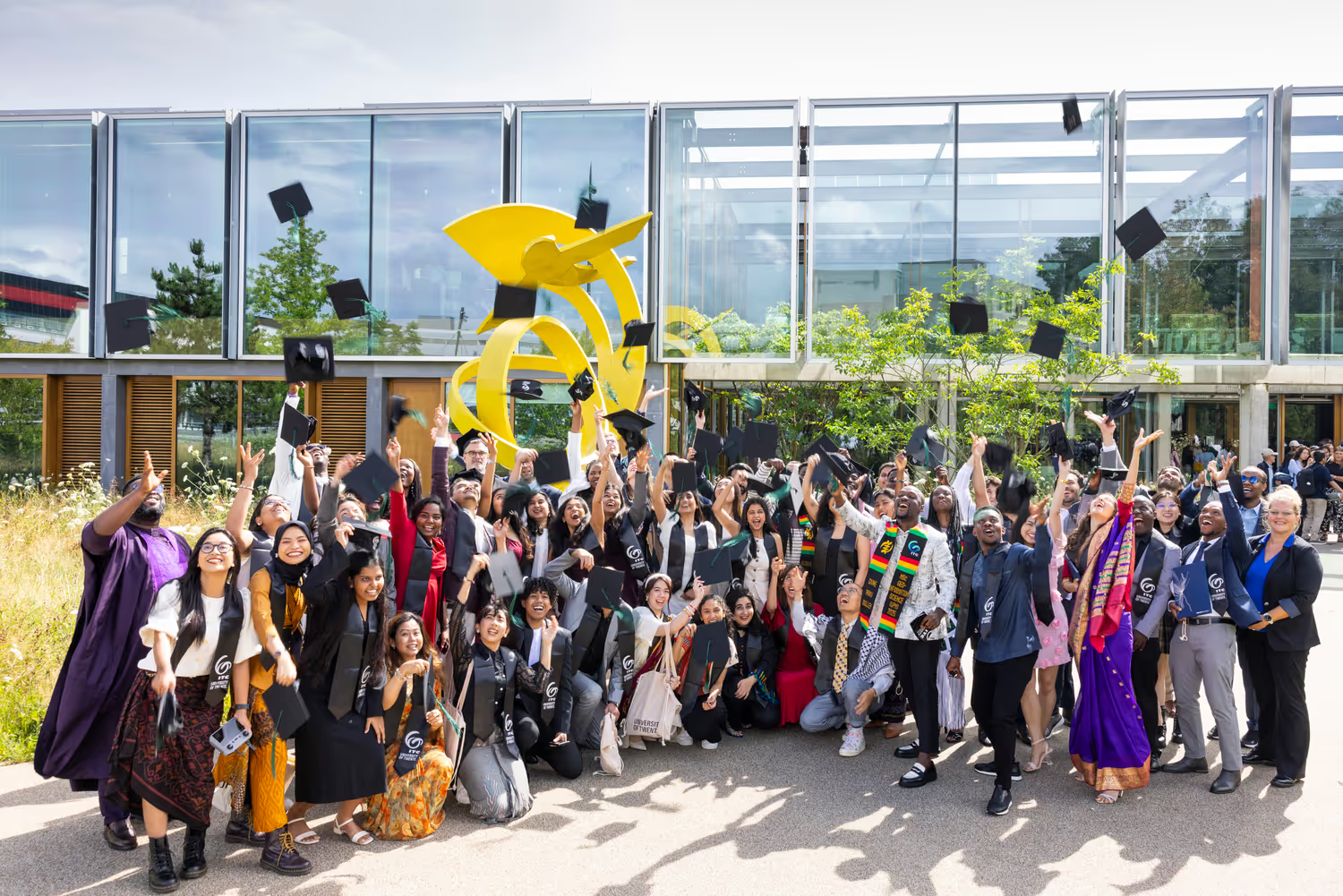
Geographical Information Sciences and Earth Observation
This Master's program focuses on the application of geographical information sciences and earth observation techniques to address global challenges. You will gain advanced knowledge and practical skills in spatial analysis, remote sensing, and geoinformatics, enabling you to develop innovative solutions for environmental monitoring, resource management, urban planning, and disaster response. The program integrates theoretical foundations with hands-on experience, using state-of-the-art software and datasets. You will learn to collect, process, analyze, and visualize geospatial data to support informed decision-making in a world facing complex environmental and societal issues. Graduates are prepared for impactful careers in research, government, international organizations, and the private sector, contributing to a more sustainable and resilient future through the power of geospatial technologies.

Institute of Social Studies
The Institute of Social Studies (ISS) is part of Erasmus University Rotterdam and offers advanced Master's degrees and PhD programs focused on global development and social justice. Located in The Hague, Netherlands, ISS provides a unique academic environment for critical analysis of development issues. The institute emphasizes interdisciplinary research and teaching, with a particular focus on contemporary global challenges such as migration, inequality, and climate change. ISS aims to contribute to building a more just and equitable world through its academic programs and research activities.

Master Citizenship and Quality of Life
This Master's program in Citizenship and Quality of Life provides a robust theoretical foundation for understanding and reflecting on citizen behavior and development within a democratic society. It explores how citizens interact with each other and with public organizations, addressing contemporary issues such as diversity, sustainability, and livelihood security. The program emphasizes the critical examination of tensions and ethical dilemmas, highlighting the role of ethical professionals in navigating these complexities. Beyond theory, the program integrates practical experience through research conducted during an internship, culminating in a consultancy report for the host organization. This hands-on approach, combined with a master's thesis, equips students with the knowledge, insight, and skills necessary to contribute to the quality of societal life as academically trained professionals. Throughout the one-year, full-time program, students engage with core questions about the meaning of quality of life, democratic citizenship in pluralistic societies, the role of education in fostering citizenship, and the practice of ethical professionalism. The curriculum balances academic learning with practical application, including policy advice, educational design, and empirical research, often involving guest lecturers and site visits.
PhD in Global Development and Social Justice
Frequently asked questions
How much does it cost to study Social Sciences in the Netherlands?
+
Tuition varies by programme — check each listing directly. EU/EEA students pay statutory rates at Dutch public universities; non-EU students pay institutional fees that differ per institution.
Which universities offer Social Sciences programmes in the Netherlands?
+
The 6 institutions listed include the University for Humanistics, Institute of Social Studies, University of Amsterdam, Utrecht University, Wageningen University & Research, and the International Institute for Geo-Information Science and Earth Observation.
Can international students study Social Sciences in the Netherlands?
+
Yes. The Netherlands has a very large number of English-taught programmes and a long history of hosting international students. Non-EU students require a residence permit issued by the university on their behalf.
What are typical entry requirements for Social Sciences in the Netherlands?
+
Undergraduate programmes require a secondary school diploma equivalent to the Dutch VWO; master's programmes require a relevant bachelor's degree in social sciences or a related discipline. English proficiency (typically IELTS 6.5+) is required for English-medium programmes.
How do I apply to study Social Sciences in the Netherlands?
+
Apply directly through each institution's online portal or Studielink (for programmes that use it). Confirm application deadlines early — many Dutch master's programmes have May or June closing dates for September entry.