Study in Qatar
Qatar offers 19 programmes across 2 universities — Hamad Bin Khalifa University and Qatar University — covering a wide range of disciplines from engineering and medicine to business and social sciences. These institutions serve as the primary higher education hubs in Qatar, a country that has invested heavily in world-class campus infrastructure through Qatar Foundation's Education City. Tuition ranges from free to roughly €27k per year, and some programmes offer full scholarships for high-achieving international students.
Qatar's universities attract students from across the Middle East, South Asia, and beyond, and the country's strategic location and economic dynamism provide strong graduate employment prospects, particularly in energy, finance, and healthcare. International applicants should note that Qatar requires a residence permit for students, which universities typically assist with during the admissions process.

Bachelor of Architecture
The Bachelor of Architecture program at Qatar University's College of Engineering provides a comprehensive education in architectural design and urban planning. It is designed to equip students with the knowledge and skills necessary to address contemporary challenges in the built environment, focusing on critical thinking, creative problem-solving, and sustainable design practices. The curriculum integrates theoretical learning with practical application, preparing graduates for professional practice and further academic pursuits.
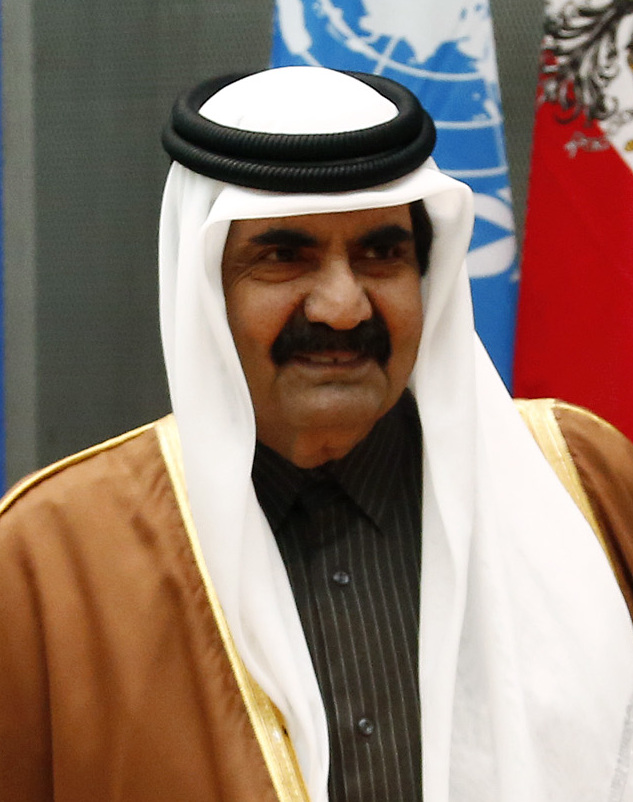
Conference on Rebuilding Higher Education in Gaza
The College of Public Policy at Hamad Bin Khalifa University (HBKU), in collaboration with several international institutions, is organizing a conference focused on the critical task of rebuilding higher education in Gaza. This event aims to address the extensive damage to educational infrastructure and systems following recent conflicts, which have led to a collapse of essential services. The conference will bring together leaders from Gaza's higher education sector with international experts, academics, and organizations to discuss immediate and long-term needs, challenges, and strategies for recovery. Reconstruction of higher education in Gaza is considered vital for the socio-economic recovery of the region, peacebuilding efforts, and the preservation of Palestinian culture and identity. The conference will delve into the financial requirements, the role of international support, and global best practices in post-conflict educational reconstruction. It will also explore the specific needs of women in Gaza and ensure equitable access to education during the rebuilding process. The conference will facilitate dialogue based on recent research, including needs assessments and analyses of financial aid flows to higher education in Palestine. It seeks to inform strategies for international support and ensure that reconstruction efforts are aligned with the priorities of Gaza's academic community, learning from past experiences to avoid donor-driven agendas.
Foundation Program - Mathematics
The Foundation Program at Qatar University offers a Pre-Calculus course designed to prepare students for university-level calculus. This course covers essential algebraic and trigonometric concepts, laying the groundwork for further study in mathematics and related fields. The program aims to equip students with the necessary analytical and problem-solving skills for success in their academic journey.
Graduate Programs
Hamad Bin Khalifa University (HBKU) offers a range of rigorous graduate programs designed to equip students with the skills needed to excel in their chosen fields. As part of a vibrant research community, students can expand their horizons and contribute to innovation. HBKU emphasizes lifelong self-development and aims to prepare future leaders across various disciplines.
Graduate Programs at Hamad Bin Khalifa University
Hamad Bin Khalifa University (HBKU) offers a diverse range of multidisciplinary graduate programs designed to prepare future leaders and foster a mindset of continuous growth. HBKU is committed to excellence and innovation, providing a vibrant community for scholars, researchers, and innovators. The rigorous academic programs are led by renowned faculty, equipping students with the skills needed to excel in their chosen fields and expand their horizons within a research-intensive environment.
M.S. in Computer Science
The Master of Science in Computer Science program at HBKU's College of Science and Engineering (CSE) is designed to equip students with advanced knowledge and practical skills in the rapidly evolving field of computer science. This program focuses on developing leaders and innovators who can contribute to the advancement of technology. Students will engage in rigorous coursework and research opportunities, preparing them for impactful careers in academia, industry, and government.
M.Sc. in Applied Statistics
The Master of Science in Applied Statistics program is designed to provide students with a strong foundation in statistical theory and methods, along with practical experience in applying these techniques to real-world problems. This program aims to equip graduates with the analytical and quantitative skills necessary for successful careers in various fields that rely on data analysis and interpretation. The curriculum covers core statistical concepts, including probability, statistical inference, regression analysis, multivariate statistics, and experimental design. Students will also learn to use statistical software for data manipulation, analysis, and visualization. The program emphasizes the development of critical thinking and problem-solving skills, enabling graduates to tackle complex challenges in diverse industries.
Master in Global Health Policy
The Master in Global Health Policy (MGHP) is a two-year, full-time program designed to equip graduates with the skills to understand and address global health challenges. It combines interdisciplinary learning with strong ethical foundations, focusing on innovation, evidence-based approaches, and health policy governance. The curriculum covers global health policy analysis, health systems, economics, crisis management, data and AI applications, and leadership. The program aims to educate and empower the next generation of ethically grounded global health leaders who can contribute to strengthening resilient and equitable health systems and improving population well-being through informed policy and practice. Students will learn to analyze, design, implement, and evaluate health policies in diverse local, regional, and international contexts.
Master of Business Administration
The Master of Business Administration (MBA) program at Qatar University is designed to equip students with advanced knowledge and skills in various aspects of business management. This program aims to develop leaders who can effectively navigate the complexities of the modern business world, fostering innovation, strategic thinking, and ethical decision-making. The curriculum is structured to provide a comprehensive understanding of core business functions while allowing for specialization.
Master of Laws (LL.M.) in Environmental Law
The College of Law at Hamad Bin Khalifa University (HBKU) offers a Master of Laws (LL.M.) program focused on Environmental Law. This program equips students with advanced legal knowledge and skills to address complex environmental challenges, particularly those related to climate change in the Middle East and North Africa (MENA) region. It fosters an understanding of legal innovations and policy approaches necessary for sustainable development and climate-resilient infrastructure.
Master of Science in Computer Science
The Master of Science in Computer Science program at Qatar University's College of Engineering offers advanced studies in the field. It aims to equip students with specialized knowledge and research skills in various areas of computer science, preparing them for careers in academia and industry. The program focuses on theoretical foundations, practical applications, and cutting-edge research within the discipline.
Master of Science in Gas and Process Engineering
The Master of Science in Gas and Process Engineering program at Qatar University equips students with advanced knowledge and skills in the field of gas and process engineering. This program is designed to meet the growing demand for specialized engineers in Qatar's energy sector and beyond. Students will engage with complex engineering challenges, focusing on the efficient and sustainable processing of natural gas and other related industrial processes.
Muhammad Fazlur Rahman Ansari: The Itinerant Philosopher
This program focuses on the life and work of Muhammad Fazlur Rahman Ansari (1914-1974), a significant theologian, philosopher, and missionary from the Indian subcontinent. He was a notable comparative religionist who traveled extensively to preach Islam and founded the Aleemiyah Institute of Islamic Studies and the World Federation of Islamic Missions. The program offers a deep dive into Ansari's contributions to Islamic thought, comparative religion, and his missionary activities. It aims to provide students with a comprehensive understanding of his intellectual legacy and his impact on religious discourse in the 20th century.
PhD in Gulf Studies
Qatar University offers a Doctor of Philosophy (PhD) in Gulf Studies, a comprehensive program designed to foster advanced research and critical analysis of the Gulf region. This program is housed within the College of Arts and Sciences, allowing students to engage with a multidisciplinary approach to understanding the complexities of this dynamic area. The PhD in Gulf Studies aims to equip students with the theoretical knowledge and research methodologies necessary to contribute original scholarship on the Gulf. Graduates are prepared for academic careers, research positions in think tanks, policy analysis, and roles in international organizations focusing on the Middle East.
PhD in Medical Sciences
Qatar University's College of Medicine offers a PhD in Medical Sciences, a research-focused, interdisciplinary program designed to cultivate the next generation of health scientists and research leaders in Qatar. The program addresses significant health challenges relevant to Qatar, aiming to bridge basic research, translational therapeutics, and clinical medicine. The curriculum emphasizes an interprofessional approach, fostering collaboration and resource alignment across participating programs. This collaborative model eliminates duplication and enhances the academic program to meet community needs while maintaining the autonomy of individual disciplines. The PhD program collaborates with key local institutions such as Hamad Medical Corporation, Weill-Cornell Medicine Qatar, Qatar Cardiovascular Research Center, Primary HealthCare Corporation, and the National Center for Cancer Care and Research. International collaborations with institutions in the US, UK, and Australia are also being expanded.
Summer Internship Program 2025
The Qatar Computing Research Institute (QCRI) at Hamad Bin Khalifa University (HBKU) offers a Summer Internship Program designed to provide undergraduate and graduate students with intensive research and software development training. The program focuses on areas such as Arabic Language Technologies, Cyber Security, Data Analytics, Social Computing, and Software Engineering. Participants will engage with cutting-edge research projects, gaining practical experience and contributing to the institute's innovative work.
Understanding Ibn Taymiyyah's Approach to Sources
This program is a lecture series exploring the intellectual contributions of Ibn Taymiyyah (d. 1328), a prominent medieval Muslim scholar. Recent scholarly interest has highlighted his extensive knowledge and sophisticated reasoning. The lecture series aims to shed light on Ibn Taymiyyah's specific methodologies concerning how he selected, read, and utilized his sources within his interpretive approach. This is particularly relevant given ongoing scholarly discussions and some existing ambiguities surrounding his scholarly methods. The discussions will be conducted in English, offering an opportunity for researchers and students to engage with a critical analysis of a significant figure in Islamic thought. The event features Dr. Mehdi Berriah, an Assistant Professor of Arabic Language and Islamic Studies, as the speaker, providing expert insight into the topic.
UWrite Undergraduate Services
The UWrite Undergraduate Services at Hamad Bin Khalifa University (HBKU) offers specialized support for engineering students in their writing, communication, and multimedia projects. This service provides a collaborative environment where students can develop and refine their technical reports, presentations, posters, e-portfolios, and project websites. Services are delivered by Peer Writing Consultants, who are fellow engineering students trained to assist with various aspects of academic and technical communication.
Frequently asked questions
How much does studying in Qatar cost?
+
Tuition ranges from free to around €27,000 per year. Some programmes at Hamad Bin Khalifa University include fully funded scholarship packages for qualified international students.
Which universities offer programmes in Qatar?
+
Hamad Bin Khalifa University and Qatar University are the two listed institutions. Both are based in Doha and offer undergraduate and postgraduate programmes across multiple disciplines.
Can international students study in Qatar?
+
Yes. Both listed universities welcome international students. Qatar's Education City campus hosts branch campuses of several international universities alongside home institutions, creating a multicultural academic environment.
What are typical entry requirements to study in Qatar?
+
Entry requirements vary by programme and institution. Undergraduate applicants generally need a recognised secondary school certificate; postgraduate applicants need a relevant bachelor's degree. English or Arabic language proficiency is required depending on the programme.
How do I apply to study in Qatar?
+
Apply directly through each university's online admissions portal. Contact the international admissions office well in advance to understand visa and residence permit requirements specific to your nationality.