Physics in South Africa
Physics in South Africa is represented on our platform by 4 programmes spread across 1 university. Institutions offering these programmes include University of Cape Town. Tuition fees vary by programme and institution.
International students interested in Physics in South Africa will find a range of academic pathways at this institution. Admission requirements vary by university and degree level; applicants typically need a relevant prior qualification and, where instruction is in English, proof of language proficiency. Browse the listings below to compare programmes, entry requirements, and application details.
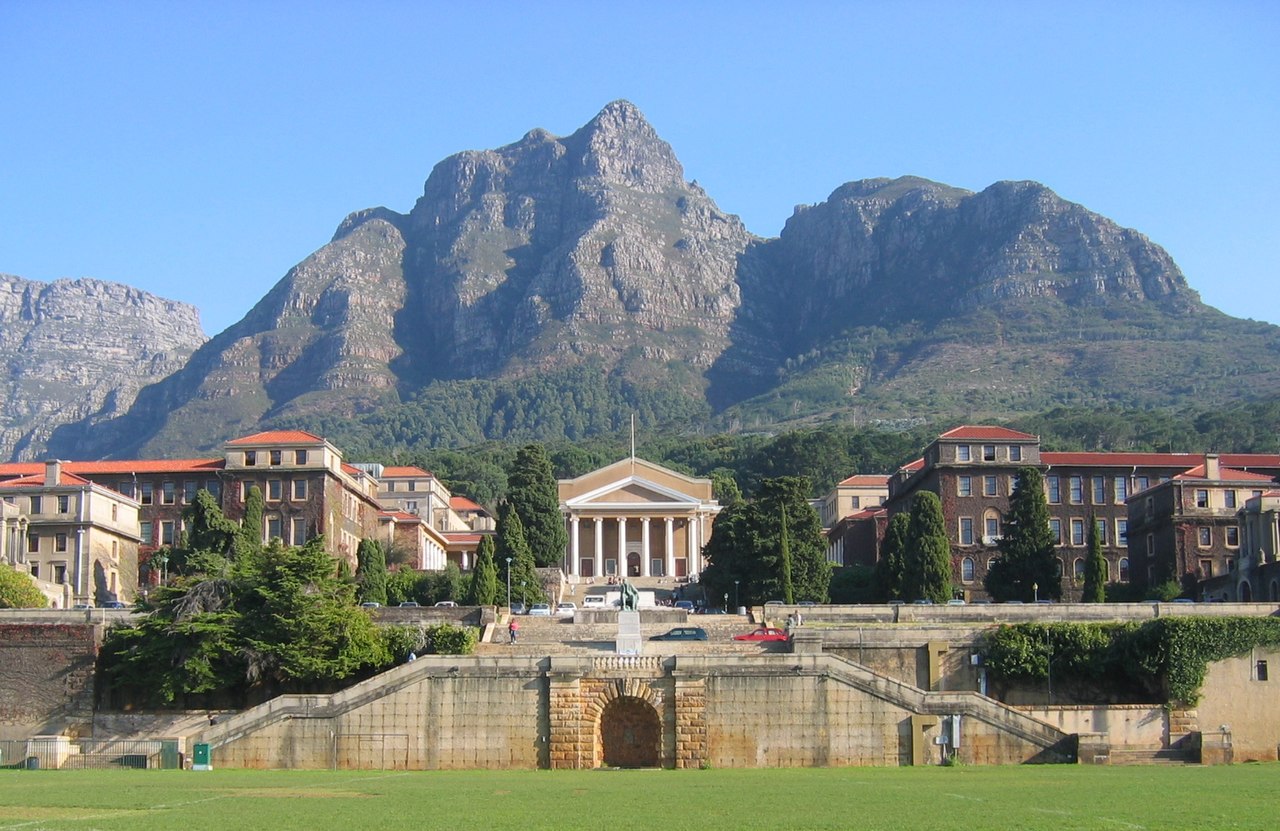
Bachelor of Science (BSc) Major in Physics
The University of Cape Town's Department of Physics offers a comprehensive Bachelor of Science (BSc) major in Physics. This three-year program provides a strong foundation in the fundamental principles of physics, covering a wide range of topics essential for understanding the physical world. Graduates will be equipped with analytical and problem-solving skills applicable in various scientific and technological fields.
BSc (Honours) Physics (PHY4000W)
The BSc (Honours) Physics is an advanced undergraduate degree typically pursued in the fourth year of study, following the completion of a BSc in Physics. This program serves as a crucial stepping stone for students aspiring to pursue further postgraduate studies, including Master of Science (MSc) and Doctor of Philosophy (PhD) degrees. This honours program provides a deeper understanding and specialization within the field of physics, preparing graduates for advanced research and academic pursuits. It is designed to build upon the foundational knowledge gained in the undergraduate BSc degree, offering specialized coursework and potentially research opportunities.
Physics
The Department of Physics at the University of Cape Town (UCT) has a strong history in both research and teaching. Current research focuses on five key areas: high energy physics, nuclear physics, solid state and nano-scale physics, applied physics, and physics education. The department maintains close ties with iThemba LABS, a national laboratory, where staff utilize cyclotron and van de Graaff accelerator beams for research. Additionally, academic staff are involved in international collaborations such as the ALICE and ATLAS experiments at CERN's Large Hadron Collider. The department aims to be a leading physics institution in Africa, offering degrees recognized internationally at both undergraduate and postgraduate levels.
Physics (BSc)
The Department of Physics at the University of Cape Town (UCT) offers a Bachelor of Science (BSc) degree with a specialization in Physics. This program provides a strong foundation in the fundamental principles of physics, covering areas such as classical mechanics, electromagnetism, thermodynamics, quantum mechanics, and modern physics. Students will engage with theoretical concepts and practical applications through lectures, tutorials, and laboratory work. The curriculum is designed to develop analytical thinking, problem-solving skills, and a deep understanding of the physical world. UCT's Physics department has active research groups in diverse fields, including High-Energy Physics, Nuclear Physics, Solid State Physics and Nanotechnology, and Physics Education Research. Students have opportunities to engage with cutting-edge research, work with experienced faculty, and contribute to scientific advancements. The program aims to equip graduates with the knowledge and skills necessary for further study or careers in science, technology, engineering, and research.
Frequently asked questions
How many Physics programmes are available in South Africa?
+
Our database lists 4 Physics programmes in South Africa, offered by 1 institution.
Which universities offer Physics in South Africa?
+
Universities offering these programmes include University of Cape Town. Check each listing for current availability and intake dates.
How much does it cost to study Physics in South Africa?
+
Tuition varies by programme — check each listing for the exact figure.
Can international students apply to Physics programmes in South Africa?
+
Yes, international students are generally eligible to apply. Most programmes require a relevant undergraduate degree and may ask for English language test scores (such as IELTS or TOEFL) if the programme is taught in English.
How do I apply to a Physics programme in South Africa?
+
Applications are typically submitted directly to the university. Review each programme listing for entry requirements, application deadlines, and any required supporting documents such as transcripts or a statement of purpose.