Master's in International Relations in United Kingdom
The United Kingdom offers 19 Master's in International Relations programmes across 13 universities, including some of the world's most prestigious institutions in this field. The University of Oxford, University College London, the University of Edinburgh, and the University of London are among the providers, offering specialisms in global governance, security studies, diplomacy, and international political economy. Tuition is approximately €21k per year across the listed programmes.
UK International Relations Master's degrees are typically completed in one year and provide direct access to London's concentration of international organisations, think tanks, and foreign affairs institutions. Oxford Brookes University, the University of Aberdeen, and other listed institutions offer additional regional perspectives. Graduates pursue careers in diplomacy, international NGOs, multilateral institutions, and foreign policy analysis.

Computer Science (Artificial Intelligence) - MSc
Coventry University offers a Master of Science (MSc) in Computer Science (Artificial Intelligence). This program is designed to provide students with advanced knowledge and practical skills in the rapidly evolving field of artificial intelligence. It covers key areas such as machine learning, data science, and intelligent systems, preparing graduates for careers in a variety of AI-focused roles. The curriculum is structured to foster critical thinking and problem-solving abilities, essential for innovation in AI.
Diplomacy Conflict Resolution MA
International Development (Online Learning) MSc
The MSc in International Development is a part-time online learning programme designed to deepen your understanding of critical challenges facing the Global South. This multidisciplinary program equips you with the analytical skills needed to examine development processes, inequalities, and responses across diverse international, national, and local contexts. You will explore fundamental theories, major debates, and critical concepts in International Development, learning to apply this knowledge to contemporary development challenges, policy processes, and initiatives. The program can be completed over two or three years, offering flexibility for students to manage their studies alongside other commitments.
International Relations
The MA International Relations program at Oxford Brookes University allows you to explore the complex global challenges shaping our world, from climate change and conflict to inequality and democracy. You will examine how states, international organizations, and communities interact in a rapidly evolving global landscape. The program is designed to broaden your professional horizons, enhance your expertise, and prepare you to make a meaningful international impact. You'll study in a supportive environment with small-group teaching, benefiting from expert academics and a diverse international cohort. The course provides critical insight into contemporary theory and develops real-world skills through applied modules, research projects, and a field trip to Brussels and The Hague.

International Relations (MA)
The International Relations (MA) program at Warwick offers a comprehensive exploration of key theoretical approaches, from Realism to Post-Colonialism, and their application to understanding contemporary global challenges. You will critically analyze the historical and modern roles of states and other international actors. This Master's degree is designed to deepen your understanding of international affairs, equipping you with the analytical skills to engage with complex global issues. It is led by the Department of Politics and International Studies, a leading centre for research and teaching in the field.
International Relations (MSc)
The MSc in International Relations at the University of Aberdeen allows you to explore and understand the complex global challenges facing states and the international community today. You will delve into pressing political issues such as war, peace, security, human rights, foreign policy, development, and globalization. The program is designed to equip you with a strong foundation in the theoretical and conceptual underpinnings of international relations, alongside the analytical and research skills needed for careers in international organizations or further academic study. You can specialize in particular themes or regions, with expertise available in areas like the Middle East, Latin America, Asia, the Nordic countries, Central and Eastern Europe, and the UK/EU.

International Relations and Humanitarian Action MSci (Hons)
This integrated Master of Science (MSci) degree focuses on understanding global crises, including conflict and inequality, and developing practical skills to respond to humanitarian emergencies. The program is delivered in partnership with the Liverpool School of Tropical Medicine (LSTM), renowned for its expertise in real-world humanitarian response. For the first three years, students will study international relations and politics at Edge Hill University, building a strong academic foundation. The fourth year will be spent at LSTM, specializing in humanitarian emergencies and global challenges. This structure provides a comprehensive understanding of both the political drivers of crises and the practicalities of humanitarian intervention. The course aims to equip students with analytical, problem-solving, and negotiation skills, alongside a deep understanding of international politics and ethical decision-making. Graduates will be well-prepared for careers in humanitarian organizations, international bodies, policy, research, or further academic study.
International Security
International Security (MA, PGDip, PGCert)

MA Human Rights
This online Master of Arts (MA) program focuses on developing practical skills for a career in human rights. It is designed by leading academic scholars and practitioners, offering a blend of theoretical, legal, and practical approaches to human rights issues. The program can also be pursued as a Postgraduate Diploma (PGDip) or Postgraduate Certificate (PGCert). Study is fully online, allowing flexibility for students worldwide to balance their education with other commitments. The University of London has over 160 years of experience in distance learning, ensuring a recognized and valued qualification upon completion. The MA degree requires completion of seven modules, including three core modules, three electives, and a dissertation. For the PGDip, six modules are required (three core, three elective), and for the PGCert, three core modules are needed.
MA International Relations
The MA in International Relations at The American University in London provides a comprehensive understanding of the factors shaping global politics, blending theoretical knowledge with practical application. The program delves into critical global issues such as war, poverty, security, and diplomacy, with a particular focus on the role of global media. You will develop sharp analytical skills and gain real-world insights, preparing you for advanced academic study or careers in government, public administration, humanitarian aid, diplomacy, or policy formation. The university's location in London and its international student community foster the development of vital intercultural communication skills.
MA Palestine Studies

MA Politics and International Relations
MA Refugee Protection and Forced Migration Studies
This online Master of Arts (MA) programme focuses on refugee protection and forced migration studies. Developed by leading experts at the Refugee Law Initiative, it offers a practice-focused curriculum designed to equip students for careers in refugee and related fields. The programme takes an interdisciplinary approach, combining legal, policy, and social science perspectives. It is delivered entirely online, allowing students to study from anywhere in the world and balance their studies with other commitments.
Master's and Postgraduate Courses at Oxford Brookes University
Oxford Brookes University offers a range of Master's degrees (MA, MSc, MEng) and postgraduate qualifications (PGCE, PgCert, PgDip) designed to advance your career. The university emphasizes a practical approach to teaching and learning, embedding real industry experience into your studies through placement opportunities and strong industry links. You can explore various full-time, part-time, and online/distance learning options to find a program that suits your academic and professional goals.

Middle East, Caucasus and Central Asian Security Studies (MLitt)
This MLitt programme offers an in-depth exploration of the political and security dynamics within the Middle East, Caucasus, and Central Asia. It is designed for students who want to develop a sophisticated understanding of this complex and strategically important region. The course combines rigorous academic study with an analysis of contemporary security challenges.
MSc Data Science
This Master of Science (MSc) in Data Science at Coventry University equips you with advanced analytical and computational skills to extract meaningful insights from complex datasets. You will learn to apply statistical methods, machine learning techniques, and data visualization tools to solve real-world problems across various industries. The course emphasizes both theoretical knowledge and practical application, preparing you for a career in the rapidly growing field of data science.
MSc in Refugee and Forced Migration Studies
The MSc in Refugee and Forced Migration Studies at the University of Oxford is an intensive, interdisciplinary program designed for students seeking a deep understanding of forced migration. You will explore the complex causes and consequences of displacement in various contexts, including conflict, natural disasters, and development, gaining critical insights into the needs of forcibly displaced populations. This program equips you with the academic framework and research skills necessary for doctoral study or for careers in human rights, refugee protection, and migration policy. The course provides an intellectually rigorous route to understanding forced migration from anthropological, political, and legal perspectives. You will engage in critical thinking and develop strong evaluative tools, preparing you to conduct and disseminate research effectively to diverse audiences. The program emphasizes small group teaching, fostering active participation and allowing students to learn from leading experts across various disciplines.
MSc International Relations
Gain a deep, critical understanding of contemporary global challenges, power structures, and the evolving nature of international politics with this flexible online Masters degree. You will learn to apply theories to understand international politics, critically examine current international issues, and discuss policy for international organisations. The program develops advanced analytical and research skills to assess complex international developments and formulate evidence-based arguments, preparing you for careers in fields such as security, global governance, political economy, and human rights. This degree can be tailored to your specific interests, career goals, and professional experience through optional modules and dissertation research. It is ideal for graduates and professionals seeking careers in international organisations, NGOs, government, policy analysis, or academia.
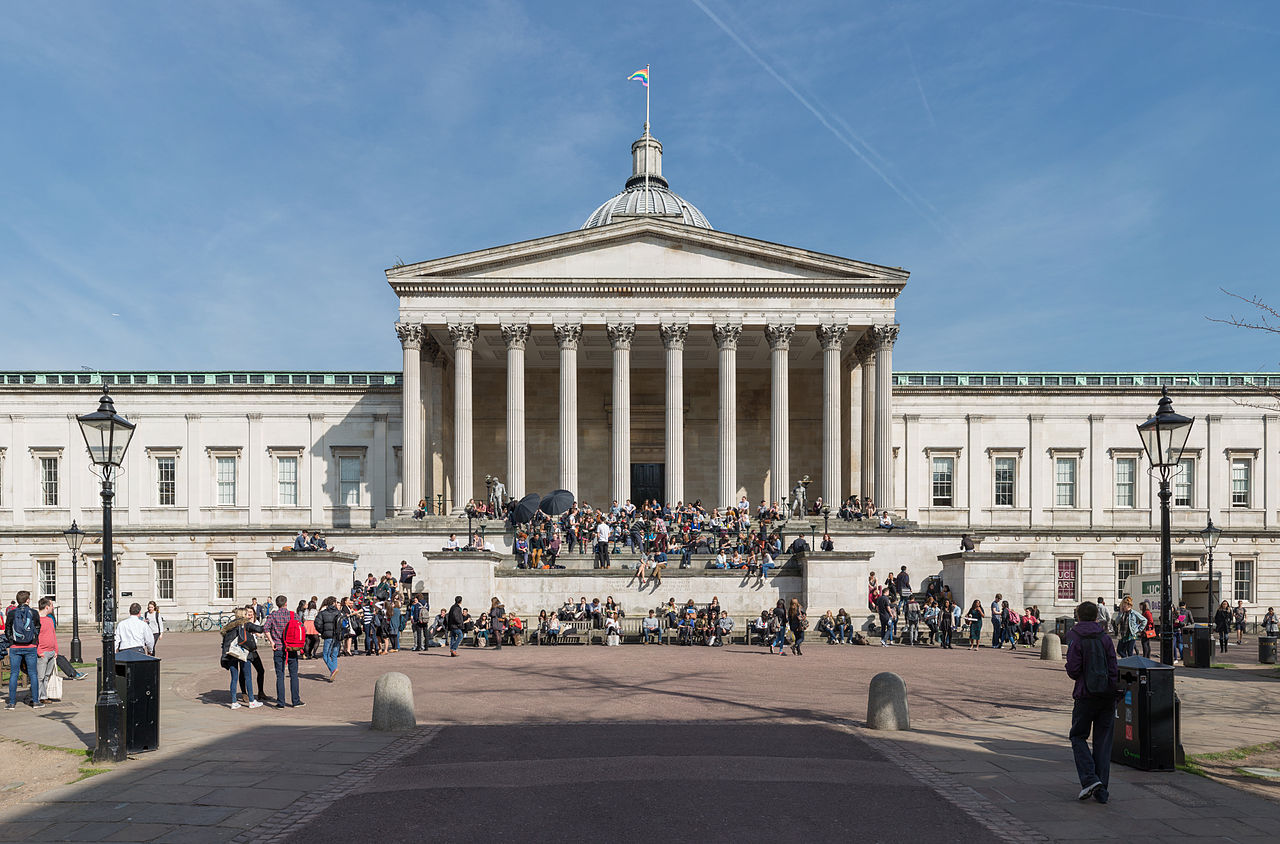
Security Studies MSc
The Security Studies MSc at UCL provides advanced training in applying empirical methods to analyze critical global security issues. You will explore the causes of terrorism, civil and international conflict, and the dynamics of military force. This program aims to equip students with a strong theoretical foundation and practical analytical skills to understand and address complex security challenges in the contemporary world. The curriculum is designed to foster critical thinking and research capabilities, preparing graduates for impactful careers in security-related fields.

World Poverty and Human Rights (LL4C2 Half Unit)
This course explores global poverty and inequality through the framework of international law and human rights. It examines the responsibilities of both states and non-state actors in addressing the deprivation that prevents billions worldwide from accessing their minimum essential human rights. The course delves into conceptual, normative, and critical perspectives on human rights, situating them within broader interdisciplinary and structural contexts related to development. It will analyze the influence of international actors and institutions on human rights and assess the application of legal standards to pressing global issues.
Frequently asked questions
How much does a Master's in International Relations cost in the UK?
+
Tuition is around €21,000 per year across the 19 listed programmes. Fees at elite institutions such as Oxford may be higher; always verify with the individual university.
Which UK universities offer a Master's in International Relations?
+
Thirteen universities are listed, including the University of Oxford, University College London, the University of Edinburgh, the University of London, Oxford Brookes University, and the University of Aberdeen.
Can international students apply to UK International Relations Master's programmes?
+
Yes. International Relations programmes at UK universities have highly diverse international cohorts. English language proficiency, a relevant bachelor's degree, and a strong personal statement are typically required.
What are the usual entry requirements?
+
A bachelor's degree (2:1 or equivalent) in International Relations, Politics, Law, History, or a related social science is typically expected. Some programmes accept applicants from other disciplines with evidence of analytical ability.
How do I apply for a Master's in International Relations in the UK?
+
Apply directly through each university's portal. Competitive programmes at Oxford and UCL have early deadlines (often December–January) for scholarship rounds. Prepare strong references and a focused research or career statement.