Master's in Mathematics & Statistics in United Kingdom
There are 13 master's Mathematics & Statistics programmes for international students across 11 universities in United Kingdom. Tuition ranges from €15k to €38k. Browse the full list below, compare entry requirements, and explore scholarships to fund your studies.

Data Science (MSc)
The MSc in Data Science at Aberystwyth University is designed for students seeking to develop expertise in extracting meaning from vast datasets, a highly sought-after skill across various industries. This program integrates knowledge from Computer Science, Mathematics, and Statistics, preparing you for roles in business, government, and scientific research. You will learn to identify customer buying patterns, track disease spread, monitor machinery, and improve individual health metrics using data-driven insights. This master's degree is particularly suitable for graduates from any discipline who wish to apply computing knowledge to their original field of study, fostering a new generation of data scientists.
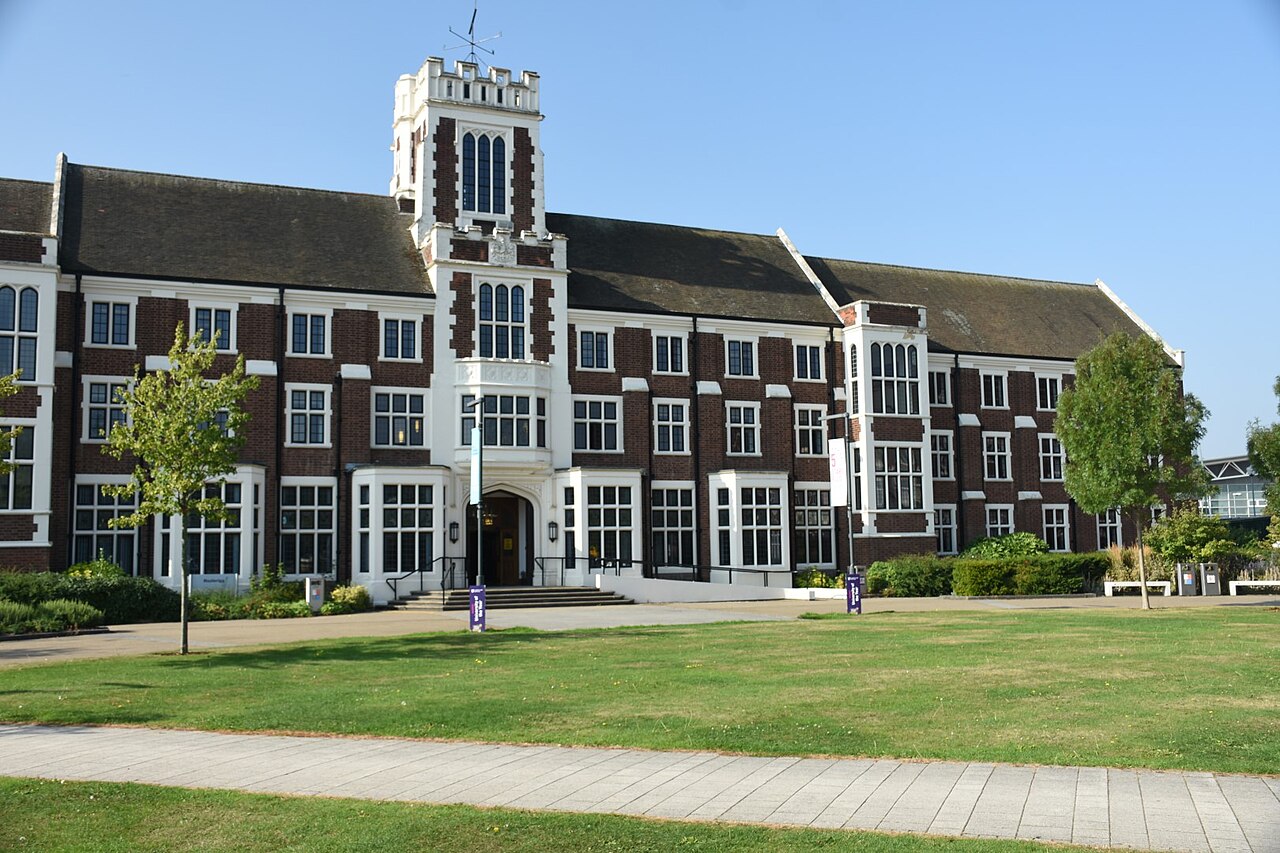
Industrial Mathematical Modelling
This MSc programme focuses on equipping you with the skills and techniques essential for industrial mathematics, specifically the ability to solve real-world problems using applied mathematics. These skills are highly valued in industry and commerce. The course is ideal for those with a background in mathematics, science, or engineering who wish to apply their knowledge in an industrial setting, and it also serves as excellent preparation for PhD studies. You will explore mathematical models of real-world processes, with a strong emphasis on practical industrial applications, culminating in a 12-week summer project typically undertaken with a local business. This project, supported by the university's strong industry connections, offers practical insight into how mathematical theory is applied in organisational contexts. You will also work in groups on industry-based problems, covering topics such as dynamics, differential equations, and fluid mechanics.

Mathematical Sciences MSc
The Mathematical Sciences MSc programme at the University of Liverpool offers a specialised pathway for students interested in pure and applied mathematics and theoretical physics. Mathematics is a foundational discipline that supports a wide array of fields, from the sciences to finance. This MSc programme provides an in-depth exploration of advanced mathematical concepts within a supportive academic environment. The University boasts a strong Mathematical Sciences department with highly qualified faculty and a commitment to both teaching excellence and cutting-edge research. The curriculum is designed to provide a robust theoretical grounding while also considering the practical needs of employers, preparing graduates for diverse career paths.

Mathematics MSc
This Master of Science (MSc) in Mathematics is a flexible program designed to reflect the research strengths of Queen Mary University of London's School of Mathematical Sciences. You will gain a deep understanding of mathematical principles crucial for logical reasoning, problem-solving, and decision-making in modern society. The course allows you to tailor your studies to your specific interests and career aspirations, with options in Pure Mathematics or Statistics and Data Science. This program opens doors to a variety of career paths or further academic research. Upon completion of your taught modules, you will undertake a substantial research project and dissertation. This project provides an opportunity to engage with the school's research centers, potentially make an original contribution to the field, and develop independent research skills. The program also offers the chance to gain a Microsoft Office Specialist qualification, enhancing your professional credentials.

MMORSE - Master of Mathematics, Operational Research, Statistics, and Economics
The MMORSE degree is an integrated Master's program that combines the study of Mathematics, Operational Research, Statistics, and Economics. This accredited course offers a strong foundation in mathematical theory and its practical applications, with core modules taught by specialists from various departments including Mathematics, Statistics, Economics, and Warwick Business School. From the third year, students can specialize in one of six pathways, such as Actuarial Science, Financial Mathematics, Operational Research and Statistics, Econometrics and Mathematical Economics, Statistics with Mathematics, or Data Analysis. The curriculum allows flexibility, with up to 25% of modules from the second year onwards potentially coming from other departments like Computer Science or the Language Centre. This program is accredited by the Royal Statistical Society, offering a route to becoming a Chartered Statistician with relevant work experience. It also provides exemptions from exams for those pursuing Chartered Actuary qualifications.

MSc Applied Mathematical Sciences
The MSc Applied Mathematical Sciences program at Heriot-Watt University is designed to equip students with advanced analytical and statistical skills essential for navigating a data-driven world. Building on over 40 years of expertise in applied mathematics research and education, this master's program offers a flexible curriculum focused on both theoretical foundations and practical application. Students will gain hands-on experience using mathematical concepts to solve complex problems across various industries, preparing them for impactful careers in fields such as mathematical modelling, artificial intelligence, and big data analytics.
MSc Statistics Degrees
The University of Warwick offers four MSc Statistics degree pathways designed to provide a comprehensive understanding of statistical theory, methods, and applications. You can choose a general MSc in Statistics for a broad foundation or specialise in Data Science, Finance, or Probability. All programs build on existing undergraduate knowledge in statistics and probability, with specific prerequisites for Finance and Probability specialisations. The curriculum is structured over a full academic year, culminating in a 60-credit dissertation project. This program equips graduates with advanced quantitative skills for careers in various industries or further academic research.

Operational Research MSc
The Operational Research MSc program at the University of Southampton equips students with advanced analytical and quantitative skills to solve complex problems in various sectors. This course is designed for individuals with a strong quantitative background who wish to develop expertise in modelling, simulation, optimisation, and data analysis. Graduates will be prepared for careers in fields that require sophisticated decision-making and problem-solving capabilities. The curriculum focuses on the theoretical foundations and practical applications of operational research techniques. Students will learn to apply these methods to real-world challenges, enhancing efficiency and effectiveness in business, industry, and public services. The program emphasizes a blend of mathematical rigor and computational tools, ensuring students are proficient in both theoretical understanding and practical implementation. Graduates from this program are highly sought after by employers looking for individuals who can leverage data to make informed strategic decisions. The skills acquired are transferable across a wide range of industries, including finance, logistics, healthcare, and technology, making it a valuable qualification for a successful career.

Statistical Science (Distance Learning) MSc
The Statistical Science MSc is a part-time, distance learning program designed to equip you with advanced techniques and skills for a career in statistics. In an era of increasing data generation, this program addresses the global demand for analysts who can interpret complex datasets using modern statistical methods. You will learn to progress from data exploration to analysis and presentation of findings, developing essential statistical knowledge, analytical and computational expertise, and interpretive and communication skills. The flexible online format allows you to study around your commitments, with teaching delivered through lecture notes, recorded sessions, videos, and practical computer exercises. Live online sessions are provided for support and Q&A. The curriculum covers core statistical concepts like inference and modeling, progressing to advanced topics in machine learning, multivariate statistics, and time series analysis, culminating in a dissertation. This MSc is ideal for those seeking to formalize and enhance their existing knowledge in statistics-related roles. All modules are also available as standalone units for professional development. You will gain hands-on experience with statistical software such as R and benefit from the expertise of leading academics and researchers in the field. The University of Nottingham is recognized for its research excellence, with 97% of its research outputs rated as 'world-leading' or 'internationally excellent' in the 2021 Research Excellence Framework, and the School of Mathematical Sciences ranked among the top in the UK.
Frequently asked questions
How many Mathematics & Statistics programmes are there in United Kingdom?
+
13 across 11 universities, listed on this page.
Can international students apply?
+
Yes — these programmes admit international students; check each programme's entry requirements and language of instruction.