Bachelor's in Economics in United States
The United States lists 15 Bachelor's programmes in Economics across 12 universities, providing undergraduates with strong quantitative and analytical training at institutions with varied profiles and locations. Stony Brook University, Dartmouth College, Colorado State University, and the College of Mount Saint Vincent are among the universities offering these pathways.
Tuition for international students is approximately €98k per year — reflecting the full-cost pricing typical of US universities for non-domestic students; many institutions offer merit scholarships and need-based aid that can significantly reduce this figure. US economics bachelor's degrees typically run four years and combine core economics theory with electives in finance, public policy, data science, or international economics.

Bachelor of Arts in Economics
At California State University Channel Islands (CSUCI), the Bachelor of Arts in Economics program offers a creative and interdisciplinary approach to understanding behavior in individuals, businesses, and government. It explores the environment and global economic trends, aiming to develop financial awareness to aid in decision-making. The program emphasizes a broad education by linking economics with various other disciplines, including business, education, art, history, and chemistry.

Bachelor of Science in Business Analytics
The Bachelor of Science in Business Analytics program at Florida Polytechnic University equips students with the essential skills to transform data into actionable insights. This program focuses on developing expertise in managing big data, marketing analytics, finance, and innovation within technology-driven business environments. Graduates will be prepared to solve complex business challenges by leveraging data analytics techniques, enabling organizations to make better decisions and achieve improved outcomes.

Business Economics BA
The Business Economics BA program is designed for students who want to focus on business aspects within their economics studies. It offers a curriculum that emphasizes the rigorous logic and integrated perspective of economics, rather than replicating a traditional undergraduate business school program. This major aims to prepare students for further graduate studies in fields such as business, economics, and law. The program requires students to complete specific courses from both the Economics Department and the John E. Anderson Graduate School of Management.

Economics
Dartmouth's Economics department offers a comprehensive program focused on using economic frameworks and data analysis to understand and address pressing social issues. Students engage with diverse areas within economics, including competition and strategy, development, finance, health, international trade, labor markets, macroeconomics, and public policy. The department actively involves students in research, providing opportunities to contribute to the understanding of complex societal challenges through economic inquiry.

Economics
The Economics program at UC San Diego provides a comprehensive study of economic principles, theories, and applications. Students will explore how individuals, firms, and governments make decisions in the face of scarcity, and how these decisions shape markets and economies. The curriculum covers microeconomics, macroeconomics, and offers opportunities to delve into specialized areas such as international trade, finance, and econometrics. The program emphasizes analytical skills and quantitative methods to understand complex economic phenomena.

Economics
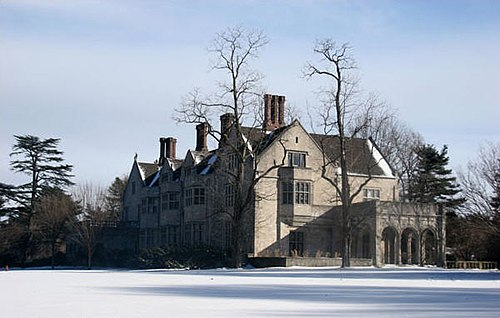
Economics - Stony Brook University
Stony Brook University offers an undergraduate program in Economics designed to provide students with a strong foundation in economic theory and quantitative methods. The program aims to equip students with the analytical skills necessary to understand complex economic issues, analyze data, and apply economic principles to real-world problems. Students will explore various fields within economics, including microeconomics, macroeconomics, econometrics, and specialized areas such as labor economics, public finance, and international economics. The curriculum emphasizes critical thinking, problem-solving, and the development of research capabilities. Graduates are prepared for a wide range of careers in business, government, and non-profit sectors, or for further graduate studies.

Economics, Bachelor of Business Administration
The Bachelor of Business Administration in Economics at the University of Central Oklahoma (UCO) prepares students to understand how businesses discover new markets and analyze economic trends. This program focuses on equipping you with the skills to proficiently apply economic principles in a business context.
Energy Economics, Minor
Enhance your primary field of study with a solid foundation in energy markets, policy, and economic analysis through the University of Central Oklahoma's Energy Economics minor. This program is designed to equip students with specialized knowledge to understand and navigate the complexities of the energy sector from an economic perspective.

Online Undergraduate Programs
The College of Mount Saint Vincent offers a range of fully online undergraduate degree programs designed for working adults seeking accelerated career growth. These programs allow you to tailor your bachelor's degree to your professional goals and develop skills applicable to any industry. You can complete your degree on your own schedule through flexible, accelerated 7-week courses and multiple start dates. The university emphasizes personalized advising and career-focused support to guide you from admission to graduation. A significant benefit is the ability to transfer up to 90 credits, which can help you finish your degree faster and reduce overall costs. The online format is convenient, allowing you to study from anywhere while gaining practical knowledge and networking opportunities.

Principles of Microeconomics
This introductory undergraduate course teaches the fundamentals of microeconomics, covering concepts, analysis, supply and demand, theories of the firm and individual behavior, competition, monopoly, and welfare economics. It also introduces the application of microeconomic principles to address current economic policy issues. This course is a core component of MIT’s undergraduate Energy Studies Minor, providing a broad understanding of energy-related science, technology, and social sciences. The course is designed for independent study and includes all necessary materials. Students will engage with lecture videos, readings from recommended textbooks (one of which is available online for free), quizzes to assess understanding, problem sets with solutions, and problem-solving videos. Additionally, a collection of links for further study and a full set of exams, including review materials and practice exams, are provided.
Quantitative Economics, Bachelor of Business Administration
The Quantitative Economics program at the University of Central Oklahoma (UCO) equips students with the analytical skills needed to understand economic principles and apply them to real-world business challenges. This degree focuses on using quantitative methods to identify opportunities and inform strategic decision-making, ensuring businesses remain competitive in their respective markets. Graduates will be prepared to contribute to business success through data-driven insights.
Frequently asked questions
How much does a Bachelor's in Economics cost in the United States?
+
Listed tuition is approximately €98k per year; however, many US universities offer merit scholarships and financial aid that can substantially reduce the actual cost for international students.
Which universities offer a Bachelor's in Economics in the United States?
+
Among the 12 universities are Stony Brook University, Dartmouth College, Colorado State University, the University of Central Oklahoma, College of Mount Saint Vincent, and West Virginia Wesleyan College.
Can international students apply to Economics bachelor's programmes in the United States?
+
Yes, US universities actively recruit international undergraduates; you will need to apply via the Common App or each university's portal, meet English-language requirements, and obtain an F-1 student visa.
What are typical entry requirements for a Bachelor's in Economics in the United States?
+
Requirements typically include a strong high-school GPA, SAT/ACT scores (though many schools are test-optional), English proficiency (TOEFL/IELTS), and recommendation letters.
How do I apply for a Bachelor's in Economics in the United States?
+
Most US universities use the Common App or their own portal, with early decision deadlines in November and regular decision deadlines in January; apply early to maximise scholarship consideration.