PhD in Environmental Sciences in United States
The United States offers 26 PhD programmes in Environmental Sciences across 19 universities, making it one of the most active research environments for doctoral candidates in this field. Institutions such as Johns Hopkins University, the University of Michigan, the University of California Santa Barbara, and Ohio State University are among those providing supervised doctoral training. Annual tuition ranges from roughly €26k to €45k, though many PhD students receive funding through research assistantships or fellowships that offset these costs.
PhD candidates in Environmental Sciences in the US typically focus on original research in areas such as climate systems, ecology, environmental policy, or earth sciences. Programmes generally require a master's degree or strong undergraduate background, and most culminate in a dissertation. International applicants should be aware that funding packages, which may include tuition waivers and stipends, are competitive and tied to research group availability.

Civil, Urban, and Environmental Engineering - PhD
New York University's Center for Data Science (CDS) offers a PhD program in Data Science, recognized globally for its rigorous, cross-disciplinary approach. This program aims to train students to become ethical, responsible data scientists capable of developing new methodologies, utilizing statistical tools for complex questions, and translating research into practical applications. The program emphasizes strong foundations in mathematics, computer science, and applied statistics, preparing graduates for leadership roles in the rapidly evolving field of data science. Students have the opportunity to conduct research in New York or at NYU Shanghai.

Climate and Cryospheric Sciences
The Climate and Cryospheric Sciences research theme at Dartmouth College focuses on understanding past and present climate change from both regional and global perspectives. A key area of study is the impact of climate change on glaciers, including their extent and mass balance. This research ultimately examines how these changes influence society through mechanisms like sea-level rise and alterations in water supplies.

Doctor of Philosophy (PhD) in Environmental Health
The PhD program in Environmental Health at Boston University School of Public Health offers specialized training and research experience. It focuses on areas like environmental epidemiology, exposure science, spatial epidemiology/GIS, extreme weather and health, risk assessment, and toxicology, with an emphasis on community-engaged work. The program aims to prepare graduates for careers in advanced research, teaching, policy, and leadership by providing essential training, research experience, resources, and support. Faculty are actively involved in policy-making and community engagement, collaborating with organizations and vulnerable populations both internationally and domestically. The department is committed to fostering an inclusive and supportive educational environment for students from diverse backgrounds.

Ecology and Evolutionary Biology PhD
The Department of Ecology and Evolutionary Biology (EEB) at the University of Michigan offers a top-ranked PhD program designed to provide students with a rigorous and integrative academic experience. Our program fosters a strong mentoring environment within a diverse and supportive community. Students benefit from access to outstanding facilities for field, museum, and laboratory research, as well as opportunities for interdisciplinary collaboration. EEB at U-M is dedicated to advancing knowledge in the dynamic fields of ecology and evolutionary biology. Our faculty engage in research across a wide range of exciting and emerging areas, preparing students for impactful careers in academia, research, and beyond. We encourage prospective students to explore our faculty's research interests and identify potential advisors.

Environmental Engineering Graduate Study
Yale's Environmental Engineering graduate program offers advanced research opportunities to address global environmental challenges. The program emphasizes a multidisciplinary approach, integrating fields such as chemistry, microbiology, materials science, and public health to develop innovative solutions. Students engage in cutting-edge research on topics like water purification, air quality, sustainable materials, and pollutant mitigation, collaborating with leading faculty across various Yale schools and institutes. Our students benefit from extensive collaborative networks, including partnerships with the School of the Environment, School of Public Health, School of Medicine, and specialized institutes. They have opportunities to contribute to significant national research initiatives, participate in faculty-led research centers, and engage in international collaborations. The program provides state-of-the-art facilities, a strong graduate student community, and a rich academic environment conducive to growth as researchers and future leaders in environmental engineering.

Geography and the Environment, Ph.D.
The graduate program in Geography and the Environment at The University of Texas at Austin is designed to prepare highly qualified doctoral students for research and teaching careers in academia and other professional fields. The program focuses on understanding and managing Earth's diverse cultural and physical environments at local and global scales. Faculty research areas include Space, Place, and Social Worlds; Environmental Changes and Surface Processes; and Digital Landscapes. The department has a strong international focus and encourages interdisciplinary collaboration, leveraging the extensive resources of the university. Students are admitted to both the Department of Geography Graduate Program and the Graduate School of The University of Texas at Austin. The program's Graduate Studies Committee (GSC) sets academic policies and curriculum requirements, while the Graduate Admissions and Awards Committee (GAAC) handles admissions and recommends students for internal and external funding opportunities.

Human Ecology, PhD
The PhD in Human Ecology is a doctoral program focused on understanding the intricate relationships between people and their environments. This program is offered through the School of Human Ecology, a leading institution known for its faculty's national reputations and commitment to nurturing future scholars. The curriculum integrates research, outreach, and service, reflecting the university's 'Wisconsin Idea' – the principle that the university's influence extends beyond campus to benefit society. Students will engage in advanced study and research across disciplinary lines, preparing them for impactful careers in academia, policy, and practice.

Ph.D. in Civil and Environmental Engineering
The Doctor of Philosophy (Ph.D.) in Civil and Environmental Engineering at Carnegie Mellon University offers advanced coursework and hands-on research opportunities. You will work with world-renowned faculty mentors and engage in interdisciplinary collaboration to deepen your understanding of key concepts and methodologies while addressing real-world challenges. The program fosters a supportive community of scholars, researchers, and innovators, providing the guidance and resources needed to excel academically and professionally. Whether your career aspirations lie in academia, industry, or government, this Ph.D. program equips you to become a leader in your field, driving meaningful change and contributing to a resilient future.

PhD in Civil & Environmental Engineering
The PhD program in Civil and Environmental Engineering at Duke University offers a unique opportunity to join a vibrant, interdisciplinary research community. You will develop your research skills in close collaboration with world-renowned experts, focusing on making a better world through innovative engineering solutions. Duke provides significant financial support, mentorship, and career exploration opportunities to help you succeed during your doctoral studies.

PhD in Civil and Environmental Engineering
Rice University's PhD program in Civil and Environmental Engineering (CEE) fosters research driven by intellect, creativity, and boldness. Students are encouraged to transform inquiry and investigation into understanding, and subsequently into applications and novel solutions for real-world challenges. The program offers two distinct sub-tracks: Civil Engineering (CE) and Environmental Engineering and Sciences (EES), allowing for specialized study within the broader field.
PhD in Earth and Environmental Sciences
The Department of Earth and Environmental Sciences (EARTH) at the University of Michigan offers a PhD program designed to train students for research and academic careers. The program provides guaranteed financial support for its duration. Students entering with a Master of Science (MS) degree typically receive support for 4 years, while those entering with a Bachelor of Science (BS) degree receive support for 5 years. All students begin as pre-candidates and advance to candidacy after completing a minimum of 18 graduate-level credits and passing a Qualifying Exam. The final step to earning the PhD is a successful dissertation defense. The program adheres to the academic policies set by the Rackham Graduate School.
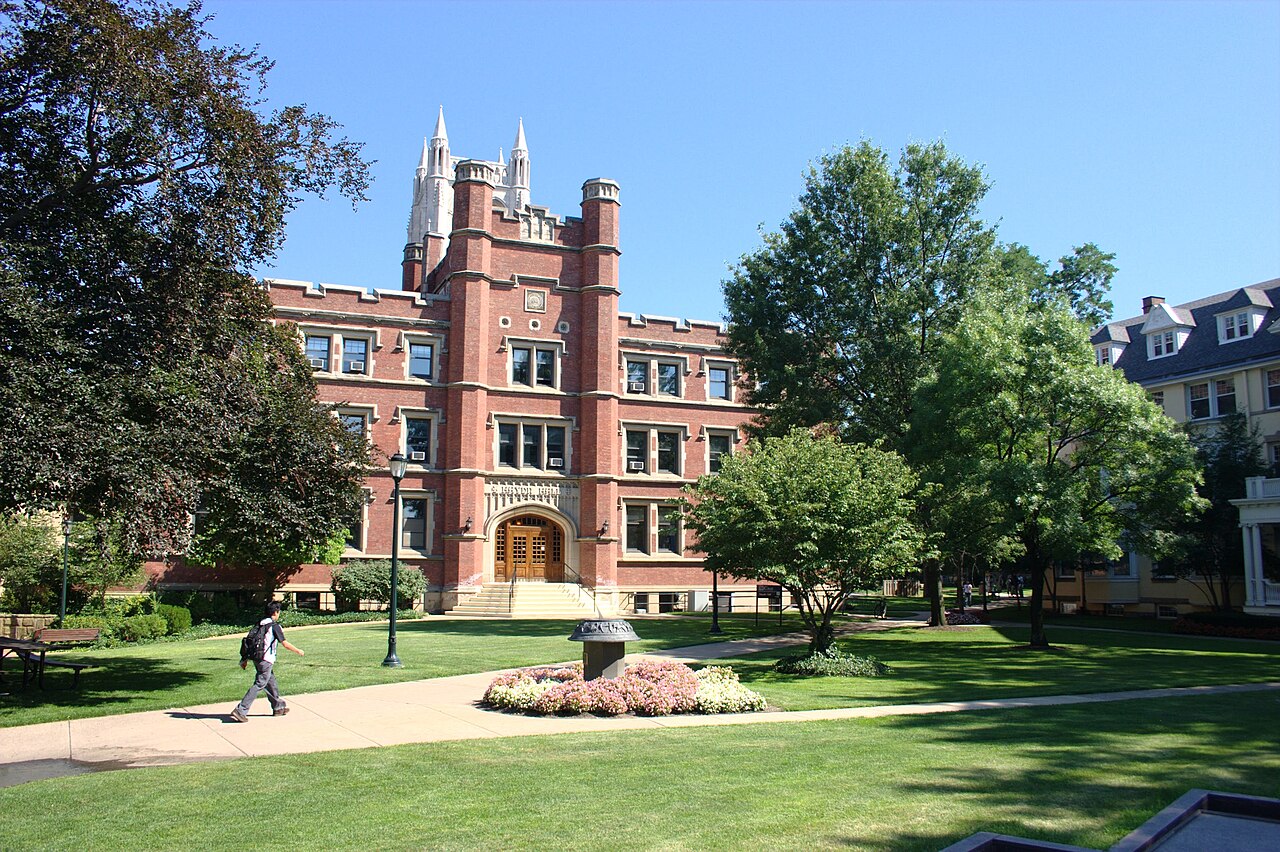
PhD in Earth, Environmental, and Planetary Sciences
The PhD program in Earth, Environmental, and Planetary Sciences at Case Western Reserve University is designed to train future professional scientists for careers in academia, research laboratories (commercial, non-profit, federal), mining, energy, environmental consulting, and regulatory agencies. The program emphasizes hands-on research through field work on five continents, experiments at world-class facilities like the Advanced Photon Source and NASA Glenn Research Center, and participation in NASA spacecraft missions. Students benefit from access to specialized departmental facilities, including alpha and gamma spectroscopy, sedimentology, aqueous geochemistry, planetary materials, high-pressure mineral physics, and geophysics computing facilities, as well as broader university resources like the Swagelok Center for Surface Analysis of Materials and the High Performance Computing Facility. Students without a Master's degree typically dedicate at least 36 hours of coursework over two years, while those with a Master's complete at least 18 hours in one year. The curriculum aims to broaden students' advanced knowledge in their chosen field. All graduate students are required to register for EEPS 509, a one-credit course focused on presenting research, and are expected to regularly attend departmental seminars. The program also focuses on developing technical research and communication skills essential for addressing regional and state needs in natural resource management and regulation.

Special Studies and Research in Environmental Health & Engineering
This course focuses on identifying and researching key issues within environmental health. It is designed for students looking to delve into the central challenges of the field and develop their research interests. The program aims to equip students with the ability to recognize areas ripe for current and future investigation.
Wildlife Ecology, PhD
The Department of Forest and Wildlife Ecology offers doctoral education and training in Wildlife Ecology, building upon a legacy established by Aldo Leopold in 1939. The program is renowned for its research and the global success of its graduates. Graduate studies typically concentrate on areas such as behavioral ecology, population dynamics, wildlife disease, landscape ecology, conservation biology, and the human dimensions of wildlife management. The department also hosts the U.S. Geological Survey, Wisconsin Cooperative Wildlife Research Unit, prioritizing research for state and federal conservation programs. Annual research funding averages between $3 million and $4 million from diverse sources. Admission to the PhD program is highly competitive, and not all qualified applicants will receive financial support. Graduate assistantships and fellowships are available for a limited number of well-qualified students. Prospective applicants are strongly encouraged to contact program faculty before applying, as admission depends on a suitable fit within a research lab and a faculty member's capacity to fund the student throughout their degree. Once admitted, students collaborate closely with their major professor and an advisory committee to develop their research. Students are expected to meet the minimum admission requirements set by the Graduate School, as well as the more rigorous program-specific criteria. The application process involves submitting the Graduate School application, a supplementary application for Wildlife Ecology, a resume/CV, transcripts, a statement of purpose, and three letters of recommendation. English proficiency test scores are also required if applicable. The department emphasizes the importance of a strong academic background and research experience.
Frequently asked questions
How much does a PhD in Environmental Sciences in the US cost?
+
Annual tuition runs roughly €26k to €45k, but many PhD students secure research or teaching assistantships that cover tuition and provide a living stipend, effectively reducing the out-of-pocket cost to zero.
Which universities offer a PhD in Environmental Sciences in the United States?
+
Among the 19 universities in this listing are Johns Hopkins University, University of Michigan, Ohio State University, Iowa State University, University of Virginia, and University of California Santa Barbara.
Can international students apply for a PhD in Environmental Sciences in the US?
+
Yes, US universities actively recruit international doctoral students. You will typically need English proficiency test scores (TOEFL or IELTS) and may require GRE scores depending on the programme.
What are typical entry requirements for these PhD programmes?
+
Most programmes require a bachelor's or master's degree in a relevant science, a strong academic record, a research statement, letters of recommendation, and English language proficiency evidence for non-native speakers.
How do I apply to a PhD in Environmental Sciences programme in the US?
+
Applications are submitted directly to each university, usually through an online portal. Contact potential supervisors early, as doctoral admissions often depend on a faculty member agreeing to supervise your research before a formal offer is made.