Master's in Finance in United States
The United States hosts 49 Master's programmes in Finance spread across 33 universities, providing a wide range of options for graduate students seeking expertise in financial theory and practice. Top institutions including New York University, Carnegie Mellon University, University of Michigan, and University of California, Davis are among those offering finance graduate degrees. Tuition ranges from free to roughly €75,000 per year, reflecting the diversity from fully funded research tracks to prestigious fee-paying professional programmes.
US Master's in Finance programmes typically last one to two years and cover areas such as investment management, corporate finance, quantitative methods, and financial markets. Many programmes are based in major financial centres, offering students direct access to internship pipelines and industry networks that can accelerate career entry into banking, asset management, or consulting.

Accountancy, MAcc (Online)

Accounting & Finance Programs
The Department of Accounting & Finance at UMass Boston offers a range of programs designed to meet the evolving demands of the industry. Our curriculum is kept current with fast-paced changes in accounting and finance, and our dedicated faculty are focused on student success. We provide rigorous academic knowledge, fostering critical thinking and preparing students to become leaders in their fields. The department offers undergraduate degrees in Accounting and Finance, as well as graduate programs including Master's degrees in Accounting and Finance, an MBA with Accounting and Finance specializations, and a PhD in Business Administration with a Finance track. A certificate in Investment Management & Quantitative Finance is also available.

Accounting, MS (Online)
California Baptist University (CBU) offers an online Master of Science in Accounting program designed to equip students with global business perspectives, strategic thinking, and critical concepts. This program aims to prepare students for professional practice while fostering personal growth. The curriculum integrates principles of Christian ethics into professional responsibility, reflecting the high ethical standards of the accounting industry. Courses are delivered in an accelerated, asynchronous format, allowing for flexible online learning on the student's schedule.

B.S. M.B.A. Degree 5 Year Accounting

Finance, M.S.
The Master of Science in Finance program at the University of Central Oklahoma equips students with the knowledge and skills to make informed decisions regarding resource allocation and investment. This program is designed to prepare graduates for successful careers in various financial roles, leveraging analytical abilities and forecasting techniques. Students will develop a strong foundation in financial principles and practices.

Finance, M.S. in Quantitative and Computational Finance
The Master of Science in Quantitative and Computational Finance (MSQF) program at Duke University is a rigorous, 24-month master's degree designed to prepare students for careers in the quantitative finance industry. The program offers a deep dive into financial theory, quantitative methods, and computational tools essential for roles in investment banking, asset management, hedge funds, and other financial institutions. It combines a strong theoretical foundation with practical application, equipping graduates with the skills needed to excel in a rapidly evolving financial landscape.

Forest and Ecosystem Finance
This course focuses on applying financial analysis to forest management decisions, particularly within the US timberland market. It explores how financial perspectives influence land ownership and management trends, providing frameworks for valuing, acquiring, and managing forestland for timber production. While centered on the US, the course will also incorporate international perspectives from professionals in investing, environmental markets, agriculture, conservation, and other land-use strategies. The skills learned are adaptable to various contexts, scales, and landowner goals. The course concludes with a case study and valuation memo based on a real or simulated deal.

LLM in Banking and Financial Law
The LLM in Banking and Financial Law at Boston University School of Law is designed for legal professionals seeking advanced knowledge in the complex field of financial services law. With a curriculum developed specifically for graduate study and a dedicated faculty of industry experts, this program has been preparing lawyers for over 40 years to handle the regulatory, transactional, and compliance challenges within the financial sector. Graduates are well-positioned for careers in banks, government agencies, law firms, corporations, and international financial organizations. The program offers flexibility with both full-time and part-time study options, available in-person in Boston or fully online.
M.S. in Quantitative Financial Economics
The Master of Science (M.S.) in Quantitative Financial Economics program, managed by the Duke Financial Economics Center (DFE) in the Department of Economics, is designed to equip students with advanced quantitative skills in financial economics. The program prepares graduates for doctoral studies or careers in finance and related quantitative fields. The curriculum focuses on sophisticated analytical tools, providing students with a distinct advantage for Ph.D. programs and roles in quantitative financial analysis. Classes are typically small, allowing for individual faculty attention, and students can engage in research through workshops and collaborations with scholars across the Economics department and the Fuqua School of Business.

Market Microstructure and Algorithmic Trading
This elective course provides foundational knowledge and explores current issues in financial market trading, with a focus on algorithmic and high-frequency strategies. You will delve into topics such as optimal execution, analysis of execution quality, limit order markets, and the intricacies of market structure. The curriculum covers price decomposition, VWAP benchmarking, and metrics for information asymmetry like PIN and VPIN, alongside the price impact of order flow imbalance. The course examines trading across various markets, including equities, options, futures, and cryptocurrencies. Practical experience is gained through hands-on analysis using Kdb+ and Python with real intraday data in Jupyter notebooks.
Master of Accountancy
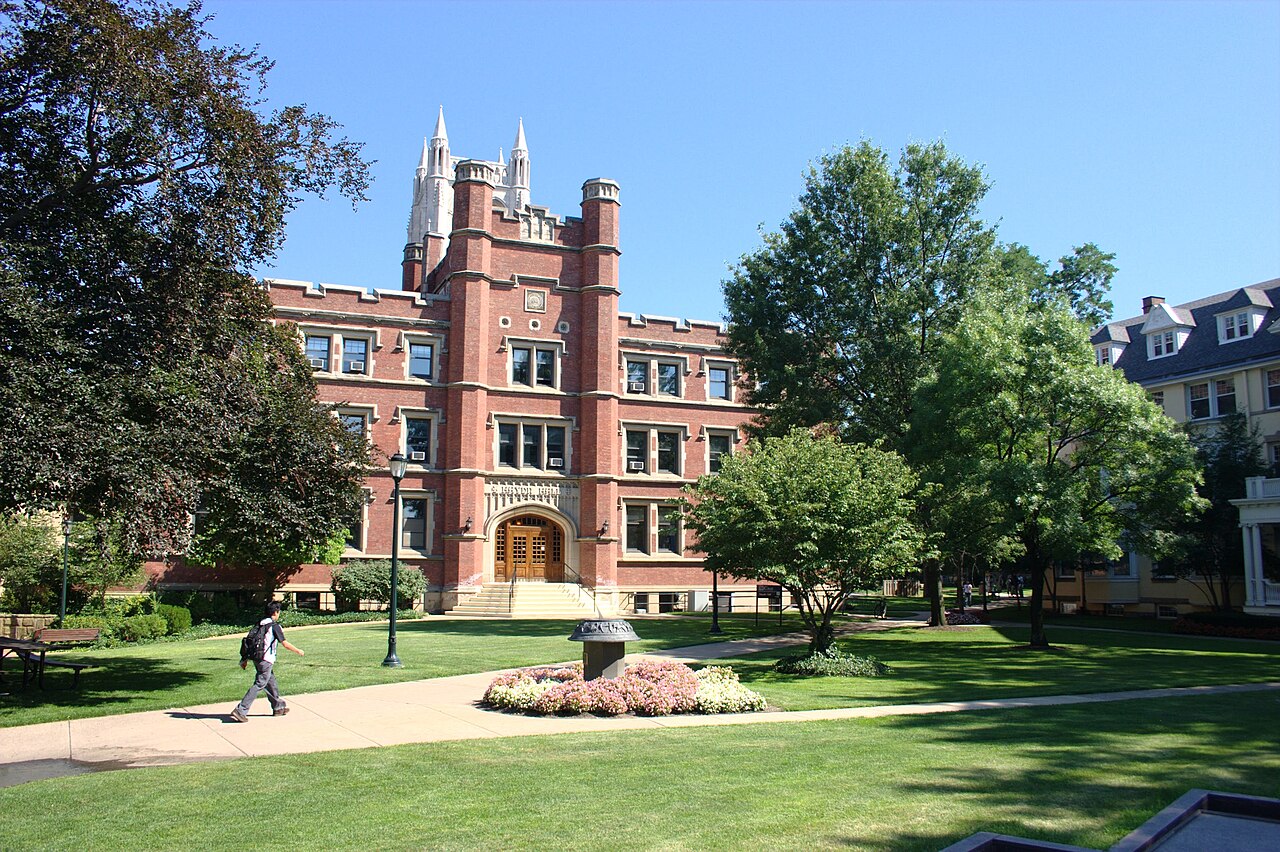
The Master of Accountancy (MAcc) program at Case Western Reserve University's Weatherhead School of Management equips you with essential skills for roles in public accounting, corporations, and non-profit organizations. This program emphasizes durable skills in a landscape shaped by technology and evolving regulations. You'll learn the 'language of business' and how organizations use accounting to communicate performance, justify decisions, and build trust. The MAcc offers two tracks: a two-semester (30 credit hours) option for quick career launch, focusing on accounting expertise and professional judgment, or a STEM-designated track (39 credit hours) for in-demand skills in analytics, technology, and data-driven decision-making. Both paths prepare you with comprehensive knowledge, practical experience, and confidence for a competitive market. The program can be completed in as little as nine months or extended to accommodate working professionals, allowing for internships or continued employment.

Master of Accountancy (MAcc)
The Master of Accountancy (MAcc) program at the University of Minnesota's Carlson School offers a comprehensive curriculum designed to equip students with critical thinking, analytical skills, and business acumen for leadership roles in accounting. It emphasizes data-driven decision-making and strategic problem-solving. The program is STEM-designated. Students can choose between two curriculum tracks: a 30-credit track for those with an undergraduate accounting degree and a 44-credit track for those from non-accounting backgrounds. Both tracks are designed to meet the 150-credit hour requirement for the CPA exam.
Master of Accountancy (MAcc)
The Master of Accountancy (MAcc) program at Lindenwood University is designed for individuals who want to advance their accounting knowledge and career. This program provides the final 30 credit hours required for the Lindenwood accountancy curriculum. Upon completion, combined with a bachelor's degree in accounting, it may help satisfy the 150 credit hour requirement for the Uniform Certified Public Accountant (CPA) Exam. If your undergraduate education differs from Lindenwood's accounting program, you may be eligible to complete the MAcc by taking additional graduate-level courses. It is recommended to consult with an advisor for personalized guidance.

Master of Accountancy (MAcc)
The Master of Accountancy (MAcc) program at Keiser University is designed for individuals seeking to advance their careers in accounting, particularly those aiming for professional certifications like the Certified Public Accountant (CPA) or Certified Fraud Examiner (CFE). The curriculum focuses on developing advanced critical thinking, research, and communication skills relevant to the accounting profession. Students will delve into topics such as financial reporting, auditing, taxation, fraud examination, and data analytics, preparing them to tackle complex accounting issues and ethical standards.

Master of Accountancy (MAcc)
Purdue University Northwest's Master of Accountancy (MAcc) program is designed to provide you with the comprehensive accounting and business knowledge needed to advance your career. This affordable and flexible program features evening classes, making it suitable for working professionals. You can choose to specialize in forensic accounting and data analysis or taxation. The program is accredited by AACSB, signifying the highest standard in business education.

Master of Accountancy (MAcc)
Troy University's Master of Accountancy (MAcc) program is designed to prepare you for advanced professional and managerial roles in public accounting, government, and industry. This one-year graduate program focuses on developing specialized accounting knowledge, research skills, and ethical decision-making abilities, equipping you to sit for the CPA exam and meet educational requirements for licensure in Alabama and nationwide. The curriculum emphasizes practical application, critical thinking, and the use of accounting technology.

Master of Accountancy (MAcc) - Tax Named Option
The Master of Accountancy (MAcc) with a named option in Tax is designed for students aiming for a career in tax. This program offers in-depth knowledge of various tax topics, preparing you for roles in public accounting or industry. The curriculum covers essential areas such as corporate taxation, research and administrative issues, partnership taxation, and international taxation. It's closely integrated with law school tax offerings, with some courses being cross-listed. Admissions to this specific named option are suspended as of spring 2026 and will be discontinued as of fall 2028. Please contact the department for any questions regarding its status.

Master of Accounting (MAcc)
The Master of Accounting (MAcc) program at University of Michigan Ross is an eight-month, STEM-designated degree designed for recent college graduates. It offers a rigorous core accounting curriculum, integrated with MBA-level electives, to equip you with essential skills for long-term success in the accounting field. The program emphasizes leadership development and cross-disciplinary learning, preparing you to make a significant impact in any organization. A new Accounting Analytics Concentration is available for those interested in data-driven decision-making. The MAcc program is structured to prepare graduates for the CPA exam and beyond. The curriculum is designed to provide a comprehensive understanding of accounting principles while also developing broader business acumen through electives. Graduates are well-prepared for roles in public accounting, particularly with top firms such as the Big Four, as well as other industries.

Master of Accounting (MAcc)
The Master of Accounting (MAcc) program at the University of Southern California's Leventhal School of Accounting offers a comprehensive path to advanced knowledge in accounting. Designed for students seeking to deepen their expertise, the program can be tailored to specific career goals through various tracks. It prepares graduates for diverse roles in the accounting field, emphasizing both foundational principles and modern analytical approaches. The program offers flexible start dates and caters to students with and without prior accounting backgrounds.
Master of Business Administration, Accounting
Keiser University's Master of Business Administration (MBA) with an Accounting specialization is designed for professionals seeking to advance into leadership roles in accounting and finance. The program combines a strong foundation in business fundamentals with advanced accounting concepts, preparing students for complex decision-making in the modern business world. It focuses on developing essential skills in financial analysis, reporting, taxation, auditing, and data analytics, all within a framework of ethical and legal responsibilities. The curriculum aims to enhance students' ability to manage financial resources, forecast performance, and contribute strategically to organizational success.
Master of Finance (MFin)
The Master of Finance (MFin) program at Case Western Reserve University's Weatherhead School of Management is designed for students who enjoy problem-solving, working with numbers, and understanding how organizations and markets operate. This program prepares you to become a leader capable of making critical financial decisions, moving beyond theoretical analysis to practical application. The curriculum emphasizes the real-world use of core financial concepts, helping you develop capabilities employers rely on. Students can choose between a 9-month accelerated track or a 15-month professional track, both offering a STEM designation and OPT eligibility for international students. The program aims to equip you with the skills to understand business valuation, identify risks, connect financial analysis with strategy, build effective decision-making models, and clearly communicate financial insights to executives. You will also complete a professionalism and communication core, enhancing your ability to leverage your financial knowledge in your career.

Master of Professional Accountancy (MPAc)
The Master of Professional Accountancy (MPAc) is an accelerated, 9-month STEM-designated graduate program designed to prepare you for a successful career in public accounting. Through a lock-step, cohort-based model, you will experience small class sizes and a pre-arranged curriculum focused on audit, tax, and accounting information systems. This intensive program equips you with the practical skills and technologies used in the modern accounting profession, fostering a close-knit community that supports academic achievement and personal growth.

Master of Science (MS) in Accounting Online
The Master of Science (MS) in Accounting program at Maryville University is designed to equip students with advanced knowledge and skills in accounting principles and practices. This online program is ideal for individuals seeking to enhance their career prospects in the dynamic field of accounting, whether they are aspiring to become Certified Public Accountants (CPAs) or move into leadership roles. The curriculum focuses on developing a strong foundation in financial accounting, managerial accounting, auditing, taxation, and accounting information systems.

Master of Science (MS) in Finance
The Stony Brook University College of Business offers a Master of Science (MS) in Finance program designed for finance professionals seeking to advance their skills or for students from other disciplines wanting to specialize in finance. This STEM-designated program requires 30 credits (10 courses) taught by leading faculty. It can be completed in two semesters of full-time study or on a part-time basis. The program includes a capstone experience where students complete an industry-based project. Graduates are prepared for careers in banking, hedge funds, corporate finance, and regulation. The program must be started in the Fall semester.

Master of Science in Accounting and Finance
The Master of Science in Accounting and Finance program at Western New England University is a 30-credit online program designed to provide advanced knowledge and skills in accounting and financial management. It prepares students for career advancement and for the CPA exam, particularly in Massachusetts and Connecticut. The curriculum emphasizes practical application, drawing on the extensive industry experience of the faculty.

Master of Science in Fintech
The Master of Science in Fintech is a part-time, one-year program designed for working professionals. It combines online learning with in-person modules held in New York and at rotating global locations. This format allows students to continue working in their home countries between modules, requiring approximately seven weeks away from the office over the course of the year. Students are expected to dedicate an average of 20-25 hours per week to online learning between the in-person sessions. The program provides opportunities for experiential learning and networking with industry professionals. It is a STEM-designated program, although its part-time nature means students are not eligible for OPT.

Master of Science in Forensic Accounting
Stevenson University Online offers a fully online Master of Science in Forensic Accounting designed to prepare students for careers in fraud detection, prevention, and investigation. The program addresses the growing demand for skilled professionals as organizations increasingly focus on compliance with stringent laws and evolving auditing standards. Graduates will be equipped to assess fraud risks, evaluate the adequacy of internal controls, analyze financial evidence, and effectively communicate findings in legal settings. The curriculum is delivered by experienced faculty with real-world expertise, ensuring students meet high industry standards.
MBA in Accounting

MBA Major in Finance
The MBA Major in Finance equips students with the analytical and theoretical tools needed to address practical financial challenges. This program applies these skills to financial management in businesses, financial institutions, government bodies, and non-profit organizations. While courses cover descriptive, institutional, and historical aspects of finance, the focus is on analytical theory and methods, utilizing economic analysis, mathematics, and statistics. Students begin with core Finance courses (FNCE 6110 and FNCE 6130) before selecting electives to tailor their studies to their specific interests and career goals. It is recommended to complete the core corporate finance requirement early as it is a prerequisite for advanced Finance courses.
MBA Program in Accounting
The MBA program with a focus on Accounting at the University of Michigan's Stephen M. Ross School of Business equips students with a deep understanding of accounting principles and their application in complex organizational and market contexts. The curriculum integrates rigorous econometric methods and large-scale datasets to analyze how internal systems, external disclosures, and regulatory environments influence managerial behavior and competitive dynamics. Students will explore core accounting concepts, with research streams focusing on managerial control dynamics, technological change, human capital, and internal forecasting. Additionally, the program examines information frictions at the firm's boundary, including global investment barriers and labor market transparency. This comprehensive approach prepares graduates for strategic decision-making roles. The program is designed to provide students with a unified, real-world framework for strategic decision-making, drawing on current research and practical applications. The faculty consists of leading researchers who integrate their findings into the curriculum, offering students insights into areas such as organizational architecture and ESG reporting.
NYU Impact Investment Fund I
The NYU Impact Investment Fund (NIIF) is a specialized, hands-on course designed to immerse students in the world of early-stage impact investing. You will learn the entire investment process, from developing an investment thesis and identifying potential companies to conducting thorough due diligence and finalizing an investment. This course is directly linked to the student-led Impact Investing Fund of the same name. Each year, the fund makes one or two investments, and students in the course work in deal teams to present investment proposals for approval. Participants will also gain access to the MIINT program, a global competition and learning lab for student investment teams. While primarily intended for students from NYU Wagner, NYU Stern, and NYU Abu Dhabi, students from other NYU programs are welcome to apply. Participation requires enrollment for the full academic year (fall and spring semesters), with each semester granting 1.5 credits. The course meets bi-weekly, but students should anticipate a weekly workload for assignments and deliverables.

Online Master of Accounting
The Online Master of Accounting (MAC) program at UNC Kenan-Flagler is designed for individuals seeking to advance their careers in accounting, whether they are recent graduates, mid-career professionals, or seasoned leaders. The program offers the same high-caliber curriculum, expert faculty, interactive learning environment, and robust career services as the on-campus program. It provides flexibility for those balancing work, family, or other commitments, with learning delivered entirely online. The curriculum is rigorous and aims to provide real-world, experiential learning opportunities.
Online MBA – Accounting
Lindenwood University offers an Online MBA in Accounting designed for working professionals seeking to advance their careers in finance and leadership. This fully online program combines essential business management principles with specialized accounting knowledge. You will develop strategic, analytical, and technological skills, including the application of AI-driven tools and data analytics for improved financial decision-making and reporting. The curriculum focuses on real-world impact, preparing graduates to confidently manage complex accounting and finance challenges.
Frequently asked questions
How many Master's in Finance programmes are available in the United States?
+
There are 49 Master's programmes in Finance available across 33 universities in the United States.
How much does a Master's in Finance cost in the United States?
+
Tuition ranges from free (for some fully funded or fellowship-supported programmes) up to about €75,000 per year. Most fee-paying programmes fall somewhere within that range, so review each programme's current fee schedule.
Which universities in the US offer a Master's in Finance?
+
Programmes are offered at institutions including New York University, Carnegie Mellon University, University of Michigan, University of California Davis, University of Colorado Boulder, and New Jersey City University, among 33 universities in total.
Can international students apply for a Master's in Finance in the United States?
+
Yes, US universities welcome international applicants. You will generally need a bachelor's degree, GMAT or GRE scores, English language test results, and letters of recommendation. Some programmes also require prior coursework in mathematics or statistics.
What are typical entry requirements for a Master's in Finance in the US?
+
Applicants typically need an undergraduate degree (often in a quantitative or business field), a competitive GMAT or GRE score, proof of English proficiency, and professional references. Work experience is valued but not always mandatory.