Mathematics & Statistics in United States
The United States lists 151 Mathematics & Statistics programmes across 49 universities, spanning bachelor's, master's, and doctoral levels. Well-known research institutions such as the Massachusetts Institute of Technology, Georgetown University, and the University of Notre Dame sit alongside large state schools including North Carolina State University and Stony Brook University, as well as urban powerhouses like New York University.
Tuition fees vary widely, from free (for fully funded PhD positions) to roughly €54k per year at the high end, reflecting the mix of public and private institutions on offer. The depth of the US research ecosystem in mathematics and statistics makes this destination particularly compelling for students aiming for careers in academia, finance, data science, or engineering.

Active Areas of Mathematics Research
Stony Brook University's Department of Mathematics offers opportunities for advanced study and research across a wide spectrum of mathematical disciplines. The program focuses on fostering in-depth understanding and contributing to the forefront of mathematical knowledge. Students engage with faculty whose research spans numerous active areas, encouraging intellectual growth and the development of strong analytical skills. The department is committed to providing a rigorous academic environment for aspiring mathematicians.

Actuarial Science
The Actuarial Science program at the University of Central Oklahoma (UCO) is the only program of its kind offered in the state of Oklahoma. This program is designed to prepare students for careers as actuaries, professionals who analyze the financial costs of risk and uncertainty. Actuaries use mathematics, statistics, and financial theory to assess the likelihood of future events and design strategies to minimize their impact.

An Introduction to Module Theory
This textbook provides a modern and accessible exploration of module theory, specifically designed for graduate students in algebra or those who require algebraic tools for their research. Authored by specialists in the field, it aims to be a comprehensive resource for understanding this complex area of mathematics. The book features a detailed presentation of concepts, supported by a substantial collection of worked-out examples, illustrative figures, and practice exercises. It is intended to serve as a primary text for graduate-level courses and a valuable reference for students and researchers seeking to deepen their knowledge of module theory.
Applied Mathematics
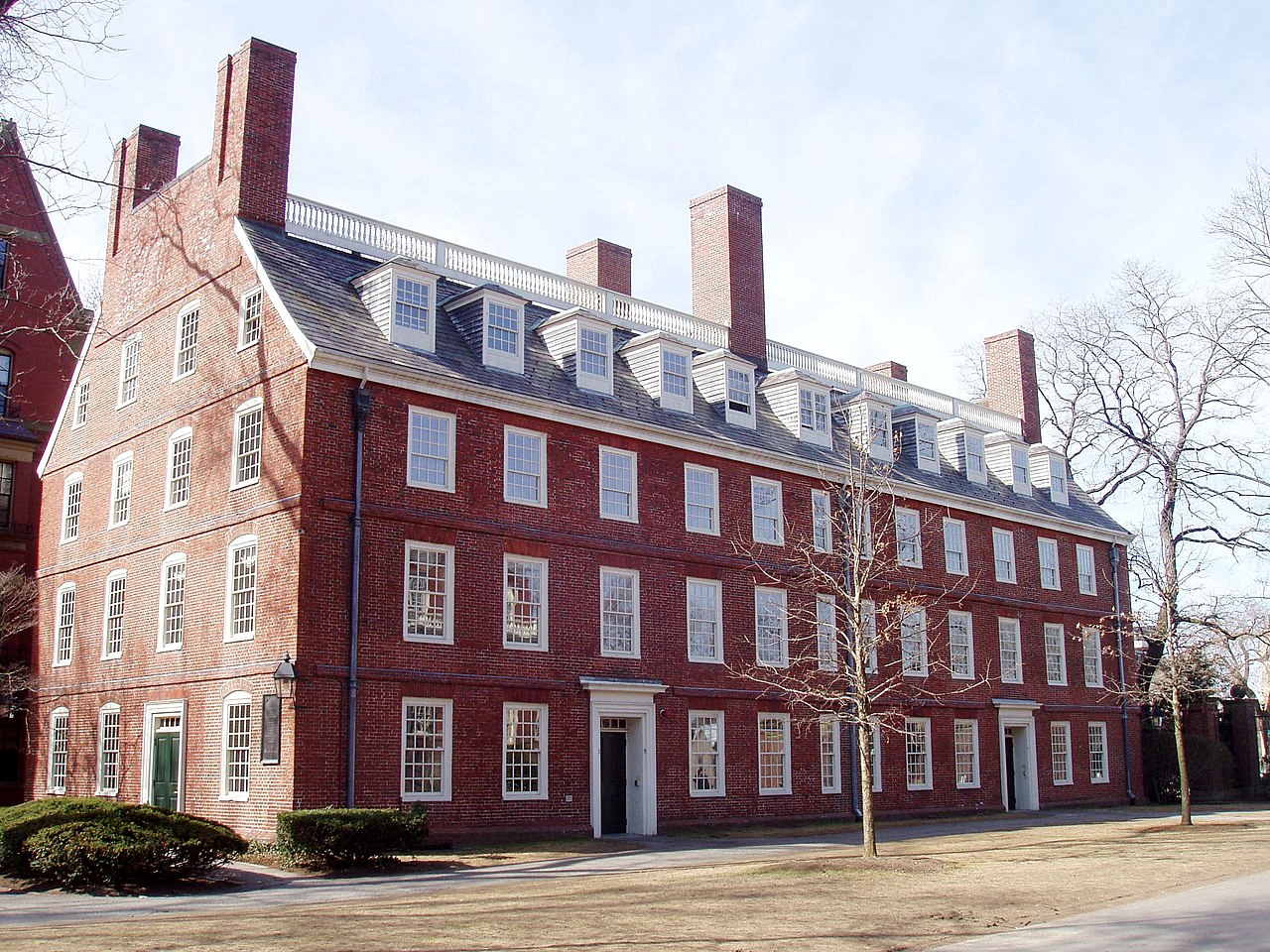
The Applied Mathematics program at Harvard offers a rigorous exploration of mathematical principles and their application across various scientific and engineering fields. Students will engage with core concepts in areas such as computing, linear algebra, multivariate calculus, and statistical inference. The curriculum is designed to build a strong foundation in problem-solving through both theoretical understanding and practical implementation using computational tools like Python. This program is ideal for students seeking to bridge the gap between abstract mathematical theory and real-world challenges.

Applied Mathematics
Applied Mathematics and Statistics
Stony Brook University's Department of Applied Mathematics and Statistics offers undergraduate and graduate programs designed to equip students with advanced quantitative skills for diverse careers. The undergraduate BS program focuses on practical applications of mathematics, probability, statistics, operations research, and actuarial mathematics, preparing graduates for roles in business and industry. The graduate program offers Master of Science (MS) and Doctor of Philosophy (PhD) degrees with specialized tracks including Computational Applied Mathematics, Computational Biology, Operations Research, Quantitative Finance, and Statistics. Additionally, a Data Science program, jointly offered with the Department of Computer Science, is available at both undergraduate and graduate levels, focusing on extracting insights from complex data using a blend of math, computer science, and statistics.
Applied Mathematics and Statistics - Stony Brook University
The Department of Applied Mathematics and Statistics at Stony Brook University offers robust graduate programs designed to equip students with advanced skills in mathematical modeling, statistical analysis, and computational techniques. Students can choose from specialized tracks that address the growing demand for expertise in areas such as computational applied mathematics, computational biology, operations research, quantitative finance, statistics, and data science. These programs emphasize a strong theoretical foundation combined with practical application to solve complex real-world problems across various industries. Our graduate studies lead to both Master of Science (MS) and Doctor of Philosophy (PhD) degrees. The curriculum is structured to provide in-depth knowledge and hands-on experience. The Data Science program, a joint offering with the Department of Computer Science, allows students to delve into unlocking insights from data, mastering fundamentals of math, computer science, and statistics, and utilizing advanced tools and algorithms. The department boasts a dedicated faculty and a vibrant community of graduate students engaged in cutting-edge research. Many faculty members actively involve graduate students in their research projects, offering invaluable opportunities for professional development and exposure to diverse fields of study.

Applied Mathematics, Bachelor of Science
The Bachelor of Science in Applied Mathematics at Stevenson University equips you with the critical thinking and data analysis skills essential for success in a data-driven world. This program focuses on using mathematical techniques to solve complex problems across various fields, including business, science, engineering, and information technology. You'll learn to construct, analyze, and interpret mathematical and statistical models, utilizing technology for problem-solving and communicating your findings effectively. Graduates are prepared for dynamic careers by developing a deep insight into problems and presenting solutions with mathematical reasoning and ethical standards.

Applied Statistics Master of Science (M.S.)
The Master of Science (M.S.) in Applied Statistics program at the University of Michigan provides students with a strong foundation in statistical theory and methods, preparing them for careers in data analysis and statistical application across various fields. The program is designed to equip students with the skills to tackle complex data challenges, interpret results, and communicate findings effectively.

Bachelor of Arts in Math Education (Grades 5-9)
Maryville University's Bachelor of Arts in Math Education (Grades 5-9) program is designed to equip students with the knowledge and skills to effectively teach mathematics to young adolescents. This program focuses on building upon fundamental math concepts learned in elementary school and preparing students for the academic demands of high school. Graduates will be prepared to understand and address the unique joys and challenges of educating this age group while specializing in mathematics instruction.

Bachelor of Arts in Middle Level Education
The Middle Level Education program at Columbia College offers a Bachelor of Arts degree designed to prepare effective classroom teachers for grades 5-8. This program emphasizes early and ongoing practical experience in educational settings, fostering skills for both independent and collaborative work. Graduates are equipped with the attitudes and professional skills necessary to provide quality education and effect positive change in schools and society. The program is recognized by the National Council of Teachers of English (NCTE) and the South Carolina State Board of Education under CAEP standards.
Bachelor of Science in Actuarial Science
The Bachelor of Science in Actuarial Science program at Maryville University equips students with the mathematical, statistical, and business skills necessary to assess risk and its financial implications. Actuaries play a crucial role in various industries, including insurance and finance, by analyzing data to predict future financial outcomes and develop strategies to mitigate risk. This program provides a strong foundation in core actuarial concepts, alongside essential knowledge in business, technology, and data science.
Bachelor of Science in Applied Mathematics
The Applied Mathematics program at Columbia College equips you with essential analytical and problem-solving skills to address complex, real-world challenges. You will gain a strong foundation in core mathematical concepts including calculus, discrete mathematics, differential equations, linear algebra, and probability and statistics. The program emphasizes applying these concepts across various fields like computer science, business, and the natural sciences, fostering a focus on communication, technology, and interdisciplinary collaboration.
Bachelor of Science in Applied Mathematics
The Bachelor of Science in Applied Mathematics at Florida Polytechnic University offers a comprehensive and flexible education in mathematical principles and their applications across various STEM fields. This program equips students with a strong foundation in mathematical concepts, theories, and problem-solving techniques. You will learn to use modeling, computation, and data analysis to tackle complex challenges and develop innovative solutions. The curriculum includes a customizable sequence of four courses in related disciplines where mathematics is central, such as engineering, physics, data science, and computer science, allowing you to tailor your studies to your interests. Graduates with strong mathematical skills are highly sought after in today's workforce.
Bachelor of Science in Mathematical Science
The Bachelor of Science in Mathematical Science at Maryville University equips students with strong analytical and problem-solving skills, forming a solid foundation for various advanced studies and careers. The curriculum offers a broad base in mathematical concepts with the flexibility to choose electives, allowing students to tailor their education to specific goals. A built-in minor in data science further enhances career prospects in a technology-driven job market. This program prepares graduates for diverse roles where logical reasoning and analytical abilities are highly valued. Graduates can pursue careers as teachers, analysts, actuaries, statisticians, and in many other fields requiring data analysis expertise. The program emphasizes both theoretical knowledge and practical application, supported by opportunities for real-world project involvement through university partnerships.

Bachelor of Science in Mathematics
California State University Channel Islands offers a Bachelor of Science (B.S.) in Mathematics with various emphasis areas to cater to diverse student interests. This program provides a strong foundation in mathematical theory and application, preparing students for a wide range of careers or further graduate studies. The curriculum is designed to develop critical thinking, problem-solving skills, and analytical abilities. Students will engage with core mathematical concepts and specialize in areas such as Applied Mathematics, Mathematics Education, Pure Mathematics, or Statistics, depending on their chosen emphasis. The program aims to foster a deep understanding of mathematics and its relevance in various fields.

Bachelor's Degree in Applied Mathematics and Statistics, Concentration: Secondary Teaching
This program prepares aspiring middle and high school mathematics instructors by combining rigorous coursework with intensive pedagogical training. Delivered in collaboration with Purdue University Northwest’s School of Education and Counseling, you will learn to reason and communicate mathematically, enabling you to foster these skills in your future students. The curriculum emphasizes classical and applied mathematics, alongside teaching methodologies, and includes practical field experience and training on various technological tools essential for the classroom.

Biomathematics
The Biomathematics program at UCLA offers Master of Science (M.S.) and Doctor of Philosophy (Ph.D.) degrees. This interdisciplinary program focuses on the application of mathematical and computational methods to biological and medical research. Students have the flexibility to tailor their studies to their specific research interests within areas like applied mathematics, biomathematics, and statistics, combined with diverse biomedical specialties. The program emphasizes individualized curricula and provides strong advising to guide students through their academic and research journeys.
Biomathematics MS, PhD
The Biomathematics MS, PhD program at UCLA offers advanced study at the intersection of mathematics and biology. This program equips students with the quantitative skills necessary to address complex biological problems using mathematical modeling and computational approaches. Graduates are prepared for research and academic careers in diverse fields requiring interdisciplinary expertise. Students in the Biomathematics program engage in rigorous coursework and research, developing proficiency in areas such as differential equations, probability, statistics, and computational methods as applied to biological systems. The curriculum is designed to foster critical thinking and problem-solving abilities, enabling students to contribute to the rapidly evolving landscape of biological sciences.
Biomathematics, MS and PhD
The Department of Computational Medicine at UCLA offers Master of Science (MS) and Doctor of Philosophy (PhD) degrees in Biomathematics. The MS program is primarily designed as a stepping stone to further graduate studies in Biomathematics. While direct admission to the MS program is uncommon, it can be granted under special circumstances. Students in the MS program will work with assigned advisors to tailor their studies in applied mathematics, biomathematics, and statistics, aligning with their specific research interests in diverse biomedical fields. The PhD program in Biomathematics provides advanced training for students seeking to become leaders in the interdisciplinary field of biomathematics. The program emphasizes rigorous coursework in core methodology, applied modeling in biomedicine, biological sciences, and applied mathematics/statistics. Students engage in independent research and are required to complete a teaching preceptorship.

Biostatistics

Biostatistics Graduate Programs (MS & PhD)
The Graduate Group in Biostatistics (GGB) at UC Davis offers interdisciplinary graduate programs designed to equip students with strong foundational knowledge and practical skills in biostatistical core disciplines and theory. The programs focus on state-of-the-art data analysis techniques, providing substantial exposure to biological and epidemiological sciences, alongside a robust background in theoretical modeling, statistical techniques, and quantitative/computational methods. Graduates are prepared for diverse careers in fields such as bioinformatics, environmental toxicology, medical research, drug development, and public health statistics. The Ph.D. program aims to enable students to address critical problems in genomics, medicine, agriculture, and environmental health by developing innovative quantitative models and advanced statistical methodologies. The M.S. program focuses on preparing students for advanced data analysis in life sciences problems through coursework and a comprehensive examination, without a dissertation requirement.
Biostatistics MS and PhD
The Biostatistics program at UC Davis offers graduate studies leading to Master of Science (M.S.) and Doctor of Philosophy (Ph.D.) degrees. This field utilizes quantitative methods to address problems in the life sciences across a wide range of areas. The program aims to provide students with a strong foundation in core biostatistical theory and methods, advanced skills for data analysis, substantial exposure to biological and epidemiological sciences, and a robust background in theoretical modeling, statistical techniques, and computational methods. Graduates are prepared for interdisciplinary careers in fields such as bioinformatics, environmental toxicology, biological and medical stochastic modeling, clinical trials, drug development, and epidemiological statistics. The program leverages the expertise of the Biostatistics faculty at UC Davis.
Critical metrics for the L^2-norm of the curvature tensor
This dissertation explores the concept of $\mathcal{R}$-critical metrics, which are metrics that are critical points for the $L^2$-norm of the curvature tensor functional on a manifold. The functional is defined as the integral of the squared magnitude of the Riemann curvature tensor over the manifold. The research investigates the properties of these metrics, particularly in lower dimensions (three and four), and their relationship to Einstein metrics. The work presents a partial converse to the statement that Einstein metrics are $\mathcal{R}$-critical. Specifically, it shows that in four dimensions, if a metric has non-positive sectional curvature and is $\mathcal{R}$-critical, then it must be an Einstein metric. Furthermore, the dissertation provides classifications of $\mathcal{R}$-critical homogeneous spaces in dimensions three and four. This includes detailed analysis of left-invariant metrics on Lie groups, with specific results for unimodular groups and those with a non-trivial center.

Differential Equations
This undergraduate course provides a comprehensive introduction to differential equations, a fundamental area of mathematics with wide-ranging applications in science, engineering, and economics. The course covers analytical and computational methods for solving various types of differential equations. The curriculum includes topics such as first-order equations, second-order linear equations, systems of linear equations, and qualitative analysis of nonlinear systems. Students will learn to model real-world phenomena using differential equations and interpret the results of their analyses.

Doctor of Philosophy (Ph.D.) in Mathematics
The Mathematics Department at Princeton University offers a Ph.D. program designed for students passionate about advancing the field of mathematics. The program focuses on rigorous training and research, preparing graduates for academic and research careers. The curriculum is structured over approximately four years, with the possibility of a fifth year based on satisfactory progress and continued need for study. The department encourages applications from students with diverse academic backgrounds and has no rigid course prerequisites, offering a wide range of graduate-level courses to support varied academic directions. International students are encouraged to apply.

Doctor of Philosophy (PhD) in Computational Applied Mathematics and Operations Research
The Doctor of Philosophy (PhD) in Computational Applied Mathematics and Operations Research is designed for students who want to pursue advanced research in applied mathematics. The program aims to provide a strong foundation in graduate-level computational and applied mathematics across various sub-fields. Graduates will be equipped to conduct original research, effectively communicate their findings, and contribute to the field. While students are not typically admitted directly for a Master of Arts (MA) degree, it can be earned along the way to the PhD. The program requires a total of 90 credit hours for the PhD, including coursework and research, and culminates in a dissertation and public oral examination.
Doctor of Philosophy in Mathematics
The University of Michigan offers a Doctor of Philosophy (PhD) program in Mathematics designed to train students for research careers in academia and industry. The program focuses on advanced coursework and original research, preparing graduates to contribute to the field of mathematics. Students will engage with faculty who are leaders in various areas of mathematics, including commutative algebra, algebraic geometry, and representation theory. The curriculum is rigorous, emphasizing theoretical understanding and problem-solving skills. The department provides a supportive environment for students to develop their research interests and collaborate with peers and faculty. Graduates of the program are equipped with advanced analytical and quantitative skills, making them well-suited for a variety of career paths in research, higher education, and specialized industries.

Doctor of Philosophy in Mathematics
The University of California, San Diego (UCSD) offers a Doctor of Philosophy (Ph.D.) program in Mathematics. This program is designed to provide advanced academic training and research opportunities for students pursuing a career in mathematics or related fields. The Ph.D. program typically involves rigorous coursework, comprehensive examinations, and the completion of an original research dissertation. Financial support is a key component for Ph.D. students, with most admitted students receiving financial assistance for up to five academic years. This support commonly includes tuition and fee coverage, along with a salary, often through Teaching Assistant (TA) appointments. Additional funding may be available through Graduate Student Researcher (GSR) positions or fellowships, depending on research projects and funding availability. Both TA and GSR roles provide a salary and full payment of tuition and fees.
Doctor of Philosophy in Statistics
The Doctor of Philosophy in Statistics program at Texas A&M University provides comprehensive training in both statistical methods and theoretical statistics. The program focuses on developing your ability to identify relevant statistical approaches for solving real-world problems and to create new methodologies when necessary. You will gain a robust understanding of current statistical theory and cultivate the mathematical skills required for advancements in statistical methodology. The curriculum is designed to be flexible, allowing you to tailor your studies to your specific academic and research interests.

Doctoral Program in Biostatistics
The Doctoral Program in Biostatistics at Brown University aims to train students to conduct independent research in the theory, methodology, and application of statistics to critical problems in biomedical research, including biology, public health, and clinical medicine. The program emphasizes developing new quantitative methods and their underlying theory, applying innovative statistical approaches to complex scientific problems, and fostering leadership in interdisciplinary research across public health, medicine, biology, and social sciences. Students are required to demonstrate mastery of advanced biostatistical methods through coursework and examinations. This includes a strong foundation in statistical inference, general biostatistical methods, specialized domain areas, and public health principles. Additionally, students must develop competency in a substantive field of application, such as genetics, economics, or epidemiology, by completing relevant graduate-level coursework in another department.

EdM in Mathematics Education
The EdM in Mathematics Education is designed for current or aspiring teachers who are passionate about teaching and aim to enhance their academic knowledge and instructional skills. This program focuses on the latest research, curricula, methodologies, and theories in mathematics education. It is particularly suitable for individuals who already hold a teaching license or do not intend to pursue one, as it does not lead to initial licensure. The curriculum is flexible and can be tailored to individual student needs and backgrounds. Full-time students can complete the degree in one academic year, while many teachers opt to study part-time while continuing their careers.

Elementary Education
The Elementary Education program at West Virginia Wesleyan College prepares students to become effective teachers for grades K-6. This program provides a strong foundation in pedagogical theory and practical classroom experience, equipping graduates with the skills needed to foster student learning and development. Students can pursue optional endorsements in specific subject areas like Mathematics (5-9) or Social Studies (5-9) to broaden their teaching capabilities. The curriculum is designed to cover essential teaching methods, child development, and subject-specific content knowledge, culminating in a supervised student teaching experience.
Equivariant Lagrangian Floer Theory on Compact Toric Manifolds
This dissertation explores the field of Equivariant Lagrangian Floer Theory, specifically applied to compact symplectic toric manifolds with subtorus actions. The research introduces an equivariant version of Lagrangian Floer theory and demonstrates its application in proving that the set of Lagrangian torus fibers, along with weak bounding cochain data and non-vanishing equivariant Lagrangian Floer cohomology, forms a rigid analytic space. The work also shows how tropical geometry can be used to locate these Lagrangian torus fibers within the moment polytope. Furthermore, the study applies equivariant theory to establish that moment Lagrangian correspondences, induced by symplectic reduction, are unobstructed after bulk deformation, provided certain equivariant Kuranishi structures and compatible equivariant CF-perturbations exist.
Geometry and Topology in the Plane
This undergraduate course explores the fundamental concepts of geometry and topology within a two-dimensional plane. It delves into the properties and structures of shapes and spaces, focusing on how they can be understood and transformed without tearing or gluing. The course covers topics such as topological invariants, surface classifications, and the fundamental group, providing a rigorous introduction to these advanced mathematical fields. It is designed for students with a solid foundation in undergraduate mathematics. Learning resources from the Spring 2023 offering, including lecture notes and problem sets, are available. The course is taught by Professor Paul Seidel in the Department of Mathematics.

Graduate Programs in Applied Mathematics
The University of Washington offers graduate programs in Applied Mathematics, including research-based Master of Science (MS) and Doctor of Philosophy (PhD) degrees, as well as professional Master of Science (MS) programs. These programs are designed to provide students with a strong foundation in mathematical theory and its applications, preparing them for advanced research or industry roles. The university emphasizes both theoretical understanding and practical application of mathematical concepts.
Graduate Programs in Mathematics
The University of Washington Department of Mathematics offers Master's and PhD programs for students seeking to deepen their mathematical knowledge. The Master's program is designed to strengthen foundational mathematical understanding, while the PhD program prepares students for careers in advanced mathematics. Both programs emphasize a rigorous curriculum and are offered on campus.

Graduate Programs in Statistics
Purdue University's Department of Statistics offers graduate programs focused on both theoretical and applied statistics. The department is known for its strong interdisciplinary research, with faculty actively engaged in cutting-edge areas such as bioinformatics, machine learning, data mining, and computational finance. Students have the opportunity to participate in Statistics in the Community (StatCom), a volunteer consulting organization that provides practical experience and community engagement. The programs are designed to address globally significant scientific issues, preparing graduates for diverse careers in industry, government, academia, and non-profit sectors.

Joint Major in Economics/Mathematics
The Department of Economics at NYU Arts & Science, in conjunction with the Courant Institute of Mathematical Sciences, offers a joint-major program in Economics and Mathematics. This program is designed for students who possess strong mathematical abilities and are seeking formal training in economic analysis combined with advanced mathematical methodologies. It is particularly beneficial for those intending to pursue graduate studies in economics or other quantitative fields. The curriculum follows the Theory concentration of the Economics major, requiring a robust set of courses in both disciplines.
Local Lagrangian and Fixed-Point Floer (Co)homologies
This dissertation presents two related research projects in mathematics. The first project develops a general framework for calculating specific types of invariants in Lagrangian Floer theory using local data. This work extends previous research by introducing a spectral sequence that helps compute these invariants, with applications demonstrated in the study of affine varieties. The second project focuses on a different kind of invariant related to symplectomorphisms, specifically examining families of singularities in Milnor fibrations. It offers a new proof for a conjecture by Zariski concerning the constancy of certain properties in these singularity families, and also recovers a result by Varchenko. While these two projects explore different areas, they are connected by the inspiration for the first project's definitions, which stem from singularities of algebraic varieties. Future work aims to use the developed spectral sequence for further computations. The dissertation includes foundational concepts relevant to both projects before delving into the specifics of each part, which can be read independently.
M.Ed. or Ph.D. in Measurement and Statistics
The Measurement and Statistics program at the University of Washington offers both a Master of Education (M.Ed.) and a Doctor of Philosophy (Ph.D.) degree. Both programs focus on preparing students to become leaders in the research and practice of cutting-edge psychometrics and applied statistical modeling. The M.Ed. program is designed as a two-year, full-time or part-time program to equip graduates with advanced skills for the job market, while the Ph.D. program is for students aiming to become scholars and experts in a specific quantitative methods area, typically completed in 3-5 years. Students in the M.Ed. program gain expertise in analyzing complex data using R, developing and refining assessments, and understanding the quantitative methodology landscape. Ph.D. students delve deeper into areas such as item response theory, structural equation modeling, multilevel modeling, Monte Carlo simulation, and validity theory. The program emphasizes educational equity and quality through advanced quantitative methods.
Many Faces of Renormalization
This program brings together mathematicians and physicists to explore the diverse applications and interconnections of renormalization in dynamical systems. Originally a key tool in Quantum Field Theory and Statistical Mechanics for understanding phase transitions and critical phenomena, renormalization group ideas have since been applied to dynamics, particularly in the study of universality and small-scale structures. The program aims to foster a unified approach to renormalization, examining its manifestations across various fields. It will delve into conformal aspects, including the small-scale properties of conformal dynamical systems and related geometric problems, as well as applications in areas like quasi-periodic Schrödinger operators. Furthermore, the program will investigate renormalization in physical contexts such as Quantum Field Theory, fluid dynamics, and statistical mechanics, focusing on the underlying stochastic mechanisms that drive statistical scaling invariance.
Master of Arts in Statistics
The Master of Arts in Statistics program offers advanced training in core statistical theory and methods. It combines traditional coursework with electives focusing on modern computational and data science topics. This program is designed to prepare students for careers in education or industry, or to serve as a foundation for further graduate studies towards a PhD. Graduates will demonstrate a strong understanding of probability theory, mathematical statistics, stochastic processes, and the ability to apply linear and generalized linear models to real-world data.
Master of Arts in Teaching (MAT)
The School of Professional Development at Stony Brook University offers a Master of Arts in Teaching (MAT) program designed to prepare graduate students for careers in education. This program provides a pathway to teacher certification in various subject areas. Additionally, the Department of Linguistics offers a Master of Arts in Teaching English to Speakers of Other Languages (MAT TESOL). For current Stony Brook undergraduates, combined Bachelor's/Master's degree programs leading to teacher certification are also available.

Master of Biostatistics
The Master of Biostatistics program at Duke University equips students with the analytical skills, biological insight, and communication abilities needed to thrive in today's data-driven biomedical research landscape. Located within a leading institution for health professions and biomedical education, this program offers a unique, health-care-centric approach, being the only biostatistics master's program based in a School of Medicine. Students benefit from early engagement with clinical and translational investigators, an active, learner-centered curriculum, and opportunities to practice in authentic research environments. The program focuses on uncovering the genetic roots of disease, optimizing drug therapies, and reducing healthcare costs, preparing graduates to drive innovation and improve lives.
Master of Public Health in Epidemiology
The Master of Public Health (MPH) in Epidemiology program at Texas A&M University equips students with the skills to become leaders in understanding, controlling, and preventing diseases within populations. This program focuses on applying fundamental epidemiologic and biostatistical methods to public health practice, policy, and research. Graduates are prepared for impactful careers in various settings, contributing to global health leadership. The department fosters a supportive environment that encourages exploration and discovery through mentorship and research opportunities.
Master of Science in Applied and Computational Mathematics
The Master of Science in Applied and Computational Mathematics (ACM) is a graduate program offered by the Department of Applied Mathematics. This on-campus degree aims to provide students with a strong working knowledge of various applied mathematics fields, potentially including specific application areas, to prepare them for successful careers in industry. The program requires a minimum of 36 credits and 9 courses, with specific core requirements. Students are expected to maintain satisfactory academic progress with a GPA of 3.2 or higher. The program can be pursued full-time or part-time.
Master of Science in Applied Mathematical Science – Mathematics
The Master of Science in Applied Mathematical Science with a specialization in Mathematics at the University of Central Oklahoma focuses on applying mathematical principles to real-world problems. This program is designed for students seeking advanced knowledge in mathematical theory and its practical applications. It equips graduates with the analytical and problem-solving skills necessary for careers in various quantitative fields. The curriculum emphasizes a strong foundation in advanced mathematics, including areas relevant to data analysis, modeling, and scientific computation. Students will develop the ability to tackle complex challenges, interpret data, and contribute to advancements in science, technology, and industry.
Master of Science in Biostatistics
The Master of Science (MS) in Biostatistics program at UC San Diego's Herbert Wertheim School of Public Health and Human Longevity Science provides comprehensive training in statistical methods and data analysis relevant to human health. The curriculum combines theoretical and applied classroom work in core biostatistics, with electives in life sciences. It emphasizes practical data analysis skills using biomedical data, and introduces modern techniques like literate programming and reproducible research. A mandatory practicum course will give students hands-on experience with real-world biomedical or public health data, culminating in a formal presentation and analysis report. The program is designed to be completed in two years (six quarters), requiring at least 56 units of coursework.
Master of Science in Biostatistics
The University of Washington offers a Master of Science (MS) in Biostatistics with two program options: Capstone and Thesis. The MS Capstone is an 18-month, full-time program designed to prepare students for careers in industry, research, or academia as biostatisticians, research scientists, or data analysts. It includes specialization pathways and a collaborative research solution as the final project. The MS Thesis is a 24-36 month, full-time program focused on research, preparing students for doctoral degrees or research positions in biomedical, clinical, and laboratory settings. This option involves a research-based thesis and requires a final methodological academic paper and a theory exam.

Master of Science in Mathematics
The Master of Science (MS) in Mathematics program at the University of Illinois Urbana-Champaign offers students a flexible curriculum with a wide range of course options. This program is designed to provide strong preparation for careers in industry or for further doctoral studies in mathematics at other institutions. While it's uncommon, graduates may pursue a PhD at the University of Illinois after completing the MS. The degree requires 32 credit hours and can typically be finished in 18 months. Students can choose between a thesis or non-thesis track. Applications are accepted for the Fall semester.
Master of Science in Mathematics
The University of Washington offers several Master's degrees in Mathematics, including options for a Master of Arts (MA) and a Master of Science (MS) with thesis or non-thesis tracks. Students are admitted to a general MS Mathematics program and can later specialize with faculty approval. The program is designed for full-time, on-campus study over approximately two years (six academic quarters). Students are expected to make satisfactory academic progress, maintaining a minimum grade of 3.0 in all courses credited towards the degree.
Master of Science in Mathematics
The Master of Science in Mathematics program is offered through the Department of Mathematics, which is part of the Courant Institute of Mathematical Sciences at New York University. This department is globally recognized for its excellence, holding top rankings in mathematics and applied mathematics. The program provides a strong foundation in core mathematical principles and offers opportunities for specialization. Graduates are well-prepared for a variety of career paths in research, engineering, finance, business, and government, where mathematical skills are increasingly crucial for solving complex problems.
Master of Science in Statistics
The Master of Science (MS) in Statistics program at the University of Illinois Urbana-Champaign offers advanced training in both mathematical and applied statistics. It is designed to prepare students for careers as practicing statisticians, enhance research expertise for those pursuing advanced degrees in other fields, or strengthen the foundation for doctoral studies in statistics or related areas. The program emphasizes practical application and collaboration in a research environment, covering core statistical theory, computational skills, and modern data science techniques. The curriculum requires 32-36 credit hours (typically 8-9 courses) beyond any prerequisite coursework, with no thesis requirement.
Master of Statistics (MStat)
The Master of Statistics (MStat) program at Rice University is designed for individuals with backgrounds in mathematical, physical, or engineering sciences who aim to develop advanced analytical skills for careers in statistics. This program serves as a bridge to industry, offering in-depth training in the applied aspects of statistical theory, methodology, and techniques, going beyond typical undergraduate coursework. It prepares graduates for roles as professional statisticians in various sectors including business, industry, non-profit organizations, and government.
Mathematics

Mathematics
Dartmouth's Department of Mathematics offers undergraduate programs focused on developing a strong foundation in mathematical principles and their applications. Students can pursue a major in Mathematics or Mathematical Data Science. The department fosters an environment of inquiry and discovery, encouraging students to engage with advanced mathematical concepts and research. The curriculum is designed to provide a rigorous academic experience, preparing students for a variety of future paths, including graduate studies, research, and careers in quantitative fields. The department also highlights its commitment to diversity, equity, and inclusion within the mathematical community.
Mathematics
The Mathematics program at California State University Channel Islands offers a comprehensive undergraduate education in the field. Students gain a strong foundation in mathematical principles, problem-solving, and analytical thinking. The curriculum is designed to prepare graduates for a variety of career paths or further study in mathematics and related fields. The department emphasizes a supportive learning environment with accessible faculty and opportunities for student engagement. This includes participation in program seminars and interaction with a diverse student body. The program is committed to providing an excellent educational experience for all interested students, upholding principles of equal opportunity.
Mathematics
Stony Brook University's Mathematics Department, established in 1958, is a highly regarded department consistently ranked among the top twenty-five in the United States. It offers a comprehensive range of programs at both undergraduate and graduate levels. The department has particular strengths in areas such as differential and symplectic geometry, algebraic geometry, algebraic topology, dynamics, complex analysis, and their applications to mathematical physics. It is closely associated with the Institute for Mathematical Sciences and the Simons Center for Geometry and Physics, fostering a collaborative research environment.
Mathematics
Stony Brook University's Department of Mathematics offers advanced graduate studies leading to a PhD. The program focuses on rigorous theoretical training and research, preparing students for academic and research careers. Doctoral candidates engage in in-depth study and contribute to the field through original research, culminating in a dissertation defense.
Frequently asked questions
How much does it cost to study Mathematics & Statistics in the United States?
+
Fees range from free (common in funded PhD programmes) to approximately €54k per year; costs depend heavily on whether the institution is public or private and whether funding is awarded.
Which US universities offer Mathematics & Statistics programmes?
+
This hub covers 49 universities, including MIT, Georgetown University, the University of Notre Dame, North Carolina State University, Stony Brook University, and New York University.
Can international students apply to Mathematics & Statistics programmes in the US?
+
Yes; US universities regularly admit international students, and many doctoral programmes include funding packages that cover tuition and a stipend.
What are typical entry requirements for Mathematics & Statistics programmes in the US?
+
Bachelor's programmes require a strong secondary-school record with advanced mathematics; graduate programmes typically expect a bachelor's in mathematics, statistics, or a related field, along with GRE scores and letters of recommendation.
How do I apply to a Mathematics & Statistics programme in the US?
+
Undergraduates apply through the Common App or each university's own portal; graduate applicants apply directly, submitting transcripts, a statement of purpose, and standardised test scores.