Bachelor's in Mathematics & Statistics in United States
The United States offers 39 Bachelor's programmes in Mathematics & Statistics across 21 universities, making it one of the most programme-rich destinations for quantitative undergraduates. Renowned institutions such as Massachusetts Institute of Technology and Columbia University in South Carolina appear alongside state universities like the University of California, Irvine and California State University Channel Islands, giving students a wide spectrum of institutional types and campus cultures to consider.
Tuition costs vary by institution and residency status — prospective students should consult each university's official fee schedule directly. International applicants typically need strong results in mathematics at secondary level, proof of English proficiency, and transcripts from prior education. Programmes may combine pure mathematics, applied statistics, or data science tracks depending on the institution.

Actuarial Science
The Actuarial Science program at the University of Central Oklahoma (UCO) is the only program of its kind offered in the state of Oklahoma. This program is designed to prepare students for careers as actuaries, professionals who analyze the financial costs of risk and uncertainty. Actuaries use mathematics, statistics, and financial theory to assess the likelihood of future events and design strategies to minimize their impact.
Applied Mathematics
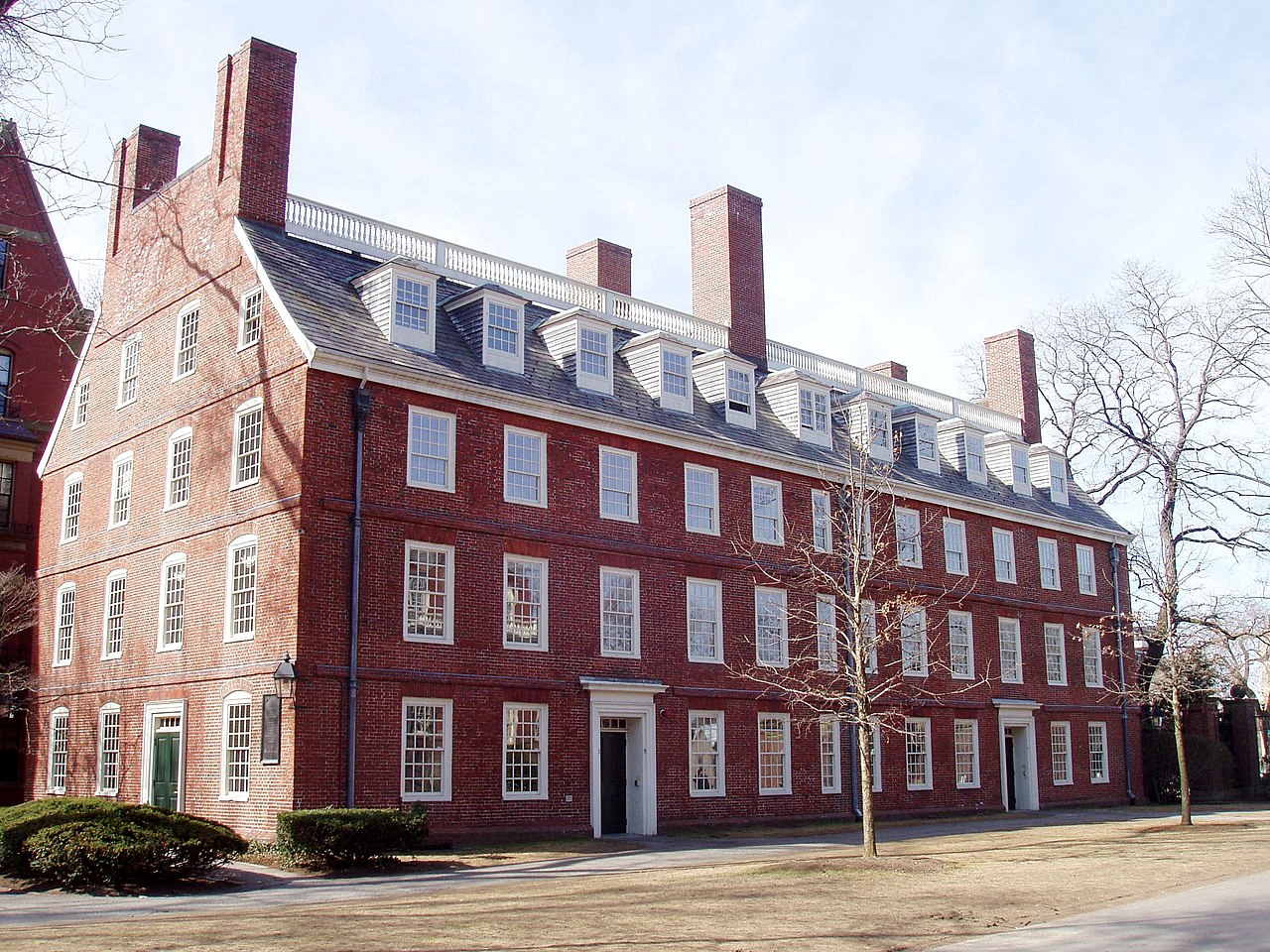
The Applied Mathematics program at Harvard offers a rigorous exploration of mathematical principles and their application across various scientific and engineering fields. Students will engage with core concepts in areas such as computing, linear algebra, multivariate calculus, and statistical inference. The curriculum is designed to build a strong foundation in problem-solving through both theoretical understanding and practical implementation using computational tools like Python. This program is ideal for students seeking to bridge the gap between abstract mathematical theory and real-world challenges.

Applied Mathematics and Statistics
Stony Brook University's Department of Applied Mathematics and Statistics offers undergraduate and graduate programs designed to equip students with advanced quantitative skills for diverse careers. The undergraduate BS program focuses on practical applications of mathematics, probability, statistics, operations research, and actuarial mathematics, preparing graduates for roles in business and industry. The graduate program offers Master of Science (MS) and Doctor of Philosophy (PhD) degrees with specialized tracks including Computational Applied Mathematics, Computational Biology, Operations Research, Quantitative Finance, and Statistics. Additionally, a Data Science program, jointly offered with the Department of Computer Science, is available at both undergraduate and graduate levels, focusing on extracting insights from complex data using a blend of math, computer science, and statistics.

Applied Mathematics, Bachelor of Science
The Bachelor of Science in Applied Mathematics at Stevenson University equips you with the critical thinking and data analysis skills essential for success in a data-driven world. This program focuses on using mathematical techniques to solve complex problems across various fields, including business, science, engineering, and information technology. You'll learn to construct, analyze, and interpret mathematical and statistical models, utilizing technology for problem-solving and communicating your findings effectively. Graduates are prepared for dynamic careers by developing a deep insight into problems and presenting solutions with mathematical reasoning and ethical standards.

Bachelor of Arts in Math Education (Grades 5-9)
Maryville University's Bachelor of Arts in Math Education (Grades 5-9) program is designed to equip students with the knowledge and skills to effectively teach mathematics to young adolescents. This program focuses on building upon fundamental math concepts learned in elementary school and preparing students for the academic demands of high school. Graduates will be prepared to understand and address the unique joys and challenges of educating this age group while specializing in mathematics instruction.
Bachelor of Arts in Middle Level Education
The Middle Level Education program at Columbia College offers a Bachelor of Arts degree designed to prepare effective classroom teachers for grades 5-8. This program emphasizes early and ongoing practical experience in educational settings, fostering skills for both independent and collaborative work. Graduates are equipped with the attitudes and professional skills necessary to provide quality education and effect positive change in schools and society. The program is recognized by the National Council of Teachers of English (NCTE) and the South Carolina State Board of Education under CAEP standards.
Bachelor of Science in Actuarial Science
The Bachelor of Science in Actuarial Science program at Maryville University equips students with the mathematical, statistical, and business skills necessary to assess risk and its financial implications. Actuaries play a crucial role in various industries, including insurance and finance, by analyzing data to predict future financial outcomes and develop strategies to mitigate risk. This program provides a strong foundation in core actuarial concepts, alongside essential knowledge in business, technology, and data science.
Bachelor of Science in Applied Mathematics
The Applied Mathematics program at Columbia College equips you with essential analytical and problem-solving skills to address complex, real-world challenges. You will gain a strong foundation in core mathematical concepts including calculus, discrete mathematics, differential equations, linear algebra, and probability and statistics. The program emphasizes applying these concepts across various fields like computer science, business, and the natural sciences, fostering a focus on communication, technology, and interdisciplinary collaboration.

Bachelor of Science in Applied Mathematics
The Bachelor of Science in Applied Mathematics at Florida Polytechnic University offers a comprehensive and flexible education in mathematical principles and their applications across various STEM fields. This program equips students with a strong foundation in mathematical concepts, theories, and problem-solving techniques. You will learn to use modeling, computation, and data analysis to tackle complex challenges and develop innovative solutions. The curriculum includes a customizable sequence of four courses in related disciplines where mathematics is central, such as engineering, physics, data science, and computer science, allowing you to tailor your studies to your interests. Graduates with strong mathematical skills are highly sought after in today's workforce.
Bachelor of Science in Mathematical Science
The Bachelor of Science in Mathematical Science at Maryville University equips students with strong analytical and problem-solving skills, forming a solid foundation for various advanced studies and careers. The curriculum offers a broad base in mathematical concepts with the flexibility to choose electives, allowing students to tailor their education to specific goals. A built-in minor in data science further enhances career prospects in a technology-driven job market. This program prepares graduates for diverse roles where logical reasoning and analytical abilities are highly valued. Graduates can pursue careers as teachers, analysts, actuaries, statisticians, and in many other fields requiring data analysis expertise. The program emphasizes both theoretical knowledge and practical application, supported by opportunities for real-world project involvement through university partnerships.

Bachelor of Science in Mathematics
California State University Channel Islands offers a Bachelor of Science (B.S.) in Mathematics with various emphasis areas to cater to diverse student interests. This program provides a strong foundation in mathematical theory and application, preparing students for a wide range of careers or further graduate studies. The curriculum is designed to develop critical thinking, problem-solving skills, and analytical abilities. Students will engage with core mathematical concepts and specialize in areas such as Applied Mathematics, Mathematics Education, Pure Mathematics, or Statistics, depending on their chosen emphasis. The program aims to foster a deep understanding of mathematics and its relevance in various fields.

Bachelor's Degree in Applied Mathematics and Statistics, Concentration: Secondary Teaching
This program prepares aspiring middle and high school mathematics instructors by combining rigorous coursework with intensive pedagogical training. Delivered in collaboration with Purdue University Northwest’s School of Education and Counseling, you will learn to reason and communicate mathematically, enabling you to foster these skills in your future students. The curriculum emphasizes classical and applied mathematics, alongside teaching methodologies, and includes practical field experience and training on various technological tools essential for the classroom.

Differential Equations
This undergraduate course provides a comprehensive introduction to differential equations, a fundamental area of mathematics with wide-ranging applications in science, engineering, and economics. The course covers analytical and computational methods for solving various types of differential equations. The curriculum includes topics such as first-order equations, second-order linear equations, systems of linear equations, and qualitative analysis of nonlinear systems. Students will learn to model real-world phenomena using differential equations and interpret the results of their analyses.

Elementary Education
The Elementary Education program at West Virginia Wesleyan College prepares students to become effective teachers for grades K-6. This program provides a strong foundation in pedagogical theory and practical classroom experience, equipping graduates with the skills needed to foster student learning and development. Students can pursue optional endorsements in specific subject areas like Mathematics (5-9) or Social Studies (5-9) to broaden their teaching capabilities. The curriculum is designed to cover essential teaching methods, child development, and subject-specific content knowledge, culminating in a supervised student teaching experience.
Geometry and Topology in the Plane
This undergraduate course explores the fundamental concepts of geometry and topology within a two-dimensional plane. It delves into the properties and structures of shapes and spaces, focusing on how they can be understood and transformed without tearing or gluing. The course covers topics such as topological invariants, surface classifications, and the fundamental group, providing a rigorous introduction to these advanced mathematical fields. It is designed for students with a solid foundation in undergraduate mathematics. Learning resources from the Spring 2023 offering, including lecture notes and problem sets, are available. The course is taught by Professor Paul Seidel in the Department of Mathematics.

Joint Major in Economics/Mathematics
The Department of Economics at NYU Arts & Science, in conjunction with the Courant Institute of Mathematical Sciences, offers a joint-major program in Economics and Mathematics. This program is designed for students who possess strong mathematical abilities and are seeking formal training in economic analysis combined with advanced mathematical methodologies. It is particularly beneficial for those intending to pursue graduate studies in economics or other quantitative fields. The curriculum follows the Theory concentration of the Economics major, requiring a robust set of courses in both disciplines.

Mathematics
Dartmouth's Department of Mathematics offers undergraduate programs focused on developing a strong foundation in mathematical principles and their applications. Students can pursue a major in Mathematics or Mathematical Data Science. The department fosters an environment of inquiry and discovery, encouraging students to engage with advanced mathematical concepts and research. The curriculum is designed to provide a rigorous academic experience, preparing students for a variety of future paths, including graduate studies, research, and careers in quantitative fields. The department also highlights its commitment to diversity, equity, and inclusion within the mathematical community.
Mathematics
The Mathematics program at California State University Channel Islands offers a comprehensive undergraduate education in the field. Students gain a strong foundation in mathematical principles, problem-solving, and analytical thinking. The curriculum is designed to prepare graduates for a variety of career paths or further study in mathematics and related fields. The department emphasizes a supportive learning environment with accessible faculty and opportunities for student engagement. This includes participation in program seminars and interaction with a diverse student body. The program is committed to providing an excellent educational experience for all interested students, upholding principles of equal opportunity.
Mathematics
Mathematics Education (B.S.E.)
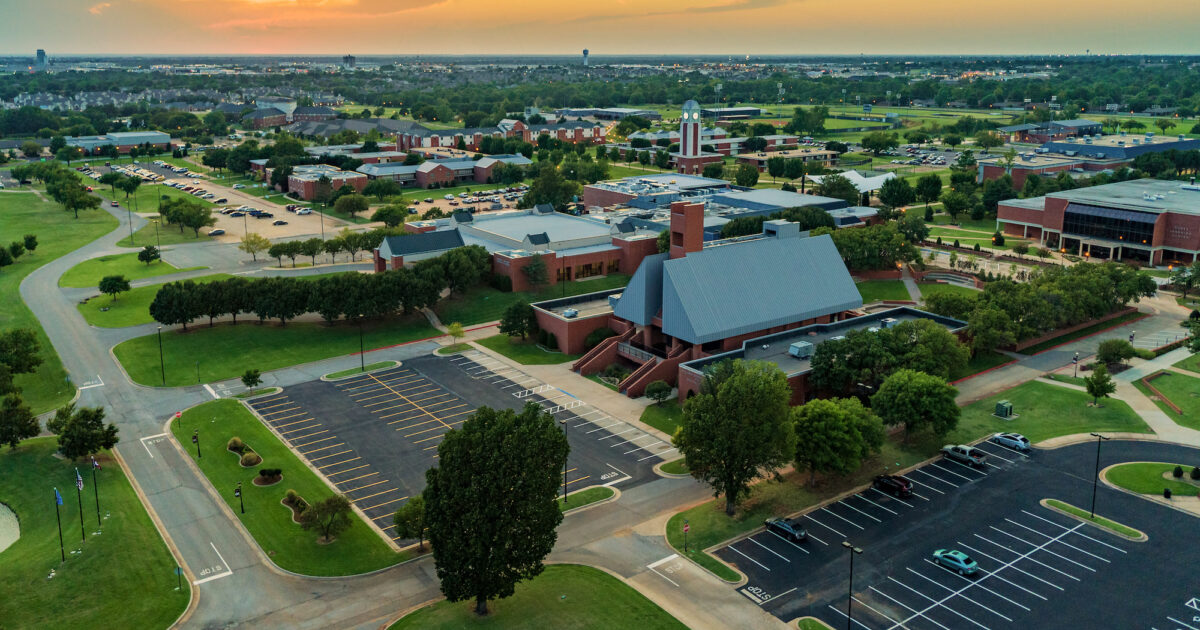
The Bachelor of Science in Education (B.S.E.) in Mathematics Education at Oklahoma Christian University prepares students to teach mathematics at the secondary level. This program equips graduates with a strong foundation in mathematical principles, problem-solving skills, and pedagogical techniques essential for effective teaching. The curriculum also emphasizes the development of communication skills, adaptability to technological advancements, and the ability to conduct independent learning and research. In addition to a comprehensive mathematics major, the program includes a Professional Education Minor, requiring 25 semester hours focused on teacher education. This ensures students gain practical knowledge in areas like classroom management, instructional strategies, and educational psychology. The curriculum is designed to foster critical thinking, integrity, and a Christian worldview, preparing students not only as educators but also as well-rounded individuals.
Mathematics-Statistics

Mathematics, Bachelor of Science Degree
The Bachelor of Science in Mathematics at Young Harris College introduces students to a wide range of theoretical and applied mathematical fields. The program requires intensive study in core areas such as real analysis and abstract algebra, preparing graduates for diverse postgraduate and professional paths. The skills developed, including logical reasoning, precise thinking, and creative problem-solving, are valuable assets for almost any career.

Mount St. Mary's University International Student Admissions
Mount St. Mary's University offers a range of undergraduate and graduate programs designed to provide students with a comprehensive education grounded in the liberal arts tradition. The university emphasizes critical thinking, ethical leadership, and community engagement, preparing students for successful careers and fulfilling lives. With a commitment to personalized learning, small class sizes, and dedicated faculty mentorship, Mount St. Mary's fosters an environment where students can thrive academically and personally.
Online Bachelor of Science in Mathematics
Maryville University offers an online Bachelor of Science in Mathematics designed for students seeking a strong foundation in mathematical principles and their applications. This program equips students with critical thinking and problem-solving skills essential for various analytical fields.
Single Variable Calculus
This course focuses on the fundamental principles of single-variable calculus. It covers topics such as limits, derivatives, and integrals, essential for understanding change and accumulation. The material is presented through lectures, problem sets, and exams, providing a comprehensive approach to calculus. Through this course, students will develop a strong foundation in mathematical analysis. The curriculum is designed to build problem-solving skills and analytical thinking, preparing students for advanced studies in mathematics, science, and engineering. The course materials include lecture notes, video lectures, and practice problems to support learning.
Statistics for Applications
This undergraduate course, "Statistics for Applications," is offered by the Mathematics department at MIT. It covers fundamental concepts in statistics relevant for various applications. The course materials are available online, including lecture notes, lecture videos, and problem sets from the Fall 2016 offering, taught by Professor Philippe Rigollet. It delves into topics such as parametric inference, maximum likelihood estimation, hypothesis testing, regression, principal component analysis, and generalized linear models.
Topics in Mathematics with Applications in Finance
This undergraduate course, offered in Fall 2013, delves into topics in mathematics with a focus on their applications in finance. It introduces fundamental concepts of stochastic processes, including random walks and Markov chains. The course explores the nature of random variables indexed by time, distinguishing between discrete-time and continuous-time processes. It aims to provide a framework for understanding and analyzing financial phenomena through mathematical modeling.

University Programs at California Baptist University
California Baptist University (CBU) offers a wide range of undergraduate and graduate programs across various disciplines. Students can choose from associate, bachelor's, master's, doctorate, and certificate programs. CBU emphasizes a Christian worldview in its academic offerings, aiming to provide students with a strong foundation in their chosen fields while fostering personal and spiritual growth.
Frequently asked questions
How many Bachelor's in Mathematics & Statistics programmes are available in the United States?
+
There are 39 Bachelor's programmes in Mathematics & Statistics spread across 21 universities in the United States.
Which universities in the United States offer a Bachelor's in Mathematics & Statistics?
+
Notable options include Massachusetts Institute of Technology, University of California Irvine, and Maryville University, among 21 universities total offering this degree.
How much does a Bachelor's in Mathematics & Statistics cost in the United States?
+
Tuition varies by programme — check each listing directly as fees differ widely between public in-state, public out-of-state, and private institutions.
Can international students apply for a Bachelor's in Mathematics & Statistics in the United States?
+
Yes, international students are welcome; most programmes require English proficiency scores (TOEFL or IELTS) and strong secondary-school mathematics results.
What are the typical entry requirements for a Bachelor's in Mathematics & Statistics in the United States?
+
Universities generally require a high school diploma with strong mathematics grades, SAT/ACT scores (where applicable), and English proficiency documentation for non-native speakers.