Physics in United States
The United States offers 47 Physics programmes across 29 universities, ranging from undergraduate through to doctoral research, at institutions distributed across the country. World-renowned universities including Massachusetts Institute of Technology, Northwestern University, University of California Irvine, and Texas A&M University are among those offering physics degrees. Tuition ranges from free to approximately €62,000 per year, with research funding widely available at graduate level.
Physics programmes in the United States are consistently ranked among the strongest globally, with access to state-of-the-art research facilities, national laboratories, and a vibrant culture of scientific inquiry. Students can pursue specialisations in astrophysics, condensed matter, particle physics, quantum computing, and applied physics. At the graduate level, most PhD students receive funded positions that cover tuition and provide a stipend, making doctoral study financially accessible for qualified international applicants.

Applied Physical Sciences PhD
The Applied Physical Sciences PhD program at the University of North Carolina at Chapel Hill offers an interdisciplinary doctoral training experience. It bridges the gap between science and engineering, fostering an environment where students combine scientific discovery with an engineering mindset, team-based research, and entrepreneurial thinking to tackle real-world challenges. The program emphasizes a collaborative and collegial atmosphere to support students in their research and career aspirations. Faculty research interests are diverse, spanning areas such as biomolecular sensors, point-of-care diagnostics, novel tools for clinical needs, advanced optical instrumentation for biology and medicine, and force technologies applied to cancer and lung disease research.

Astronomy

Astronomy PhD
The Astronomy PhD program at Northwestern University offers comprehensive training in astronomy, with a strong emphasis on enabling students to commence graduate research early in their studies. The program is designed to be flexible, allowing students to supplement their astronomy coursework with subjects from physics and other quantitative fields like applied mathematics, statistics, computer science, or engineering, tailored to their specific research interests. Students benefit from the dynamic research environment fostered by the Center for Interdisciplinary Research and Exploration in Astrophysics (CIERA).

Bachelor of Arts/Science in Physics
Texas A&M University offers multiple pathways to an undergraduate degree in Physics, allowing you to choose between a Bachelor of Arts (B.A.) or a Bachelor of Science (B.S.) degree. The B.A. provides a flexible foundation in physics with a required minor in another discipline, ideal for careers in fields like intellectual property law, science reporting, or physics teaching. The B.S. in Physics is a more rigorous program, emphasizing strong foundations in physics and mathematics, and includes mandatory participation in faculty-guided research. This degree is highly recommended for students planning to pursue advanced degrees in physics or employment as professional physicists in industry. The B.S. program also offers several specialized tracks, including Astrophysics, Business, Computational Science, Materials Physics, Physical Science Teaching, and Physics and Mathematics Teaching, allowing you to tailor your studies to specific career interests.

Bachelor of Science in Physics
The Bachelor of Science in Physics program at Florida Polytechnic University provides a comprehensive understanding of the fundamental laws governing nature, from the subatomic realm to cosmic scales. This program builds upon a strong foundation in mathematics and science, delving into core physics areas such as mechanics, thermodynamics, electricity and magnetism, and quantum mechanics, alongside computational physics. Students can specialize in astrophysics or applied quantum mechanics. The curriculum is structured around an innovative design sequence, emphasizing project-based learning and preparing students for internships and research. This approach culminates in a senior capstone design project where students collaborate in teams to solve real-world industry challenges.

Bachelor of Sciences in Applied Physics
The Bachelor of Sciences in Applied Physics program at California State University Channel Islands (CSUCI) focuses on the intersection of scientific principles and technological applications. Students will explore fundamental laws of nature and learn to apply them to practical, real-world problems. This interdisciplinary program emphasizes working one-on-one with faculty in an innovative learning environment. The curriculum prepares graduates for high-demand careers in various high-tech fields. The program provides a strong foundation in physics, mathematics, computer science, and engineering, with exposure to life sciences and medicine. Graduates will be equipped to contribute to modern research in areas such as biophysics, biomedical engineering, bioinformatics, materials science, and medical imaging.
Cannabusiness Program
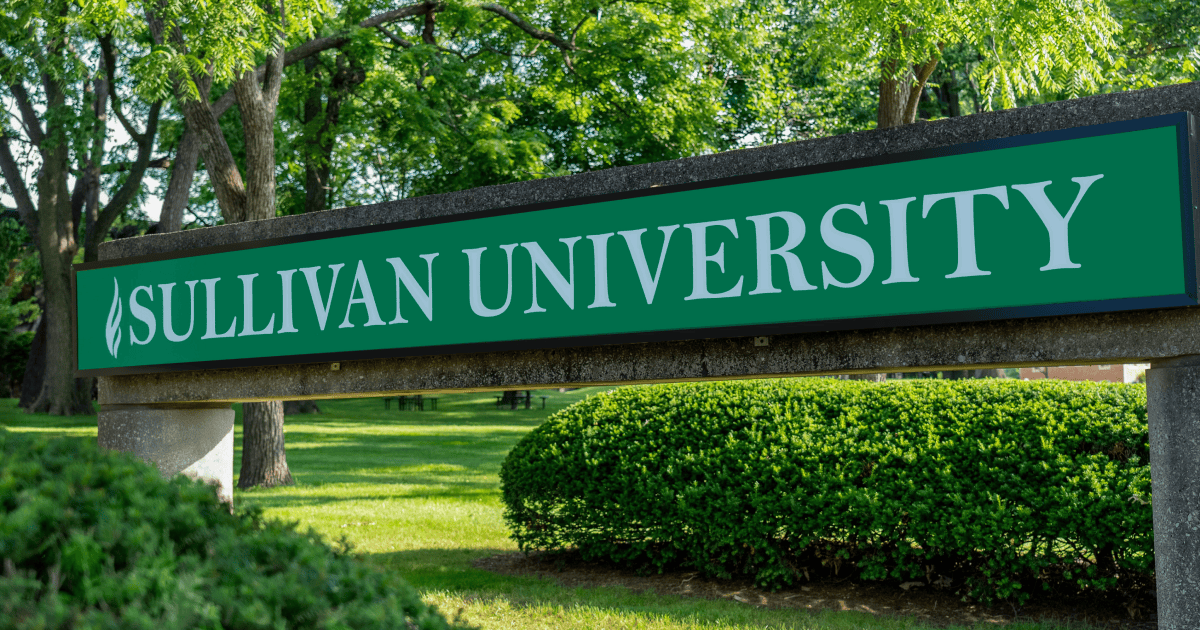
The Cannabusiness program at Sullivan University offers a comprehensive study of the legal cannabis industry. It is designed for individuals interested in careers in medical, entrepreneurial, or business aspects of this growing field. The curriculum combines academic learning with practical training in areas such as retailing, wholesaling, and manufacturing, while also examining the social, legal, and economic implications of cannabis. This program provides a thorough understanding of the industry, from supply chain management to legal frameworks, preparing students for roles at the forefront of the cannabis sector.

Earth, Planetary, and Space Sciences - Geophysics and Space Physics
The Department of Earth, Planetary, and Space Sciences at UCLA offers Master of Science (M.S.) and Doctor of Philosophy (Ph.D.) degrees with a specialization in Geophysics and Space Physics. This program focuses on understanding the fundamental processes governing Earth, its surrounding space environment, and other celestial bodies. Students will explore areas such as seismology, gravity, thermal regimes, geomagnetism, tectonics, geophysical fluid dynamics, mineral physics, and planetary science. The curriculum is designed to provide a strong foundation in theoretical and applied geophysics, with opportunities to specialize in various subfields. Students work closely with faculty advisors to tailor their course of study and research, culminating in either a comprehensive examination and thesis or a research-based thesis. The program aims to equip students with advanced research skills and knowledge necessary for careers in academia or industry.

Engineering Physics - Physics
The Engineering Physics program at the University of Central Oklahoma (UCO) is designed for students who are interested in the fundamental principles of physics and their practical application in solving engineering problems. This program offers a unique blend of theoretical knowledge and hands-on experience, preparing graduates for diverse careers in science and technology. Students in this program will delve into core physics concepts, including mechanics, electricity and magnetism, thermodynamics, and quantum mechanics, while also gaining a strong foundation in engineering principles. This interdisciplinary approach equips graduates with the analytical and problem-solving skills necessary to excel in fields that require a deep understanding of both physics and engineering.

Graduate Program in Biophysics
The Graduate Program in Biophysics (BPY) at Princeton University facilitates interdisciplinary graduate education at the intersection of physical and life sciences. It is a collaborative effort involving faculty from the Lewis-Sigler Institute and numerous science and engineering departments. The program covers a wide spectrum of biophysics research, from molecular to ecosystem levels, incorporating both experimental and theoretical approaches. This PhD program aims to train future leaders in biophysics, welcoming students with backgrounds in physical sciences, life sciences, or those with specific undergraduate experience in biophysical problems. All admitted students receive financial support covering tuition, health insurance, and a stipend for the duration of their studies.

Graduate Program in Physics
Carnegie Mellon University's Physics department offers a Ph.D. program designed to train students in advanced research and prepare them for careers in academia or industry. The program focuses on developing strong theoretical and experimental skills, with opportunities to engage in cutting-edge research across various subfields of physics. Students will work closely with faculty mentors, participate in seminars, and contribute to the vibrant research community. The curriculum is rigorous, emphasizing deep understanding of fundamental principles and their application to complex problems. The department is committed to fostering an inclusive environment where students can thrive and achieve their academic and professional goals.

Graduate Program in Physics
The NYU Department of Physics offers graduate programs designed to provide outstanding training for aspiring physicists, astrophysicists, and biophysicists. The department aims to support a diverse student body, recognizing that physicists have varied backgrounds, talents, and career paths. The goal is to help each student flourish and discover their individual trajectory in fields ranging from academic research to industry and public service. The admissions process seeks capable and committed students who will benefit from the program's offerings. Decisions are made based on a comprehensive review of the application, considering each component's relevance to the applicant's goals and overall profile. The program emphasizes a holistic approach to admissions, acknowledging that no single metric can fully capture an applicant's potential.
Master of Science in Applied Physical Sciences (Materials Science)
The Department of Applied Physical Sciences at the University of North Carolina at Chapel Hill offers a Ph.D. program in Materials Science. This interdisciplinary program integrates faculty from various departments, including Chemistry, Mathematics, and Physics and Astronomy, to conduct research and provide training in the applications of physical sciences. The program focuses on key areas such as optical and electronic materials, nanomaterials, polymers, and biomaterials. Students will gain a strong foundation in materials science fundamentals, including structure, surfaces, fabrication, thermodynamics, and laboratory techniques, and will pursue specialized knowledge through elective courses and research within their chosen concentration. The department also houses the BeAM makerspace network, offering students access to tools and expertise for hands-on creation and innovation. Research within the program spans several critical areas, including electronic materials, nanomaterials, polymers, and biomaterials. Interdisciplinary projects also explore topics like solar energy, soft and biological matter, structural materials, optical engineering, neuroscience, data science, and computational modeling. Students benefit from access to state-of-the-art facilities for materials synthesis, processing, and characterization, including the Chapel Hill Analytical and Nanofabrication Laboratory (CHANL) and the BeAM makerspaces. The program aims to prepare knowledgeable and responsible students, citizens, and researchers who can address real-world problems through technology and innovation.
Master of Science in Geophysics
The Master of Science in Geophysics program at Texas A&M University provides students with advanced knowledge and research skills in geophysics. This program focuses on developing an in-depth understanding of the Earth's processes and resources through the application of geophysical principles and techniques. Students will learn to analyze geophysical data, assess environmental and hazard risks, and contribute to land and environmental stewardship. Through rigorous coursework and research, you will gain practical experience with commercial software and field equipment used in geophysics. The curriculum is designed to equip you with the ability to interpret complex geophysical information, formulate and test research hypotheses, and present your findings effectively in both oral and written formats. This degree prepares graduates for careers requiring expertise in subsurface analysis and resource evaluation.

Master of Science in Physics
The Master of Science (Sc.M.) program in Physics at Brown University is designed to enhance professional skills and prepare students for advanced graduate study. The program offers flexibility, allowing completion in two, three, or four semesters of full-time study, depending on a student's prior academic background. Part-time enrollment is also an option over a longer period. The curriculum requires 8 credits of 2000-level courses. Four of these must be core Ph.D. program courses (PHYS 2010, 1720 or 2020, 2040, 2050, 2060, 2140). An additional four 2000-level credits are required, chosen from remaining core courses or other upper-level physics electives. With approval, up to two of these can be taken in other departments. While not strictly required, completing a Master's thesis is highly recommended for professional development.
Ph.D. in Astronomy and Astrophysics
Carnegie Mellon University offers a new Ph.D. program in Astronomy and Astrophysics, launching for Fall 2025 intake. This program is designed for students passionate about cosmic discovery, data science, and interdisciplinary research. With the field of astronomy entering a golden age of data from instruments like the James Webb Space Telescope, Vera C. Rubin Observatory, and the Euclid mission, this program equips students with advanced tools and technologies to explore the universe's mysteries. It aims to prepare future leaders in data-intensive astronomy.
Ph.D. in Physics
The Ph.D. in Physics program at Carnegie Mellon University offers advanced study and research opportunities for students seeking to become leaders in the field. The program is designed to provide a strong foundation in core physics principles while allowing students to specialize in areas of interest through research. Students will engage in coursework, research projects, and seminars, culminating in a doctoral thesis. The curriculum includes required core courses in quantum mechanics, electrodynamics, and statistical mechanics, alongside breadth courses in specialized physics areas. Students are also required to complete research projects and participate in oral examinations to demonstrate their readiness for independent research. The program emphasizes rigorous academic training and practical research experience to prepare graduates for careers in academia or industry.

PhD in Physics
The PhD program in Physics and Astronomy at Stony Brook University aims to provide students with a comprehensive understanding of physics and astronomy, coupled with the ability to conduct original research in a specialized area. Graduates are prepared for research positions in academia and national laboratories, as well as careers in industrial research, medical physics, data science, and finance. The program emphasizes developing independent thinking, critical reasoning skills, and the ability to effectively communicate research findings to a scientific audience. Beyond the general PhD in Physics, concentrations are available in Astronomy and Physical Biology, allowing students to tailor their studies to specific interests.
Photonic Materials and Devices
This graduate-level course, "Photonic Materials and Devices," delves into the fundamental principles and design considerations of materials used in photonic applications. It explores topics ranging from optical materials design and waveguide technology to semiconductor physics and nonlinear optics. The course utilizes a combination of lecture notes, problem sets, and readings from foundational texts in photonics. It is designed for students interested in advanced study within Materials Science and Engineering with a focus on optical phenomena and devices.

Physics
Utica University's physics program provides a thorough introduction to the study of the physical world, from atomic structures to the vastness of galaxies. The program is designed for students who are curious about the universe, enjoy problem-solving, and are not afraid of challenges. It offers opportunities to explore the fundamental nature of the physical universe with accomplished faculty and an individualized learning environment. The physics program prepares students for graduate school and careers in research, teaching, engineering, and other fields requiring a strong scientific foundation. The department is committed to serving the entire university community with rigorous courses for physics majors and minors, as well as foundational physics courses for students in other disciplines like chemistry, biology, mathematics, computer science, construction management, and health sciences. It also provides essential science courses for non-science students.

Physics
Purdue University's Department of Physics and Astronomy offers undergraduate and graduate programs designed to educate students to the peak of their abilities. The department is internationally recognized for its research, which provides a stimulating learning environment. Students participate in cutting-edge research, gaining the concepts and critical thinking skills necessary for diverse careers. The programs offer a strong foundation in physics for technical disciplines and promote a general understanding of the universe for non-specialists, highlighting the excitement of scientific discovery and its relevance to everyday life.

Physics
The Physics program at the University of Michigan offers a comprehensive doctoral education for students passionate about the field. This program delves into the fundamental principles of physics, preparing students for advanced research and academic careers. The curriculum is designed to provide a strong theoretical foundation coupled with practical research experience.
Physics

Physics (BA)
Boston University offers a Bachelor of Arts (BA) in Physics designed to provide a strong foundation in the principles of physics and its applications. This program is suitable for students interested in pursuing careers in science, research, or related technical fields, as well as those who wish to develop strong analytical and problem-solving skills applicable to various professions. The curriculum covers core areas of physics, including mechanics, electricity and magnetism, thermodynamics, and quantum mechanics. Students have the opportunity to engage in research alongside faculty, gaining hands-on experience in experimental or theoretical physics. The program also offers flexibility through various joint programs and minors, allowing students to combine physics with other disciplines such as astronomy, chemistry, mathematics, philosophy, and computer science.

Physics & Engineering Dual-Degree Program
This unique program allows you to earn two degrees: a Bachelor of Science in Physics from West Virginia Wesleyan College (WVWC) and an engineering degree from either West Virginia University (WVU) or Marshall University. You will spend the first three years at WVWC, building a strong foundation in physics, and then transfer to WVU or Marshall for two years of specialized engineering study. This dual-degree approach combines the benefits of smaller class sizes and close faculty interaction at WVWC with the advanced engineering facilities and expertise at a larger university. Graduates are well-prepared for careers in various engineering fields or for further study. The program emphasizes hands-on learning, with access to well-equipped labs featuring instruments like electron microscopes, wind tunnels, and 3D printers. Students have ample opportunities for research, both on campus and through summer programs at institutions like NASA, Cornell, and Columbia University. Extracurricular involvement in performing arts and sports is also encouraged, with flexible scheduling to accommodate student interests.

Physics and Astronomy, PhD
The University of Pennsylvania's Department of Physics and Astronomy offers a PhD program designed to train students in advanced research. The program combines a focused period of coursework with independent, original research, which typically forms the basis of the dissertation and initial academic publications. Students benefit from a robust schedule of seminars and colloquia featuring international scholars, supplementing classroom learning and research activities.
Physics Graduate Program
Northwestern University's graduate program in Physics aims to educate scholar-technologists equipped to conduct cutting-edge research and development. The program encourages students to push the boundaries of interdisciplinary scholarship. Ideal candidates come from diverse backgrounds and seek opportunities to explore research beyond traditional departmental lines, particularly those with a desire to merge technological expertise with social science and humanities training. While the provided information details specific course offerings for Winter 2021 across various disciplines including Astronomy, Physics, and Data Science, it does not outline a comprehensive curriculum structure for a specific degree. The program emphasizes a rigorous academic environment designed to foster innovation and advanced study in physics and related fields.
Physics Graduate Program
Dartmouth's Physics and Astronomy department offers a PhD program focused on cutting-edge research across various fields. Students engage in advanced theoretical and experimental work, contributing to new discoveries and a deeper understanding of the universe. The program fosters a collaborative environment with opportunities to work alongside renowned faculty on challenging scientific problems.

Physics of Energy
This program, PH240, delves into the fundamental physics principles that underpin energy generation, consumption, and storage. It examines various energy sources, from traditional fossil fuels to emerging renewable technologies, and explores the physical processes involved in their utilization. The course aims to provide students with a comprehensive understanding of the scientific challenges and opportunities in the field of energy. Key areas of study include thermodynamics, electromagnetism, materials science, and fluid dynamics as they relate to energy systems. The program also addresses the physical limitations and potential of technologies such as solar cells, wind turbines, batteries, and advanced nuclear reactors. Emphasis is placed on analyzing energy efficiency, losses, and the environmental impact of different energy choices. Through case studies and reports, students will explore real-world energy issues, from grid stability and renewable integration to the physics of transportation and industrial energy consumption. The course encourages critical thinking about the global energy landscape and the role of physics in developing sustainable energy solutions.

Physics PhD
The University of California, San Diego (UCSD) offers advanced doctoral studies in Physics. This program focuses on theoretical physics, with research interests spanning condensed matter theory, nanoelectronics, physical chemistry, and biophysics. Students engage in cutting-edge research, particularly in the theory of quantum transport in nanoscale and atomic systems, non-equilibrium statistical mechanics, and applications in unconventional computing and biophysics. The program encourages students to explore complex phenomena at the atomic and molecular level and contribute to the development of new technologies.
Physics PhD Program
The University of Michigan Physics PhD program offers rigorous academic training and is highly regarded for its graduates who excel as researchers, teachers, and industry professionals. The program emphasizes a collaborative and interdisciplinary research environment. Students benefit from a high program completion rate, full funding for up to five years, and a supportive atmosphere fostered by faculty, students, and staff.
Physics, MS
The University of California, San Diego (UCSD) Department of Physics has a rich history, founded in 1958 by Keith Brueckner with the vision of creating an innovative graduate program. Brueckner, with the support of Roger Revelle, aimed to attract top talent by offering cutting-edge research facilities and a spectacular location. The department's early success was built on recruiting distinguished scientists and establishing strong core experimental fields in solid state/low temperature physics and plasma physics, complemented by theory, astrophysics, and space physics groups. Located in Mayer Hall and Urey Hall, the department has been a hub for significant scientific breakthroughs, including the development of Density Functional Theory. Over the decades, it has continued to foster successive cohorts of distinguished scientists and recruit exceptional faculty. Traditions like the Watermelon Drop, originating as a physics experiment, highlight the department's enduring connection to its scientific roots and campus life.

Physics, Ph.D. and M.A.
The Physics program at UC Davis offers both a Doctor of Philosophy (Ph.D.) and a Master of Arts (M.A.) degree. With over 40 faculty members actively engaged in a broad spectrum of experimental and theoretical research, the department provides a vibrant and diverse environment for graduate study. Key research strengths include condensed matter physics, cosmology, and high energy/elementary particle physics, complemented by smaller groups focusing on biophysics, complexity, gravitation, nuclear physics, and physics education. Students often utilize national and international facilities for their doctoral research. The vast majority of Ph.D. students receive financial support through teaching or research assistantships, or external fellowships. Graduates typically pursue careers in industry, academia, or national laboratories.
The Physics of Energy
This course explores the fundamental physics principles underlying various energy sources and technologies. It examines the physical processes involved in energy generation, conversion, and storage, providing a comprehensive understanding of the energy landscape. The curriculum covers topics ranging from traditional energy forms to cutting-edge renewable and sustainable solutions.
Visualizing Electricity & Magnetism - Falling Coil
This program offers a unique visualization of the magnetic field surrounding a conducting, non-magnetic ring as it falls through the magnetic field of a fixed permanent magnet under gravity. The visualization is part of a larger initiative to help students understand complex concepts in Electricity & Magnetism through interactive and visual tools. It is designed to illustrate fundamental principles in electromagnetism, specifically Faraday's Law, by showing the dynamics of field lines and induced currents.
Frequently asked questions
How many Physics programmes are available in the United States?
+
There are 47 Physics programmes across 29 universities in the United States.
How much does studying Physics cost in the United States?
+
Tuition ranges from free (for some funded graduate positions) to approximately €62,000 per year. Many graduate students receive assistantship funding that covers tuition and provides a living stipend.
Which universities in the US offer Physics programmes?
+
Programmes are offered at Massachusetts Institute of Technology, Northwestern University, University of California Irvine, Texas A&M University, University of Central Oklahoma, and West Virginia Wesleyan College, among 29 universities.
Can international students apply to Physics programmes in the United States?
+
Yes. International applicants for undergraduate study need secondary school qualifications with strong mathematics and science results, while graduate applicants typically need a bachelor's degree in physics or a related field, GRE scores, and English language certification.
What are typical entry requirements for Physics in the United States?
+
Undergraduate applicants need strong high school mathematics and science results. Graduate programmes require a physics or related undergraduate degree, competitive academic performance, and in many cases a GRE Physics Subject Test score alongside a statement of research interests.