Political Science in United States
The United States offers 55 Political Science programmes across 37 universities, providing one of the most comprehensive selections of undergraduate and graduate politics education in the world. Georgetown University, Boston University, New York University, and Dartmouth College are among the most prominent providers, offering specialisations in international relations, comparative politics, American government, public policy, and political theory in research-intensive environments.
Tuition ranges from free to approximately €71,000 per year, spanning the full spectrum from tuition-free public institutions to elite private universities. The United States Coast Guard Academy and Xavier University represent niche but distinctive options, while New York University's urban campus provides exceptional access to international organisations and policy networks. Financial aid, fellowships, and teaching assistantships are widely available and can meaningfully reduce the net cost.

American Founding and Constitution, Certificate
This graduate certificate program offers an in-depth, interdisciplinary study of the founding principles and constitutional framework of the United States. Through courses focused on primary sources, historical documents, and key debates, you will gain an advanced understanding of the American Founding and the Constitution, exploring their origins, how they have evolved, and their ongoing influence on governance, law, and civic life. The program is ideal for educators, professionals, and scholars who want to deepen their knowledge of American constitutionalism, the foundational ideas that shaped the nation, and the historical interpretation and application of the Constitution.

B.A. Politics
The Wilf Family Department of Politics at NYU offers a Bachelor of Arts degree focused on providing students with the analytical skills to understand political events through logic and evidence. The program encourages a scientific approach to studying political institutions and driving positive change. Students will explore courses in political theory, quantitative analysis, American politics, comparative politics, and international politics, covering a wide range of topics such as law, elections, ethnic conflict, economic development, public policy, and political economy. The faculty has expertise in US and global politics, with courses regularly offered on various regions including Latin America, Europe, Africa, Russia, India, Japan, and China. The program also offers opportunities to study away at NYU's global sites in Florence, Italy, and Washington, D.C.

Bachelor of Science in Public Administration
The University of La Verne offers a Bachelor of Science in Public Administration program designed to equip students with the knowledge and skills necessary for careers in public sector management. The curriculum focuses on the theory, application, and practical aspects of managing public organizations. The program emphasizes hands-on learning through class participation, special projects, and research reports. For maximum convenience and flexibility, this program is available online and at various locations across California, including Irvine, Ontario, and Rio Hondo Community College. The program also offers an accelerated option for qualifying undergraduate students to pursue a Master of Public Administration (MPA) after completing 90 semester units. Additionally, the Campus Accelerated Program for Adults (CAPA) provides full-time and part-time options with online, on-campus, and hybrid formats, as well as evening and weekend classes, making it ideal for working adults.

Business Economics & Public Policy, MBA
The Business Economics and Public Policy (BEPP) MBA major at the University of Pennsylvania's Wharton School equips future business leaders with the analytical skills to understand the incentives and policies of firms, governments, and consumers. This program is designed for those who want to grasp how economic principles shape corporate decision-making and influence public policy, providing a critical advantage for roles in analysis, consulting, and executive leadership across diverse industries. The curriculum delves into the economic implications of globalization, technological advancements, intellectual property rights, emerging economies, and evolving government regulations. It prepares students to navigate and influence the dynamic business environment shaped by privatization, deregulation, and shifts in health, antitrust, and environmental policies, all of which significantly impact business interests.

Criminal Justice Technology - A.S. Degree
The Criminal Justice Technology program at St. Johns River State College provides a solid foundation in the principles, procedures, and practices of the criminal justice system. It combines practical learning with real-world relevance to equip students with the knowledge and skills needed for various professional roles within the justice system. The program prepares students to serve their communities by understanding criminal evidence, court procedures, criminal investigation, juvenile delinquency, and effective report writing.

Doctor of Philosophy in Public Policy
Cornell University offers a Doctor of Philosophy (PhD) in Public Policy designed to train the next generation of research scholars. The program focuses on critical national and international public policy issues, providing advanced training in empirical methods, a chosen disciplinary area, and interdisciplinary approaches. Students benefit from the resources of a world-renowned Ivy League institution within a close-knit and supportive community. Graduates gain the skills necessary to shape and evaluate policy in diverse settings, including academic positions and leadership roles in public and private sectors.
Doctor of Public Administration
The University of La Verne's Doctor of Public Administration (DPA) program is designed for experienced professionals seeking to become leaders in public service. It equips graduates to contribute thoughtfully to public sector organizations, nonprofits, municipal governments, and quasi-governmental agencies. The program focuses on developing critical thinking, policy assessment, research, program evaluation, and ethical decision-making skills, enabling students to tackle complex organizational and business challenges with a global perspective.

Government
The Government department at Dartmouth College offers a comprehensive undergraduate program focused on the study of politics, government, and policy. Students engage with a wide range of topics within political science, including American politics, comparative politics, international relations, political theory, and public law. The curriculum is designed to foster critical thinking, analytical skills, and a deep understanding of political processes and institutions at local, national, and global levels. The department boasts a diverse and accomplished faculty with expertise across various subfields of government. Students benefit from the opportunity to learn from professors who are actively involved in research and policy analysis, bringing real-world insights into the classroom. The program encourages students to explore complex political issues, develop their own research questions, and contribute to scholarly discourse.
Human Development & Family Studies, Bachelor of Arts
The Bachelor of Arts in Human Development & Family Studies (HDFS) is an interdisciplinary program designed for students interested in understanding human nature and the factors that influence it. You will explore how individuals develop physically, emotionally, and socially throughout their lifespan, considering the context of family and society. This program prepares graduates for research, public service roles, or further graduate studies.

Integrated Undergraduate-Graduate (IUG) in Public Policy
Penn State offers an Integrated Undergraduate-Graduate (IUG) program allowing academically strong students to pursue both a bachelor's degree and a Master of Public Policy (MPP) in approximately five years. This accelerated pathway is designed for students interested in policy advocacy, design, and implementation. The IUG curriculum aims to integrate critical thinking skills, in-depth knowledge of a chosen specialization, and advanced public policy concepts, providing graduates with a competitive edge in the job market and for further graduate study. Employers highly value the MPP degree, with graduates typically earning significantly more than those with only a bachelor's degree.
International Master of Public Administration (I-MPA)
The International Master of Public Administration (I-MPA) program at the University of Pennsylvania is an intensive, one-year graduate program designed for leaders aiming to enhance their skills in governance, collaboration, and public service. The curriculum emphasizes critical thinking, interdisciplinary approaches, and practical problem-solving through a blend of individual coursework, small-group learning within Leadership Task Groups (LTGs), and collaborative projects. Students engage with complex global issues and develop strategies for effective leadership in public, private, and non-profit sectors. The program structure consists of ten courses, totaling 12 course units (c.u.), completed over two semesters. Students have the option to extend their studies with a full-semester capstone project course, building directly on coursework from the previous year, which results in an individual research paper. This capstone allows for deep dives into specific global challenges, guided by expert faculty and relevant case studies.

International Public Policy and Management (M.I.P.M.)
The International Public Policy and Management (IPPAM) program at the University of Southern California (USC) is designed for international professionals and U.S. professionals aiming to work in global contexts. It attracts students from diverse academic and professional backgrounds, including public administration, social sciences, business, health care, and engineering. The program emphasizes practical application and aims to equip students with the skills needed for leadership in international policy and management. To be considered for admission, candidates must possess an undergraduate degree from a regionally accredited university and have at least three years of relevant professional experience. The admissions committee evaluates applications based on the alignment of academic and professional interests with the IPPAM program, the quality and length of work experience, academic history, interviews, essays, letters of recommendation, and English proficiency. IPPAM offers a comprehensive curriculum that bridges academic theory with real-world challenges in public policy and management. The program's location in Los Angeles provides access to a vibrant international community and diverse professional opportunities. Graduates are prepared for roles in government, non-profit organizations, and international agencies worldwide.

Joint PhD in Public Policy with Economics, Political Science, or Sociology
This joint doctoral program offers a unique interdisciplinary approach to public policy, combining rigorous disciplinary training in Economics, Political Science, or Sociology with a deep focus on public policy research. Students become full members of their chosen social science department while also engaging with the Ford School's vibrant public policy community. The program is designed for individuals seeking research careers who are committed to using advanced social science tools to address critical policy questions.
MA in Politics
The Master of Arts (MA) in Politics program at New York University's Graduate School of Arts and Science (GSAS) offers a comprehensive graduate-level study in the field of political science. Designed for students seeking to deepen their understanding of political systems, theories, and research methodologies, the program allows for specialization in various areas within politics. While many students have undergraduate degrees in political science, the program welcomes applicants from diverse academic backgrounds, provided they demonstrate a strong interest and aptitude for the subject. The curriculum is structured to build a robust foundation in political analysis, with opportunities to explore advanced topics and engage in independent research. Students can pursue this degree on a full-time or part-time basis, with most full-time students completing the program in 3-4 semesters and part-time students in 2-3 years.

Master in Public Affairs
The Master in Public Affairs (MPA) is a two-year, full-time residential program designed to equip students with rigorous, evidence-based analytical skills for careers in public policy. The program offers interdisciplinary training to address complex global and domestic policy challenges, preparing graduates to lead creative solutions. Approximately 65 students are enrolled in each cohort, fostering a collaborative learning environment.
Master of Arts in Educational Leadership, Politics, and Advocacy
This Master of Arts program equips you to lead, influence policy, and advocate for equitable change in education. You will explore the evolving landscape of educational politics and policy, and understand the crucial role of organizations that partner with schools and communities locally, nationally, and globally. The program develops your knowledge, skills, and critical perspectives to analyze complex educational challenges using data-driven and participatory methods, while honing your ability to communicate effectively and champion equity-driven change.
Master of Arts in Leadership and Public Service
The Master of Arts in Leadership and Public Service is designed to train leaders who can serve communities by implementing tangible solutions. This program uses the State of Tennessee as a primary laboratory, offering a firsthand view of how the state addresses challenges and opportunities. You will join a cohort of classmates from various communities across Tennessee to learn the dynamics of leadership, policy, and governance in diverse contexts. The curriculum focuses on building critical skills in leadership, communication, collaboration, and conflict resolution, guided by faculty and community experts. The program aims to equip and empower individuals dedicated to serving the common good, with the potential to change your life and career trajectory within one year.

Master of Arts in Political Science
The Master of Arts (M.A.) in Political Science at Duke University offers a comprehensive graduate-level education for students seeking advanced knowledge in the field. This program is designed to provide a strong foundation in political analysis, research methods, and theoretical frameworks. Students will engage with diverse areas of political science, preparing them for further academic pursuits or careers in various sectors that require sophisticated understanding of political systems and dynamics. The M.A. program emphasizes rigorous academic inquiry and critical thinking. It allows students to specialize in several key subfields, fostering deep expertise. The curriculum is structured to equip graduates with the analytical and research skills necessary to tackle complex political challenges. Duke University's Political Science department is home to renowned faculty whose research spans a wide range of contemporary and historical political issues, offering students the opportunity to learn from leading scholars in the field.

Master of Arts in Political Science at University of Illinois Urbana-Champaign
The University of Illinois Urbana-Champaign offers a Master of Arts (MA) in Political Science. While the department does not typically admit students directly into the MA program, an exception is made for the Civic Leadership concentration, which is restricted to students who were accepted into the program as undergraduates at Illinois. For those pursuing a PhD in Political Science, a Master of Arts can usually be earned within three semesters, requiring 32 graduate hours and a 3.0 GPA. The program emphasizes graduate teaching experience, which is considered valuable for students aspiring to college teaching careers. Financial aid, including fellowships and assistantships, is available on a competitive basis for PhD students, often covering tuition waivers and stipends up to $22,000.

Master of Global Policy Studies
The Master of Global Policy Studies program is designed to equip students with the knowledge and skills to become leaders in an interconnected world. It adopts a multidisciplinary approach to examine the complex economic, political, technological, and social issues of the 21st century. Students can specialize in areas such as security, law and diplomacy; international trade and finance; development; global governance and international law; international energy, environment, and technology; or regional international policy. It is also possible for students to propose their own specialization, subject to approval.
Master of Public Administration
The Master of Public Administration (MPA) program at the University of La Verne is designed to equip professionals for service in public and nonprofit organizations at local, state, and national levels. The program emphasizes collaborative problem-solving with public service leaders and alumni to address contemporary challenges. Students benefit from career mentoring, professional networking, and opportunities to advance their careers in public service. The MPA is offered online and in a hybrid format at the Ontario campus, providing flexibility for working professionals. Courses are structured in 8-week terms, incorporating both in-person and online instruction.
Master of Public Administration (MPA)
The Master of Public Administration (MPA) program at the University of Southern California's Price School focuses on developing distinguished academic and professional leaders. Admission is based on a holistic review of your past performance, including grades, work experience, and community service, as well as your future potential as indicated by letters of recommendation and your commitment to educational and career goals. The program emphasizes clear communication of your qualifications through submitted materials, as interviews are not part of the admission process.
Master of Public Administration (MPA) Online
The Master of Public Administration (MPA) online program from USC Price is designed to equip students with the skills needed for leadership and management in the public sector and beyond. It integrates key disciplines relevant to the modern political environment, connecting research with practical policy and management applications. The curriculum focuses on institutional and organizational competencies, as well as analytical skills, offering flexibility for students to tailor their education to their career goals. The program is delivered online with live classes, but requires two on-campus residencies and a capstone project.

Master of Public Affairs (MPA)
Brown University's Master of Public Affairs (MPA) program is designed to cultivate and elevate the next generation of global leaders dedicated to addressing pressing societal challenges. This one-year program provides a rigorous academic foundation and practical skills necessary for impactful careers in public service and beyond. Students will engage with a curriculum focused on economics, statistics, and policy analysis, preparing them to tackle complex issues with data-driven insights and strategic leadership. The program fosters a collaborative learning environment where students can develop their vision for addressing societal challenges and advance their career aspirations.
Master of Public Affairs (MPA)
The Master of Public Affairs (MPA) program at the University of Michigan's Ford School is designed for experienced professionals seeking to advance their careers in public policy and management. This 30-credit, two-semester program combines rigorous training in applied policy analysis with the development of essential management, leadership, and communication skills. It focuses on complex domestic and international policy issues, preparing graduates for senior roles in government, non-profit organizations, and the private sector. The program emphasizes a strong foundation in economics, statistics, ethics, politics, and policy writing, allowing for customization through electives across various University of Michigan schools.

Master of Public Policy (M.P.P.)
The Master of Public Policy (M.P.P.) program at UCLA Luskin School of Public Affairs equips students with the analytical, quantitative, and organizational skills needed to address complex public policy challenges. The curriculum is designed to provide a strong foundation in policy analysis through a core set of required courses, complemented by a wide range of elective specializations. Students engage in practical application through an internship and an Applied Policy Project, preparing them for leadership roles in government, non-profit organizations, and the private sector.

Master of Public Policy (M.P.P.) and Ph.D. in Public Policy
The Department of Public Policy at UNC-Chapel Hill offers both a Master of Public Policy (M.P.P.) and a Ph.D. in Public Policy. The M.P.P. program is an accelerated dual-degree option for current UNC-Chapel Hill undergraduates, allowing them to begin graduate coursework in their senior year and complete the M.P.P. in one additional academic year. The Ph.D. program is designed for students aiming to contribute new knowledge to public policy through rigorous research, combining core theoretical and analytical foundations with specialization in a chosen policy field. The department's faculty expertise spans six broad areas of policy research: Education and Labor Markets, Environment and Human Welfare, Social Policy and Inequality, Health Policy, Bioethics, and Human Rights, International Development Policy, and Global Conflict and Cooperation. Students benefit from research opportunities through various university centers and institutes. Both programs emphasize a strong grounding in policy analysis, research methods, and application to real-world challenges. The M.P.P. includes a capstone project and internship, while the Ph.D. focuses on developing advanced research skills and contributing original scholarship.
Master of Public Policy (MPP) and Master of Public Affairs (MPA)
The University of Michigan's Ford School offers two distinct master's programs: the Master of Public Policy (MPP) and the Master of Public Affairs (MPA). Both programs are designed to equip students with the skills and knowledge necessary to address complex public policy challenges and make a significant impact in public service. The MPP focuses on developing expertise in evidence-based policymaking through rigorous quantitative training, while the MPA offers a broader understanding of public administration and leadership. Both programs are residential, requiring on-campus attendance. These programs are ideal for individuals who are passionate about public service and eager to develop the analytical and leadership skills needed to drive positive change. Students will engage with faculty who are leaders in their fields and benefit from a vibrant academic community. The Ford School emphasizes practical application, encouraging students to connect their academic learning to real-world policy issues.

MPA in Global Leadership
The MPA in Global Leadership (MPA-GL) is a specialized master's program designed for experienced professionals seeking to deepen their expertise in public policy and enhance their leadership capabilities. This intensive 10-month program is distinct from Columbia's traditional MPA due to its focus on students with significant professional experience and its accelerated curriculum. It aims to prepare leaders for greater impact in their current fields or to transition into senior roles in new sectors. The program emphasizes diversity, bringing together international students with varied disciplinary backgrounds to create a rich learning environment.
Ph.D. in Political Science
Duke University's Political Science department offers a top-ten ranked Ph.D. program designed for students passionate about advanced research in the field. The program emphasizes rigorous coursework in the initial two years, combined with early engagement in faculty research to foster an understanding of innovative scholarship. Graduates are well-prepared for academic careers, with a strong placement record in tenure-track positions, as well as leadership roles in public, private, and non-profit sectors.
Ph.D. in Public Affairs
The Ph.D. in Public Affairs at Princeton University's School of Public and International Affairs (SPIA) prepares students to address complex public policy challenges through evidence-based analysis and innovative approaches. The program is offered within two distinct research clusters: Security Studies and Science, Technology, and Environmental Policy (STEP). Graduates are well-prepared for careers in academia, government, think tanks, non-profit organizations, and the private sector.

PhD in Political Science
The PhD program in Political Science at Boston University offers a rigorous and supportive academic environment for doctoral candidates. This highly selective program admits an average of six students annually, all of whom receive full funding. The program focuses on training students in advanced research and teaching methodologies, preparing them for careers in academia, research institutions, and government agencies. Students benefit from a diverse faculty community across various departments and access to extensive resources within the Boston area.
PhD in Public Administration
NYU Wagner's PhD in Public Administration program equips students with theoretical and methodological training to generate insights for effective and equitable public and nonprofit programs and policies. The program emphasizes an interdisciplinary approach, allowing students to leverage expertise from fields such as economics, political science, sociology, psychology, and organization studies. It is designed to be flexible, enabling students to create a personalized plan of study by utilizing courses across NYU Wagner and other graduate schools. Students are encouraged to pursue their research interests with faculty guidance to maximize their impact. The program places a strong emphasis on research and teaching experience, offering numerous opportunities to collaborate on research projects with faculty and affiliated research centers, and to gain teaching experience as teaching colleagues and instructors. The program prepares graduates for academic positions, research roles in think tanks and firms, and leadership positions within research units of public, quasi-public, and private organizations.

Political Science
Touro College offers a Bachelor of Arts degree program in Political Science designed to provide students with a comprehensive understanding of political systems, theories, and international relations. The curriculum covers foundational concepts in American politics, comparative politics, and international relations, alongside advanced topics and specialized electives. Students will explore the historical, constitutional, and institutional frameworks of government, as well as the theories and practices that shape political behavior and policy.
Political Science
Duke's Political Science department offers Master of Arts (M.A.) programs designed to provide students with advanced knowledge and research skills in the field of political science. These programs cater to students interested in pursuing further academic study, careers in public service, or roles in the private sector that require a strong understanding of political dynamics. The curriculum emphasizes rigorous theoretical training and methodological expertise, preparing graduates for diverse and impactful careers.

Political Science
The Political Science program at Texas A&M University offers an in-depth study of governments, the processes of public policy-making, and their societal impacts. This discipline explores various levels of government, from local to international, and examines the political attitudes and behaviors of citizens and officials. Key themes include power, authority, influence, identity, ethics, law, liberty, justice, wealth, and violence. Studying political science equips students with robust analytical tools to understand human interactions within and among groups. It provides systematic knowledge of recurring political patterns and problems, along with methods for data collection and analysis. This program is designed to cultivate critical thinking and effective communication, preparing students for active citizenship, professional success, and continuous learning. Students can choose between a Bachelor of Arts (BA) or Bachelor of Science (BS) degree option.

Political Science (Bachelor of Arts)
The Bachelor of Arts in Political Science at Albany State University (ASU) offers a comprehensive study of political systems and behavior, moving beyond traditional civics to a global scope with scientific research techniques. This program is designed for students interested in understanding how governments function, how societies structure power, and how resources are allocated. While not directly training for a single job, it equips graduates with analytical and critical thinking skills applicable to a wide range of careers. The curriculum is structured around four emphasis areas: American Politics, Legal Studies, Pre-Law, Public Administration, and International Affairs. Students gain practical experience through opportunities like the Georgia Legislative Intern and Washington Honors Semester programs, as well as local governmental and political office internships. Pre-Law students can also intern with organizations like the American Bar Association. The program provides a strong foundation for both immediate employment and further graduate studies.
PUB POL 647: Excel for Public Policy
This course provides an accelerated introduction to essential public policy research and analysis skills using Microsoft Excel. It is designed to equip students with fundamental abilities in accessing, manipulating, analyzing, and presenting data within a spreadsheet environment. Proficiency in spreadsheet software remains crucial in professional settings, and this course will prepare you for both basic and intermediate applications of Excel. No prior Excel knowledge is required, though a foundational understanding of statistics is recommended.

Public Administration (MPA)
The Master of Public Administration (MPA) program at Lindenwood University is an exclusively online degree designed to equip you for leadership roles in government, non-profit organizations, and international agencies. The program can be completed in as few as 15 months with a full-time course load, making it an efficient path to career advancement. This degree prepares graduates for a variety of impactful careers, including roles in law enforcement, urban planning, social services, public health, and policy analysis. Alumni have successfully transitioned into city and state government positions, pursued further graduate studies, and taken on leadership roles that contribute to community improvement. All course materials are open-source, eliminating the need for costly and quickly outdated textbooks. This approach ensures students have access to the latest information in policy innovation, making the program both high-quality and affordable.

Public Administration (Public Finance), MPA
The Master of Public Administration (MPA) in Public Finance at Arizona State University is a professional degree designed for individuals aspiring to leadership roles in public service. This program prepares you for careers across government, nonprofit, and private sectors, with a specific focus on financial management within public governance. ASU's public affairs programs are highly ranked, ensuring you receive a prestigious education. This flexible program can be pursued on a full-time or part-time basis, allowing you to tailor your studies to your schedule. The curriculum emphasizes crucial managerial and analytical skills essential for public service. Through a specialized concentration in public finance, you will gain in-depth knowledge of urban economics, public sector money management, public budgeting, and capital budgeting and financing, equipping you for a rewarding career focused on public good. Located at the Downtown Phoenix campus, this program offers a vibrant urban environment for your studies. While not STEM-OPT eligible, the program is well-suited for those looking to become results-oriented, strategic leaders capable of making informed decisions in public finance and budgeting.

Public Administration, DPA (Online)
The online Doctor of Public Administration (DPA) program at California Baptist University is designed for working professionals in public and non-profit organizations who aim to enhance their leadership skills and maximize their impact. This program focuses on integrating theory with practice, with all faculty bringing extensive practitioner experience to the classroom. Students will explore complex issues relevant to federal, state, and local levels across various sectors, including planning, criminal justice, governance, policy, health management, and social services.
Public Administration, MPA (Online)
California Baptist University's online Master of Public Administration (MPA) program is designed to prepare leaders for roles in local, state, and federal government agencies, as well as nonprofit organizations. This program aims to equip students with the practical knowledge and skills necessary to address complex societal needs and drive positive change. The curriculum integrates theory with practice, encouraging collaboration across sectors and fostering creative solutions to public service challenges. Students will gain a strong foundation in public service values, enhanced by a biblically rooted perspective that promotes ethical and compassionate leadership. The online format offers flexibility, with accelerated, asynchronous courses allowing professionals to study on their own schedule while advancing their careers and impact.

Public Affairs MPA
The Berkeley Master of Public Affairs (MPA) is a one-year, flexible degree program designed for mid-career professionals with significant work experience, typically seven or more years, who have led or managed teams. This program, offered by the Goldman School of Public Policy (GSPP), focuses on enhancing innovation and leadership skills. It prepares executives and professionals to become strategic and visionary leaders, advancing their careers in public service. The GSPP also offers a two-year Master of Public Policy (MPP) for those earlier in their careers, which includes a core curriculum, a summer internship, and a second-year policy analysis project. The MPP program emphasizes practical skills in defining policy issues, assessing alternatives, evaluating social consequences, and developing implementation strategies. The school's teaching approach prioritizes teamwork and interaction with faculty, often involving students in real policy problems for actual clients. For those interested in doctoral studies, the GSPP offers a PhD in Public Policy, a highly individualized program focused on generating knowledge, theories, and methodologies for public policy analysis and management, primarily aimed at training academic social science researchers.

Public Policy and Law, Bachelor of Science
The Bachelor of Science in Public Policy and Law program at Young Harris College provides students with a comprehensive understanding of governmental policy, the judiciary's role in shaping public policy, and the influence of cultural and governmental institutions. This interdisciplinary program encourages students to develop critical thinking skills and the ability to apply knowledge to future challenges. Students gain insights into federalism and its impact on policy, and the function of the American legal system. This major is designed to prepare students for various career paths, including roles in business and government, or for further academic pursuits such as law school or graduate programs in public administration. The program emphasizes a liberal arts approach, recommending students to consider a double major to broaden their academic and professional horizons.
S. Corporations in Crisis: An Introduction to the Worlds of “White Collar Crime” and “Corporate Governance”
This seminar introduces students to the complex and dramatic world of corporate misconduct, exploring scenarios that can lead to civil or criminal liabilities. The course examines situations where misconduct may be localized or directly involve senior management, and how individuals within the organization might respond to it. Students will learn about the ethical and legal considerations involved when individuals decide to report wrongdoing, either internally through corporate channels or externally as whistleblowers, driven by moral obligation, fear of complicity, or the incentive of rewards. The course will analyze the mechanisms for internal corporate correction, such as reporting to audit committees, and the legal frameworks governing external reporting by whistleblowers. Case studies, including those inspired by major corporate scandals like Enron and current events such as the FTX trial, will be used to illustrate these concepts. The curriculum also considers instances where whistleblowing might be motivated by personal gain rather than genuine concern for legal compliance. The overarching goal is to equip students with an understanding of legal ethics and criminal law as they are practiced in contemporary business and legal environments, drawing on the diverse expertise of the three instructors who have extensive experience in law and business.

School of Politics, Philosophy, and Public Affairs
The School of Politics, Philosophy, and Public Affairs (PPPA) at Washington State University offers a dynamic learning environment for students interested in understanding politics and society. You will develop critical thinking skills, logic, and ethical reasoning, while learning to combine communication technologies with research methods to solve real-world problems. Our faculty bring diverse expertise to the classroom and guide students in hands-on research on important global and local issues. WSU fosters a collaborative atmosphere where students can apply their knowledge for the public good.

Science and Public Policy Minor
The Science and Public Policy (SCPP) minor at Barnard College allows students to explore the complex moral and ethical issues that arise where science, public policy, and societal concerns intersect. The program is designed to equip students with the ability to critically analyze various issues, from medicine and public health to genomics, technology, and environmental science, considering both their scientific basis and broader societal implications. This minor prepares students to become informed citizens, scientists, and policymakers ready to address future scientific challenges. Students pursuing the SCPP minor will develop a holistic understanding of how scientific advancements impact society and how policy decisions shape scientific development. The curriculum encourages critical thinking and interdisciplinary learning, drawing courses from various departments. Graduates will be prepared to engage with and contribute to discussions and solutions at the cutting edge of science and policy.
United States Coast Guard Academy
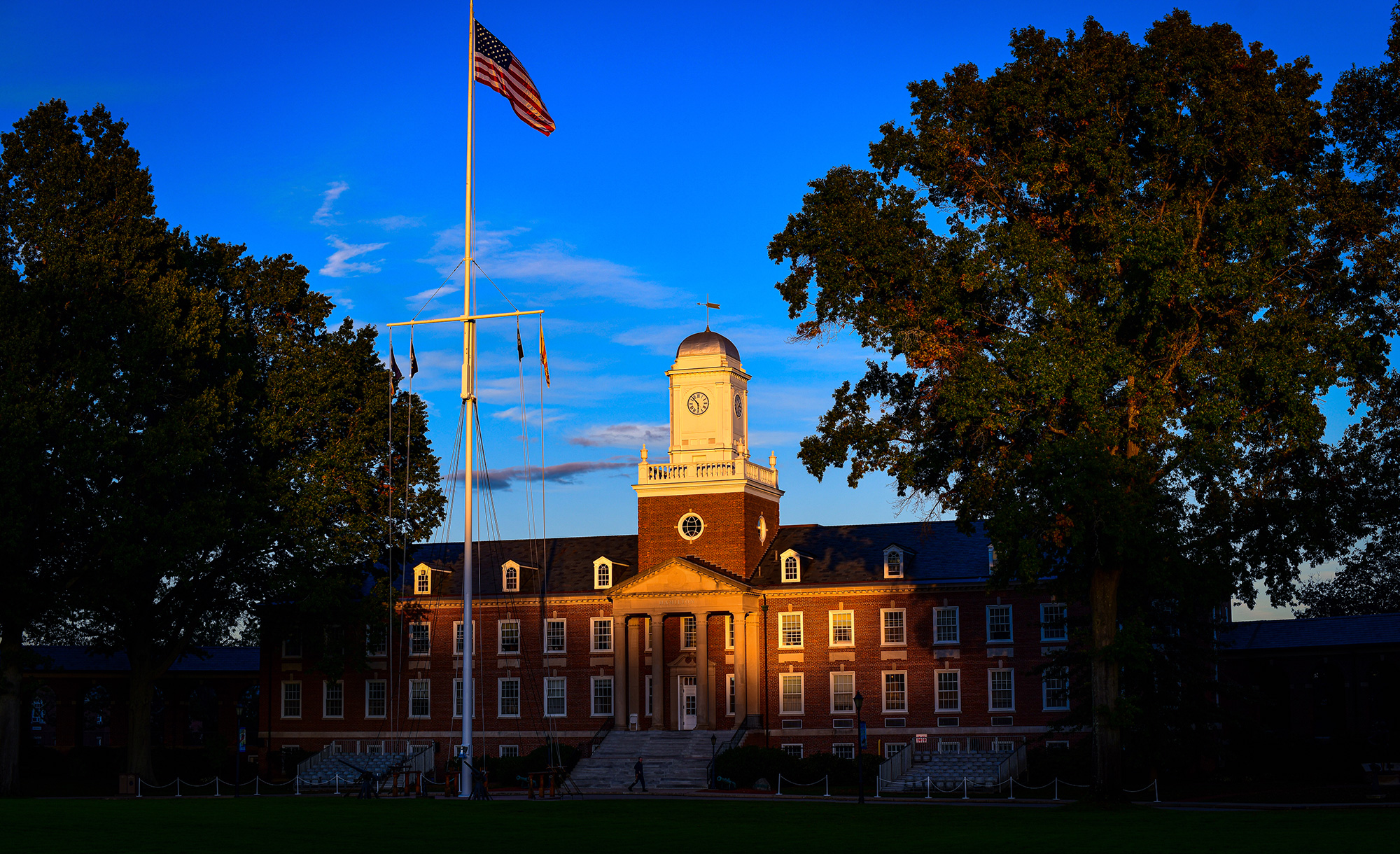
The United States Coast Guard Academy (USCGA) offers a unique educational experience focused on developing future officers for the Coast Guard. It's more than just a college; it's an elite institution that challenges your mind, tests your will, and teaches you to lead. You'll undergo rigorous training and character-building teamwork, instilling discipline, drive, and a commitment to service above self. This comprehensive program prepares graduates for a life of adventure and success in leadership roles within the Coast Guard.
Frequently asked questions
How much do Political Science programmes cost in the United States?
+
Tuition ranges from free to approximately €71,000 per year. Some programmes are tuition-free, while private institutions like Georgetown University and New York University are at the higher end.
Which universities offer Political Science programmes in the United States?
+
37 universities offer these programmes, including Georgetown University, Boston University, New York University, Dartmouth College, Xavier University, and the United States Coast Guard Academy.
Can international students study Political Science in the United States?
+
Yes, US universities welcome international students in their political science programmes; applicants typically need academic transcripts, English proficiency documentation, and letters of recommendation.
What are the typical entry requirements for Political Science programmes in the United States?
+
Requirements vary by degree level but generally include a strong academic record, English language proficiency for non-native speakers, a personal statement, and letters of recommendation. Graduate programmes may also require GRE scores.
How do I apply for a Political Science programme in the United States?
+
Apply through each university's admissions portal or the Common App for undergraduate programmes. Gather transcripts, language test scores, essays, and references well ahead of the relevant deadline, which varies by institution and programme level.