CANADA · BURNABY
British Columbia Institute of Technology
public · Founded 1964 · Languages: en
In short
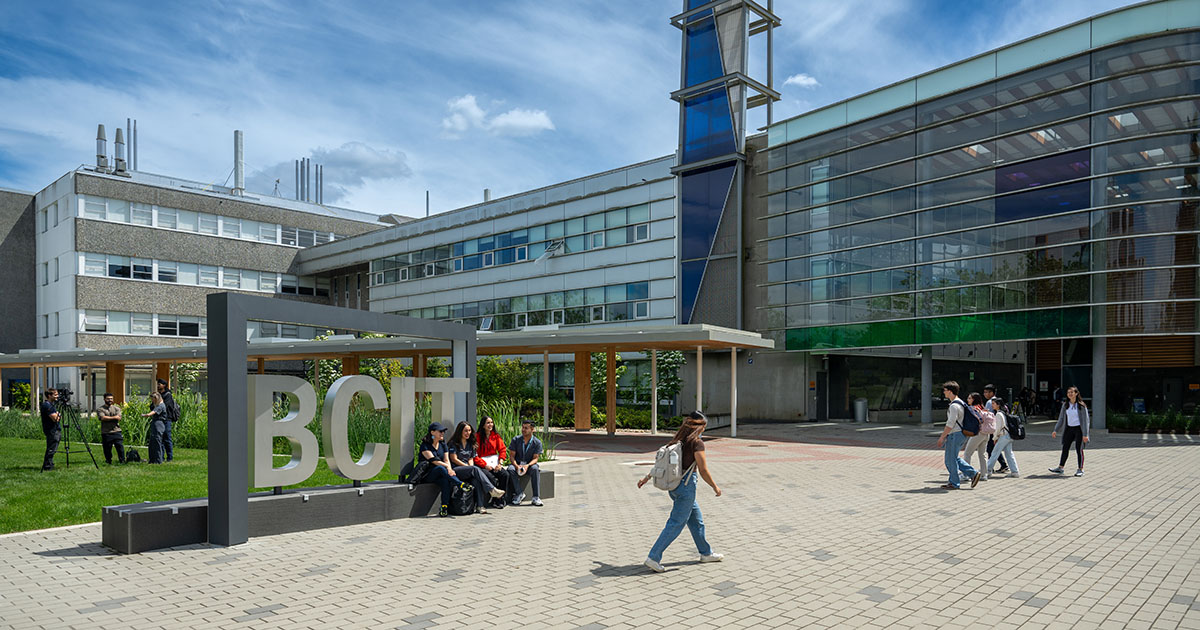
The British Columbia Institute of Technology (BCIT) is a leading polytechnic institution in Canada, offering industry-driven programs and practical, hands-on learning experiences. It is a top destination for international students seeking workforce-ready education with strong employer connections.
Key facts
- Type
- Public
- Founded
- 1964
- Students
- 48,000
- International students
- 6,000
- Acceptance rate
- 65%
- Tuition (intl)
- €12–20k/yr
- Languages
- EN
- Location
- Burnaby, Canada
The British Columbia Institute of Technology (BCIT) is Canada's leading polytechnic institution, headquartered in Burnaby, BC. Founded in 1964, BCIT educates approximately 48,000 full- and part-time students annually through applied, industry-driven programs spanning IT, engineering, health sciences, business, trades, and natural sciences. BCIT's curriculum is developed in direct collaboration with industry partners, ensuring graduates are workforce-ready from day one. Instructors are practising professionals bringing real-world expertise into classrooms and labs. Programs range from certificates and diplomas to bachelor's degrees and applied master's, with extensive co-op and work-integrated learning opportunities. The institute is a top destination for international students from over 100 countries, offering dedicated support services, on-campus housing, and a welcoming multicultural environment. Its strong employer relationships translate directly into high graduate employment rates.
Why study here
- Gain practical, hands-on experience directly applicable to your career from day one.
- Learn from instructors who are seasoned professionals with real-world industry experience.
- Benefit from strong industry connections leading to relevant curriculum and high employment rates.
- Access diverse programs in high-demand fields: IT, Engineering, Health Sciences, and Trades.
- Utilize flexible learning options including part-time, online, and evening courses.
- Live in modern, affordable student housing on the Burnaby campus.
Student life
BCIT students enjoy a modern Burnaby campus with a student association (BCITSA), fitness facilities, clubs, and on-campus housing. The diverse Vancouver metro area offers world-class outdoor recreation, a multicultural food scene, and strong career networking opportunities in BC's thriving technology and health sectors.
Fees
InternationalInternational fees are typically 3.4 times the domestic tuition, approximately CAD $14,000–$28,000 per year depending on the program. Mandatory U-Pass BC fees apply.
HomeDomestic fees for individual courses range from $623.20 to $1,137.31. Each year, BC post-secondary institutions may raise domestic tuition by 2 percent.
LivingEstimated living costs in Burnaby/Vancouver are approximately CAD $15,000–$18,000 per year, including accommodation, food, and personal expenses.
Tuition estimates are based on the 2026-27 academic year rates and are subject to change. Costs are for budgeting purposes only and will be confirmed upon course registration.
Admissions
High school completionRequired (grade 12 or equivalent)
Program prerequisitesVary by program (math, science levels)
ApplicationOnline via bcit.ca
IELTS6.5 overall (6.0 in each component)
TOEFL iBT88 overall
CAEL60
Rankings
Research InfosourceTop polytechnic in Western Canada
Co-operative Education and Work-Integrated Learning Canada (CEWIL)Top employer partnership programs
University scholarships
BCIT International Entrance AwardCAD $2,000 one-time for new international students
BCIT Foundation ScholarshipsVaries; based on academic merit and financial need
Industry Partner BursariesVaries by sponsor
Accreditation
Degree Quality Assessment Board (DQAB), Province of British Columbia; individual programs accredited by ABET, ACPE, CARNA, and other professional bodies
For international students
CanadaStudent visa & funds
International students must obtain a study permit from IRCC before arriving. Most college and undergraduate applicants must also include a Provincial or Territorial Attestation Letter (PAL/TAL) confirming a space under the annual cap; from January 2026, master’s and doctoral students at public institutions are exempt from this requirement. Applicants must show living funds of CAD 22,895 (effective September 2025, for a single student, excluding tuition and travel), and Student Direct Stream applicants hold this amount as a GIC.
Working while you study
Full-time students at designated learning institutions whose permits include work authorization may work up to 24 hours per week off campus during academic terms — a cap in effect since November 2024 that replaced the former 20-hour rule and a temporary 40-hour exception. Students may work unlimited hours during scheduled breaks such as summer and winter holidays. From April 2026, eligible students no longer need a separate co-op work permit for mandatory placements.
After you graduate
Graduates of eligible programs may apply for a Post-Graduation Work Permit (PGWP) within 180 days of confirmed completion. The PGWP matches program length up to a maximum of three years, and master’s graduates receive a three-year permit regardless of program length. Since November 2024 most applicants must show a recent language test at CLB 7 (university graduates) or CLB 5 (college graduates); degree graduates are exempt from the field-of-study alignment rule that applies to other applicants.
English tests
- IELTS Academic6.0–6.5 with no band below 6.0; research-intensive universities 6.5–7.0
- TOEFL iBT80–100; top universities (e.g. University of Toronto) 100+
Main intakes
SeptemberJanuaryMay
Typical living cost
€1,250/month
Approximate all-in student budget; major cities run higher.
SourcesIRCC — Study permit: get the right documents · CIC News — Increased fund requirements for study permits (Sept 2025) · CIC News — Off-campus work rules update (May 2026) · IRCC — Post-graduation work permit: who can apply · ETS — Minimum TOEFL score requirements for the USA, UK and Canada · Mastersportal — Living costs & tuition in Canada
Programs
a selectionBritish Columbia Institute of Technology · Canada
Architectural and Building Technology Diploma
The Architectural and Building Technology program is a two-year, full-time diploma designed to equip you with the practical skills and theoretical knowledge needed for a career in the building industry. You will learn from experienced faculty with industry backgrounds and gain hands-on experience through lectures, workshops, and field trips. The program focuses on design, development, construction, and building science. Students follow a core curriculum that covers essential topics such as construction drawing, materials, estimating, building systems, and computer applications. In the second year, you can specialize in one of three areas: Architectural, Building Science, or Economics/Construction Operations, aligning your studies with your career goals. A mandatory practicum provides valuable work experience. This program is highly regarded by employers, and graduates are sought after for their job-ready competencies. It offers a pathway to rewarding careers in various sectors of the construction and design fields.
Diploma
Level
—
Tuition
24 mo
Duration
British Columbia Institute of Technology · Canada
Broadcast and Online Journalism Diploma
The Broadcast and Online Journalism Diploma program at BCIT is a two-year, full-time program designed to equip you with the skills needed to become a versatile journalist and media professional. You will learn essential skills in interviewing, announcing, and news delivery, with a strong emphasis on multi-platform production. Students gain practical experience by producing a 30-minute news segment, creating multimedia content for BCIT News, and reporting for the student-run radio station. The program is ideal for curious and creative individuals who are passionate about current events and aspire to make a difference as multi-media storytellers. From the first day, you will engage in hands-on journalism work in news, sports, and current affairs, guided by experienced faculty and connected with industry professionals. The program's curriculum focuses on cutting-edge digital journalism and the effective use of social media for news reporting.
Diploma
Level
—
Tuition
24 mo
Duration
British Columbia Institute of Technology · Canada
Cisco Certified Network Associate (CCNA) Statement of Completion
The Cisco Certified Network Associate (CCNA) Statement of Completion program consists of three courses designed to prepare you for the CCNA certification exam. This program combines theory with practical, hands-on activities using Cisco routers and switches. You will learn essential networking theory, TCP/IP, IP routing, Ethernet switching, fundamental network security, and Wide Area Networking (WAN) concepts. Upon successful completion of all three levels, you will be well-prepared for entry-level IT and networking roles.
Certificate
Level
—
Tuition
21 mo
Duration
British Columbia Institute of Technology · Canada
Civil Engineering, Bachelor of Engineering
The Bachelor of Engineering (BEng) in Civil Engineering at BCIT is a four-year full-time program designed to prepare you for a career in professional engineering practice. The first two years provide a broad, practical foundation in civil engineering fundamentals, with opportunities to apply these concepts to real-world design challenges. You will also develop essential communication skills and gain hands-on experience in areas like material testing, surveying, and CAD. Upon completion of the first two years, you will receive a Diploma in Civil Engineering. The final two years of the program are academically rigorous, delving deeper into the theoretical aspects of civil engineering science and design. You will integrate your practical knowledge with theoretical studies through assignments and projects. The program also encourages an interdisciplinary perspective, incorporating project and construction management, and complementary studies in social sciences and humanities. A team-based capstone design project will further enhance your skills for professional practice.
Bachelor's
Level
—
Tuition
48 mo
Duration
British Columbia Institute of Technology · Canada
Geographic Information Systems
The Geographic Information Systems (GIS) program at BCIT offers pathways to a dynamic career in a rapidly growing field. GIS technology is essential across numerous sectors, including environmental management, urban planning, engineering, and business. Whether you are a recent graduate or an experienced professional looking to advance your career, our programs provide the technical education and practical skills needed to succeed. The curriculum is designed to equip you with a strong foundation in GIS principles, software, and applications, preparing you for diverse roles in both the public and private sectors.
Bachelor's
Level
—
Tuition
24 mo
Duration
British Columbia Institute of Technology · Canada
International Trade and Transportation Logistics Certificate
This part-time certificate program equips you with essential practical skills for international supply chain management and logistics. You will learn current techniques used by successful managers for market analysis, international trade strategies, transportation, and planning. The curriculum integrates courses developed by industry professionals from CITT, CIFFA, and ASCM, ensuring you receive up-to-date information and skills applicable to roles such as trade manager or logistics coordinator. The program is delivered in a blended format, offering flexibility for those already working in fields like purchasing, shipping, manufacturing, or small business ownership who wish to advance their careers or improve their operations.
Certificate
Level
—
Tuition
—
Duration
Scholarships
for Canada full funding
University of Toronto
Lester B. Pearson International Student Scholarship
For international students beginning undergraduate study at the University of Toronto who are first-time entrants from outside Canada. Students must be nominated by their school, then complete the U of T application and scholarship process. Selection recognises exceptional academic achievement and creativity, with a record of leadership and impact at school.
full
Funding
€200k
Max
Nov 30, 2026
Deadline
 full funding
University of British Columbia
International Leader of Tomorrow (ILOT) Award
For international students entering their first undergraduate degree at the University of British Columbia (UBC) who demonstrate outstanding academic achievement, leadership, and financial need. Students must be nominated by their school and require financial support to study at UBC; the award is need-based, covering costs the student and family cannot meet.
full
Funding
€70k
Max
Nov 15, 2026
Deadline
 full funding
Western University
Western University National Scholarship Program (Canada)
Open to Canadian citizens and permanent residents entering full-time undergraduate study at Western University's main campus, with a minimum academic average of 90% in Grade 12 U/M courses (or equivalent), a school nomination, a reference letter, a transcript and an essay.
full
Funding
€47k
Max
Feb 14, 2027
Deadline
 partial funding
University of Ottawa
University of Ottawa International English Scholarships
Open to international undergraduate students who hold a valid Canadian study permit and are newly admitted to an English-language undergraduate programme in Arts, Engineering, Health Sciences, Science, Social Sciences, or the Telfer School of Management. A minimum admission average of 80 percent is needed for the Admission Scholarship and 90 percent for the Academic Excellence Scholarship. Students in the French immersion or French-language streams are not eligible.
partial
Funding
€46k
Max
Apr 1, 2027
Deadline
 full funding
Canadian Institutes of Health Research (CIHR), Natural Sciences and Engineering Research Council (NSERC), Social Sciences and Humanities Research Council (SSHRC)
Vanier Canada Graduate Scholarships
Open to Canadian and international students pursuing a doctoral (PhD) degree at a Canadian university. Candidates must be nominated by the Canadian institution, not yet have started the doctoral program beyond defined limits, and demonstrate academic excellence, research potential, and leadership.
full
Funding
€34k
Max
Nov 4, 2026
Deadline
full fundingCIHR / NSERC / SSHRC (Tri-Agency), Government of Canada
Canada Graduate Research Scholarship – Doctoral (CGRS-D)
For doctoral students undertaking a PhD at a Canadian institution, with an outstanding academic record. Awards are made by Canada's tri-agency (CIHR, NSERC, SSHRC); applicants apply through their university, and eligibility (including for international students) follows the current Canada Graduate Scholarships rules.
full
Funding
€27k
Max
Nov 1, 2026
Deadline
Frequently asked questions
What are the estimated living costs for international students at BCIT?
+
Estimated living costs in Burnaby/Vancouver are approximately CAD $15,000–$18,000 per year. This estimate includes accommodation, food, and personal expenses.
How much are international tuition fees at BCIT?
+
International fees are typically 3.4 times the domestic tuition, amounting to approximately CAD $14,000–$28,000 per year, depending on the program. Mandatory U-Pass BC fees also apply.
What are the English proficiency requirements for international applicants?
+
International applicants must demonstrate English language proficiency. Accepted tests include IELTS with a score of 6.5 overall (6.0 in each component), TOEFL iBT with a score of 88 overall, or CAEL with a score of 60.
What types of programs does BCIT offer?
+
BCIT offers over 300 full-time programs, ranging from certificates and diplomas to bachelor's degrees and applied master's degrees. Programs span IT, engineering, health sciences, business, trades, and natural sciences.
Does BCIT offer support for international students?
+
Yes, BCIT is a top destination for international students and offers dedicated support services. They also provide on-campus housing and strive to create a welcoming multicultural environment.
Last updated