UNITED STATES
Chabot-Las Positas Community College District
public · Founded 1963 · Languages: English
In short
Chabot-Las Positas Community College District offers affordable Associate degrees and vocational certificates with transfer pathways to UC and CSU systems. Located in the Bay Area, it provides open access to education and strong career-technical programs.
Key facts
- Type
- Public
- Founded
- 1963
- Students
- 8,005
- International students
- 500
- Tuition (intl)
- €8–10k/yr
- Languages
- ENGLISH
- Location
- United States
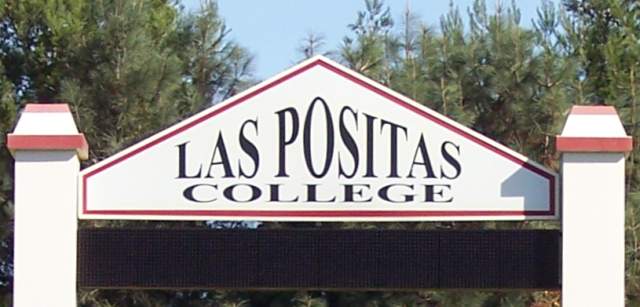
The Chabot-Las Positas Community College District (CLPCCD) operates two public community colleges in California's East Bay: Chabot College in Hayward and Las Positas College in Livermore. Founded in 1963, the district provides open-access Associate degrees, vocational certificates, and University of California/California State University transfer pathways to a combined student body of over 20,000. Its location in the San Francisco Bay Area places students within commuting distance of Silicon Valley's tech economy and UC Berkeley.
Why study here
- Highly affordable tuition compared to four-year universities — a cost-effective gateway to UC and CSU transfer
- Open-admission policy means a broad range of students can access quality higher education
- Bay Area location provides proximity to Silicon Valley internship and employment opportunities
- Strong STEM and career/technical programmes aligned with regional industry needs in tech, healthcare, and logistics
- Comprehensive support services for international, first-generation, and returning adult students
Student life
Chabot College and Las Positas College each host a range of student clubs, athletics, performing arts, and community events. The Hayward and Livermore campuses offer libraries, tutoring centres, food pantries, and mental health services. The Tri-Valley and East Bay regions provide affordable living relative to San Francisco, with easy access to BART rail for exploring the Bay Area's cultural and natural attractions.
Fees
InternationalInternational students pay California community college non-resident tuition of approximately USD 8,000–11,000 (EUR 7,500–10,000) per year for full-time enrolment.
HomeCalifornia resident students pay only the state-mandated per-unit enrollment fee (~USD 46/unit), making annual costs roughly USD 600–900 for full-time study.
LivingLiving costs in the Hayward/Livermore area are approximately USD 16,000–22,000 (EUR 15,000–20,500) per year including shared accommodation, food, and transport.
Financial aid (FAFSA/CA Dream Act) is available to eligible domestic students. International students are not eligible for federal aid but may access institutional emergency funds.
Admissions
Open admissionCLPCCD colleges have an open-admission policy — any high school graduate or equivalent is eligible to enrol
International studentsMust apply through the International Student Program, submit transcripts, show proof of funds, and obtain an I-20 for an F-1 visa
PlacementEnglish and Math placement assessments determine appropriate course level upon enrolment
TOEFL iBT61
IELTS5.5
Duolingo95
University scholarships
Chabot College Foundation ScholarshipVaries; multiple awards of USD 500–2,000 for eligible students
Las Positas College Foundation ScholarshipVarious merit and need-based awards from USD 250 to USD 2,500
Accreditation
Both Chabot College and Las Positas College are accredited by the Accrediting Commission for Community and Junior Colleges (ACCJC), a regional accreditor recognised by the US Department of Education.
For international students
United StatesStudent visa & funds
International students primarily enter on the F-1 visa, which requires enrolment at a SEVP-certified institution. Before the visa interview the school issues a Form I-20 — a certificate of eligibility — for which a Designated School Official must verify documented funds covering tuition, living expenses and travel for the first year, plus a reliable source for subsequent years. The financial evidence must be specific and from an identified source.
Working while you study
F-1 students may work on campus up to 20 hours per week while classes are in session and full-time during official breaks, with no separate authorization needed. Off-campus work is generally not permitted in the first academic year. After one academic year in good standing, students may use Curricular Practical Training (CPT) for paid work that is an integral part of the curriculum, authorized by the school; other off-campus work requires an approved Employment Authorization Document from USCIS.
After you graduate
After completing a degree, F-1 students may apply for Optional Practical Training (OPT) — up to 12 months of work authorization in a related field — by filing Form I-765 and receiving an EAD before starting work. Graduates of a degree on the DHS STEM Designated Degree Program List may apply for a 24-month STEM OPT extension, for up to 36 months total. The extension requires an E-Verify employer and a qualifying STEM degree earned within the previous ten years.
English tests
- IELTSUG 6.0–6.5; PG 6.5–7.0; top-tier programs 7.0–7.5
- TOEFL iBTUG 80–100; PG 90–110; selective research universities 100+
- PTE AcademicUG 50–60; PG 55–70; highly selective programs 65+
Main intakes
AugustJanuary
Typical living cost
€1,420/month
Approximate all-in student budget; major cities run higher.
SourcesStudy in the States — Students and the Form I-20 · Study in the States — Financial ability · USCIS — Students and employment · USCIS — Optional Practical Training (OPT) for F-1 students · USCIS — STEM OPT extension · LeapScholar — Minimum IELTS scores for USA universities · Mastersportal — Student living costs in the USA (2025–2026)
Scholarships
for United States full funding
Duke University
Karsh International Scholarship Program
Open to international (non-U.S. citizen, non-permanent-resident) high school students applying for first-year undergraduate admission to Duke University. Candidates must demonstrate financial need through Duke's need-based aid process, show interdisciplinary academic curiosity, and have a record of community engagement. There is no separate scholarship form; international applicants who indicate they are applying for financial aid are automatically considered for the Karsh award.
full
Funding
€320k
Max
Jan 2, 2027
Deadline
 full funding
University of Miami (with the Stamps Family Charitable Foundation)
University of Miami Stamps Scholarship
Open to high school seniors, both domestic (U.S.) and international, applying for first-year undergraduate admission to the University of Miami through Early Decision I or Early Action. Applicants are automatically considered with no separate scholarship form; they must submit all first-year admission requirements and demonstrate strong academic achievement, leadership, and community involvement. Semi-finalists complete a Zoom interview.
full
Funding
€260k
Max
Nov 1, 2026
Deadline
 full funding
QuestBridge
QuestBridge National College Match Scholarship
Open to high-achieving US high school seniors from low-income backgrounds who are US citizens, permanent residents, or students studying in the US regardless of citizenship. Competitive applicants typically earn mostly A's in challenging courses, rank in the top 5-10% of their class, and have strong standardised test results (SAT/PSAT above 1310 or ACT above 28), though each application is read in context. Applicants must demonstrate strong writing, intellectual curiosity and determination through essays and recommendations. Matched students must attend a partner college as a binding-early-decision commitment.
full
Funding
€185k
Max
9d left
Deadline
full fundingArgonne National Laboratory
Maria Goeppert Mayer Fellowship at Argonne National Laboratory
Open to early-career scientists and engineers of all nationalities who hold a PhD awarded within the last three years at the time of application, or who will complete the PhD before the fellowship start date. Research interests must align with Argonne's mission areas. U.S. citizenship is required for national-security-related projects (Detection of Imaging Signatures).
full
Funding
€130k
Max
14d left
Deadline
 partial funding
Boustany Foundation / Harvard Business School
Boustany MBA Harvard Scholarship
Open to candidates of any nationality (priority to those of Lebanese descent) who have received an offer of admission to the Harvard MBA programme and have a strong academic background.
partial
Funding
€100k
Max
May 31, 2027
Deadline
 full funding
Stanford University
Knight-Hennessy Scholars
Open to citizens of any country who earned their first/bachelor's degree within the last ~7 years (or will by the Stanford start) and who apply for and gain admission to a full-time Stanford graduate program. Selection seeks independence of thought, purposeful leadership, and a civic mindset.
full
Funding
€90k
Max
21d left
Deadline
Frequently asked questions
What are the tuition fees for international students at Chabot-Las Positas Community College District?
+
International students pay non-resident tuition, which is approximately USD 8,000–11,000 per year for full-time enrollment. This rate is significantly lower than many four-year universities.
What are the estimated living costs for international students?
+
Living costs in the Hayward/Livermore area are estimated at USD 16,000–22,000 annually. This includes shared accommodation, food, and transportation.
Are there scholarships available for international students?
+
While international students are not eligible for federal aid, scholarships like the Chabot College Foundation Scholarship and Las Positas College Foundation Scholarship are available. Award amounts vary and are based on eligibility.
What are the English proficiency requirements for international students?
+
International students can demonstrate English proficiency through scores like TOEFL iBT (61), IELTS (5.5), or Duolingo (95). Specific requirements are detailed by the International Student Program.
What makes Chabot-Las Positas an attractive option for transfer students?
+
The district offers cost-effective pathways to the University of California and California State University systems. Its Bay Area location also provides proximity to Silicon Valley and other major universities.
Last updated