In short
The College of the Rockies offers accessible certificate, diploma, and degree programs with small class sizes and a focus on an outdoor lifestyle. It provides pathways to university degrees and is an excellent value for international students due to its affordable tuition and living costs.
Key facts
- Type
- Public
- Founded
- 1975
- Students
- 2,500
- International students
- 300
- Tuition (intl)
- €9–14k/yr
- Languages
- EN
- Location
- Cranbrook, Canada
College of the Rockies (COTR) is a public post-secondary institution in Cranbrook, British Columbia, offering certificates, diplomas, and degrees across trades, health, business, arts, and sciences. Its six campuses serve the East Kootenay region, providing accessible education close to home for local and international students alike. COTR's programs connect to BC's university transfer system, letting students continue seamlessly to bachelor's degrees at partner universities. The college is widely known for its supportive class sizes, dedicated instructors, and an outdoor lifestyle that is hard to match anywhere else in Canada.
Why study here
- Small class sizes mean direct access to instructors and a genuine community feel on every campus.
- BC Transfer System agreements allow seamless pathway to a university degree after completing diploma coursework.
- Six regional campuses across the East Kootenay put higher education within reach of rural and remote communities.
- The Rocky Mountain setting offers unparalleled access to skiing, snowboarding, hiking, and mountain biking right outside the door.
- Affordable tuition and lower cost of living compared to major Canadian cities make COTR excellent value for international students.
Student life
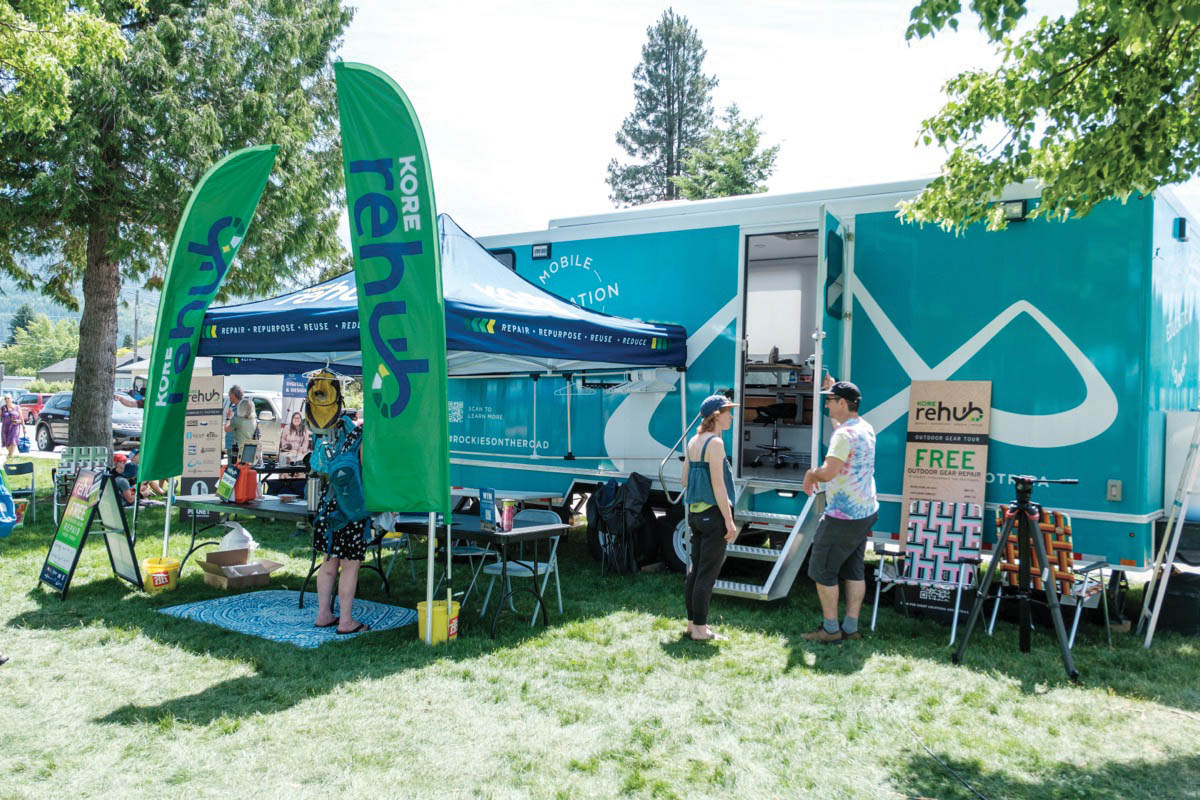
Campus life at COTR centres on community, outdoor adventure, and hands-on learning. Students access on-campus housing in Cranbrook, a student association, clubs, and regular social events. The surrounding Kootenay region offers world-class skiing at Kimberley Alpine Resort and Fernie Alpine Resort, along with hiking, kayaking, and cycling throughout the year. The college's small-town atmosphere fosters close friendships and strong peer support networks.
Fees
InternationalApproximately CAD 12,000–18,000 per year (EUR 9,000–14,000) depending on program
HomeApproximately CAD 4,000–6,000 per year for domestic students
LivingApproximately CAD 10,000–14,000 per year in Cranbrook for accommodation and living costs
Tuition varies by program type and credit load. English Language Program fees are included in overall program fees for ELP students.
Admissions
Secondary school completionBC Dogwood Certificate or equivalent high school diploma
English (domestic)Minimum C+ (65%) in English Studies 12 or equivalent
Program-specific prerequisitesVary by program; check individual program pages on cotr.bc.ca
IELTS Academic6.0 overall, no band below 5.5
TOEFL iBT79 overall
COTR TELP placement testELP 98 / ELP 95 co-requisite placement
University scholarships
COTR International Student AwardUp to CAD 1,000 per semester
East Kootenay Community Credit Union BursaryVaries
Accreditation
College of the Rockies is a publicly funded institution under the British Columbia College and Institute Act, and its programs are recognised under the BC Transfer System (BCCAT).
For international students
CanadaStudent visa & funds
International students must obtain a study permit from IRCC before arriving. Most college and undergraduate applicants must also include a Provincial or Territorial Attestation Letter (PAL/TAL) confirming a space under the annual cap; from January 2026, master’s and doctoral students at public institutions are exempt from this requirement. Applicants must show living funds of CAD 22,895 (effective September 2025, for a single student, excluding tuition and travel), and Student Direct Stream applicants hold this amount as a GIC.
Working while you study
Full-time students at designated learning institutions whose permits include work authorization may work up to 24 hours per week off campus during academic terms — a cap in effect since November 2024 that replaced the former 20-hour rule and a temporary 40-hour exception. Students may work unlimited hours during scheduled breaks such as summer and winter holidays. From April 2026, eligible students no longer need a separate co-op work permit for mandatory placements.
After you graduate
Graduates of eligible programs may apply for a Post-Graduation Work Permit (PGWP) within 180 days of confirmed completion. The PGWP matches program length up to a maximum of three years, and master’s graduates receive a three-year permit regardless of program length. Since November 2024 most applicants must show a recent language test at CLB 7 (university graduates) or CLB 5 (college graduates); degree graduates are exempt from the field-of-study alignment rule that applies to other applicants.
English tests
- IELTS Academic6.0–6.5 with no band below 6.0; research-intensive universities 6.5–7.0
- TOEFL iBT80–100; top universities (e.g. University of Toronto) 100+
Main intakes
SeptemberJanuaryMay
Typical living cost
€1,250/month
Approximate all-in student budget; major cities run higher.
SourcesIRCC — Study permit: get the right documents · CIC News — Increased fund requirements for study permits (Sept 2025) · CIC News — Off-campus work rules update (May 2026) · IRCC — Post-graduation work permit: who can apply · ETS — Minimum TOEFL score requirements for the USA, UK and Canada · Mastersportal — Living costs & tuition in Canada
Programs
a selectionCollege of the Rockies · Canada
Academic Skills for College Preparation
This college preparation course helps students build on their existing knowledge to develop effective strategies for succeeding in Canadian academic environments. You will enhance your reading, writing, and critical thinking skills by exploring intercultural situations and academic content. The program will enable you to analyze academic materials within their cultural contexts, apply your learning, and express your understanding clearly in written form.
Certificate
Level
—
Tuition
4 mo
Duration
College of the Rockies · Canada
Contemporary Art: A History
This course offers an in-depth study and interpretation of significant social, historical, political, and philosophical themes within contemporary art. It examines contemporary art as a reflection of society, tracing influences from Western Art of the 13th century through to Modern and Contemporary Art of the 20th and 21st centuries. Students will explore key developments by looking at the intersections of art with science, technology, and new forms of visual culture that are shaping the art world today.
Certificate
Level
€0k
Tuition
—
Duration
College of the Rockies · Canada
EAP Practicum 1
EAP Practicum 1 is a course designed to equip students with the essential skills, knowledge, and values needed to become an Education Assistant in a school setting. This course provides a practical opportunity to integrate theoretical concepts learned in the classroom with hands-on experience within a real school environment. It focuses on developing practical competencies relevant to supporting students and educators in K-12 schools.
Diploma
Level
€0k
Tuition
—
Duration
College of the Rockies · Canada
Early Childhood Education – Special Needs Educator Diploma
This diploma program prepares you to support children with special needs in early childhood settings. It builds upon an Early Childhood Education certificate or equivalent, adding specialized courses focused on inclusive practices and individualised support. The program is designed for flexibility, offered entirely online and on a part-time basis, allowing you to continue working while studying. Graduates will be equipped with the compassion, patience, and adaptability required to advocate for and nurture children with diverse learning styles and abilities.
Diploma
Level
—
Tuition
—
Duration
College of the Rockies · Canada
Fine Arts Certificate
The Fine Arts Certificate program at College of the Rockies is designed for students who have a passion for creativity and self-expression. This two-semester program offers a comprehensive introduction to various artistic disciplines, including drawing, painting, sculpture, creative writing, and art history. It's an excellent opportunity to explore and develop your artistic talents in a supportive environment with small class sizes.
Certificate
Level
—
Tuition
12 mo
Duration
College of the Rockies · Canada
Health Care in the School System
This course provides a global perspective on the healthcare needs of students within the K-12 school system. You will explore the essential roles and responsibilities of an Education Assistant in supporting student health. The curriculum covers current healthy schools' initiatives in British Columbia, strategies for assisting students with diverse healthcare requirements, and methods for Education Assistants to manage their own personal health and wellness.
Certificate
Level
€0k
Tuition
—
Duration
Scholarships
for Canada full funding
University of Toronto
Lester B. Pearson International Student Scholarship
For international students beginning undergraduate study at the University of Toronto who are first-time entrants from outside Canada. Students must be nominated by their school, then complete the U of T application and scholarship process. Selection recognises exceptional academic achievement and creativity, with a record of leadership and impact at school.
full
Funding
€200k
Max
Nov 30, 2026
Deadline
 full funding
University of British Columbia
International Leader of Tomorrow (ILOT) Award
For international students entering their first undergraduate degree at the University of British Columbia (UBC) who demonstrate outstanding academic achievement, leadership, and financial need. Students must be nominated by their school and require financial support to study at UBC; the award is need-based, covering costs the student and family cannot meet.
full
Funding
€70k
Max
Nov 15, 2026
Deadline
 full funding
Western University
Western University National Scholarship Program (Canada)
Open to Canadian citizens and permanent residents entering full-time undergraduate study at Western University's main campus, with a minimum academic average of 90% in Grade 12 U/M courses (or equivalent), a school nomination, a reference letter, a transcript and an essay.
full
Funding
€47k
Max
Feb 14, 2027
Deadline
 partial funding
University of Ottawa
University of Ottawa International English Scholarships
Open to international undergraduate students who hold a valid Canadian study permit and are newly admitted to an English-language undergraduate programme in Arts, Engineering, Health Sciences, Science, Social Sciences, or the Telfer School of Management. A minimum admission average of 80 percent is needed for the Admission Scholarship and 90 percent for the Academic Excellence Scholarship. Students in the French immersion or French-language streams are not eligible.
partial
Funding
€46k
Max
Apr 1, 2027
Deadline
 full funding
Canadian Institutes of Health Research (CIHR), Natural Sciences and Engineering Research Council (NSERC), Social Sciences and Humanities Research Council (SSHRC)
Vanier Canada Graduate Scholarships
Open to Canadian and international students pursuing a doctoral (PhD) degree at a Canadian university. Candidates must be nominated by the Canadian institution, not yet have started the doctoral program beyond defined limits, and demonstrate academic excellence, research potential, and leadership.
full
Funding
€34k
Max
Nov 4, 2026
Deadline
full fundingCIHR / NSERC / SSHRC (Tri-Agency), Government of Canada
Canada Graduate Research Scholarship – Doctoral (CGRS-D)
For doctoral students undertaking a PhD at a Canadian institution, with an outstanding academic record. Awards are made by Canada's tri-agency (CIHR, NSERC, SSHRC); applicants apply through their university, and eligibility (including for international students) follows the current Canada Graduate Scholarships rules.
full
Funding
€27k
Max
Nov 1, 2026
Deadline
Frequently asked questions
What are the estimated tuition fees for international students at the College of the Rockies?
+
International student tuition fees at the College of the Rockies are approximately CAD 12,000–18,000 per year, with the exact amount depending on the specific program of study. This range is an estimate and can vary based on program type and credit load.
What are the living costs for students in Cranbrook?
+
Accommodation and living costs for students in Cranbrook are estimated to be around CAD 10,000–14,000 per year. This provides a baseline for budgeting while studying at the College of the Rockies.
Does the College of the Rockies offer pathways to university degrees?
+
Yes, the College of the Rockies has agreements with the BC Transfer System, allowing students to seamlessly transfer credits to bachelor's degrees at partner universities after completing diploma coursework. This provides a clear academic progression route.
What are the English language proficiency requirements for international students?
+
International students can demonstrate English proficiency through IELTS Academic with a score of 6.0 overall and no band below 5.5, or TOEFL iBT with an overall score of 79. The college also offers its own placement test, the COTR TELP.
What makes the College of the Rockies a good choice for international students?
+
The college is known for its small class sizes, supportive instructors, and an affordable cost of living and tuition compared to major Canadian cities. The unique outdoor lifestyle in the Rocky Mountains also offers unparalleled recreational opportunities.
Last updated