GERMANY · BRANDENBURG AN DER HAVEL
Fachhochschule Brandenburg
public · Founded 1991 · Languages: de, en
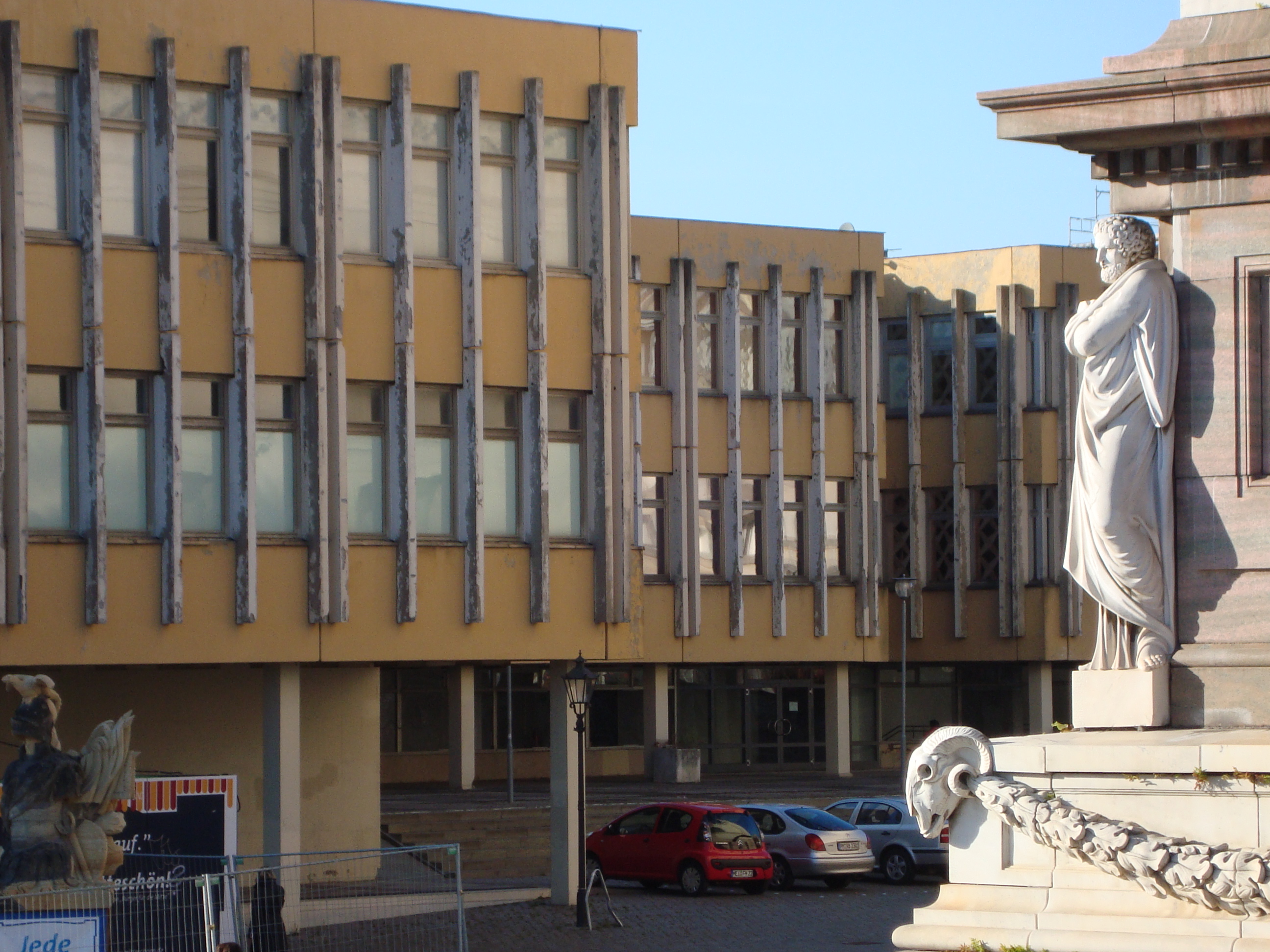
In short
Fachhochschule Brandenburg (THB) is a public university of applied sciences in Brandenburg an der Havel, Germany, offering practically oriented programmes in engineering, computer science, and management. It is known for its low or no tuition fees and affordable living costs, with close proximity to Berlin.
Key facts
- Type
- Public
- Founded
- 1991
- Students
- 3,283
- International students
- 350
- Acceptance rate
- 65%
- Tuition (intl)
- €2–3k/yr
- Languages
- DE, EN
- Location
- Brandenburg an der Havel, Germany
Technische Hochschule Brandenburg (THB) is a public university of applied sciences in Brandenburg an der Havel, Germany, founded in 1991. It provides practically oriented programmes in engineering, computer science, business informatics, and management with a strong emphasis on regional industry partnerships and hands-on learning. Approximately 3,300 students study at THB in programmes at Bachelor's and Master's level. The university's compact size and proximity to Berlin make it an accessible and affordable option for both domestic and international students.
Why study here
- Practically oriented programmes with strong links to regional and national industry partners, easing the path into employment.
- Low or no tuition fees as a German public university — most programmes cost only semester fees of around €300.
- Close proximity to Berlin, giving access to a major job market and cultural scene while living in a more affordable city.
- Small university atmosphere with personalised academic support, a language centre, and dedicated career services.
- Interdisciplinary research institutes covering bioinformatics, digitalisation, and materials science.
Student life
THB hosts regular campus events including an Open Day, career contact fairs, and workshops through its 'Lern-Café'. The Service Desk provides support for all student inquiries. Language courses in German and other languages are available to support both domestic and international students. Brandenburg an der Havel itself is a charming medieval city with affordable housing and good rail connections to Berlin.
Fees
InternationalNo tuition fees for most programmes at this public university; international students pay a semester contribution of approximately €300 per semester (~€600/year).
HomeSame as international students — no tuition fees; semester contribution ~€300.
LivingLiving costs in Brandenburg an der Havel are among the lowest in Germany: approximately €600–€800/month including rent, food, and transport.
Some specialised or part-time Master's programmes may charge tuition fees. Always confirm current fees on the THB website.
Admissions
Bachelor's programmesGerman Abitur or equivalent international higher education entrance qualification (Hochschulzugangsberechtigung).
Master's programmesRelevant Bachelor's degree with sufficient GPA; specific requirements per programme.
German languageMost programmes taught in German; TestDaF or DSH C1 required for non-native speakers. Some programmes available in English.
IELTS6.0 for English-taught programmes.
TOEFL iBT80 for English-taught programmes.
Rankings
Not globally rankedN/A — regional university of applied sciences
University scholarships
DAAD ScholarshipsVarious amounts for international students; apply via daad.de.
Deutschlandstipendium€300/month merit scholarship; apply through THB.
Accreditation
Accredited by the German Accreditation Council (Akkreditierungsrat). Recognised as a state-accredited university of applied sciences in Brandenburg, Germany.
For international students
GermanyStudent visa & funds
Non-EU/EEA students must obtain a national student visa (Type D) before arrival and then convert it to a student residence permit at the local Foreigners’ Authority (Ausländerbehörde). To prove financial self-sufficiency, most applicants open a blocked account (Sperrkonto) holding €11,904 — €992 per month for twelve months — an amount in effect since 2024 and unchanged for 2026. The blocked account caps monthly withdrawals at €992 so the funds last the year.
Working while you study
Non-EU international students may work up to 140 full days or 280 half-days per calendar year without approval from the Federal Employment Agency — an allowance raised from the previous 120/240-day limit under the 2024 skilled-immigration reform. A shift of more than four hours counts as a full day. Student-assistant roles at the university (Hiwi positions) generally fall outside this cap, and hours during semester breaks count toward the same annual allowance.
After you graduate
After completing a degree at a German university, non-EU graduates are entitled to an 18-month residence permit to seek work under the Residence Act, during which any employment is allowed. Separately, the Opportunity Card (Chancenkarte), introduced in June 2024, lets qualifying non-EU nationals enter to look for work for up to a year using a points system, with limited part-time work permitted. Recent German graduates qualify for the 18-month post-study permit directly, without the points test.
English tests
- IELTS6.0–6.5 for English-taught bachelor’s; 6.5–7.0 for most master’s
- TOEFL iBT80–90 for most programs; competitive universities (e.g. TUM) 88–95
- German (TestDaF/DSH)German-taught programs require TestDaF level 4 (TDN 4) or DSH-2
Main intakes
OctoberApril
Typical living cost
€1,050/month
Approximate all-in student budget; major cities run higher.
Programs
a selectionFachhochschule Brandenburg · Germany
Dual Studies at VS
The Dual Study program at VS offers a unique blend of academic learning and practical work experience. You will alternate between studying at university and gaining hands-on experience within a company, allowing you to apply theoretical knowledge directly. This program is offered in cooperation with the Baden-Württemberg Cooperative State University (DHBW) and leads to a Bachelor's degree after three years. This degree prepares you for entry-level positions or further Master's studies.
Bachelor's
Level
Free
Tuition
36 mo
Duration
Fachhochschule Brandenburg · Germany
Engineering Science Dual System
This Bachelor of Engineering program in Engineering Science offers a dual system approach, combining academic study with practical experience. The standard period of study is seven semesters. The program is offered full-time at the Brandenburg University of Applied Sciences. The main language of instruction is German.
Bachelor's
Level
—
Tuition
21 mo
Duration
Fachhochschule Brandenburg · Germany
Master's Degree Programs at Technische Hochschule Brandenburg
Technische Hochschule Brandenburg (THB) offers a range of Master of Science and Master of Engineering programs designed to advance your knowledge and skills in specialized fields. These programs cater to various interests, including business, technology, and media. Some programs are offered in a part-time, online, or hybrid format, providing flexibility for students. Certain Master's degrees require prior professional experience.
Master's
Level
—
Tuition
—
Duration
Fachhochschule Brandenburg · Germany
Media Computer Science (Online)
This online Master of Science program in Media Computer Science is designed for professionals seeking to advance their careers, and can be studied part-time. It is part of a virtual university network, offering flexible distance learning options. The program focuses on Media Computing and is suitable for those with a background in computer science, media informatics, or related fields with a strong IT or media component.
Master's
Level
—
Tuition
24 mo
Duration
Scholarships
for Germany full funding
The Software Lab (CISPA & University of Stuttgart)
CISPA & University of Stuttgart Software Lab PhD Scholarships
Open to applicants who hold or expect a Master's degree in Computer Science or a related field, with strong coding skills, an interest in large-scale software projects and the ability to write and present in English (no German required). Candidates should be passionate about high-quality academic research, willing to mentor undergraduate students, and have a long-term vision and persistence for deep research. Positions are filled on a rolling basis as suitable candidates are identified.
full
Funding
€60k
Max
Dec 31, 2026
Deadline
full fundingMunich School for Data Science (MUDS)
Munich School for Data Science (MUDS) PhD Scholarships
Open to international students of all nationalities with a strong academic background in computer science, data science, or a related field, or a degree in a domain science (such as life sciences, medicine, health, earth observation, or robotics) or interdisciplinary fields (such as geoinformatics or bioinformatics) with a strong data science emphasis. Applicants need a passion for applying state-of-the-art data science techniques to real-world scientific challenges. Selection is based on academic record, research potential, and motivation.
full
Funding
€55k
Max
May 6, 2027
Deadline
 full funding
Helmholtz-Zentrum Hereon, Institute of Hydrogen Technology
Helmholtz-Zentrum Hereon PhD Position in Materials Science and Mechanical Engineering
Open to applicants who hold a Master's degree in Materials Science, Mechanical Engineering or a related field, with strong knowledge of metallurgy, slip/twinning mechanisms and the mechanical behaviour of metals. Experience with magnesium (Mg) alloys, micro-compression or SEM techniques is an advantage. Candidates need strong problem-solving skills and the ability to work both independently and collaboratively in an interdisciplinary, international environment. The post is a salaried PhD position open to international applicants.
full
Funding
€55k
Max
May 11, 2027
Deadline
 full funding
Leibniz University Hannover
Leibniz University Hannover Soil Science PhD Scholarship
Open to applicants of all nationalities who hold a Master's degree in soil science, geosciences, environmental sciences or a closely related field, are proficient in written and spoken English, and are physically fit for extended fieldwork in tropical regions (Ghana and India). Experience with soil analysis, spectral tools and drone operations is an advantage but not mandatory.
full
Funding
€45k
Max
Aug 15, 2027
Deadline
full fundingForschungszentrum Julich
Forschungszentrum Julich Funded PhD Positions
Open to international applicants who hold a master's degree in Chemical, Mechanical or Electrical Engineering or a related field with strong academic performance, with experience in electrochemical modelling and simulation, knowledge of PEM and AEM electrolyser technology, skills in automation and data analysis (Python, LabVIEW), and proficiency in German and English.
full
Funding
€42k
Max
Dec 31, 2026
Deadline
full fundingAlexander von Humboldt Foundation
Alexander von Humboldt Research Fellowships (for Postdoctoral and Experienced Researchers)
For researchers from abroad — postdoctoral (normally within 4 years of a PhD) or experienced (within 12 years of a PhD) — to carry out a long-term research stay in Germany with a host of their choice. Selection is on academic record and research potential; applications can be submitted at any time.
full
Funding
€40k
Max
Nov 15, 2026
Deadline
Frequently asked questions
Are there tuition fees for international students at Fachhochschule Brandenburg?
+
As a public university of applied sciences, Fachhochschule Brandenburg does not charge tuition fees for most programmes. International students only need to pay a semester contribution of approximately €300 per semester.
What are the living costs for students in Brandenburg an der Havel?
+
Living costs in Brandenburg an der Havel are among the lowest in Germany, estimated at €600–€800 per month. This includes expenses for rent, food, and transportation.
What academic programmes are offered at Fachhochschule Brandenburg?
+
Fachhochschule Brandenburg offers practically oriented Bachelor's and Master's programmes with a focus on engineering, computer science, business informatics, and management. The university emphasizes regional industry partnerships and hands-on learning.
What are the English language proficiency requirements for English-taught programmes?
+
For programmes taught in English, international students typically need to demonstrate a certain level of English proficiency. This can be shown with an IELTS score of 6.0 or a TOEFL iBT score of 80.
How does Fachhochschule Brandenburg support international students?
+
The university provides support through a dedicated Service Desk, language courses in German and other languages, and career services. Small class sizes also allow for personalized academic support.
Last updated