ISRAEL · JERUSALEM
Hebrew University of Jerusalem
public · Founded 1918 · Languages: en, he
In short
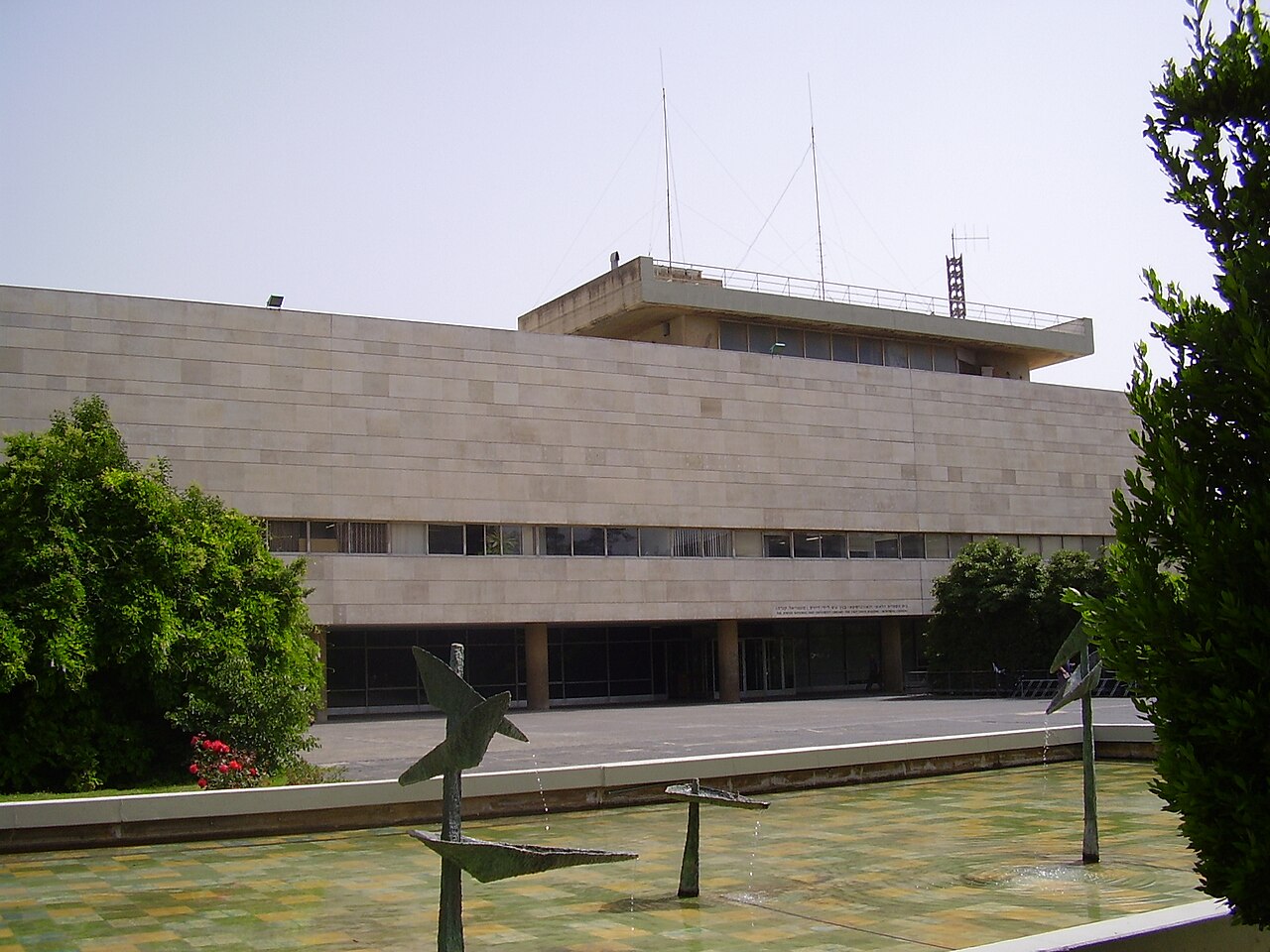
The Hebrew University of Jerusalem, co-founded by Albert Einstein, is a globally recognized institution ranked among the world's top 100 universities. It offers English-medium programs for international students in a historically rich setting, with strong ties to Israel's innovation ecosystem.
Key facts
- Type
- Public
- Founded
- 1918
- Students
- 22,000
- International students
- 2,500
- Acceptance rate
- 40%
- Tuition (intl)
- €10–18k/yr
- Languages
- EN, HE
- Location
- Jerusalem, Israel
The Hebrew University of Jerusalem is Israel's second-oldest and most globally prestigious university, co-founded in 1918 by Albert Einstein and Chaim Weizmann. With campuses across Jerusalem and Rehovot, it encompasses seven faculties covering humanities, social sciences, law, natural sciences, mathematics, medicine, and agriculture. HUJI consistently ranks in the global top 100 (ARWU) and has produced Nobel Prize winners, Fields Medal recipients, and Turing Award laureates. Its 180+ spin-off companies make it a central pillar of Israel's innovation economy.
Why study here
- Access world-class research at a QS top-250/ARWU top-100 institution with Nobel Prize-winning faculty.
- Study in Jerusalem, a city of unparalleled historical, cultural, and intellectual significance.
- Benefit from a rich academic environment with strong graduate programmes and research funding.
- Tap into Israel's innovation ecosystem through 180+ university spin-off companies and industry partnerships.
- English-medium programmes and international exchange agreements facilitate study for international students.
Student life
Campus life at Hebrew University spans multiple Jerusalem locations, each with its own character — Mount Scopus overlooks the old city while Givat Ram is home to the science faculties. Students enjoy an array of cultural events, student organisations, and easy access to Jerusalem's markets, galleries, and historical sites. The international student community is supported by dedicated services including dormitories, Hebrew language courses, and orientation programmes.
Fees
InternationalApproximately 10,000–18,000 EUR per year for international students, depending on programme and level.
HomeIsraeli domestic students pay subsidised rates set by the Council for Higher Education.
LivingMonthly living costs in Jerusalem are approximately 900–1,400 EUR covering accommodation, food, transport, and leisure.
Dormitories are available on campus and are competitive; early application is advised. Scholarships and fellowships reduce effective costs for graduate students.
Admissions
Undergraduate (international)Secondary school graduation with strong academic record; standardised test scores (SAT/ACT) may be required for some programmes.
GraduateRelevant bachelor's degree with a strong GPA; letters of recommendation; research proposal for PhD applicants.
TOEFL iBT85+
IELTS6.5+
Rankings
Shanghai ARWU#88 globally
Shanghai ARWU – Mathematics#15
Shanghai ARWU – Communication#16
Shanghai ARWU – Public Policy#23
QS World University Rankings~240
University scholarships
Rector's Excellence ScholarshipPartial tuition reduction for outstanding international graduate applicants
Academic Shield Grant (injured veterans)2,000 ILS plus support package
Hebrew University International Graduate FellowshipsVaries — covers tuition and stipend for doctoral researchers
Accreditation
Hebrew University is accredited by the Council for Higher Education of Israel. Its medical, law, and pharmacy programmes meet international accreditation standards and are recognised globally.
Programs
a selectionHebrew University of Jerusalem · Israel
BA Communication
Bachelor's
Level
—
Tuition
—
Duration
Hebrew University of Jerusalem · Israel
Bachelor of Laws (LLB)
Bachelor's
Level
—
Tuition
—
Duration
Hebrew University of Jerusalem · Israel
Communication and Journalism
In today's world, media and communications are central to all aspects of life, from personal connections to global events. The Department of Communication and Journalism at the Hebrew University is a leading institution for studying media and communication. It is ranked first in Israel, in the top ten in Europe, and 14th globally among communication departments. The department offers programs at the Bachelor's, Master's, and Doctoral levels.
Master's
Level
—
Tuition
24 mo
Duration
Hebrew University of Jerusalem · Israel
Computer Science and Engineering
The Master of Science (M.Sc.) program in Computer Science at the Hebrew University of Jerusalem offers advanced studies in a wide range of fields within computer science. The program aims to provide students with a deep theoretical understanding and practical skills to excel in research and development. The faculty is comprised of world-renowned researchers, fostering an environment of innovation and academic excellence.
Master's
Level
Free
Tuition
24 mo
Duration
Hebrew University of Jerusalem · Israel
Doctoral Program in Communication
The doctoral program in Communication is designed for highly motivated students who wish to engage in advanced research. It aims to prepare graduates for careers in academic or applied research within the field of communication. The program focuses on dissertation-based projects, with each student guided by a faculty supervisor. A strong emphasis is placed on fostering a supportive community through regular Doctoral Forum meetings, a dedicated workspace for doctoral students, and support for attending conferences and publishing research.
PhD
Level
—
Tuition
—
Duration
Hebrew University of Jerusalem · Israel
Hebrew University – Doctoral Studies in Law (LL.D.)
The Hebrew University Faculty of Law offers doctoral studies leading to an LL.D. degree. This program is designed for students seeking to conduct advanced legal research and contribute to the field of law through original scholarship. The LL.D. program provides a rigorous academic environment for developing research skills and producing a substantial doctoral dissertation. Students in the LL.D. program will work closely with faculty members who are leading scholars in various legal disciplines. The program emphasizes independent research, critical analysis, and the development of new insights into complex legal issues. It is an opportunity for aspiring legal academics and researchers to deepen their expertise and prepare for careers in academia, policy, or advanced legal practice.
PhD
Level
—
Tuition
—
Duration
Scholarships
for Israel full funding
Wellcome Trust
Wellcome Trust Fellowships and Grants (for international researchers)
For researchers at different career stages working on health-related science. Wellcome funds a family of fellowships and grants — early-career, career-development, and discovery awards, plus team and translational funding — each with its own eligibility, value, and call deadline. There is no single scholarship application; you apply to the specific scheme that fits your stage and project.
full
Funding
€3000k
Max
Rolling
Deadline
 full funding
Wellcome Trust
Wellcome International Training Fellowships
For early-career researchers based in low- and middle-income countries (outside the high-income world) who want protected time and support for research training in health, often including a PhD or postdoctoral research. Wellcome's scheme names and exact criteria change over time, so applicants should check the current relevant Wellcome funding scheme.
full
Funding
€150k
Max
Rolling
Deadline
 full funding
European Commission - European Research Executive Agency (REA)
Marie Sklodowska-Curie Actions Postdoctoral Fellowships
Open to researchers of any nationality who hold a PhD (or will have defended their doctoral thesis by the call deadline) and have at most 8 years of full-time-equivalent research experience after the PhD. Applicants apply jointly with a host organisation - a university, research institution, business, SME, or other body based in an EU Member State or a country associated to Horizon Europe. European Postdoctoral Fellowships are open to all nationalities for a project inside the EU or an associated country; Global Postdoctoral Fellowships are reserved for EU nationals or long-term residents who carry out a phase in a third country before returning to Europe. Researchers who have been displaced by conflict and those restarting a research career after a break are explicitly encouraged to apply.
full
Funding
€100k
Max
-7d left
Deadline
 full funding
Rotary Foundation
Rotary Peace Fellowships
For professionals committed to peace and development, with relevant work experience and (for the master's) a strong academic background and proficiency in English. Applicants apply through their local Rotary district and are selected globally by The Rotary Foundation for study at a Rotary Peace Center.
full
Funding
€90k
Max
May 15, 2027
Deadline
 full funding
Independent Social Research Foundation (ISRF)
ISRF Europe Early Career Fellowship
Open to early-career researchers in the social sciences and humanities who are within 10 years of their PhD award (career breaks considered) and hold a salaried position at a higher education or research institution, or are independent scholars with a host institution. Research must be hosted at a European institution and address innovative, interdisciplinary social research questions. Open to scholars of all nationalities.
full
Funding
€82k
Max
Feb 14, 2027
Deadline
 full funding
Massachusetts Institute of Technology (MIT)
MIT Need-Based Aid for International Undergraduates
For international undergraduate applicants to MIT, which is need-blind in admission and meets the full demonstrated financial need of every admitted student. Aid is a grant (no loans in the standard package); the amount is set by each family's assessed need.
full
Funding
€80k
Max
Nov 10, 2026
Deadline
Frequently asked questions
What are the estimated annual fees for international students at the Hebrew University of Jerusalem?
+
International students can expect annual fees to range from approximately 10,000 to 18,000 EUR, depending on the specific program and academic level. Living costs in Jerusalem are estimated to be between 900 and 1,400 EUR per month.
What is the academic standing of the Hebrew University of Jerusalem globally?
+
The Hebrew University of Jerusalem is consistently ranked among the top 100 universities worldwide by the Shanghai ARWU. It is also recognized within the top 250 by QS World University Rankings.
Are there English-medium programs available for international students?
+
Yes, Hebrew University offers English-medium undergraduate and graduate programs for international students. While Hebrew language proficiency is not required for these programs, a minimum TOEFL iBT score of 85 or IELTS score of 6.5 is generally expected.
What is the university's connection to innovation and research?
+
The university is a significant contributor to Israel's innovation economy, with over 180 spin-off companies originating from its research. It has a history of groundbreaking discoveries, with Nobel Prize winners and other acclaimed researchers among its faculty and alumni.
What are the admission requirements for international undergraduate students?
+
International undergraduate applicants typically need to have graduated from secondary school with a strong academic record. Some programs may also require standardized test scores such as the SAT or ACT.
Last updated