
In short
Macquarie University is a public research university in Sydney, Australia, offering diverse study options and strong industry connections. It provides a vibrant campus with extensive facilities and a focus on student employability, welcoming students from over 100 countries.
Key facts
- Type
- Public
- Founded
- 1964
- Students
- 38,747
- International students
- 12,000
- Acceptance rate
- 60%
- Tuition (intl)
- €22–38k/yr
- Languages
- EN
- Location
- Sydney, Australia
Macquarie University, established in 1964, is a progressive public research university in Sydney, Australia, known for challenging traditional higher education models and collaborating closely with industry. Located within one of Australia's largest business and technology precincts, Macquarie University offers a vibrant campus experience with extensive facilities and a strong focus on student support and employability. It provides diverse study options across various fields, alongside unique entry pathways and a generous scholarship programme, and fosters a diverse and inclusive community welcoming students from over 100 countries.
Why study here
- Access to extensive modern facilities and infrastructure, with over a billion dollars invested in the last decade.
- Benefit from a strong emphasis on graduate employability through personalised degrees and industry co-designed courses.
- Engage in impactful research addressing real-world problems, supported by interdisciplinary approaches.
- Study in a diverse and inclusive environment with support for students from various cultural backgrounds, LGBTQ+ individuals, and those with disabilities.
- Leverage extensive industry connections, with over 300 leading companies located on or around the main campus.
- Enjoy vibrant student life with on-campus amenities including dining, sports facilities, and student accommodation.
Student life
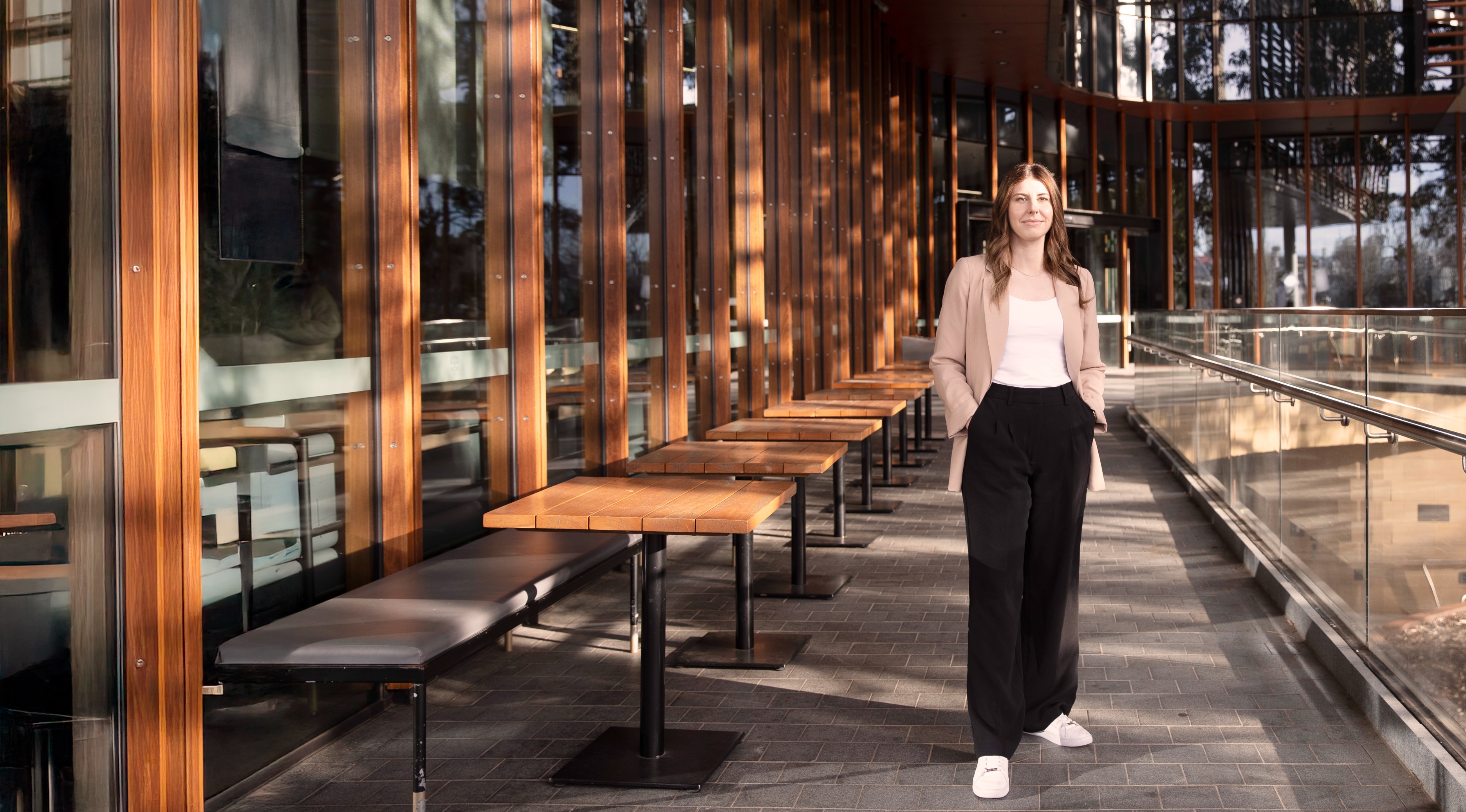
Macquarie University provides a vibrant and diverse community with a range of services and facilities designed to support student life. The Wallumattagal Campus, spanning 126 hectares, features green spaces, modern accommodation, and a variety of lifestyle facilities. Students can enjoy numerous dining options, from diverse international cuisine to cafés and the Ubar. The Sport and Aquatic Centre offers swimming pools, a health club, squash, basketball, and martial arts facilities. The university is committed to equity, diversity, and inclusion, offering support services for students from various backgrounds. Campus services also include childcare centres, a medical clinic, pharmacy, and counselling services.
Fees
InternationalAnnual international tuition fees typically range from AUD 36,000 to AUD 56,000 (approx. EUR 22,000–34,000) depending on the programme. Business, medicine, and law programmes are at the higher end of the range.
HomeDomestic Australian students pay regulated Commonwealth Supported Places fees or full-fee rates; most undergraduate domestic students receive government-subsidised places.
LivingEstimated annual living costs in Sydney: AUD 22,000–30,000 (approx. EUR 13,000–18,000), covering accommodation, food, transport, and personal expenses.
Course fees are due by the payment due date, which can vary by study period and unit. A late payment fee of $150 may be incurred for overdue payments. Students can view specific due dates on their Statement of Outstanding Charges in eStudent. The census date is the last day to withdraw from a unit without financial or academic penalty.
Admissions
UndergraduateCompletion of secondary schooling equivalent to the Australian Year 12. Entry scores vary by programme.
PostgraduateRecognised bachelor's degree in a relevant discipline with a minimum credit average (typically 2.7 GPA or equivalent).
IELTS6.5 overall (varies by course; some courses require 7.0)
TOEFL iBT83 overall (varies by course)
PTE Academic58 overall (varies by course)
Rankings
QS World University Rankings 2024195
Times Higher Education World University Rankings 2024201–250
QS Top 50 Under 50 UniversitiesTop 50
University scholarships
Macquarie University International ScholarshipUp to AUD 10,000 (EUR 6,000) per year
Vice-Chancellor's International Scholarship25% tuition fee reduction
Graduate Research ScholarshipsFull tuition + AUD 29,000 stipend/year
Accreditation
Accredited by the Australian government; active member of English Australia and University English Centres Australia (UECA); quality endorsement from the National ELT Accreditation Scheme (NEAS).
For international students
AustraliaStudent visa & funds
International students need the Student visa (subclass 500), which requires a Confirmation of Enrolment from a CRICOS-registered provider, Overseas Student Health Cover, and a health and character check. Since May 2024 applicants must show financial capacity of at least AUD 29,710 for one year of living costs, plus first-year tuition and around AUD 2,500 for travel. Since March 2024 all applicants must also satisfy the Genuine Student (GS) requirement, which replaced the former Genuine Temporary Entrant test.
Working while you study
Student visa holders may work a maximum of 48 hours per fortnight while their course is in session — a cap re-introduced in July 2023 — and unlimited hours during official scheduled course breaks. Students enrolled in a master’s by research or a doctoral degree have no work-hour limit at any time. Work must not begin before the course start date.
After you graduate
Eligible graduates may apply for the Temporary Graduate visa (subclass 485) within six months of completing their studies. In the Post-Higher Education Work stream, bachelor’s and master’s (coursework) holders receive up to two years and master’s (research) or doctoral holders up to three years; regional study and the Australia–India trade agreement can add further time. The general age limit is under 35 at the time of application, rising to under 50 for research-degree holders.
English tests
- IELTSUG 6.0–6.5; PG 6.5–7.0; Group of Eight typically 6.5–7.0 with no band below 6.0
- TOEFL iBT79–100; UG 79–90, PG 90–100
- PTE Academic50–65; UG 58+, PG 65+
Main intakes
FebruaryJuly
Typical living cost
€1,600/month
Approximate all-in student budget; major cities run higher.
SourcesDepartment of Home Affairs — Student visa (subclass 500) · Study Australia — Student visa (subclass 500) work rights · Study Australia — Temporary Graduate visa (subclass 485) · IDP IELTS — Minimum IELTS scores for Australian universities · AECC — Cost of living in Australia for international students
Programs
a selectionMacquarie University · Australia
Bachelor of Laws
Law is fundamental to how societies function, guiding responses to environmental issues, conflict resolution, privacy, and human rights. In an evolving global landscape, there's a need for professionals who can analyze complex problems, understand competing interests, and develop solutions that balance justice, ethics, and impact. Legal expertise is valuable across many sectors, including business, government, finance, and advocacy, wherever critical thinking and strong reasoning are required. The Bachelor of Laws program at Macquarie University emphasizes practical experience and industry connections. Students have opportunities for internships with leading law firms, potentially leading to graduate employment. The program also offers client-facing experience through a not-for-profit family law firm focused on access to justice, and participation in Social Justice and Strategic Litigation Clinics. Learning takes place in a modern law environment designed to foster collaboration.
Bachelor's
Level
—
Tuition
48 mo
Duration
Macquarie University · Australia
Degree Builder
Macquarie University's Degree Builder program is designed to prepare you for the future job market. It emphasizes co-designing degrees with industry partners to identify essential interdisciplinary skills and areas of high demand. The program offers a streamlined approach to double degrees, allowing you to combine your interests and gain future-focused employability skills. You can choose from a variety of single bachelor's and master's degrees, or opt for a double degree to explore multiple specializations.
Bachelor's
Level
—
Tuition
—
Duration
Macquarie University · Australia
Diploma Programs at Macquarie University
Macquarie University offers a range of Diploma programs designed as pathway programs for both domestic and international students who may not yet meet the direct entry requirements for an undergraduate degree. These diplomas are equivalent to the first year of a bachelor's degree, providing a supportive environment to develop the necessary academic skills and knowledge. Successful completion of a diploma with the required grades allows for guaranteed entry into the second year of a nominated bachelor's degree at Macquarie University, with credit granted for completed units.
Diploma
Level
—
Tuition
12 mo
Duration
Macquarie University · Australia
Macquarie University Study Options
Macquarie University offers a range of study options, including undergraduate, postgraduate coursework, and research degrees. You can choose to focus on a single area of study for a specialised degree or combine different fields in a double degree to broaden your knowledge and career prospects. The university also offers combined bachelor and master degrees, such as in security, intelligence, and criminology, providing a pathway to advanced specialisation.
Bachelor's
Level
—
Tuition
—
Duration
Macquarie University · Australia
Master of Information Technology
The Master of Information Technology is designed for individuals with undergraduate degrees in fields outside of IT who want to develop advanced technology skills. In today's world, sophisticated IT systems are crucial for organizations, and there is a significant global shortage of skilled tech professionals. This program aims to equip you with specialized, competitive, and transferable skills to excel in the rapidly growing IT sector. The degree includes an accelerated first year equivalent to an IT bachelor's degree, followed by advanced units in the second year. You can choose to specialize in Applied Artificial Intelligence, Cyber Security, or Information Systems. The program offers the flexibility to complete a supervised research project or an industry internship, allowing you to apply your learning to real-world challenges and gain practical experience.
Master's
Level
—
Tuition
24 mo
Duration
Macquarie University · Australia
PhD and Research Degrees
Macquarie University is committed to fostering the next generation of talented researchers and globally-minded leaders. Our research degrees offer a flexible structure, allowing you to advance your research training according to your personal goals and needs. You will be guided by supportive and engaged supervisors, empowering you to pursue innovative ideas within your chosen field. The university also facilitates connections with industry and community partners, helping you to establish valuable relationships with potential future employers.
PhD
Level
—
Tuition
—
Duration
Scholarships
for Australia full funding
Australian Government - Department of Foreign Affairs and Trade (Australia Awards)
ASEAN-Australia Awards Scholarships
Open to citizens of eligible ASEAN countries (Brunei, Cambodia, Indonesia, Laos, Malaysia, Myanmar, Philippines, Singapore, Thailand, Vietnam and Timor-Leste) applying for a master's degree by coursework or research at an Australian university. Applicants need a strong academic record, leadership potential, relevant work experience and English proficiency, and must meet Australian visa and health requirements. Exact terms are set each cycle by the Australian Government.
full
Funding
€120k
Max
Apr 30, 2027
Deadline
full fundingForrest Research Foundation (Minderoo Foundation)
Forrest Research Foundation Post-doctoral Fellowships
Open to early-career post-doctoral researchers of any nationality and from all academic disciplines. Applicants must be in the final year of their PhD or no more than two years past PhD completion at the time of taking up the fellowship, be proficient in English, and meet the employment-eligibility conditions of the host Western Australian university. Fellows must reside at Forrest Hall in Perth for the full term and commit to mentoring Forrest Scholars, undertaking ambassadorial duties and providing leadership within Forrest Hall.
full
Funding
€90k
Max
May 31, 2027
Deadline
 full funding
University of Melbourne
Hansen Scholarship at the University of Melbourne
Australian citizens, permanent residents or holders of an Australian temporary or permanent protection visa who are enrolled in an Australian Year 12 or IB programme, aged 16-20 at application, with a predicted ATAR of 90+ (or IB equivalent) and demonstrated financial hardship (e.g. a family receiving Centrelink benefits). Asylum seekers are eligible for full fee remission.
full
Funding
€65k
Max
Mar 31, 2027
Deadline
full fundingAustralian Government (Department of Foreign Affairs and Trade)
Australia Awards Scholarships
Open to citizens of ~30+ eligible developing countries (mostly the Indo-Pacific), who are not married to/engaged to an Australian or NZ citizen, meet academic and English requirements, and commit to returning home for at least 2 years after study. Fields must align with the partner country's development priorities.
full
Funding
€60k
Max
Apr 30, 2027
Deadline
 full funding
University of Sydney
University of Sydney International Research Scholarship (USydIS)
For international students undertaking a postgraduate research degree (a master's by research or a PhD) at the University of Sydney. It covers tuition fees and a living-allowance stipend; applicants need a strong research background and a confirmed place and supervisor for their research project.
full
Funding
€45k
Max
14d left
Deadline
full fundingUniversity of Melbourne (School of Computing and Information Systems)
University of Melbourne CIS PhD Scholarship
Open to domestic and international students of all nationalities. Applicants must hold a Master of Computer Science from the University of Melbourne, apply for the Doctor of Philosophy – Engineering and IT (Computing and Information Systems) programme (DR-PHILEIT), and demonstrate strong academic performance, leadership, and research potential. A research proposal, a personal statement, and a letter of support from the proposed PhD supervisor are required.
full
Funding
€42k
Max
Jul 14, 2027
Deadline
Frequently asked questions
What are the estimated tuition fees for international students at Macquarie University?
+
Annual international tuition fees at Macquarie University typically range from AUD 36,000 to AUD 56,000, depending on the chosen program. Programs in business, medicine, and law are generally at the higher end of this range.
What are the estimated living costs for students in Sydney?
+
Estimated annual living costs in Sydney are between AUD 22,000 and AUD 30,000. This estimate covers accommodation, food, transportation, and other personal expenses.
What are the English language requirements for international students?
+
For IELTS, an overall score of 6.5 is generally required, though some courses may demand a 7.0. For TOEFL iBT, the minimum overall score is 83, and for PTE Academic, it's 58. Specific requirements can vary by course.
What kind of scholarship opportunities are available for international students?
+
Macquarie University offers several scholarships, including the Macquarie University International Scholarship (up to AUD 10,000 per year) and the Vice-Chancellor's International Scholarship (a 25% tuition fee reduction).
Where is Macquarie University located?
+
Macquarie University's main campus is located 15 kilometres from Sydney's city centre, within a business and technology precinct. The university also has a City Campus in Sydney's CBD.
Last updated