UNITED STATES · WOODS HOLE
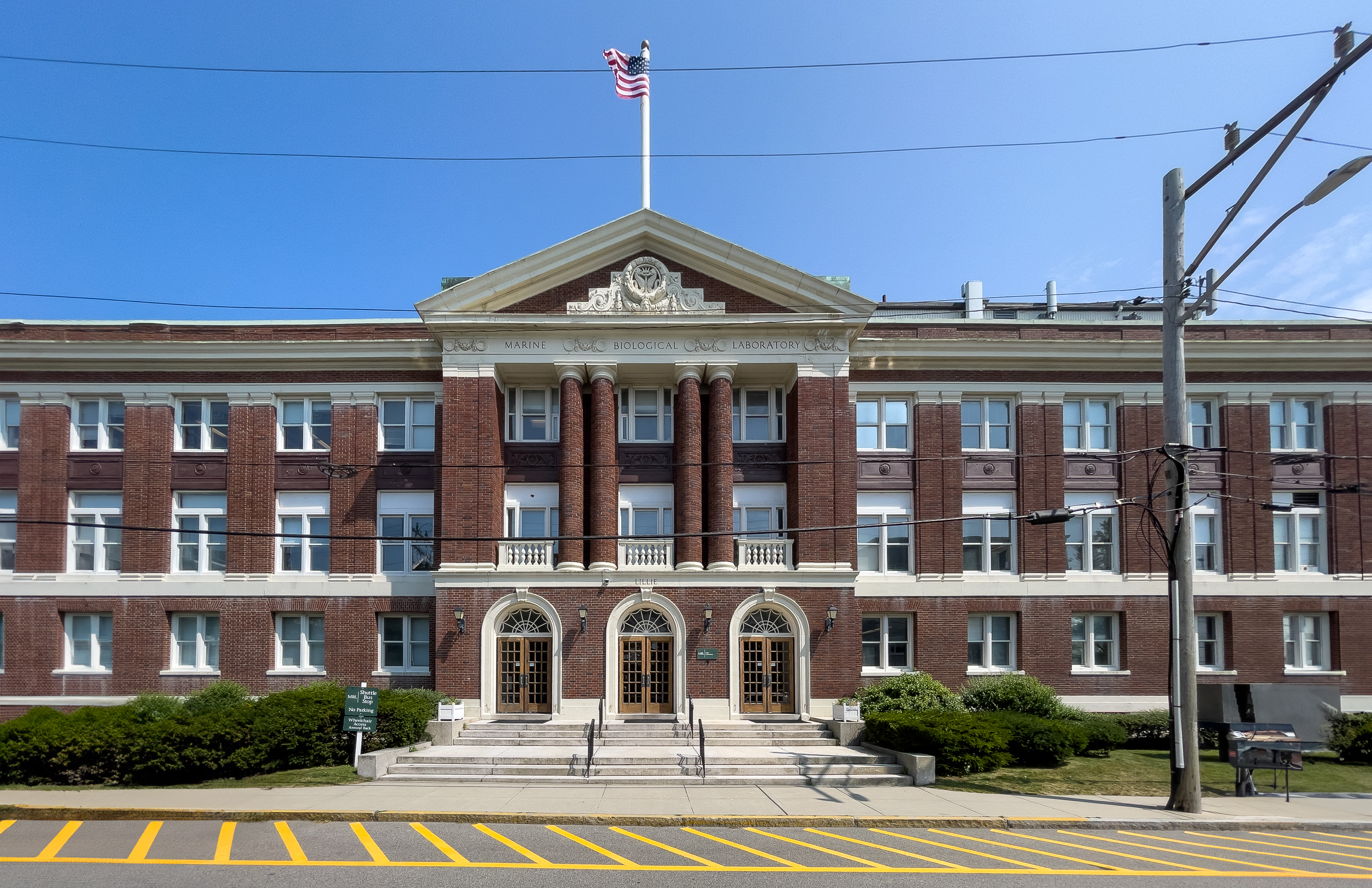
Marine Biological Laboratory
private · Founded 1888 · Languages: en
In short
The Marine Biological Laboratory (MBL) in Woods Hole, MA, is a renowned research institution affiliated with the University of Chicago, offering unique opportunities in marine biology and environmental sciences. It provides intensive, discovery-driven learning with access to a global scientific community and significant funding opportunities.
Key facts
- Type
- Private
- Founded
- 1888
- Students
- 1,500
- International students
- 1,500
- Tuition (intl)
- €8–18k/yr
- Languages
- EN
- Location
- Woods Hole, United States
The Marine Biological Laboratory (MBL), founded in 1888, is a private, non-profit institution dedicated to scientific discovery and education in the biological and environmental sciences. Affiliated with the University of Chicago since 2013, the MBL occupies a unique position in Woods Hole, Massachusetts, where two distinct ocean bodies meet, providing unmatched access to marine biodiversity. Over 60 Nobel laureates have been associated with the institution throughout its 135-year history.
Why study here
- Access to a globally unique scientific community of leading researchers and Nobel laureates in an intensive collaborative environment.
- Hands-on discovery-driven learning using an extraordinary variety of marine organisms across cell biology, neuroscience, ecology, and environmental science.
- Benefit from a formal affiliation with the University of Chicago, with PhD research opportunities embedded at the MBL.
- Participate in year-round research centers spanning ecosystems, regenerative biology, and microbiology.
- Grass Foundation Fellowships and other competitive awards support early-career scientists with funding, housing, and travel.
Student life
Life at the MBL is immersive and community-centered. During the summer, hundreds of scientists and students live and work on the compact waterfront campus, fostering intense intellectual exchange across disciplines and career stages. Evening lectures, seminar series, and informal gatherings create a collegial atmosphere unlike a traditional university. Kayaking, sailing, and exploring the Cape Cod landscape offer recreational respite.
Fees
InternationalProgram and course fees vary widely by program; summer research courses typically range from $8,000 to $18,000 EUR-equivalent covering tuition, laboratory access, and some housing support.
HomeSame fee structure applies to U.S. participants; fellowship and grant funding frequently offsets costs.
LivingOn-campus housing and meal plans are available for MBL course participants during the summer season.
Many participants receive fellowship funding (e.g., Grass Fellowships) that covers lab space, animals, equipment, housing, meals, and travel. The MBL Discovery Fund provides additional tuition and supply support.
Admissions
ApplicationProgram-specific online application; requirements differ by course or fellowship program.
Research StatementApplicants must describe proposed research and career goals in a written statement.
Letters of RecommendationTypically 2-3 letters from academic or research supervisors.
CV / ResumeDetailing research experience, publications, and academic background.
TOEFL80+ iBT recommended for non-native speakers
IELTS6.5 recommended
University scholarships
Grass Foundation FellowshipFull lab costs, housing, meals, and round-trip travel for fellow and family
MBL Discovery FundTuition and supply support for course participants; amount varies
Accreditation
The MBL is a recognized non-profit research institution affiliated with the University of Chicago, a fully accredited research university. Graduate-level coursework may carry University of Chicago credit.
For international students
United StatesStudent visa & funds
International students primarily enter on the F-1 visa, which requires enrolment at a SEVP-certified institution. Before the visa interview the school issues a Form I-20 — a certificate of eligibility — for which a Designated School Official must verify documented funds covering tuition, living expenses and travel for the first year, plus a reliable source for subsequent years. The financial evidence must be specific and from an identified source.
Working while you study
F-1 students may work on campus up to 20 hours per week while classes are in session and full-time during official breaks, with no separate authorization needed. Off-campus work is generally not permitted in the first academic year. After one academic year in good standing, students may use Curricular Practical Training (CPT) for paid work that is an integral part of the curriculum, authorized by the school; other off-campus work requires an approved Employment Authorization Document from USCIS.
After you graduate
After completing a degree, F-1 students may apply for Optional Practical Training (OPT) — up to 12 months of work authorization in a related field — by filing Form I-765 and receiving an EAD before starting work. Graduates of a degree on the DHS STEM Designated Degree Program List may apply for a 24-month STEM OPT extension, for up to 36 months total. The extension requires an E-Verify employer and a qualifying STEM degree earned within the previous ten years.
English tests
- IELTSUG 6.0–6.5; PG 6.5–7.0; top-tier programs 7.0–7.5
- TOEFL iBTUG 80–100; PG 90–110; selective research universities 100+
- PTE AcademicUG 50–60; PG 55–70; highly selective programs 65+
Main intakes
AugustJanuary
Typical living cost
€1,420/month
Approximate all-in student budget; major cities run higher.
SourcesStudy in the States — Students and the Form I-20 · Study in the States — Financial ability · USCIS — Students and employment · USCIS — Optional Practical Training (OPT) for F-1 students · USCIS — STEM OPT extension · LeapScholar — Minimum IELTS scores for USA universities · Mastersportal — Student living costs in the USA (2025–2026)
Programs
a selectionMarine Biological Laboratory · United States
Advanced Research Training Courses
The Marine Biological Laboratory (MBL) offers advanced research training courses designed to develop a dynamic scientific and academic workforce. These courses attract approximately 500 trainees annually from around 300 institutions and 60 countries. Participants engage directly with distinguished faculty from across the globe, enabling them to conduct novel experiments, test new hypotheses, and foster collaborative networks. MBL emphasizes that financial constraints should not hinder scientific pursuits, with most courses offering substantial financial aid, including need-based scholarships. Applicants are encouraged to apply regardless of their financial situation, as opportunities to apply for aid to cover tuition, room, and board will be available upon acceptance.
Certificate
Level
—
Tuition
—
Duration
Marine Biological Laboratory · United States
Advanced Research Training Courses (ARTC)
The Marine Biological Laboratory (MBL) offers Advanced Research Training Courses (ARTC) designed to transform students into accomplished scientists. These transformative courses provide access to state-of-the-art equipment and focus on fundamental scientific principles. Participants work directly with world-class faculty on novel experiments, fostering a global network of collaboration and pushing the boundaries of current knowledge. The ARTC program attracts over 500 graduate students and postdoctoral researchers annually from more than 300 institutions worldwide, covering a wide range of biological sciences including development, cell physiology, microbiology, neuroscience, and microscopy.
Master's
Level
—
Tuition
—
Duration
Marine Biological Laboratory · United States
Internships at the Marine Biological Laboratory
The Marine Biological Laboratory (MBL) offers a variety of internship opportunities designed to provide intensive, hands-on research experience for undergraduate students. These programs are typically summer-based and focus on different areas of biological and environmental science, including marine biology, ecology, and oceanography. Interns work closely with leading scientists on individual research projects, contributing to ongoing studies and developing their scientific skills in a collaborative research environment. While specific program details may vary, most internships are 10-12 weeks long and involve fieldwork, laboratory work, data analysis, and presentation of research findings. The MBL is committed to fostering the next generation of scientists by offering a stimulating and supportive atmosphere for learning and discovery. The programs are often funded, aiming to remove financial barriers for participants. Applications for these competitive internships open in mid-December for the following year. Prospective interns are encouraged to research the specific programs that align with their interests and academic background. For inquiries, students can contact the designated program coordinator for further information.
Certificate
Level
—
Tuition
10 mo
Duration
Marine Biological Laboratory · United States
Jeff Metcalf Summer Undergraduate Research Fellows (SURF) Program
The Jeff Metcalf Summer Undergraduate Research Fellows (SURF) program offers University of Chicago students a unique opportunity to engage in world-class scientific research at the Marine Biological Laboratory (MBL). This 10-week summer experience is designed for first, second, and third-year undergraduates to explore scientific fields beyond their coursework and participate in comprehensive discovery research. The program aims to foster student-faculty relationships, build academic and professional credentials, and help students clarify their career aspirations.
Certificate
Level
—
Tuition
10 mo
Duration
Marine Biological Laboratory · United States
Logan Science Journalism Program
The Logan Science Journalism Program offers a unique opportunity for science journalists, writers, editors, and broadcast journalists to step away from daily deadlines and immerse themselves in fundamental biomedical or environmental research. Founded in 1986, this program is hosted at the Marine Biological Laboratory (MBL) in Woods Hole, Massachusetts, a leading center for scientific discovery. Participants will engage in hands-on research training, choosing between two intensive introductory courses: one focused on biomedical research and the other on environmental research. This immersive experience aims to provide journalists with a deeper understanding of scientific processes.
Certificate
Level
Free
Tuition
—
Duration
Marine Biological Laboratory · United States
Logan Science Journalism Program - Environmental Hands-On Research Course
Certificate
Level
—
Tuition
—
Duration
Scholarships
for United States full funding
Duke University
Karsh International Scholarship Program
Open to international (non-U.S. citizen, non-permanent-resident) high school students applying for first-year undergraduate admission to Duke University. Candidates must demonstrate financial need through Duke's need-based aid process, show interdisciplinary academic curiosity, and have a record of community engagement. There is no separate scholarship form; international applicants who indicate they are applying for financial aid are automatically considered for the Karsh award.
full
Funding
€320k
Max
Jan 2, 2027
Deadline
 full funding
University of Miami (with the Stamps Family Charitable Foundation)
University of Miami Stamps Scholarship
Open to high school seniors, both domestic (U.S.) and international, applying for first-year undergraduate admission to the University of Miami through Early Decision I or Early Action. Applicants are automatically considered with no separate scholarship form; they must submit all first-year admission requirements and demonstrate strong academic achievement, leadership, and community involvement. Semi-finalists complete a Zoom interview.
full
Funding
€260k
Max
Nov 1, 2026
Deadline
 full funding
QuestBridge
QuestBridge National College Match Scholarship
Open to high-achieving US high school seniors from low-income backgrounds who are US citizens, permanent residents, or students studying in the US regardless of citizenship. Competitive applicants typically earn mostly A's in challenging courses, rank in the top 5-10% of their class, and have strong standardised test results (SAT/PSAT above 1310 or ACT above 28), though each application is read in context. Applicants must demonstrate strong writing, intellectual curiosity and determination through essays and recommendations. Matched students must attend a partner college as a binding-early-decision commitment.
full
Funding
€185k
Max
10d left
Deadline
full fundingArgonne National Laboratory
Maria Goeppert Mayer Fellowship at Argonne National Laboratory
Open to early-career scientists and engineers of all nationalities who hold a PhD awarded within the last three years at the time of application, or who will complete the PhD before the fellowship start date. Research interests must align with Argonne's mission areas. U.S. citizenship is required for national-security-related projects (Detection of Imaging Signatures).
full
Funding
€130k
Max
15d left
Deadline
 partial funding
Boustany Foundation / Harvard Business School
Boustany MBA Harvard Scholarship
Open to candidates of any nationality (priority to those of Lebanese descent) who have received an offer of admission to the Harvard MBA programme and have a strong academic background.
partial
Funding
€100k
Max
May 31, 2027
Deadline
 full funding
Stanford University
Knight-Hennessy Scholars
Open to citizens of any country who earned their first/bachelor's degree within the last ~7 years (or will by the Stanford start) and who apply for and gain admission to a full-time Stanford graduate program. Selection seeks independence of thought, purposeful leadership, and a civic mindset.
full
Funding
€90k
Max
22d left
Deadline
Frequently asked questions
What is the Marine Biological Laboratory (MBL)?
+
The Marine Biological Laboratory (MBL) is a private, non-profit institution founded in 1888, dedicated to scientific discovery and education in the biological and environmental sciences. It is affiliated with the University of Chicago and is located in Woods Hole, Massachusetts.
Where is the MBL located and why is it significant?
+
The MBL is situated in Woods Hole, Massachusetts, a seaside community where two distinct ocean bodies meet. This unique geographical position provides exceptional access to a diverse range of marine life, ideal for research and study.
What are the approximate fees for international students at MBL?
+
Program and course fees vary widely, but summer research courses typically range from $8,000 to $18,000 EUR-equivalent. This usually covers tuition, laboratory access, and some housing support.
Are there scholarships or funding opportunities for international students?
+
Yes, many participants receive fellowship funding, such as the Grass Foundation Fellowships, which often covers lab space, animals, equipment, housing, meals, and travel. The MBL Discovery Fund also provides additional tuition and supply support.
What are the English language proficiency requirements for international applicants?
+
For non-native English speakers, a TOEFL score of 80+ iBT is recommended. An IELTS score of 6.5 is also recommended.
What application materials are required for MBL programs?
+
Requirements differ by program, but typically include a program-specific online application, a research statement detailing proposed research and career goals, 2-3 letters of recommendation, and a CV/resume detailing research experience and academic background.
Last updated