UNITED STATES · RALEIGH
North Carolina State University
public · Founded 1887 · Languages: en
In short
North Carolina State University (NC State) is a leading public research institution in Raleigh, NC, offering over 300 undergraduate and graduate programs. It is recognized globally for its academic excellence and research impact.
Key facts
- Type
- Public
- Founded
- 1887
- Students
- 40,500
- International students
- 3,600
- Acceptance rate
- 45%
- Tuition (intl)
- €8–26k/yr
- Languages
- EN
- Location
- Raleigh, United States
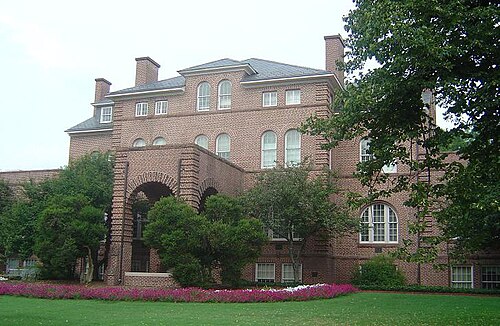
North Carolina State University (NC State) is a leading public research institution located in Raleigh, North Carolina. Since its founding in 1887, NC State has committed to world-class teaching and impactful research, consistently ranking among the top universities globally. As a land-grant institution, it emphasizes community, equality, and sharing knowledge for the greater good, offering a comprehensive range of over 100 undergraduate majors and more than 200 master’s and doctoral programs across 12 colleges. NC State is recognized as a Research 1 university, making significant contributions in various fields including science, technology, engineering, mathematics, agriculture, business, design, education, humanities, social sciences, natural resources, textiles, and veterinary medicine. The university fosters an environment where students, faculty, and industry partners collaborate on solutions to global challenges, with research outcomes impacting local, national, and international communities. The university prides itself on providing extensive opportunities and resources expected from a large institution, combined with the personalized attention often found in smaller schools. It is consistently ranked as a top-value college, preparing graduates for successful careers and meaningful lives through a strong focus on hands-on experience, research, and interdisciplinary collaboration.
Why study here
- Access to a comprehensive range of over 100 undergraduate and 200 graduate programs, ensuring a wide choice of study paths.
- Benefit from a Research I university status, with extensive opportunities to engage in cutting-edge research alongside internationally recognized faculty.
- Experience a supportive and inclusive campus community with over 800 student organizations, ensuring a vibrant student life and opportunities to connect with like-minded peers.
- Gain practical, hands-on experience and STEM skills highly valued by top companies, leading to high employability and successful careers.
- Study in Raleigh, North Carolina, a city consistently ranked among the best places to live and work in the U.S., offering a high quality of life and career prospects.
Student life
NC State offers a lively and welcoming campus community with exceptional opportunities beyond the classroom. Students can make themselves at home in one of 20 residence halls or four apartment complexes, offering flexible living options close to classes, meals, and study spots. The university provides extensive dining choices, from coffee shops to full-service restaurants. Living and Learning Villages offer communities for students sharing passions like sustainability, wellness, and entrepreneurship, while an active Greek life boasts over 50 fraternities and sororities. With over 800 student organizations, there's a community for every interest, from beekeeping to biochemistry. Students can also engage with four on-campus community centers: the African American Cultural Center, LGBTQ Pride Center, Multicultural Student Affairs, and Women's Center. The university hosts nearly 500 arts opportunities annually, including theater, dance, craft classes, and art exhibitions. Leadership opportunities are available through Student Government and the University Activities Board, fostering personal growth and campus involvement. NC State's Division of Academic and Student Affairs (DASA) supports the 'whole student' from orientation to graduation, promoting an inclusive environment and providing resources for academic, professional, and personal success, including a 94% retention rate and 85% graduation rate.
Fees
InternationalTuition and fees for international students are determined by classification, academic program, and courses. Specific details are available through the student services portal, but generally range from $9,226 to $30,209 per year for undergraduates, varying significantly for graduate programs.
HomeIn-state (North Carolina resident) undergraduate tuition and fees are substantially lower than non-resident rates, at roughly $9,200 per year including mandatory fees.
LivingInformation on living expenses is not explicitly provided, but the university notes flexible housing options (20 residence halls and four apartment complexes) and diverse dining plans (coffee shops, grab-and-go, dining halls, full-service restaurants). Budget approximately $12,000-$15,000 per year for room, board, and personal expenses.
All figures are in US dollars. International undergraduates are charged the non-resident rate. Mandatory fees and health insurance apply on top of base tuition.
Admissions
Undergraduate Academic Record (Engineering)High school academic record, including weighted and unweighted GPA and class rank, receives significant emphasis. Strong performance in advanced math, chemistry, and physics is preferred. Typical admitted first-year students have an unweighted GPA of 3.8 – 4.0 and often rank in the top 10% of their high school class.
Standardized Test Scores (Engineering)For the most recent year test scores were required (2019), the middle 50% of incoming first-years had SAT scores in the 1340-1450 range and ACT scores in the 30-33 range.
Extracurricular Activities and Leadership ExperiencesConsidered in the admissions process for all programs.
Engineering First Year Program (EFY)All first-year engineering students are admitted to EFY. Students declare an intended major or remain undecided. Successful completion of English composition, calculus, chemistry, physics, and introductory engineering/computer courses is required before joining an academic department.
TOEFL iBT85 (minimum; competitive applicants score higher)
IELTS6.5 overall
Duolingo English Test110
Rankings
QS World University Rankings 2026Top 50 among universities in the United States
Center for World University RankingsTop 1% of universities worldwide
U.S. News & World Report#64 Among National Universities
Forbes#23 Among Public Colleges Nationally
U.S. News & World Report#4 College of Veterinary Medicine in the Nation
U.S. News & World Report#1 best graduate program in education in North Carolina
Money#2 best public college in North Carolina for value
Heartland Forward#2 for research commercialization among public universities nationally
U.S. News & World Report#5 graduate biological/agricultural engineering program nationally
National Science Foundation#6 in research expenditures nationally for universities without a medical school
U.S. News & World Report#6 online graduate educational administration program nationally
U.S. News & World Report#6 online graduate electrical engineering program nationally
U.S. News & World Report#7 undergraduate biological/agricultural engineering program nationally
U.S. News & World Report#7 graduate nuclear engineering program nationally
U.S. News & World Report#9 online graduate civil engineering program nationally
Princeton ReviewTop 10 best value among public universities nationally
Military FriendlyTop 10 military-friendly school among Tier 1 research institutions
U.S. News & World Report#10 online graduate education program for veterans nationally
U.S. News & World Report#10 online mechanical engineering program nationally
Princeton Review#11 best alumni network among public universities nationally
U.S. News & World Report#11 undergraduate industrial/manufacturing engineering program nationally
Princeton Review#11 online MBA program nationally
U.S. News & World Report#11 online graduate industrial engineering program nationally
U.S. News & World Report#12 online business analytics MBA program nationally
U.S. News & World Report#18 graduate statistics program nationally
U.S. News & World Report#18 online graduate education program nationally
University scholarships
The Elois and Allie Mack Clayton ScholarshipVaries
John L. Crow and John R. Jenkins Scholarship EndowmentVaries
Charles W. “Chuck” & G. Nadine P. Edwards Excellence ScholarshipVaries
Jerry and Elizabeth Godwin ScholarshipVaries
Diana G. and James L. Oblinger ScholarshipVaries
Progress Energy MSTE Education EndowmentVaries
Sara Lee Multimedia Technology Education EndowmentVaries
Ruth L. and Herbert E. Speece ScholarshipVaries
Accreditation
Accredited by the Southern Association of Colleges and Schools Commission on Colleges (SACSCOC). Engineering programs are accredited by ABET; professional programs hold discipline-specific accreditations including AVMA (veterinary medicine) and AACSB (business).
For international students
United StatesStudent visa & funds
International students primarily enter on the F-1 visa, which requires enrolment at a SEVP-certified institution. Before the visa interview the school issues a Form I-20 — a certificate of eligibility — for which a Designated School Official must verify documented funds covering tuition, living expenses and travel for the first year, plus a reliable source for subsequent years. The financial evidence must be specific and from an identified source.
Working while you study
F-1 students may work on campus up to 20 hours per week while classes are in session and full-time during official breaks, with no separate authorization needed. Off-campus work is generally not permitted in the first academic year. After one academic year in good standing, students may use Curricular Practical Training (CPT) for paid work that is an integral part of the curriculum, authorized by the school; other off-campus work requires an approved Employment Authorization Document from USCIS.
After you graduate
After completing a degree, F-1 students may apply for Optional Practical Training (OPT) — up to 12 months of work authorization in a related field — by filing Form I-765 and receiving an EAD before starting work. Graduates of a degree on the DHS STEM Designated Degree Program List may apply for a 24-month STEM OPT extension, for up to 36 months total. The extension requires an E-Verify employer and a qualifying STEM degree earned within the previous ten years.
English tests
- IELTSUG 6.0–6.5; PG 6.5–7.0; top-tier programs 7.0–7.5
- TOEFL iBTUG 80–100; PG 90–110; selective research universities 100+
- PTE AcademicUG 50–60; PG 55–70; highly selective programs 65+
Main intakes
AugustJanuary
Typical living cost
€1,420/month
Approximate all-in student budget; major cities run higher.
SourcesStudy in the States — Students and the Form I-20 · Study in the States — Financial ability · USCIS — Students and employment · USCIS — Optional Practical Training (OPT) for F-1 students · USCIS — STEM OPT extension · LeapScholar — Minimum IELTS scores for USA universities · Mastersportal — Student living costs in the USA (2025–2026)
Programs
a selectionNorth Carolina State University · United States
Advanced Architectural Studies (MR)
The Master of Advanced Architectural Studies (MR) is a graduate program designed for students seeking to deepen their knowledge and skills in advanced architectural concepts. While the degree is awarded as 'Master of Advanced Architectural Studies,' it does not specify focus areas. The program is not accredited by the National Architecture Accrediting Board (NAAB). It requires a total of 30 credit hours, including 15 hours of required courses and 15 hours of electives.
Master's
Level
—
Tuition
24 mo
Duration
North Carolina State University · United States
Biological and Agricultural Engineering (PhD): Systems Analysis Concentration
The Doctor of Philosophy (PhD) in Biological and Agricultural Engineering at North Carolina State University offers a Systems Analysis Concentration. This program is designed for students who want to conduct advanced research and contribute to the field through in-depth study and analysis. The concentration focuses on applying systems thinking and analytical methods to complex problems within biological and agricultural systems. This program emphasizes rigorous research methodologies, advanced coursework, and the development of critical thinking skills. Students will work closely with faculty members who are leaders in their respective research areas, contributing to the university's reputation for innovation and excellence in engineering and agricultural sciences. The curriculum is structured to provide a strong theoretical foundation and practical research experience, preparing graduates for impactful careers in academia, industry, and government.
PhD
Level
—
Tuition
—
Duration
North Carolina State University · United States
Chemical Engineering (MS)
The Master of Science in Chemical Engineering program at North Carolina State University offers advanced study and research opportunities for students seeking to deepen their expertise in the field. The program requires 30 credit hours, which can be completed through either a thesis or non-thesis track. Students will engage in core chemical engineering principles, including process modeling, thermodynamics, transport phenomena, and reaction engineering. Elective courses are chosen in consultation with an academic committee to tailor the program to individual interests and career goals.
Master's
Level
—
Tuition
24 mo
Duration
North Carolina State University · United States
Communication, Rhetoric, and Digital Media (PhD)
The PhD in Communication, Rhetoric, and Digital Media at North Carolina State University offers a rigorous academic program for students seeking to advance their knowledge in the intersection of communication, rhetorical theory, and digital technologies. This program focuses on critical analysis, research methodologies, and the development of scholarly expertise in a rapidly evolving digital landscape. Students will engage with interdisciplinary approaches to understand how communication shapes and is shaped by new media and technological advancements.
PhD
Level
—
Tuition
—
Duration
North Carolina State University · United States
Electric Power System Engineering (MS): Internship Concentration
The Master of Science in Electric Power System Engineering with an Internship Concentration at NC State University is designed for students seeking practical, hands-on experience in the electric power industry. This on-campus program allows students to integrate a significant internship of 4-7 months into their graduate studies. The internship, combined with coursework, provides a comprehensive understanding of electric power systems and prepares graduates for specialized roles in the field. Students are encouraged to secure an internship after completing their first semester and must fulfill specific university requirements for international students before commencing their practical training.
Master's
Level
—
Tuition
24 mo
Duration
North Carolina State University · United States
Electric Power System Engineering (MS): Wide Bandgap Power Electronics Concentration
North Carolina State University offers a Master of Science (MS) in Electric Power Systems Engineering with a specialization in Wide Bandgap Power Electronics. This program focuses on advanced topics in power electronics, semiconductor devices, and their applications in modern electric power systems. The curriculum is designed to provide students with in-depth knowledge and practical skills in designing, analyzing, and implementing power electronic systems, particularly those utilizing wide bandgap semiconductor technologies. The program requires a total of 30 credit hours, encompassing a core curriculum in electric power engineering and specialized coursework within the wide bandgap concentration. Students will engage with topics such as power electronics design, control systems, renewable energy systems, and electric machines. The faculty comprises experienced professors and researchers in the field, contributing to a robust academic and research environment. Graduates are prepared for advanced roles in research, development, and engineering within the power electronics and electric energy industries.
Master's
Level
—
Tuition
24 mo
Duration
Scholarships
for United States full funding
Duke University
Karsh International Scholarship Program
Open to international (non-U.S. citizen, non-permanent-resident) high school students applying for first-year undergraduate admission to Duke University. Candidates must demonstrate financial need through Duke's need-based aid process, show interdisciplinary academic curiosity, and have a record of community engagement. There is no separate scholarship form; international applicants who indicate they are applying for financial aid are automatically considered for the Karsh award.
full
Funding
€320k
Max
Jan 2, 2027
Deadline
 full funding
University of Miami (with the Stamps Family Charitable Foundation)
University of Miami Stamps Scholarship
Open to high school seniors, both domestic (U.S.) and international, applying for first-year undergraduate admission to the University of Miami through Early Decision I or Early Action. Applicants are automatically considered with no separate scholarship form; they must submit all first-year admission requirements and demonstrate strong academic achievement, leadership, and community involvement. Semi-finalists complete a Zoom interview.
full
Funding
€260k
Max
Nov 1, 2026
Deadline
 full funding
QuestBridge
QuestBridge National College Match Scholarship
Open to high-achieving US high school seniors from low-income backgrounds who are US citizens, permanent residents, or students studying in the US regardless of citizenship. Competitive applicants typically earn mostly A's in challenging courses, rank in the top 5-10% of their class, and have strong standardised test results (SAT/PSAT above 1310 or ACT above 28), though each application is read in context. Applicants must demonstrate strong writing, intellectual curiosity and determination through essays and recommendations. Matched students must attend a partner college as a binding-early-decision commitment.
full
Funding
€185k
Max
9d left
Deadline
full fundingArgonne National Laboratory
Maria Goeppert Mayer Fellowship at Argonne National Laboratory
Open to early-career scientists and engineers of all nationalities who hold a PhD awarded within the last three years at the time of application, or who will complete the PhD before the fellowship start date. Research interests must align with Argonne's mission areas. U.S. citizenship is required for national-security-related projects (Detection of Imaging Signatures).
full
Funding
€130k
Max
14d left
Deadline
 partial funding
Boustany Foundation / Harvard Business School
Boustany MBA Harvard Scholarship
Open to candidates of any nationality (priority to those of Lebanese descent) who have received an offer of admission to the Harvard MBA programme and have a strong academic background.
partial
Funding
€100k
Max
May 31, 2027
Deadline
 full funding
Stanford University
Knight-Hennessy Scholars
Open to citizens of any country who earned their first/bachelor's degree within the last ~7 years (or will by the Stanford start) and who apply for and gain admission to a full-time Stanford graduate program. Selection seeks independence of thought, purposeful leadership, and a civic mindset.
full
Funding
€90k
Max
21d left
Deadline
Frequently asked questions
What are the general tuition and fees for international undergraduate students at NC State?
+
Tuition and fees for international undergraduates at North Carolina State University generally range from $9,226 to $30,209 per year. These costs vary based on classification, academic program, and courses taken, with mandatory fees and health insurance applied in addition to base tuition.
What are the English language proficiency requirements for international students?
+
International students applying to NC State must meet specific English proficiency requirements. Minimum scores are typically 85 on the TOEFL iBT, a 6.5 overall on the IELTS, or 110 on the Duolingo English Test.
What is NC State's global ranking and reputation?
+
North Carolina State University is recognized globally, ranking among the top 1% of universities worldwide by the Center for World University Rankings and in the Top 50 among universities in the United States by QS World University Rankings 2026.
What academic programs are available at NC State?
+
NC State offers a comprehensive range of programs, with over 100 undergraduate majors and more than 200 master’s and doctoral programs across 12 colleges. The university is known for its strengths in science, technology, engineering, mathematics, agriculture, business, design, and more.
What are the estimated living expenses for students?
+
While not explicitly detailed, students should budget approximately $12,000-$15,000 per year for room, board, and personal expenses. NC State offers various housing and dining options to accommodate student needs.
Last updated