CANADA · TORONTO
Ontario College of Art and Design
public · Founded 1876 · Languages: en
In short
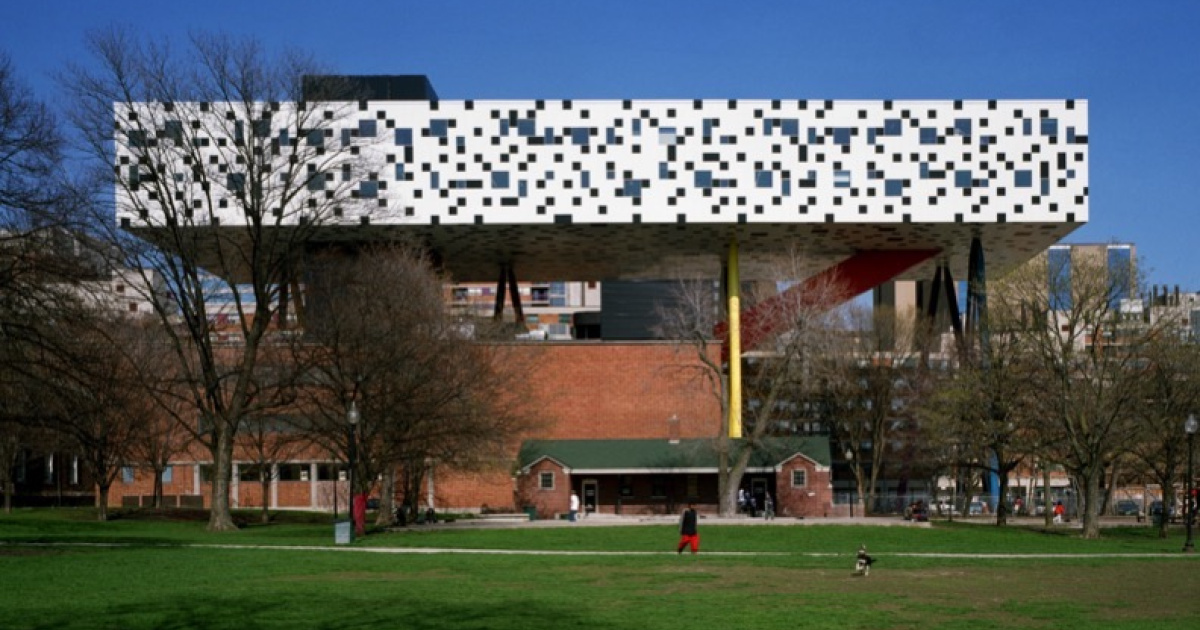
OCAD University is Canada's largest art and design university, located in downtown Toronto, offering studio-based programs in fine arts, design, and digital media. It provides a comprehensive education with a focus on creative practice and research, preparing graduates for global careers in the creative industries.
Key facts
- Type
- Public
- Founded
- 1876
- Students
- 5,200
- International students
- 900
- Acceptance rate
- 55%
- Tuition (intl)
- €18–24k/yr
- Languages
- EN
- Location
- Toronto, Canada
OCAD University is Canada's largest and most comprehensive art, design, and media university, founded in 1876 and situated in downtown Toronto. It offers studio-based and research-intensive programmes in fine arts, design, digital media, and creative industries through bachelor, master, and doctoral degrees. OCAD U is home to the world-leading Inclusive Design Research Centre and the Imagination Catalyst innovation hub. Graduates work across creative industries globally in design, technology, film, fashion, publishing, and beyond.
Why study here
- Study at Canada's largest art and design university, steps from the Art Gallery of Ontario in downtown Toronto.
- Benefit from world-leading inclusive design research and cutting-edge Digital Futures programmes.
- Build a professional portfolio through studio-intensive, practice-based learning with faculty who are active artists and designers.
- Access the Imagination Catalyst incubator for creative entrepreneurship and industry mentorship.
- Graduate into a global alumni network of artists, designers, and creative leaders shaping culture and technology.
Student life
Life at OCAD U is immersive and community-driven. Students spend significant time in studio facilities equipped for painting, sculpture, printmaking, photography, ceramics, industrial fabrication, and digital production. The Students Union runs galleries, events, and advocacy programmes. Toronto offers endless cultural stimulation — museums, cinemas, music venues, and a food scene reflecting over 200 world cultures. The university is located on a compact urban campus that blends seamlessly into the Queen West and Kensington Market creative neighbourhoods.
Fees
InternationalInternational undergraduate tuition at OCAD U is approximately CAD 24,000-30,000 per year (roughly EUR 16,500-21,000) depending on the programme. Graduate programmes range from CAD 8,000-20,000 per year for international students.
HomeDomestic Canadian undergraduate tuition is approximately CAD 7,000-9,000 per year. Graduate domestic tuition varies by programme.
LivingToronto living costs are significant; budget approximately CAD 16,000-22,000 per year for housing, food, transit, and personal expenses.
Studio materials and supply costs are additional to tuition — budget approximately CAD 1,500-3,000 per year for materials. OCAD U recommends all students carry health insurance.
Admissions
Academic TranscriptsOntario Secondary School Diploma (OSSD) or equivalent with a minimum average typically around 70-75%. International transcripts must be evaluated by WES or equivalent.
PortfolioA creative portfolio submitted through SlideRoom demonstrating breadth and depth of artistic or design work. Portfolio requirements vary by programme — check the OCAD U website for specific guidelines.
Artist StatementA written artist or design statement explaining your creative interests, motivations, and programme choice.
English ProficiencyNon-native English speakers must provide IELTS, TOEFL, or Duolingo scores unless they have completed secondary education in English.
IELTS Academic6.5 overall with no band below 6.0
TOEFL iBTMinimum 88
Duolingo English TestMinimum 115
Rankings
QS World University Rankings by Subject (Art and Design) 2024Top 100 globally
Canada — leading art and design university1st in Canada
University scholarships
OCAD U International Entrance AwardCAD 2,000-5,000 for high-achieving international applicants
Governor General's MedalRecognition award for top graduating student
Bursary and Emergency FundingVaries — available for students with demonstrated financial need
OCAD U Graduate ScholarshipsVaries by programme; some full-tuition awards available
Accreditation
OCAD University is a publicly funded university in Ontario, operating under the OCAD University Act. It holds degree-granting authority from the Province of Ontario and is a member of the Association of Universities and Colleges of Canada (AUCC/Universities Canada).
For international students
CanadaStudent visa & funds
International students must obtain a study permit from IRCC before arriving. Most college and undergraduate applicants must also include a Provincial or Territorial Attestation Letter (PAL/TAL) confirming a space under the annual cap; from January 2026, master’s and doctoral students at public institutions are exempt from this requirement. Applicants must show living funds of CAD 22,895 (effective September 2025, for a single student, excluding tuition and travel), and Student Direct Stream applicants hold this amount as a GIC.
Working while you study
Full-time students at designated learning institutions whose permits include work authorization may work up to 24 hours per week off campus during academic terms — a cap in effect since November 2024 that replaced the former 20-hour rule and a temporary 40-hour exception. Students may work unlimited hours during scheduled breaks such as summer and winter holidays. From April 2026, eligible students no longer need a separate co-op work permit for mandatory placements.
After you graduate
Graduates of eligible programs may apply for a Post-Graduation Work Permit (PGWP) within 180 days of confirmed completion. The PGWP matches program length up to a maximum of three years, and master’s graduates receive a three-year permit regardless of program length. Since November 2024 most applicants must show a recent language test at CLB 7 (university graduates) or CLB 5 (college graduates); degree graduates are exempt from the field-of-study alignment rule that applies to other applicants.
English tests
- IELTS Academic6.0–6.5 with no band below 6.0; research-intensive universities 6.5–7.0
- TOEFL iBT80–100; top universities (e.g. University of Toronto) 100+
Main intakes
SeptemberJanuaryMay
Typical living cost
€1,250/month
Approximate all-in student budget; major cities run higher.
SourcesIRCC — Study permit: get the right documents · CIC News — Increased fund requirements for study permits (Sept 2025) · CIC News — Off-campus work rules update (May 2026) · IRCC — Post-graduation work permit: who can apply · ETS — Minimum TOEFL score requirements for the USA, UK and Canada · Mastersportal — Living costs & tuition in Canada
Programs
a selectionOntario College of Art and Design · Canada
Digital Futures
The Digital Futures program at OCAD University equips you to create the technologies that shape how we live, work, and play. You will learn to leverage new technologies to solve problems, address contemporary issues, and envision future possibilities. This program focuses on developing skills in areas such as games, wearable technology, mobile applications, virtual and augmented reality, and interactive installations. You'll gain foundational digital skills while emphasizing collaborative learning in a creative environment that integrates art, design, and your personal interests. The curriculum is supported by internationally renowned faculty with expertise across art, design, science, and business.
Bachelor's
Level
—
Tuition
48 mo
Duration
Ontario College of Art and Design · Canada
Illustration
The Illustration program at OCAD U focuses on developing your ability to create images that not only complement written text but also stand as compelling visual artworks on their own. You will learn to produce work for various media, including magazines, books, newspapers, advertisements, packaging, and graphic novels. The program encourages you to discover and express your unique artistic voice, creating art that resonates with a wide audience. You will be guided by faculty and practicing illustrators, mastering both traditional and digital techniques. By the end of the four-year program, you will possess the necessary business acumen to thrive as an independent freelancer and work effectively in diverse professional settings.
Bachelor's
Level
—
Tuition
48 mo
Duration
Ontario College of Art and Design · Canada
Industrial Design
The Industrial Design program at OCAD University focuses on developing innovative solutions for everyday life, encompassing both physical products and digital applications. You will learn to research user needs, develop concepts, and create prototypes, with a strong emphasis on designing sustainable products that consider diverse cultural contexts and long-term usability. The program balances theoretical knowledge with practical, hands-on creative courses, including design and drawing, preparing you for a career in a rapidly evolving field.
Bachelor's
Level
—
Tuition
48 mo
Duration
Ontario College of Art and Design · Canada
Interdisciplinary Master's in Art, Media and Design
The Interdisciplinary Master's in Art, Media and Design (IAMD) program fosters a community of artists, thinkers, and researchers dedicated to developing respectful practices of knowledge creation. You will engage with shifting landscapes of culture, tradition, technology, and decolonial frameworks through rigorous practice and research. The program encourages global and intercultural dialogue, focusing on interdisciplinary processes and expanding your understanding of ancestral traditions, performance, media, and digital fabrication. Through the IAMD program, you will develop critical research methodologies, position your work in relation to Indigenous knowledges and decolonial pedagogy, and participate in graduate-level studio practice. You will explore theory and research methods through seminars, electives, self-directed study, and residency opportunities. The program culminates in a major studio project with a written critical analysis (for MFA/MDes) or a thesis with a creative project (for MA), contributing new knowledge to the field and promoting sustainable, socially responsible, and diverse perspectives.
Master's
Level
—
Tuition
24 mo
Duration
Ontario College of Art and Design · Canada
Photography
The Photography program at OCAD University offers a comprehensive education in both artistic vision and technical proficiency. You will explore photography through historical, analogue, and digital processes, understanding its role in creative expression and cultural production. The program emphasizes hands-on experience in modern facilities, including digital labs, darkrooms, and studios, supported by expert technicians. Through courses in history, theory, and criticism, you'll develop a deep understanding of photography's evolution and contemporary relevance. You will expand your skills in lighting, composition, editing, and production through diverse projects. The program encourages interdisciplinary exploration, connecting photography with installation, video, and performance art. Graduates will possess a refined portfolio and the critical thinking skills necessary for a career in photographic arts, curation, editing, art education, or further graduate studies.
Bachelor's
Level
—
Tuition
48 mo
Duration
Ontario College of Art and Design · Canada
Sculpture / Installation
The Sculpture / Installation program at OCAD University equips you with the skills to create three-dimensional artworks and space-specific installations. Through hands-on and digital fabrication, you will explore various mediums including sculpting, 3D technology, metalwork, woodworking, mouldmaking, plastic fabrication, and bronze casting. The curriculum balances practical studio work with theoretical courses that delve into contemporary art practices, critical thinking, and diverse cultural perspectives, preparing you for creative research and exhibition.
Bachelor's
Level
—
Tuition
48 mo
Duration
Scholarships
for Canada full funding
University of Toronto
Lester B. Pearson International Student Scholarship
For international students beginning undergraduate study at the University of Toronto who are first-time entrants from outside Canada. Students must be nominated by their school, then complete the U of T application and scholarship process. Selection recognises exceptional academic achievement and creativity, with a record of leadership and impact at school.
full
Funding
€200k
Max
Nov 30, 2026
Deadline
 full funding
University of British Columbia
International Leader of Tomorrow (ILOT) Award
For international students entering their first undergraduate degree at the University of British Columbia (UBC) who demonstrate outstanding academic achievement, leadership, and financial need. Students must be nominated by their school and require financial support to study at UBC; the award is need-based, covering costs the student and family cannot meet.
full
Funding
€70k
Max
Nov 15, 2026
Deadline
 full funding
Western University
Western University National Scholarship Program (Canada)
Open to Canadian citizens and permanent residents entering full-time undergraduate study at Western University's main campus, with a minimum academic average of 90% in Grade 12 U/M courses (or equivalent), a school nomination, a reference letter, a transcript and an essay.
full
Funding
€47k
Max
Feb 14, 2027
Deadline
 partial funding
University of Ottawa
University of Ottawa International English Scholarships
Open to international undergraduate students who hold a valid Canadian study permit and are newly admitted to an English-language undergraduate programme in Arts, Engineering, Health Sciences, Science, Social Sciences, or the Telfer School of Management. A minimum admission average of 80 percent is needed for the Admission Scholarship and 90 percent for the Academic Excellence Scholarship. Students in the French immersion or French-language streams are not eligible.
partial
Funding
€46k
Max
Apr 1, 2027
Deadline
 full funding
Canadian Institutes of Health Research (CIHR), Natural Sciences and Engineering Research Council (NSERC), Social Sciences and Humanities Research Council (SSHRC)
Vanier Canada Graduate Scholarships
Open to Canadian and international students pursuing a doctoral (PhD) degree at a Canadian university. Candidates must be nominated by the Canadian institution, not yet have started the doctoral program beyond defined limits, and demonstrate academic excellence, research potential, and leadership.
full
Funding
€34k
Max
Nov 4, 2026
Deadline
full fundingCIHR / NSERC / SSHRC (Tri-Agency), Government of Canada
Canada Graduate Research Scholarship – Doctoral (CGRS-D)
For doctoral students undertaking a PhD at a Canadian institution, with an outstanding academic record. Awards are made by Canada's tri-agency (CIHR, NSERC, SSHRC); applicants apply through their university, and eligibility (including for international students) follows the current Canada Graduate Scholarships rules.
full
Funding
€27k
Max
Nov 1, 2026
Deadline
Frequently asked questions
What are the tuition fees for international students at OCAD University?
+
International undergraduate tuition at OCAD U is approximately CAD 24,000-30,000 per year, depending on the program. Graduate programs range from CAD 8,000-20,000 per year for international students.
What are the living costs in Toronto for students?
+
Living costs in Toronto are significant; students should budget approximately CAD 16,000-22,000 per year for housing, food, transit, and personal expenses.
How do I apply to OCAD University?
+
OCAD University uses a portfolio-based admissions process, and all applicants must submit a portfolio demonstrating creative ability, alongside academic transcripts, through the Ontario Universities Application Centre (OUAC).
What are the English language proficiency requirements for international applicants?
+
Non-native English speakers must provide scores from tests like IELTS Academic (6.5 overall with no band below 6.0), TOEFL iBT (Minimum 88), or Duolingo English Test (Minimum 115), unless they have completed secondary education in English.
Does OCAD University offer scholarships for international students?
+
Yes, OCAD University offers the OCAD U International Entrance Award, ranging from CAD 2,000-5,000 for high-achieving international applicants.
Last updated