CANADA · TORONTO
Ryerson Polytechnic University
public · Founded 1948 · Languages: English
In short
Toronto Metropolitan University (TMU) offers career-focused education in downtown Toronto, known for its entrepreneurial spirit and strong industry connections. It provides over 125 undergraduate and graduate programs with a focus on experiential learning and co-op opportunities.
Key facts
- Type
- Public
- Founded
- 1948
- Students
- 46,000
- International students
- 12,000
- Acceptance rate
- 55%
- Tuition (intl)
- €18–32k/yr
- Languages
- ENGLISH
- Location
- Toronto, Canada
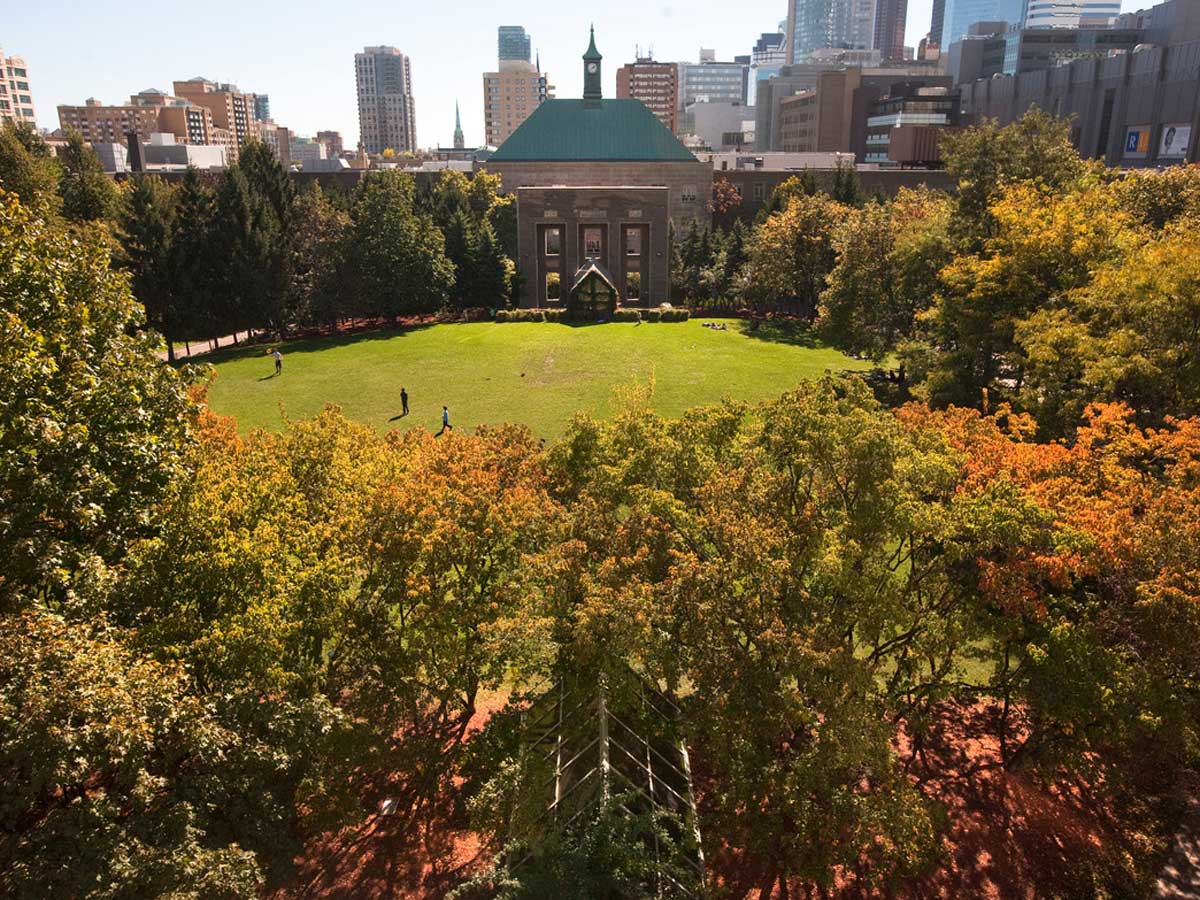
Toronto Metropolitan University (TMU), formerly Ryerson University, is a large public university located in downtown Toronto, Canada, founded in 1948. Ranked among Canada's most entrepreneurial universities, TMU delivers career-focused, applied education across more than 60 undergraduate and 65 graduate programmes in arts, science, engineering, business, communication, and design. TMU is home to the Digital Media Zone (DMZ), one of Canada's top startup incubators, and the Ted Rogers School of Management, both nationally recognised for producing industry-ready graduates. The university emphasises experiential learning, co-op placements, and industry partnerships, ensuring graduates are competitive in the job market. Its downtown Toronto location places students at the centre of Canada's financial, technology, and cultural capital, with direct access to Bay Street, the tech corridor, and a rich network of employers. TMU also operates robust continuing education and online programmes, making it accessible to working professionals.
Why study here
- Study at Canada's most entrepreneurial university, with strong industry connections and co-op opportunities.
- Live and network in downtown Toronto — Canada's largest city and a global technology and finance hub.
- Access the DMZ startup incubator, one of Canada's top innovation hubs for student entrepreneurs.
- Choose from 60+ undergraduate and 65+ graduate programmes with strong applied and career-focused curricula.
- Benefit from a highly diverse student body, with students from over 140 countries on campus.
Student life
TMU's campus is woven into downtown Toronto's Yonge-Dundas area, giving students immediate access to the city's restaurants, entertainment, parks, and public transit. The university has over 100 student groups, a dedicated student centre, and athletics facilities including a gym, pool, and fitness studios. Housing options include on-campus residences and off-campus apartments across the city. The Chang School of Continuing Education offers evening and online courses, catering to part-time and mature students. Toronto's multicultural character means students experience an internationally diverse social and cultural environment every day.
Fees
InternationalApproximately CAD 24,000–43,000 per year (approximately EUR 18,000–32,000) for international undergraduate students, depending on programme.
HomeApproximately CAD 7,000–10,000 per year for domestic students, depending on programme.
LivingEstimated CAD 1,800–2,500 per month in Toronto, covering shared accommodation, food, transit, and personal expenses. Toronto is one of Canada's more expensive cities.
International student fees vary significantly by faculty. Engineering and business programmes tend to be at the higher end. A student levy for services and health coverage is added to tuition.
Admissions
Undergraduate entryOntario Secondary School Diploma (OSSD) or equivalent international qualification; minimum average varies by programme, typically 70–90%+.
Graduate entryFour-year undergraduate degree or equivalent with minimum B average (typically 3.0/4.33 GPA) in the last two years of study.
Academic transcriptsOfficial transcripts from all secondary and post-secondary institutions attended; certified English translations required for non-English documents.
IELTS6.5 overall (6.0 in each band) for most undergraduate programmes
TOEFL iBT88+ for most undergraduate programmes
Duolingo English Test120+ (accepted for some programmes)
Rankings
QS World University Rankings 2024801–1000
Maclean's University Rankings 2024 — Comprehensive18
Times Higher Education Impact Rankings 2023Top 200 globally
University scholarships
TMU International Entrance ScholarshipUp to CAD 5,000 (one-time, merit-based for international undergraduate students)
Aga Khan Foundation International ScholarshipPartial to full scholarship; for students from developing countries
Ontario Graduate Scholarship (OGS)CAD 15,000 per year for domestic and international graduate students
Accreditation
Toronto Metropolitan University is a publicly funded university operating under the Toronto Metropolitan University Act, 1977 (Ontario). Individual programmes hold accreditations from AACSB (business), Engineers Canada (engineering), and other professional bodies.
For international students
CanadaStudent visa & funds
International students must obtain a study permit from IRCC before arriving. Most college and undergraduate applicants must also include a Provincial or Territorial Attestation Letter (PAL/TAL) confirming a space under the annual cap; from January 2026, master’s and doctoral students at public institutions are exempt from this requirement. Applicants must show living funds of CAD 22,895 (effective September 2025, for a single student, excluding tuition and travel), and Student Direct Stream applicants hold this amount as a GIC.
Working while you study
Full-time students at designated learning institutions whose permits include work authorization may work up to 24 hours per week off campus during academic terms — a cap in effect since November 2024 that replaced the former 20-hour rule and a temporary 40-hour exception. Students may work unlimited hours during scheduled breaks such as summer and winter holidays. From April 2026, eligible students no longer need a separate co-op work permit for mandatory placements.
After you graduate
Graduates of eligible programs may apply for a Post-Graduation Work Permit (PGWP) within 180 days of confirmed completion. The PGWP matches program length up to a maximum of three years, and master’s graduates receive a three-year permit regardless of program length. Since November 2024 most applicants must show a recent language test at CLB 7 (university graduates) or CLB 5 (college graduates); degree graduates are exempt from the field-of-study alignment rule that applies to other applicants.
English tests
- IELTS Academic6.0–6.5 with no band below 6.0; research-intensive universities 6.5–7.0
- TOEFL iBT80–100; top universities (e.g. University of Toronto) 100+
Main intakes
SeptemberJanuaryMay
Typical living cost
€1,250/month
Approximate all-in student budget; major cities run higher.
SourcesIRCC — Study permit: get the right documents · CIC News — Increased fund requirements for study permits (Sept 2025) · CIC News — Off-campus work rules update (May 2026) · IRCC — Post-graduation work permit: who can apply · ETS — Minimum TOEFL score requirements for the USA, UK and Canada · Mastersportal — Living costs & tuition in Canada
Programs
a selectionRyerson Polytechnic University · Canada
Communication and Culture
The Joint Graduate Program in Communication and Culture is designed for students interested in exploring the connections between communication, culture, and society. This research-intensive program offers both Master of Arts (MA) and Doctor of Philosophy (PhD) degrees, launched in 1999. It focuses on critical thinking and creative problem-solving to address contemporary global issues, preparing graduates for careers in academia, industry, and other fields. Students benefit from a rich academic environment with over 100 affiliated graduate faculty members and access to resources at two universities. The program is structured around three research streams: Media and Culture (M&C), Politics and Policy (P&P), and Technology in Practice (TinP). Scholarly and social activities are hosted by both partner institutions, fostering a collaborative learning experience. The vibrant and safe city of Toronto provides additional access to numerous collections, institutions, creative industries, and cultural activities, enhancing the student experience and career opportunities.
Master's
Level
—
Tuition
24 mo
Duration
Ryerson Polytechnic University · Canada
Computer Science (MSc, PhD)
The Master of Science (MSc) and Doctor of Philosophy (PhD) in Computer Science are advanced programs designed for students passionate about this rapidly evolving field. Computer science profoundly impacts daily life, and graduates with advanced degrees are highly sought after in both industry and academia. Our central downtown Toronto location provides advantageous access to a vibrant start-up community, major corporations, financial institutions, and research hospitals, fostering strong collaborations with industrial partners. This program offers diverse career pathways, including roles as software developers, data scientists, database analysts, computer vision scientists, roboticists, information technologists, and professors. We are committed to supporting our students, with funding typically provided to domestic thesis-based students to help finance their studies.
Master's
Level
—
Tuition
—
Duration
Ryerson Polytechnic University · Canada
Doctor of Philosophy in Communication and Culture
PhD
Level
—
Tuition
—
Duration
Ryerson Polytechnic University · Canada
Master of Spatial Analysis (MSA)
The Master of Spatial Analysis (MSA) is a unique graduate program designed to equip students with advanced skills in Geographic Information Systems (GIS) and geographical thinking. Through project-based courses, a practicum placement, and a major research paper or thesis, students learn to apply spatial analysis techniques to support decision-making in government and industry. Graduates are prepared for roles in diverse fields such as business, environmental consulting, crime analysis, social policy, and public health. The program fosters the ability to analyze complex spatial data to address real-world challenges and contribute to economic, social, and environmental well-being.
Master's
Level
—
Tuition
24 mo
Duration
Ryerson Polytechnic University · Canada
Midwifery Education Program
The Midwifery Education Program (BHSc) trains graduates to provide safe, competent, and ethical midwifery care. Midwives offer primary care for low-risk pregnancies, supporting individuals throughout pregnancy, labour, birth, and the postpartum period for up to six weeks. A significant portion of the program, over half, is dedicated to hands-on clinical practice and interprofessional placements, ensuring students gain practical experience in real-world settings.
Bachelor's
Level
—
Tuition
—
Duration
Ryerson Polytechnic University · Canada
PhD Computer Science
PhD
Level
—
Tuition
—
Duration
Scholarships
for Canada full funding
University of Toronto
Lester B. Pearson International Student Scholarship
For international students beginning undergraduate study at the University of Toronto who are first-time entrants from outside Canada. Students must be nominated by their school, then complete the U of T application and scholarship process. Selection recognises exceptional academic achievement and creativity, with a record of leadership and impact at school.
full
Funding
€200k
Max
Nov 30, 2026
Deadline
 full funding
University of British Columbia
International Leader of Tomorrow (ILOT) Award
For international students entering their first undergraduate degree at the University of British Columbia (UBC) who demonstrate outstanding academic achievement, leadership, and financial need. Students must be nominated by their school and require financial support to study at UBC; the award is need-based, covering costs the student and family cannot meet.
full
Funding
€70k
Max
Nov 15, 2026
Deadline
 full funding
Western University
Western University National Scholarship Program (Canada)
Open to Canadian citizens and permanent residents entering full-time undergraduate study at Western University's main campus, with a minimum academic average of 90% in Grade 12 U/M courses (or equivalent), a school nomination, a reference letter, a transcript and an essay.
full
Funding
€47k
Max
Feb 14, 2027
Deadline
 partial funding
University of Ottawa
University of Ottawa International English Scholarships
Open to international undergraduate students who hold a valid Canadian study permit and are newly admitted to an English-language undergraduate programme in Arts, Engineering, Health Sciences, Science, Social Sciences, or the Telfer School of Management. A minimum admission average of 80 percent is needed for the Admission Scholarship and 90 percent for the Academic Excellence Scholarship. Students in the French immersion or French-language streams are not eligible.
partial
Funding
€46k
Max
Apr 1, 2027
Deadline
 full funding
Canadian Institutes of Health Research (CIHR), Natural Sciences and Engineering Research Council (NSERC), Social Sciences and Humanities Research Council (SSHRC)
Vanier Canada Graduate Scholarships
Open to Canadian and international students pursuing a doctoral (PhD) degree at a Canadian university. Candidates must be nominated by the Canadian institution, not yet have started the doctoral program beyond defined limits, and demonstrate academic excellence, research potential, and leadership.
full
Funding
€34k
Max
Nov 4, 2026
Deadline
full fundingCIHR / NSERC / SSHRC (Tri-Agency), Government of Canada
Canada Graduate Research Scholarship – Doctoral (CGRS-D)
For doctoral students undertaking a PhD at a Canadian institution, with an outstanding academic record. Awards are made by Canada's tri-agency (CIHR, NSERC, SSHRC); applicants apply through their university, and eligibility (including for international students) follows the current Canada Graduate Scholarships rules.
full
Funding
€27k
Max
Nov 1, 2026
Deadline
Frequently asked questions
What are the estimated tuition fees for international students at Toronto Metropolitan University (TMU)?
+
International undergraduate student tuition fees at TMU range from approximately CAD 24,000 to CAD 43,000 per year, depending on the specific program. These fees are in addition to a student levy for services and health coverage.
What are the living costs for students in Toronto?
+
Students living in Toronto can expect to spend an estimated CAD 1,800 to CAD 2,500 per month. This estimate covers shared accommodation, food, transit, and personal expenses in one of Canada's more expensive cities.
What English proficiency scores are required for international applicants?
+
For most undergraduate programs, international students typically need an IELTS score of 6.5 overall with at least 6.0 in each band, or a TOEFL iBT score of 88+. Some programs may accept a Duolingo English Test score of 120+.
Does TMU offer support for international students regarding English proficiency?
+
Yes, TMU offers pathway programmes through its English Language Skills Assessment (ELSA). Additionally, applicants who have studied full-time in an English-medium institution for four or more years may be exempt from English proficiency tests.
What is the downtown Toronto location like for students?
+
TMU's downtown Toronto location places students in the heart of Canada's financial, technology, and cultural capital. This vibrant urban setting offers direct access to industry, cultural experiences, and career opportunities.
Last updated