DENMARK · LYNGBY
Technical University of Denmark
public · Founded 1829 · Languages: en, da
In short
The Technical University of Denmark (DTU) is a leading international engineering institution offering world-class education in Lyngby, near Copenhagen. It is ranked among the top universities globally and provides English-taught MSc programs with strong industry links and innovation hubs.
Key facts
- Type
- Public
- Founded
- 1829
- Students
- 13,500
- International students
- 4,500
- Acceptance rate
- 40%
- Tuition (intl)
- €8–8k/yr
- Languages
- EN, DA
- Location
- Lyngby, Denmark
The Technical University of Denmark (DTU) is an international elite technical university founded in 1829, and today Denmark's largest engineering institution with approximately 13,500 students. Situated in Lyngby near Copenhagen, DTU delivers world-class education in engineering and the natural sciences, underpinned by research that directly addresses global challenges in energy, climate, health, food, and digitalisation. DTU is ranked among the top 110 universities worldwide (QS 2025) and among the top 10 technical universities in Europe.
Why study here
- Ranked #107 globally (QS 2025) and Denmark's #1 engineering university — a world-class credential recognised by top employers.
- All MSc programmes taught in English, with research-active faculty and strong links to industry across Europe and beyond.
- DTU Skylab — a 5,500 m² innovation hub — offers hands-on entrepreneurship, deep-tech labs, and start-up support.
- EU/EEA students study tuition-free; strong scholarship and PhD funding opportunities exist for non-EU students.
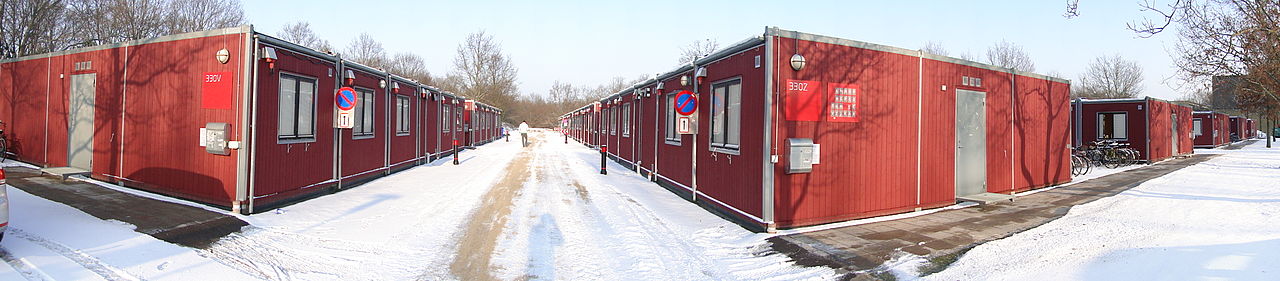
- Multiple campus locations including research centres in Risø (energy), Hirtshals (fisheries), and Sisimiut, Greenland (arctic science).
Student life
DTU offers a vibrant student life with various opportunities for engagement and development. The DTU Skylab serves as a central innovation and entrepreneurial hub, providing state-of-the-art labs, workshops, and spaces for deep-tech start-ups, alongside extracurricular events and programs. Students also have access to diverse campus facilities, including sports fields and gardens at the Lyngby Campus. The university emphasizes a cross-disciplinary learning environment, fostering collaboration and an entrepreneurial mindset among its students.
Fees
InternationalNon-EU/EEA students pay approximately €7,500 per semester (€15,000 per year). A two-year MSc programme costs approximately €30,000 in total.
HomeEU/EEA students are exempt from tuition fees. A student services fee (around €200/semester) may apply.
LivingCopenhagen area living costs are approximately €1,100–€1,500 per month including accommodation, food, transport, and personal expenses.
Tuition fees for non-EU/EEA students are subject to revision for future intakes. EU/EEA PhD students typically receive a salary (not fees). Check the official DTU website for current rates.
Admissions
MSc programmesBachelor's degree in a relevant engineering or science field; prerequisite check done per programme; apply via DTU's online portal.
PhD programmesMSc degree; admission through specific project or open call; salary-based position for successful candidates.
Exchange studentsNomination from home institution required; minimum 1 year (Erasmus) or 2 years (bilateral) of university studies completed.
IELTS Academic6.5 overall
TOEFL iBT88+
Rankings
QS World University Rankings 2025107
Times Higher Education 2025201-250
ARWU (Shanghai Rankings) 2024201-300
University scholarships
DTU Graduate Scholarship (non-EU MSc)Partial tuition waiver; competitive, programme-specific
Government of Denmark ScholarshipFull tuition + monthly stipend for selected non-EU students
Erasmus+ Mobility GrantMonthly mobility allowance for EU exchange students
Accreditation
DTU received institutional accreditation in 2014 from the Danish Accreditation Institution (ENQA member), confirming that its quality assurance system is effectively implemented. Individual programmes hold ABET, EUR-ACE, and other relevant disciplinary accreditations.
Programs
a selectionTechnical University of Denmark · Denmark
Advanced Topics in Machine Learning: Tensor Networks for Machine Learning
This intensive five-day course delves into the theoretical and practical aspects of Tensor Networks specifically for Machine Learning applications. You will explore technical details, programming techniques, and real-world applications through lectures, tutorials, and exercises. The course is designed for individuals with a solid foundation in machine learning, statistical modeling, mathematics, and computer science, and requires programming experience, ideally in Python. Participants will complete the course by submitting a report on the topics covered. This is a short, focused course, offering 2.5 ECTS points.
Master's
Level
€8k
Tuition
6 mo
Duration
Technical University of Denmark · Denmark
Computational Tools for Data Science
This course offers a focused and intensive introduction to modern computational tools and techniques designed for handling and analyzing massive datasets. The primary emphasis is on providing practical, hands-on experience with these tools. Upon completion, students will be equipped to select or develop algorithms for specific data science tasks, implement and apply these algorithms to real-world problems, and critically evaluate technologies for parallel and distributed computing. The course also covers how to analyze the scalability of computational methods and clearly articulate the reasoning behind design and development choices.
Master's
Level
€15k
Tuition
13 mo
Duration
Technical University of Denmark · Denmark
Computer Systems
This course delves into the fundamental workings of computer systems, exploring the critical interplay between hardware and software. You will investigate how data is represented and processed, understand various computational models, and learn about the architecture of modern computers, including memory hierarchies. The course also covers essential programming in C for resource-constrained systems and introduces hardware description languages for designing processors and accelerators. You'll gain insights into system-level integration, performance analysis, and the principles of computer networks and control systems.
Bachelor's
Level
€15k
Tuition
—
Duration
Technical University of Denmark · Denmark
Deep Learning
Deep learning (DL) is a transformative technology driving advancements in machine perception, particularly in areas like generative AI for images and text. Its applications are expanding rapidly, leading to more accurate medical diagnoses from image analysis, and the development of intelligent applications in healthcare and IT through improved speech and natural language processing. DL also provides powerful tools for data-driven applications such as drug discovery and condition monitoring. This course offers a comprehensive understanding of deep artificial neural network models, including their training methodologies and the computational frameworks used for deployment on graphical processing units. You will explore the capabilities and limitations of these models across various settings, such as classification, regression, sequence modeling, and reasoning in complex environments.
Master's
Level
—
Tuition
13 mo
Duration
Technical University of Denmark · Denmark
DTU 02139: Digital Electronics 2
This course builds upon Digital Electronics 1, offering a deep dive into the design of digital circuits for calculation and control tasks. You will gain practical experience with simulation and synthesis tools, and implement your designs on reconfigurable hardware like FPGAs. The course covers topics such as hardware description languages (Chisel), timing analysis, metastability, and FPGA architecture. Through lectures and hands-on lab exercises, including a final project on a vending machine, you will develop the skills to design and implement complex digital systems.
Bachelor's
Level
€15k
Tuition
—
Duration
Technical University of Denmark · Denmark
Introduction to Bioinformatics
This course introduces the fundamental concepts and practical applications of bioinformatics, a field crucial for modern biology. It focuses on using computational methods to analyze biological data, particularly DNA and protein sequences and structures. The course emphasizes the practical application of these tools, rooted in evolutionary theory, and involves extensive computer-based exercises. Students will learn to leverage vast biological databases and analytical techniques to understand biological processes and optimize experimental work.
Bachelor's
Level
—
Tuition
13 mo
Duration
Scholarships
for Denmark full funding
University of Copenhagen (UCPH), Department of Computer Science
University of Copenhagen PhD Fellowship in Interpretable Natural Language Processing
Open to applicants who hold (or will hold) a Master's degree (MSc) in Computer Science, Machine Learning, Artificial Intelligence or a closely related field, with a strong background in NLP or ML. Candidates must have excellent written and spoken English and ideally evidence of prior research, programming and data-analysis experience. The position is a salaried PhD employment under the Danish AC collective agreement rather than a tuition-paying studentship, and is open to applicants of any nationality.
full
Funding
€50k
Max
May 15, 2027
Deadline
 partial funding
Danish universities with Ministry of Higher Education and Science, Denmark
Danish Government Scholarship
For talented non-EU/EEA/Swiss students applying for a full-degree higher education programme in Denmark, who are required to pay tuition fees. The scholarships are allocated to Danish universities, which select recipients from their admitted international applicants; you apply via the institution.
partial
Funding
€20k
Max
Jan 15, 2027
Deadline
 full funding
Wellcome Trust
Wellcome Trust Fellowships and Grants (for international researchers)
For researchers at different career stages working on health-related science. Wellcome funds a family of fellowships and grants — early-career, career-development, and discovery awards, plus team and translational funding — each with its own eligibility, value, and call deadline. There is no single scholarship application; you apply to the specific scheme that fits your stage and project.
full
Funding
€3000k
Max
Rolling
Deadline
 full funding
Wellcome Trust
Wellcome International Training Fellowships
For early-career researchers based in low- and middle-income countries (outside the high-income world) who want protected time and support for research training in health, often including a PhD or postdoctoral research. Wellcome's scheme names and exact criteria change over time, so applicants should check the current relevant Wellcome funding scheme.
full
Funding
€150k
Max
Rolling
Deadline
 full funding
European Commission - European Research Executive Agency (REA)
Marie Sklodowska-Curie Actions Postdoctoral Fellowships
Open to researchers of any nationality who hold a PhD (or will have defended their doctoral thesis by the call deadline) and have at most 8 years of full-time-equivalent research experience after the PhD. Applicants apply jointly with a host organisation - a university, research institution, business, SME, or other body based in an EU Member State or a country associated to Horizon Europe. European Postdoctoral Fellowships are open to all nationalities for a project inside the EU or an associated country; Global Postdoctoral Fellowships are reserved for EU nationals or long-term residents who carry out a phase in a third country before returning to Europe. Researchers who have been displaced by conflict and those restarting a research career after a break are explicitly encouraged to apply.
full
Funding
€100k
Max
-7d left
Deadline
 full funding
Rotary Foundation
Rotary Peace Fellowships
For professionals committed to peace and development, with relevant work experience and (for the master's) a strong academic background and proficiency in English. Applicants apply through their local Rotary district and are selected globally by The Rotary Foundation for study at a Rotary Peace Center.
full
Funding
€90k
Max
May 15, 2027
Deadline
Frequently asked questions
What are the tuition fees for international students at the Technical University of Denmark (DTU)?
+
Non-EU/EEA students pay approximately €7,500 per semester, totaling around €15,000 per year for an MSc program. EU/EEA students are generally exempt from tuition fees but may pay a student services fee.
What are the English language proficiency requirements for international applicants?
+
All applicants must demonstrate English proficiency. Accepted tests include IELTS Academic with an overall score of 6.5 or TOEFL iBT with a score of 88 or higher.
Does DTU offer scholarships for international students?
+
Yes, DTU offers scholarships such as the DTU Graduate Scholarship for non-EU MSc students, providing a partial tuition waiver. The Government of Denmark Scholarship is also available for selected non-EU students, covering tuition and providing a stipend.
What is the estimated cost of living for students in the Copenhagen area?
+
Living costs in the Copenhagen area are estimated to be between €1,100 and €1,500 per month. This estimate includes accommodation, food, transportation, and personal expenses.
What academic programs are available in English?
+
All Master of Science (MSc) programmes at DTU are taught in English, supported by research-active faculty and strong industry connections.
Last updated