UNITED KINGDOM · CAMBRIDGE
University of Cambridge
public · Founded 1209 · Languages: en
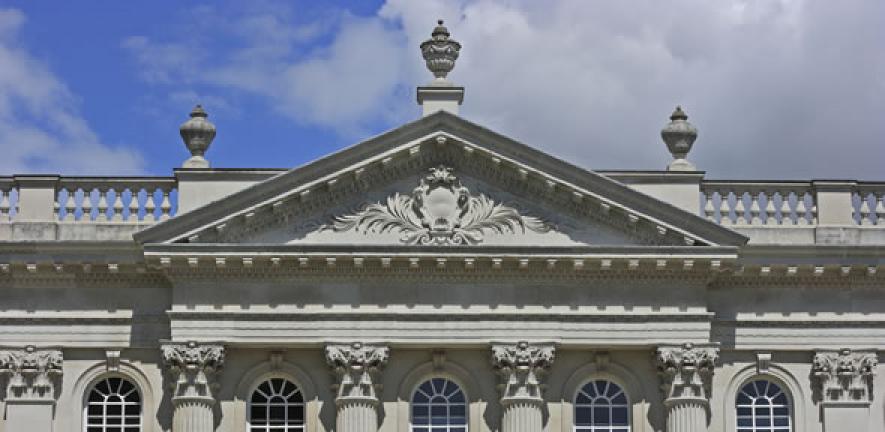
In short
The University of Cambridge is a world-renowned public research university in the UK, known for its rich history, academic excellence, and distinctive collegiate system. It offers a highly competitive but rewarding educational experience with world-leading research opportunities and a vibrant student life.
Key facts
- Type
- Public
- Founded
- 1209
- Students
- 24,450
- International students
- 9,000
- Acceptance rate
- 21%
- Tuition (intl)
- €28–75k/yr
- Languages
- EN
- Location
- Cambridge, United Kingdom
The University of Cambridge is a world-renowned public research university located in Cambridge, United Kingdom. As the second-oldest university in the English-speaking world, it boasts a rich history of academic excellence and groundbreaking research, contributing significantly across diverse fields from science and engineering to arts and humanities. Cambridge operates a distinctive collegiate system, consisting of 31 independent colleges. These colleges serve as supportive communities, offering accommodation, pastoral care, and a unique teaching method called 'supervisions' - small group teaching sessions. This system, combined with university lectures and seminars, provides a personalized and intellectually rigorous learning experience. The university is a global leader in research, pioneering discoveries from the structure of DNA to advancements in AI and climate science. Its extensive alumni network includes numerous Nobel laureates and influential figures worldwide, preparing graduates for impactful careers and leadership roles.
Why study here
- Experience a unique collegiate system that offers individualized teaching and strong community support.
- Benefit from world-leading research opportunities and contribute to global advancements.
- Join a university with a long-standing reputation for academic excellence and a distinguished alumni network.
- Access superb academic resources, including extensive libraries and diverse museums.
- Engage in a vibrant student life with numerous sports clubs and societies, fostering holistic development.
Student life
Cambridge offers a rich and diverse student life, blending intense academic study with a vibrant social and extracurricular scene. Students benefit from the supportive college system, which provides a close-knit community, accommodation, and welfare support. The University boasts world-class libraries and museums, along with a wide array of sports clubs and societies catering to diverse interests. Whether pursuing competitive sports, engaging in arts and culture, or participating in numerous student-led groups, there are ample opportunities for personal development and social interaction.
Fees
InternationalInternational undergraduate tuition fees vary by course group, ranging from approximately GBP 25,000 for arts and humanities to over GBP 67,000 per year for clinical medicine, plus an annual College fee of around GBP 12,000-13,000. Postgraduate fees also vary widely by programme. Applicants should check the University's official fee tables for their specific course.
HomeHome (UK) undergraduate tuition is set at the regulated level of GBP 9,250 per year. Home postgraduate fees vary by programme.
LivingStudents should budget roughly GBP 12,000-15,000 per year for accommodation, food, study costs, and personal expenses; the University publishes a minimum financial requirement for student visa applicants.
Information on specific international and home tuition fees, as well as living costs, can be found on the University's official undergraduate and postgraduate finance pages. Fees vary significantly by course and college.
Admissions
IELTS AcademicOverall band score of 7.5, with a minimum of 7.0 in each element
TOEFL iBTOverall score of 110, with a minimum of 25 in each element
Rankings
QS World University RankingsTop 5 globally
Times Higher Education World University RankingsTop 5 globally
Complete University Guide (UK)Top 2 in the UK
University scholarships
Cambridge Commonwealth, European and International Trust—
Gates Cambridge Trust Scholarship—
Accreditation
The University of Cambridge is a public research university with degree-awarding powers recognised by the UK government and regulated by the Office for Students. It is a member of the Russell Group of leading UK research universities.
For international students
United KingdomStudent visa & funds
International students apply for the UK Student visa, which replaced the former Tier 4 (General) route. You need an unconditional offer from a licensed student sponsor and must show maintenance funds held for at least 28 consecutive days. As of November 2025 the requirement is £1,529 per month (for up to nine months) for courses in London and £1,171 per month for courses elsewhere, on top of tuition. Students who have already held a UK visa for 12 months, and nationals of certain low-risk countries, are exempt from evidencing the funds.
Working while you study
On a degree-level course at a licensed higher-education provider, you may work up to 20 hours per week during term time and full-time during official vacation periods; sub-degree courses are capped at 10 hours per week. There is no distinction between on-campus and off-campus work, but self-employment and working as a professional sportsperson or coach are not permitted. Once you have completed all course requirements you may work full-time until your visa expires.
After you graduate
Graduates of an eligible UK degree can apply for the Graduate visa (the Graduate Route) without needing an employer sponsor. As of 2026, bachelor’s and master’s graduates receive two years of open work permission and PhD graduates receive three years. Under the 2025 immigration reforms, applications made on or after 1 January 2027 will grant 18 months instead of two years for non-doctoral qualifications, while PhD holders keep three years.
English tests
- IELTSUG 6.0–6.5; PG 6.5–7.0; competitive/Russell Group courses up to 7.0–7.5
- TOEFL iBTUG 80–90; PG 90–100; top research universities 100+
- PTE AcademicUG 51–65; PG 59–75
Main intakes
SeptemberJanuary
Typical living cost
€1,400/month
Approximate all-in student budget; major cities run higher.
Programs
a selectionUniversity of Cambridge · United Kingdom
History and Modern Languages, BA (Hons)
This joint honours degree allows you to combine the study of history with modern languages, offering insights into the cultures of other countries and a deep understanding of past and present global contexts. The course includes intensive study of language, culture, film, the history of political thought, and a wide variety of modern British, European, American, and world history. You will spend at least 8 months in the third year abroad, immersing yourself in the language, culture, and history of another country through study, work, or other approved activities. You can choose to study languages such as German, French, Spanish, Italian, Portuguese, and Russian. If you have no prior experience with a language, you can begin studying it from scratch. If you have A-level or IB Higher Level qualifications, you can continue with it at a more advanced level. Your language choice is indicated during the application process. The program boasts internationally renowned faculty in both History and Modern Languages. You will have access to excellent library resources, including the Seeley collection in the Faculty of History and the library in the Faculty of Modern and Medieval Languages and Linguistics, which cover a wide range of materials from the Middle Ages to the present. Additionally, college libraries and the vast Cambridge University Library are available.
Bachelor's
Level
—
Tuition
48 mo
Duration
University of Cambridge · United Kingdom
History and Politics BA (Tripos)
This joint degree offers a unique opportunity to study History and Politics together, drawing on the expertise of both the Faculty of History and the Department of Politics and International Studies. The program balances a solid foundation in each subject with an exploration of how historical and political understanding can illuminate contemporary global issues. You will benefit from the high quality of teaching, engaging with leading academics through a combination of university lectures, seminars, and personalized college supervisions. These supervisions, often one-on-one or in very small groups, provide invaluable individual feedback and a space to discuss complex ideas. The curriculum is structured to offer breadth in the initial years and depth in specialized topics later on, allowing you to develop a comprehensive understanding of historical and political themes.
Bachelor's
Level
—
Tuition
36 mo
Duration
University of Cambridge · United Kingdom
History BA (Tripos)
The University of Cambridge offers a Bachelor of Arts (BA) in History, one of the most comprehensive history programs globally. This course allows you to explore three millennia of history across the world, examining it through political, economic, cultural, social, and intellectual perspectives. The program is designed to equip you with a broad historical understanding, teach you to critically analyze primary and secondary sources, and develop your confidence in formulating and answering historical questions using strong research and analytical skills. You will learn to effectively organize and present your ideas. The curriculum has been enhanced to deepen students' knowledge, skills, and employability. It focuses on three core tracks: acquiring historical knowledge through Outline, Topic, and Advanced Topic papers; developing the craft of history via Skills, Sources, and Research Project papers; and fostering historical thinking through dedicated modules and seminars. The program emphasizes the university's unique supervision system, where students engage in personal discussions with senior historians in small groups or one-on-one settings, receiving detailed feedback on their work. Lectures and seminars provide broader introductions to historical events, processes, and interpretations.
Bachelor's
Level
—
Tuition
36 mo
Duration
University of Cambridge · United Kingdom
MPhil in Conservation Leadership
The Cambridge Masters in Conservation Leadership is an intensive 11-month, full-time program designed to equip individuals with advanced leadership and management skills essential for driving positive change in conservation efforts. It is delivered through a unique collaboration between the University of Cambridge and ten leading conservation organizations, forming the Cambridge Conservation Initiative. This course is specifically aimed at applicants with at least three years of relevant professional experience and demonstrated leadership potential. The curriculum blends taught modules with practical, experiential learning, including a group consultancy project and an individual professional placement with a conservation organization. The program focuses on developing students' ability to address the complex drivers of biodiversity loss in an integrated and interdisciplinary way, fostering innovative solutions across different sectors and boundaries. The core aim is to cultivate leaders who not only understand the root causes of environmental challenges but also possess the skills and confidence to implement effective conservation strategies. This includes developing leadership capacity at multiple levels: personal (resilience, self-awareness), organizational (strategic planning, finance, HR), and systemic (influencing policy, communication, governance). Students also benefit from personalized professional mentoring from senior conservation leaders.
Master's
Level
—
Tuition
11 mo
Duration
University of Cambridge · United Kingdom
PhD in Stem Cell Biology
This PhD program is offered by the Cambridge Stem Cell Institute (CSCI), a leading global centre for stem cell research focused on understanding and applying stem cell biology to improve human health. The program aims to train highly skilled investigators with a deep understanding of stem cell science and its medical implications. Students will engage in focused research under close supervision, developing advanced research skills and specialist knowledge. The program's goal is to equip graduates for ambitious careers in stem cell science or related fields.
PhD
Level
—
Tuition
48 mo
Duration
University of Cambridge · United Kingdom
The Cambridge MBA
The Cambridge MBA is a one-year, full-time master's degree offered by Cambridge Judge Business School, part of the University of Cambridge. This intensive program is designed to transform aspiring leaders, equipping them with the skills, network, and confidence needed for accelerated leadership opportunities, career changes, or entrepreneurial ventures. You will gain a world-class Cambridge master's degree, engage with a rigorous and customizable curriculum, and benefit from an international cohort and practical experience through real client projects.
Master's
Level
—
Tuition
12 mo
Duration
Scholarships
for United Kingdom full funding
Wellcome Trust
Wellcome Discovery Awards
Open to established researchers and research teams with a proven record of research delivery who are based at, or will be hosted by, an eligible not-for-profit organisation in the UK, the Republic of Ireland, or an eligible low- or middle-income country (excluding India and mainland China). Projects must propose bold, transformative research aligned with Wellcome's mission to improve health. The award does not cover the lead applicant's own salary, and a researcher may lead only one active Discovery Award submission.
full
Funding
€4000k
Max
Nov 25, 2026
Deadline
full fundingThe Alan Turing Institute
Open Source AI Fellowship (UK)
Open to AI professionals and researchers who are legally eligible to work in the UK without sponsorship, have resided in the UK for at least 5 years (a security check is required), are employed by a UK-based organisation willing to support a 12-month secondment, and hold a PhD or equivalent professional experience in AI or a related discipline.
full
Funding
€98k
Max
Aug 18, 2027
Deadline
 full funding
Skoll Foundation / University of Oxford Saïd Business School
Skoll Scholarship for the Oxford MBA
Open to applicants of any nationality admitted to the full-time one-year Oxford MBA at Saïd Business School who can demonstrate a track record of entrepreneurial action creating positive social or environmental impact, and for whom the cost of the programme is a significant financial burden.
full
Funding
€95k
Max
Jan 8, 2027
Deadline
full fundingRhodes Trust
Rhodes Scholarship
For talented young people from around the world to undertake postgraduate study at the University of Oxford. Around 100 scholars are selected each year from more than 60 countries and constituencies; applications are made in your home country or constituency, each with its own age and eligibility rules.
full
Funding
€70k
Max
14d left
Deadline
full fundingGates Cambridge Trust
Gates Cambridge Scholarships
Open to citizens of any country outside the United Kingdom applying for a full-time postgraduate degree (PhD, MSc/MLitt, or one-year master's) at the University of Cambridge. Selection weighs academic excellence, a strong fit with the chosen Cambridge course, a clear commitment to improving the lives of others, and leadership potential.
full
Funding
€70k
Max
Dec 3, 2026
Deadline
full fundingAfrica Initiative for Governance (AIG), tenable at the Blavatnik School of Government, University of Oxford
Africa Initiative for Governance (AIG) Scholarships at the University of Oxford
Open to West African nationals (for example from Nigeria and Ghana) seeking to study the Master of Public Policy at the Blavatnik School of Government, University of Oxford. Applicants are generally aged between 25 and 45, hold a strong undergraduate degree (typically second-class upper or above), demonstrate leadership potential and a commitment to Africa's public sector, and intend to apply their learning in their home country's public service.
full
Funding
€65k
Max
Jan 9, 2027
Deadline
Frequently asked questions
What are the international tuition fees at the University of Cambridge?
+
International undergraduate tuition fees vary by course group, ranging from approximately GBP 25,000 for arts and humanities to over GBP 67,000 per year for clinical medicine, plus an annual College fee of around GBP 12,000-13,000. Postgraduate fees also vary widely by programme.
What is the estimated cost of living for students at Cambridge?
+
Students should budget roughly GBP 12,000-15,000 per year for accommodation, food, study costs, and personal expenses. The University publishes a minimum financial requirement for student visa applicants.
What are the English language proficiency requirements for international students?
+
For IELTS Academic, an overall band score of 7.5 is required, with a minimum of 7.0 in each element. For TOEFL iBT, an overall score of 110 is needed, with a minimum of 25 in each element.
Can international students receive scholarships at Cambridge?
+
Yes, international students can apply for scholarships like the Cambridge Commonwealth, European and International Trust, which offers full or part funding based on academic merit and financial need. The highly competitive Gates Cambridge Trust Scholarship offers full-cost funding for postgraduate degrees.
What is the unique collegiate system at the University of Cambridge?
+
Cambridge has a distinctive collegiate system with 31 independent colleges that serve as supportive communities. They offer accommodation, pastoral care, and a unique teaching method called 'supervisions' (small group teaching sessions).
Last updated