
In short
The University of Ottawa is Canada's largest bilingual university, located in the nation's capital. It offers a unique academic experience with strong research opportunities and financial support for its diverse student body.
Key facts
- Type
- Public
- Founded
- 1848
- Students
- 41,749
- International students
- 11,000
- Acceptance rate
- 60%
- Tuition (intl)
- €22–40k/yr
- Languages
- EN, FR
- Location
- Ottawa, Canada
The University of Ottawa is Canada's largest bilingual university, founded in 1848 and located in the heart of the national capital. With over 40,000 students and a dual English-French mandate, uOttawa offers a unique academic experience that opens doors in Canada's public sector, international organisations, and global business. It ranks among Canada's top research universities and first for scholarships and bursaries.
Why study here
- Canada's only major bilingual university offering degrees in both English and French.
- Prime location in Ottawa gives access to government, NGOs, and embassies for internships.
- Ranked 1st in Canada for scholarships and bursaries — strong financial support.
- Top-5 in Canada for research intensity with world-class labs and research centres.
- Diverse, welcoming campus with over 11,000 international students from 150+ countries.
Student life
Life at uOttawa blends academic rigour with an active campus community. Students can join hundreds of clubs, varsity and intramural sports, and student-run organisations. Ottawa's museums, festivals (Winterlude, Tulip Festival), cycling paths, and vibrant restaurant scene provide rich off-campus experiences. International students have access to dedicated orientation events, a peer mentoring programme, and an international student support office.
Fees
InternationalApprox. CAD 30,000-55,000 per year depending on programme (approx. EUR 22,000-40,000).
HomeApprox. CAD 7,000-12,000 per year for domestic students.
LivingApprox. CAD 15,000-18,000 per year for accommodation, food, and transport in Ottawa.
Professional programmes (law, medicine, MBA) carry higher fees. Check uOttawa fee tables for the current academic year.
Admissions
High School AverageCompetitive average of 80%+ recommended; threshold varies by programme.
Official TranscriptsRequired from all secondary and post-secondary institutions attended.
Statement of InterestRequired for some graduate and professional programmes.
IELTS Academic6.5 overall, no band below 5.5
TOEFL iBT86 overall
Rankings
QS World University Rankings219
Maclean's Medical-Doctoral8
University scholarships
Excellence ScholarshipCAD 3,000-12,000
International Admission ScholarshipCAD 4,000
uOttawa Merit ScholarshipVaries
Accreditation
Chartered by the Province of Ontario; member of U15 group of Canadian research universities.
For international students
CanadaStudent visa & funds
International students must obtain a study permit from IRCC before arriving. Most college and undergraduate applicants must also include a Provincial or Territorial Attestation Letter (PAL/TAL) confirming a space under the annual cap; from January 2026, master’s and doctoral students at public institutions are exempt from this requirement. Applicants must show living funds of CAD 22,895 (effective September 2025, for a single student, excluding tuition and travel), and Student Direct Stream applicants hold this amount as a GIC.
Working while you study
Full-time students at designated learning institutions whose permits include work authorization may work up to 24 hours per week off campus during academic terms — a cap in effect since November 2024 that replaced the former 20-hour rule and a temporary 40-hour exception. Students may work unlimited hours during scheduled breaks such as summer and winter holidays. From April 2026, eligible students no longer need a separate co-op work permit for mandatory placements.
After you graduate
Graduates of eligible programs may apply for a Post-Graduation Work Permit (PGWP) within 180 days of confirmed completion. The PGWP matches program length up to a maximum of three years, and master’s graduates receive a three-year permit regardless of program length. Since November 2024 most applicants must show a recent language test at CLB 7 (university graduates) or CLB 5 (college graduates); degree graduates are exempt from the field-of-study alignment rule that applies to other applicants.
English tests
- IELTS Academic6.0–6.5 with no band below 6.0; research-intensive universities 6.5–7.0
- TOEFL iBT80–100; top universities (e.g. University of Toronto) 100+
Main intakes
SeptemberJanuaryMay
Typical living cost
€1,250/month
Approximate all-in student budget; major cities run higher.
SourcesIRCC — Study permit: get the right documents · CIC News — Increased fund requirements for study permits (Sept 2025) · CIC News — Off-campus work rules update (May 2026) · IRCC — Post-graduation work permit: who can apply · ETS — Minimum TOEFL score requirements for the USA, UK and Canada · Mastersportal — Living costs & tuition in Canada
Programs
a selectionUniversity of Ottawa · Canada
Bachelor of Education (B.Ed.)
The University of Ottawa offers a Bachelor of Education (B.Ed.) program designed to prepare students for a career in teaching. The full-time program spans two years (four terms) and is delivered in person across three campuses: Ottawa, Toronto, and Windsor. For those seeking flexibility, a part-time online B.Ed. program is also available, which takes eight terms to complete, with online coursework and in-person practica. Admission to the B.Ed. program is limited, and students must be admitted to enroll in courses.
Bachelor's
Level
—
Tuition
24 mo
Duration
University of Ottawa · Canada
Bachelor of Education (B.Ed.) - Teacher Education
This two-year Bachelor of Education program prepares you to teach in English-language schools in Ontario. You will gain a strong foundation in educational theory and inclusive teaching practices relevant to today's classrooms through a blend of foundational, teachable, elective, and professional inquiry courses. The program emphasizes equity, diversity, inclusion, culturally responsive pedagogies, student well-being, and evidence-informed teaching. You will learn from a diverse team of researchers and educational leaders, preparing you to meet professional standards and contribute to building more just and inclusive communities.
Bachelor's
Level
—
Tuition
24 mo
Duration
University of Ottawa · Canada
Bachelor of Science in Biology
The Department of Biology at the University of Ottawa offers a vibrant academic environment for students interested in the diverse fields of biological sciences. With internationally recognized research strengths in areas like bioinformatics, comparative physiology, ecotoxicology, macroecology, and evolution, the department provides students with cutting-edge knowledge and practical experience. Students benefit from state-of-the-art laboratories and have access to unique natural environments for fieldwork, such as the Mer Bleue Conservation Area and Gatineau Park. The department offers a Bachelor of Science in Biology, alongside interdisciplinary programs such as Biomedical Science, Environmental Science, and Biopharmaceutical Science. At the graduate level, Master of Science (MSc) and Doctor of Philosophy (PhD) programs in Biology are available, as well as collaborative programs in Chemical and Environmental Toxicology, Bioinformatics, and Environmental Sustainability. Students are encouraged to explore research opportunities through the professor directory and can engage with current scientific discoveries through departmental news, highlighting advancements in areas like reproductive disorders and insect physiology. The department is committed to providing a comprehensive and enriching educational experience within the broad spectrum of biological sciences.
Bachelor's
Level
—
Tuition
48 mo
Duration
University of Ottawa · Canada
Computer Science Graduate Programs
The University of Ottawa, in collaboration with Carleton University, offers graduate programs in Computer Science through the Ottawa–Carleton Institute for Computer Science (OCICS). These joint programs allow students to access faculty, courses, and facilities from both universities. Students enroll at the university of their thesis supervisor. The institute offers Master's and Doctoral (PhD) degrees, with specializations available in areas like Artificial Intelligence and Bioinformatics. The Master of Computer Science (MCS) program includes options for thesis, project, or coursework, and a CO-OP option for valuable industry experience. These programs are conducted entirely in English and are based on campus. Research facilities are available at both the University of Ottawa and Carleton University, fostering a collaborative academic environment. For students interested in interdisciplinary studies, the School of Computer Science also participates in a collaborative program in bioinformatics at the master's level.
Master's
Level
—
Tuition
24 mo
Duration
University of Ottawa · Canada
Computer Science with Co-op (BSc)
The Co-op program in Computer Science at the University of Ottawa offers a Bachelor of Science (BSc) with Honours, integrating academic study with practical work experience. This program is designed for students who want to gain hands-on skills and industry exposure alongside their degree. The co-op structure involves alternating study and work terms, allowing students to apply their learning in real-world settings and build a professional network. The program emphasizes core computer science principles and provides opportunities to work with leading employers across various sectors.
Bachelor's
Level
—
Tuition
60 mo
Duration
University of Ottawa · Canada
Doctorate in Philosophy (PhD) in Neuroscience
The PhD in Neuroscience program at the University of Ottawa is designed to equip students with advanced theoretical knowledge and critical analytical skills in the field of neuroscience. Through a combination of in-depth scientific literature review, hands-on laboratory research, data analysis, and presentation of findings, students develop the capacity to conduct independent research. This program prepares graduates for diverse careers in academic and non-academic research and teaching, fostering autonomy in research, publication, and grant application writing. State-of-the-art facilities and research opportunities are central to the program's offerings.
PhD
Level
—
Tuition
64 mo
Duration
Scholarships
for Canada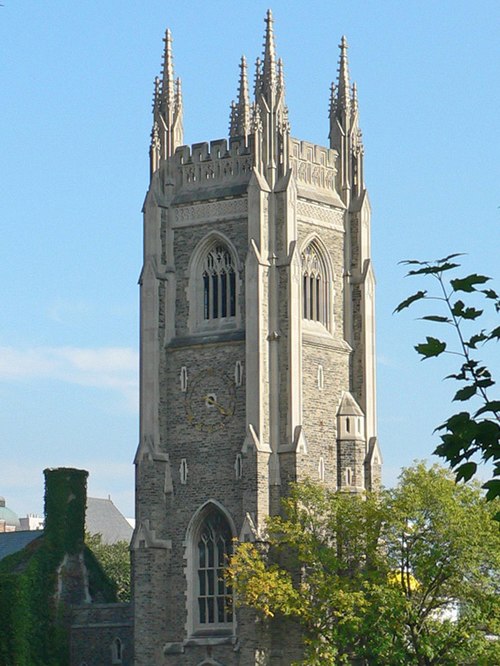 full funding
University of Toronto
Lester B. Pearson International Student Scholarship
For international students beginning undergraduate study at the University of Toronto who are first-time entrants from outside Canada. Students must be nominated by their school, then complete the U of T application and scholarship process. Selection recognises exceptional academic achievement and creativity, with a record of leadership and impact at school.
full
Funding
€200k
Max
Nov 30, 2026
Deadline
 full funding
University of British Columbia
International Leader of Tomorrow (ILOT) Award
For international students entering their first undergraduate degree at the University of British Columbia (UBC) who demonstrate outstanding academic achievement, leadership, and financial need. Students must be nominated by their school and require financial support to study at UBC; the award is need-based, covering costs the student and family cannot meet.
full
Funding
€70k
Max
Nov 15, 2026
Deadline
 full funding
Western University
Western University National Scholarship Program (Canada)
Open to Canadian citizens and permanent residents entering full-time undergraduate study at Western University's main campus, with a minimum academic average of 90% in Grade 12 U/M courses (or equivalent), a school nomination, a reference letter, a transcript and an essay.
full
Funding
€47k
Max
Feb 14, 2027
Deadline
partial fundingUniversity of Ottawa
University of Ottawa International English Scholarships
Open to international undergraduate students who hold a valid Canadian study permit and are newly admitted to an English-language undergraduate programme in Arts, Engineering, Health Sciences, Science, Social Sciences, or the Telfer School of Management. A minimum admission average of 80 percent is needed for the Admission Scholarship and 90 percent for the Academic Excellence Scholarship. Students in the French immersion or French-language streams are not eligible.
partial
Funding
€46k
Max
Apr 1, 2027
Deadline
 full funding
Canadian Institutes of Health Research (CIHR), Natural Sciences and Engineering Research Council (NSERC), Social Sciences and Humanities Research Council (SSHRC)
Vanier Canada Graduate Scholarships
Open to Canadian and international students pursuing a doctoral (PhD) degree at a Canadian university. Candidates must be nominated by the Canadian institution, not yet have started the doctoral program beyond defined limits, and demonstrate academic excellence, research potential, and leadership.
full
Funding
€34k
Max
Nov 4, 2026
Deadline
full fundingCIHR / NSERC / SSHRC (Tri-Agency), Government of Canada
Canada Graduate Research Scholarship – Doctoral (CGRS-D)
For doctoral students undertaking a PhD at a Canadian institution, with an outstanding academic record. Awards are made by Canada's tri-agency (CIHR, NSERC, SSHRC); applicants apply through their university, and eligibility (including for international students) follows the current Canada Graduate Scholarships rules.
full
Funding
€27k
Max
Nov 1, 2026
Deadline
Frequently asked questions
What are the estimated annual fees for international students at the University of Ottawa?
+
International student fees vary by program, generally ranging from approximately CAD 30,000 to CAD 55,000 per year. Professional programs like law, medicine, and MBA may have higher fees.
What are the living costs for students in Ottawa?
+
Students should budget approximately CAD 15,000 to CAD 18,000 per year for accommodation, food, and transportation in Ottawa.
What are the English proficiency requirements for international students?
+
International students generally need an IELTS Academic score of 6.5 overall with no band below 5.5, or a TOEFL iBT score of 86 overall.
What academic average is recommended for admission?
+
A competitive average of 80% or higher is recommended, though the exact threshold can vary depending on the specific program of study.
What makes the University of Ottawa unique for international students?
+
As Canada's largest bilingual university, uOttawa offers a unique dual English-French academic experience. Its capital city location provides access to government and international organizations for internships.
Does the University of Ottawa offer financial support for international students?
+
Yes, the University of Ottawa ranks first in Canada for scholarships and bursaries and offers several options such as the Excellence Scholarship and International Admission Scholarship.
Last updated