In short
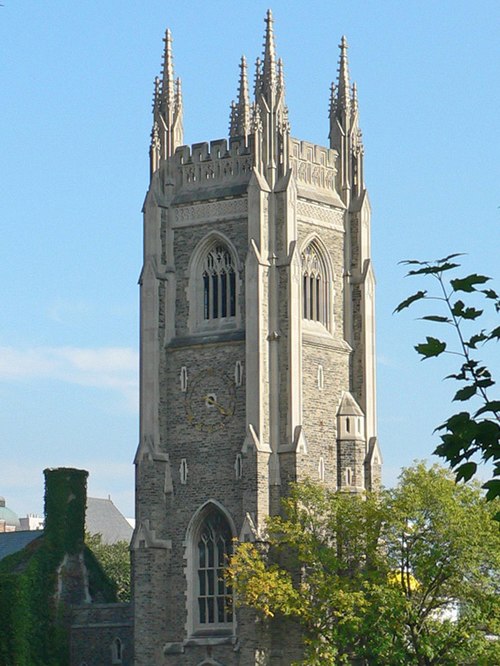
The University of Toronto is Canada's consistently top-ranked public research university with three campuses in the Greater Toronto Area. It offers a world-class education with extensive program options and a diverse international community.
Key facts
- Type
- Public
- Founded
- 1827
- Students
- 102,431
- International students
- 29,449
- Acceptance rate
- 43%
- Tuition (intl)
- €4–10k/yr
- Languages
- EN
- Location
- Toronto, Canada
The University of Toronto is a globally recognized public research university, consistently ranked as Canada's top institution since its founding in 1827. With three campuses across the Greater Toronto Area (St. George in downtown Toronto, Mississauga to the west, and Scarborough to the east), U of T offers a diverse and inclusive academic environment. Known for its extensive research ecosystem and commitment to challenging societal norms, the university attracts bright minds from various backgrounds and disciplines to collaborate on pressing global challenges. It prepares students for success through a comprehensive global education that emphasizes excellence and strong learning communities. U of T's vast alumni network of over 720,000 graduates contributes to its global impact, driving innovation and progress worldwide. The university actively addresses complex issues through education, research, and innovation, aiming to build a more equitable, sustainable, and prosperous future.
Why study here
- Gain a world-class education from Canada's consistently top-ranked university.
- Benefit from a rich research environment with significant funding and opportunities to contribute to global challenges.
- Choose from a wide array of over 700 undergraduate and 300 graduate programs across diverse fields of study.
- Experience a truly international and inclusive community with students from 175 countries.
- Access experiential learning opportunities like internships and co-op programs, especially through UTSC Management Co-op, which offers a full year of paid work experience.
- Study in Toronto, one of the world's most diverse city regions, with three distinct campuses offering different academic and social experiences.
Student life
The University of Toronto offers a vibrant and diverse student life across its three campuses. Each campus – St. George (downtown Toronto), Mississauga, and Scarborough – provides a unique environment for learning and personal growth. Students can explore a wide range of academic and wellness supports, participate in numerous campus events, and engage with a global community. The university emphasizes an inclusive culture, fostering an environment where every member feels a sense of belonging. Co-curricular activities, student organizations, and campus services are available to enrich the student experience and help navigate the university's vibrant ecosystem. Additionally, the university offers campus tours, virtual tours, and online info sessions to help prospective students envision their life at U of T.
Fees
International—
HomeTuition cost for first-entry domestic undergraduate students for 2025-26 ranges from approximately $6,100 to $16,090, depending on the program.
Living—
The provided tuition range is for domestic undergraduate students in first-entry programs for the 2025-26 academic year. Specific international student tuition fees are not detailed in the provided source materials.
Admissions
Cambridge English C1 Advanced or C2 ProficiencyOverall 180, with at least 170 in each component
Canadian Academic English Language Assessment (CAEL), including CAEL OnlineOverall 70, with no part below 60
Caribbean Examinations Council English coursesFinal grade of A (I) or B (II) in CSEC English
Duolingo English Test (completed on or after July 1st, 2024)Overall 120, with a score of 120 in Production
Duolingo English Test (completed before July 1st, 2024)Overall 120, with no subscore below 100
Rankings
National Taiwan University Ranking 20254
Times Higher Education World University Rankings 202621
U.S. News Best Global Universities 202516
Academic Ranking of World Universities 202525
QS World University Rankings 202629
University scholarships
Alfred and Florence Aiken and Dorothy Woods Memorial Graduate ScholarshipBased on yearly interest
Jeanne Armour Award in Canadian HistoryNot specified
Jeanne Armour Graduate Scholarships in Canadian HistoryCovers funding for travel, conference, and stipendiary amounts
Carmen Brock FellowshipNot specified
Chinese Railway Workers of Canada Memorial ScholarshipNot specified
Maurice Cody FellowshipNot specified
Tom Easterbrook Graduate Scholarship in Communications and Mass MediaNot specified
Rene Efrain Memorial Scholarship in French History in the Department of HistoryBased on yearly interest
Emeritus History Professors Graduate FellowshipNot specified
Marianne Hodgson Graduate PrizeNot specified
Margaret S. McCullough Scholarship in Canadian Historical ResearchNot specified
Kenneth McNaught Fellowship in HistoryNot specified
Part Time MA History Award$750
Vivienne Poy Chancellor’s FellowshipNot specified
C.P. Stacey – Connaught Graduate FellowshipNot specified
Women’s Canadian Historical Society of Toronto Graduate Fellowships in Canadian History$2,500 each
Natalie Zemon-Davis FellowshipNot specified
Craig Brown Travelling Fellowship for History Graduate StudentsNot specified
Barbara Frum FundNot specified
History Conference Travel GrantNot specified
Martin Klein Fellowship Fund for Students From AfricaNot specified
Eric and Wendy Schmidt AI in Science Postdoctoral Fellowship$85,000 CDN/year (plus $11,000 CDN/year towards benefits and levy costs)
Accreditation
The University of Toronto's co-operative education programs, primarily offered at Scarborough, have received accreditation from Co-operative Education and Work Integrated Learning (CEWIL) Canada.
For international students
CanadaStudent visa & funds
International students must obtain a study permit from IRCC before arriving. Most college and undergraduate applicants must also include a Provincial or Territorial Attestation Letter (PAL/TAL) confirming a space under the annual cap; from January 2026, master’s and doctoral students at public institutions are exempt from this requirement. Applicants must show living funds of CAD 22,895 (effective September 2025, for a single student, excluding tuition and travel), and Student Direct Stream applicants hold this amount as a GIC.
Working while you study
Full-time students at designated learning institutions whose permits include work authorization may work up to 24 hours per week off campus during academic terms — a cap in effect since November 2024 that replaced the former 20-hour rule and a temporary 40-hour exception. Students may work unlimited hours during scheduled breaks such as summer and winter holidays. From April 2026, eligible students no longer need a separate co-op work permit for mandatory placements.
After you graduate
Graduates of eligible programs may apply for a Post-Graduation Work Permit (PGWP) within 180 days of confirmed completion. The PGWP matches program length up to a maximum of three years, and master’s graduates receive a three-year permit regardless of program length. Since November 2024 most applicants must show a recent language test at CLB 7 (university graduates) or CLB 5 (college graduates); degree graduates are exempt from the field-of-study alignment rule that applies to other applicants.
English tests
- IELTS Academic6.0–6.5 with no band below 6.0; research-intensive universities 6.5–7.0
- TOEFL iBT80–100; top universities (e.g. University of Toronto) 100+
Main intakes
SeptemberJanuaryMay
Typical living cost
€1,250/month
Approximate all-in student budget; major cities run higher.
SourcesIRCC — Study permit: get the right documents · CIC News — Increased fund requirements for study permits (Sept 2025) · CIC News — Off-campus work rules update (May 2026) · IRCC — Post-graduation work permit: who can apply · ETS — Minimum TOEFL score requirements for the USA, UK and Canada · Mastersportal — Living costs & tuition in Canada
Programs
a selectionUniversity of Toronto · Canada
Aerospace Engineering
Aerospace Engineering focuses on the science, design, manufacturing, and operation of aircraft, spacecraft, and robotic systems. This field is crucial for space exploration, satellite communications, rocketry, and increasingly, for innovative applications like urban air mobility and wind turbines for sustainable energy. This program offers a comprehensive and multidisciplinary curriculum with a strong emphasis on theoretical foundations, covering aerodynamics, dynamics and control systems, structures and materials, and propulsion. It prepares students for impactful roles in leading aerospace companies and research institutions globally. Students benefit from instruction by professors at the University of Toronto Institute for Aerospace Studies (UTIAS), a renowned hub for aerospace research in Canada. This provides access to cutting-edge facilities, industry partnerships, and opportunities for design experience.
Bachelor's
Level
—
Tuition
48 mo
Duration
University of Toronto · Canada
Artificial Intelligence Certificate
This certificate program provides a foundational understanding of Artificial Intelligence (AI), covering key concepts, principles, and applications. You will explore the fundamentals of machine learning, data analysis, and the ethical considerations surrounding AI development and deployment. The program is designed to equip learners with the knowledge to understand and interact with AI technologies in various professional contexts.
Certificate
Level
—
Tuition
—
Duration
University of Toronto · Canada
Bachelor of Music in Performance - Voice
The Bachelor of Music in Performance (Voice) program at the University of Toronto offers comprehensive, performance-based training for students aiming for a professional career in music. You'll join a supportive community, hone your skills in small classes, and gain extensive public performance experience. The program is designed for motivated and versatile students passionate about music, who demonstrate potential for growth and are eager to seize opportunities. While focusing on the classical repertoire, there are options to explore other genres like jazz, musical theatre, and popular music.
Bachelor's
Level
—
Tuition
48 mo
Duration
University of Toronto · Canada
Biology
Biology is the scientific study of living organisms, exploring the diversity of life and fundamental concepts like evolution, natural selection, and specialization. This program involves hands-on learning through laboratory work, where you'll engage with real organisms, conduct dissections, make observations, and collect data. The study of biology is crucial for addressing global challenges such as conservation, environmental issues, and understanding medicine and disease.
Bachelor's
Level
—
Tuition
—
Duration
University of Toronto · Canada
Biopharmaceutical Admissions (MBiotech)
The Biopharmaceuticals Stream (MBiotech) at the University of Toronto Mississauga offers a unique, one-year master's program that combines advanced scientific training in biopharmaceuticals with essential business acumen. This program is designed for students with a background in science who are interested in the commercial aspects of the biotechnology industry. It aims to prepare graduates for leadership roles in the biopharmaceutical sector by equipping them with both technical expertise and business knowledge. The program accepts 42 students annually and emphasizes a rigorous curriculum that bridges scientific discovery with market application.
Master's
Level
—
Tuition
12 mo
Duration
University of Toronto · Canada
Civil and Mineral Engineering (MASc, MEng, PhD)
The Department of Civil and Mineral Engineering at the University of Toronto focuses on research addressing societal needs, from underground resources to major structures. Students, staff, and professors engage in research ranging from nanoscale studies of water contamination and concrete properties to large-scale structural tests and urban transit modeling. This research is strengthened by collaborations with industry and government partners, utilizing world-class facilities and expertise. The department is structured around five interdisciplinary themes: Cities & Infrastructure; Complex Systems; Energy & Environment; Mining & Subsurface Systems; and Transformative Technologies. These themes encompass traditional civil engineering fields like Structural, Transportation, Environmental, Building Engineering, Construction Management, and Mining and Geomechanics.
Master's
Level
—
Tuition
18 mo
Duration
Scholarships
for Canadafull fundingUniversity of Toronto
Lester B. Pearson International Student Scholarship
For international students beginning undergraduate study at the University of Toronto who are first-time entrants from outside Canada. Students must be nominated by their school, then complete the U of T application and scholarship process. Selection recognises exceptional academic achievement and creativity, with a record of leadership and impact at school.
full
Funding
€200k
Max
Nov 30, 2026
Deadline
 full funding
University of British Columbia
International Leader of Tomorrow (ILOT) Award
For international students entering their first undergraduate degree at the University of British Columbia (UBC) who demonstrate outstanding academic achievement, leadership, and financial need. Students must be nominated by their school and require financial support to study at UBC; the award is need-based, covering costs the student and family cannot meet.
full
Funding
€70k
Max
Nov 15, 2026
Deadline
 full funding
Western University
Western University National Scholarship Program (Canada)
Open to Canadian citizens and permanent residents entering full-time undergraduate study at Western University's main campus, with a minimum academic average of 90% in Grade 12 U/M courses (or equivalent), a school nomination, a reference letter, a transcript and an essay.
full
Funding
€47k
Max
Feb 14, 2027
Deadline
 partial funding
University of Ottawa
University of Ottawa International English Scholarships
Open to international undergraduate students who hold a valid Canadian study permit and are newly admitted to an English-language undergraduate programme in Arts, Engineering, Health Sciences, Science, Social Sciences, or the Telfer School of Management. A minimum admission average of 80 percent is needed for the Admission Scholarship and 90 percent for the Academic Excellence Scholarship. Students in the French immersion or French-language streams are not eligible.
partial
Funding
€46k
Max
Apr 1, 2027
Deadline
 full funding
Canadian Institutes of Health Research (CIHR), Natural Sciences and Engineering Research Council (NSERC), Social Sciences and Humanities Research Council (SSHRC)
Vanier Canada Graduate Scholarships
Open to Canadian and international students pursuing a doctoral (PhD) degree at a Canadian university. Candidates must be nominated by the Canadian institution, not yet have started the doctoral program beyond defined limits, and demonstrate academic excellence, research potential, and leadership.
full
Funding
€34k
Max
Nov 4, 2026
Deadline
full fundingCIHR / NSERC / SSHRC (Tri-Agency), Government of Canada
Canada Graduate Research Scholarship – Doctoral (CGRS-D)
For doctoral students undertaking a PhD at a Canadian institution, with an outstanding academic record. Awards are made by Canada's tri-agency (CIHR, NSERC, SSHRC); applicants apply through their university, and eligibility (including for international students) follows the current Canada Graduate Scholarships rules.
full
Funding
€27k
Max
Nov 1, 2026
Deadline
Frequently asked questions
What are the English proficiency requirements for international students?
+
International students must demonstrate English language proficiency. Accepted tests include Cambridge English (C1 Advanced or C2 Proficiency), CAEL, Duolingo, and Caribbean Examinations Council English courses. Specific score requirements vary by test.
Does the University of Toronto offer English language proficiency exemptions?
+
Yes, exemptions are available for students who have completed four or more years of full-time study in an English-speaking Canadian school or an English-language school in a country where English is dominant. A senior-level English course is generally required for undergraduate programs.
What is the tuition cost for domestic undergraduate students?
+
Tuition for first-entry domestic undergraduate students in 2025-26 ranges from approximately $6,100 to $16,090, depending on the program. International student fees are not detailed in the provided information.
What makes the University of Toronto stand out for international students?
+
The university is Canada's top-ranked institution, offering a diverse and inclusive community with students from 175 countries. It provides a rich research environment and over 700 undergraduate programs.
What are the different campus locations at the University of Toronto?
+
The University of Toronto has three campuses: the historic St. George campus in downtown Toronto, the Mississauga (UTM) campus west of the city, and the Scarborough (UTSC) campus in eastern Toronto. Each campus offers a distinct learning environment within the Greater Toronto Area.
Last updated