CANADA · TORONTO
University of Trinity College
private · Founded 1851 · Languages: English

In short
Trinity College, a federated college of the University of Toronto, offers a distinguished liberal arts education within a global top-25 university. It provides a small-college community experience with Oxford-style tutorials, located in the vibrant heart of downtown Toronto.
Key facts
- Type
- Private
- Founded
- 1851
- Students
- 1,800
- International students
- 400
- Acceptance rate
- 30%
- Tuition (intl)
- €30–40k/yr
- Languages
- ENGLISH
- Location
- Toronto, Canada
Trinity College at the University of Toronto, founded in 1851 by Bishop John Strachan, is one of Canada's most distinguished liberal arts colleges. As a federated college of U of T, its approximately 1,800 undergraduate students access the full academic resources of one of the world's top universities while enjoying the close community of a small college. Trinity is located on the beautiful St. George Campus in downtown Toronto and is renowned for its Foundation Year Programme, Ethics Society and Law specialist, and Oxford-style tutorials.
Why study here
- Dual affiliation: a Trinity College degree backed by the University of Toronto, ranked in the global top 25.
- Small community feel within a world-class research university — access to 700+ undergraduate programmes.
- Oxford-style tutorial tradition providing close mentorship from faculty and exceptional critical thinking development.
- Prime location in downtown Toronto, Canada's financial and cultural capital, with unmatched co-op and employment opportunities.
- Historic Gothic revival campus and vibrant residential life, including the iconic Quadrangle and storied debate and drama traditions.
Student life
Trinity College offers a rich residential and extracurricular experience. Students live on campus in one of the College's residence halls and participate in the Episkopon (student government), Literary Institute (North America's oldest debating club), and a variety of arts, music, and athletic programmes. The Foundation Year Programme cohort creates particularly strong bonds among first-year students. Trinity's Chaplaincy, Academic Advisor programme, and peer mentorship ensure strong pastoral support in the college's tight-knit Anglican heritage community.
Fees
InternationalInternational undergraduate students at the University of Toronto (Trinity) pay approximately CAD 45,000–58,000 per year in tuition (approximately EUR 30,000–38,000), varying by programme faculty.
HomeCanadian domestic students pay approximately CAD 6,000–14,000 per year depending on programme and faculty.
LivingToronto living costs are estimated at CAD 15,000–20,000 per year for accommodation, food, transport and personal expenses. Trinity on-campus residence offers meal plans included in fees.
College residence fees for Trinity are billed separately from U of T tuition. Financial aid and scholarship packages can substantially reduce net cost for eligible students.
Admissions
Ontario high school (domestic)Competitive average in the top-6 Grade 12 U/M courses; typically 90–95% for competitive faculties at U of T.
International qualificationsIB Diploma (typically 36–40 points for competitive programmes); A-levels (AAA); or equivalent national qualifications. SAT/ACT not required.
Trinity College applicationApplicants to Trinity submit a separate supplemental application including a personal essay; residence priority is given to first-year Trinity-registered students.
IELTS Academic6.5 overall (no band below 6.0); 7.0 for some programmes
TOEFL iBT100 overall (minimum 22 in each section)
Duolingo English Test120 overall
Rankings
QS World University Rankings 2025 (University of Toronto)25
Times Higher Education World University Rankings 2025 (University of Toronto)21
Academic Ranking of World Universities 2024 (University of Toronto)24
University scholarships
Trinity College Entrance ScholarshipCAD 2,000–10,000 per year for academically outstanding incoming students
University of Toronto International Scholar AwardCAD 100,000 over four years for exceptional international students (highly competitive)
Lester B. Pearson International Scholarship (U of T)Full tuition, books, incidental fees, and residence for four years
Trinity College BursariesVaries; awarded based on financial need to Trinity registered students
Accreditation
Trinity College is a federated university of the University of Toronto, which is accredited by the Ontario government under the Post-secondary Education Choice and Excellence Act. The University of Toronto holds institutional accreditation from Universities Canada and its professional schools hold relevant disciplinary accreditations.
For international students
CanadaStudent visa & funds
International students must obtain a study permit from IRCC before arriving. Most college and undergraduate applicants must also include a Provincial or Territorial Attestation Letter (PAL/TAL) confirming a space under the annual cap; from January 2026, master’s and doctoral students at public institutions are exempt from this requirement. Applicants must show living funds of CAD 22,895 (effective September 2025, for a single student, excluding tuition and travel), and Student Direct Stream applicants hold this amount as a GIC.
Working while you study
Full-time students at designated learning institutions whose permits include work authorization may work up to 24 hours per week off campus during academic terms — a cap in effect since November 2024 that replaced the former 20-hour rule and a temporary 40-hour exception. Students may work unlimited hours during scheduled breaks such as summer and winter holidays. From April 2026, eligible students no longer need a separate co-op work permit for mandatory placements.
After you graduate
Graduates of eligible programs may apply for a Post-Graduation Work Permit (PGWP) within 180 days of confirmed completion. The PGWP matches program length up to a maximum of three years, and master’s graduates receive a three-year permit regardless of program length. Since November 2024 most applicants must show a recent language test at CLB 7 (university graduates) or CLB 5 (college graduates); degree graduates are exempt from the field-of-study alignment rule that applies to other applicants.
English tests
- IELTS Academic6.0–6.5 with no band below 6.0; research-intensive universities 6.5–7.0
- TOEFL iBT80–100; top universities (e.g. University of Toronto) 100+
Main intakes
SeptemberJanuaryMay
Typical living cost
€1,250/month
Approximate all-in student budget; major cities run higher.
SourcesIRCC — Study permit: get the right documents · CIC News — Increased fund requirements for study permits (Sept 2025) · CIC News — Off-campus work rules update (May 2026) · IRCC — Post-graduation work permit: who can apply · ETS — Minimum TOEFL score requirements for the USA, UK and Canada · Mastersportal — Living costs & tuition in Canada
Scholarships
for Canada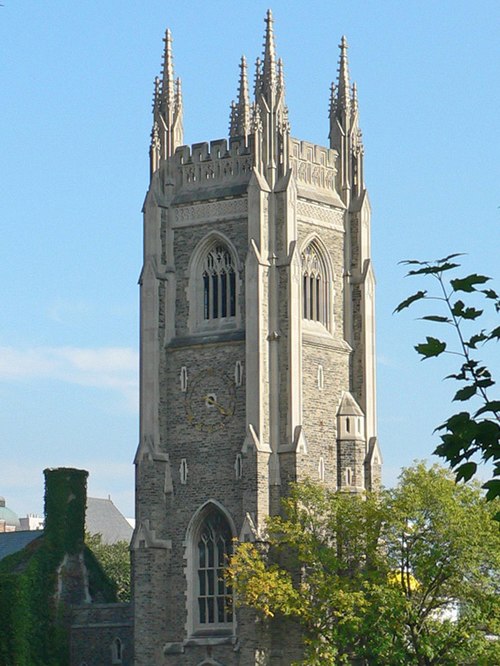 full funding
University of Toronto
Lester B. Pearson International Student Scholarship
For international students beginning undergraduate study at the University of Toronto who are first-time entrants from outside Canada. Students must be nominated by their school, then complete the U of T application and scholarship process. Selection recognises exceptional academic achievement and creativity, with a record of leadership and impact at school.
full
Funding
€200k
Max
Nov 30, 2026
Deadline
 full funding
University of British Columbia
International Leader of Tomorrow (ILOT) Award
For international students entering their first undergraduate degree at the University of British Columbia (UBC) who demonstrate outstanding academic achievement, leadership, and financial need. Students must be nominated by their school and require financial support to study at UBC; the award is need-based, covering costs the student and family cannot meet.
full
Funding
€70k
Max
Nov 15, 2026
Deadline
 full funding
Western University
Western University National Scholarship Program (Canada)
Open to Canadian citizens and permanent residents entering full-time undergraduate study at Western University's main campus, with a minimum academic average of 90% in Grade 12 U/M courses (or equivalent), a school nomination, a reference letter, a transcript and an essay.
full
Funding
€47k
Max
Feb 14, 2027
Deadline
 partial funding
University of Ottawa
University of Ottawa International English Scholarships
Open to international undergraduate students who hold a valid Canadian study permit and are newly admitted to an English-language undergraduate programme in Arts, Engineering, Health Sciences, Science, Social Sciences, or the Telfer School of Management. A minimum admission average of 80 percent is needed for the Admission Scholarship and 90 percent for the Academic Excellence Scholarship. Students in the French immersion or French-language streams are not eligible.
partial
Funding
€46k
Max
Apr 1, 2027
Deadline
 full funding
Canadian Institutes of Health Research (CIHR), Natural Sciences and Engineering Research Council (NSERC), Social Sciences and Humanities Research Council (SSHRC)
Vanier Canada Graduate Scholarships
Open to Canadian and international students pursuing a doctoral (PhD) degree at a Canadian university. Candidates must be nominated by the Canadian institution, not yet have started the doctoral program beyond defined limits, and demonstrate academic excellence, research potential, and leadership.
full
Funding
€34k
Max
Nov 4, 2026
Deadline
full fundingCIHR / NSERC / SSHRC (Tri-Agency), Government of Canada
Canada Graduate Research Scholarship – Doctoral (CGRS-D)
For doctoral students undertaking a PhD at a Canadian institution, with an outstanding academic record. Awards are made by Canada's tri-agency (CIHR, NSERC, SSHRC); applicants apply through their university, and eligibility (including for international students) follows the current Canada Graduate Scholarships rules.
full
Funding
€27k
Max
Nov 1, 2026
Deadline
Frequently asked questions
What are the tuition fees for international undergraduate students at Trinity College?
+
International undergraduate students at Trinity College pay approximately CAD 45,000–58,000 per year in tuition, varying by program and faculty. College residence fees are billed separately, and living costs in Toronto are estimated at an additional CAD 15,000–20,000 annually.
What makes studying at Trinity College unique?
+
Trinity College offers a dual affiliation with the University of Toronto, a global top-25 university, combined with a small community feel and Oxford-style tutorials. Its prime downtown Toronto location also provides excellent employment opportunities.
What are the English language proficiency requirements for international students?
+
International students typically need an IELTS Academic score of 6.5 overall (with no band below 6.0, or 7.0 for some programs), or a TOEFL iBT score of 100 overall (with a minimum of 22 in each section). The Duolingo English Test is also accepted with an overall score of 120.
Does Trinity College offer scholarships or financial aid for international students?
+
Yes, Trinity College offers scholarships such as the Trinity College Entrance Scholarship (CAD 2,000–10,000) and bursaries based on financial need. The University of Toronto also offers the highly competitive University of Toronto International Scholar Award and the Lester B. Pearson International Scholarship.
What is the student life like at Trinity College?
+
Trinity College provides a rich residential and extracurricular experience with active student government, debating clubs, and various arts and athletic programs. The Foundation Year Programme fosters strong bonds, and students receive strong pastoral support within the college's Anglican heritage community.
Last updated