Study in China
China offers 312 programmes at 32 universities, with tuition ranging from roughly €2k to €24k per year — among the most affordable options for an internationally significant destination. The catalogue features leading research universities such as Nanjing University, Xiamen University, the University of Science and Technology of China, Xi'an Jiaotong University, Tongji University, and Central South University, all of which feature prominently in global rankings.
China's universities have expanded their English-taught programme offerings substantially in recent years, particularly at master's level in engineering, business, and the sciences. Government-backed scholarships such as the Chinese Government Scholarship (CSC) can cover tuition and living costs for eligible international students, making China a compelling option for high-achieving applicants from across the world.

Advanced Biotechnology Program
The Advanced Biotechnology program at Southern University of Science and Technology (SUSTech) offers a comprehensive curriculum for students interested in cutting-edge biological research and applications. Building on a strong foundation, this program delves into areas such as gene editing, gene therapy, and understanding plant stress responses. The program is designed to provide students with advanced knowledge and practical skills, preparing them for impactful careers in research, industry, and academia. With a focus on innovation and scientific inquiry, SUSTech aims to foster the next generation of leaders in biotechnology.

Applied Chemistry

Applied Physics (Doctoral)
The Department of Physics at the University of Science and Technology Beijing (USTB) has evolved from its origins as a teaching and research section into a comprehensive entity integrating teaching, scientific research, and development. It comprises the Department of Physics, the Institute of Applied Physics, and the Modern Physics Research Center. The department boasts a high-caliber faculty, including an academician of the Chinese Academy of Sciences, professors, associate professors, and doctoral supervisors, with a significant portion of the staff holding doctoral degrees. The department offers undergraduate programs in Applied Physics and graduate programs in Physics, Condensed Matter Physics, Theoretical Physics, and Physical Electronics. Students are currently enrolled at all levels, from undergraduate to doctoral. Research at the department is robust, with faculty actively engaged in national and provincial projects, including the prestigious 973 and 863 programs, and the National Natural Science Foundation. Significant research funding has been secured, contributing to a substantial number of publications in SCI journals. The Physics Laboratory is recognized as a national base for engineering physics course teaching and an experimental teaching demonstration center. The department is responsible for teaching physics and experimental physics to students across various disciplines at USTB, including engineering, science, management, literature, classics, and law, in addition to cultivating physics undergraduates and graduate students.
Automation and Intelligent Manufacturing - Southern University of Science and Technology
Southern University of Science and Technology (SUSTech) offers a Master's program in Automation and Intelligent Manufacturing within its College of Science and Engineering. This program focuses on advanced topics in automation, control systems, robotics, and intelligent manufacturing processes. It aims to equip students with theoretical knowledge and practical skills necessary for research and development in these rapidly evolving fields. The curriculum is designed to foster innovation and problem-solving abilities, preparing graduates for careers in academia and industry.
Bachelor (Physics and Electronic Engineering)

Bachelor of Arts/Science in Zhejiang University
Zhejiang University (ZJU) is a comprehensive, research-oriented, and innovative university with distinctive characteristics and significant influence both domestically and internationally. It offers programs across 13 major disciplines, including Philosophy, Economics, Law, Education, Literature, History, Science, Engineering, Agriculture, Medicine, Management, Art, and Interdisciplinary Studies. Most undergraduate programs are taught in Chinese, though some are offered in English. The typical program duration is 4-6 years, and successful graduates will be awarded a Bachelor's degree in accordance with national and university regulations.

Bachelor of Engineering in Urban Planning and Design
The Bachelor of Engineering in Urban Planning and Design program at Tongji University offers a comprehensive four-year curriculum focused on the principles and practices of creating sustainable and well-designed urban environments. Established in 1907, Tongji University has a long-standing tradition of excellence in engineering and architecture, providing a strong foundation for this specialized program. This program equips students with the knowledge and skills to address complex urban challenges, including spatial planning, environmental sustainability, transportation, housing, and heritage conservation. Students will engage with both theoretical concepts and practical applications, preparing them for a wide range of careers in urban development and management. The curriculum emphasizes interdisciplinary approaches, drawing on fields such as architecture, civil engineering, geography, sociology, and environmental science. Graduates will be well-prepared to contribute to the planning and design of cities that are functional, livable, and resilient.
Bachelor of Management Science - Administration Management
The Administration Management major at Tongji University aims to develop skilled professionals in public affairs management and public policy research, leveraging the university's strengths in sustainable development and urban management. Students will gain a solid foundation in management, economics, administration, and political science. The program emphasizes analytical skills for addressing urban management challenges in China, incorporating concepts of sustainable development and an international perspective. It is structured around three core modules: foundational theories, practical applications (including public organization, social construction, urban development, and sustainable management), and research methodologies.

Bachelor of Teaching Chinese to Speakers of Other Languages / Master of International Chinese Language Education
Shenzhen University offers programs in Chinese Language Education for international students. These programs aim to cultivate qualified Chinese language teachers for global demand and support the professional development of those in the field. Students have the opportunity to study for a Bachelor's degree in Teaching Chinese to Speakers of Other Languages or a Master's degree in International Chinese Language Education.

Bachelor Programs at Dalian University of Technology
Dalian University of Technology (DUT) offers a range of Bachelor programs designed for international students. These programs aim to provide a comprehensive education in various fields, fostering academic excellence and practical skills. DUT is committed to creating a diverse and inclusive learning environment, attracting students from around the globe to study in China.

Bachelor Programs at Northwestern Polytechnical University
Northwestern Polytechnical University (NPU) offers a range of undergraduate programs taught in English, catering to international students. These programs are designed to provide a strong foundation in specialized fields, preparing students for future academic pursuits or professional careers. The university is committed to fostering an international learning environment, with programs available across various disciplines including engineering, science, and business. Students will have the opportunity to engage with faculty and peers from diverse backgrounds while studying at NPU's campus in Xi'an, China.
Bachelor's Programs for International Students
Shenzhen University (SZU) offers a range of four-year full-time undergraduate programs for international students. These programs are primarily taught in Chinese, with a select few offered in English. To be eligible, applicants must be non-Chinese citizens holding a valid foreign passport, be in good health, and have completed high school or an equivalent level of education. Specific language proficiency requirements apply, including HSK 5 for Chinese-taught programs (with some exceptions) and IELTS 5.5 or TOEFL iBT 80 for English-taught programs. Native speakers of Chinese or English may be exempt from these requirements. Additionally, applicants must meet specific criteria related to holding foreign nationality for at least four years and residing overseas for at least two years within the last four years, as per Ministry of Education regulations.
Business Administration (Digital Marketing)
This program focuses on digital marketing within a broader Business Administration framework. It's designed for students interested in the intersection of business, digital technology, artificial intelligence, and new media. You will learn to analyze data and apply artificial intelligence technologies to digital marketing strategies. The curriculum aims to reshape your mindset, broaden your strategic vision, and foster practical capabilities to create business value through digital marketing plans. The goal is to equip you with the skills to master digital marketing techniques and methods, contributing significantly to business development after graduation.
Business Administration (Innovation and Entrepreneurship)
This program focuses on equipping students with a systematic understanding of business management principles. You will learn to translate business ideas into practice by analyzing opportunities, developing strategies, integrating resources, and managing personnel effectively. The aim is to prepare you to successfully operate entrepreneurial ventures by enhancing your business thinking, mental models, and communication skills.

Central South University - Bachelor's Programs
Central South University (CSU) offers a wide array of Bachelor's degree programs across numerous disciplines. These programs are designed to provide students with a strong foundation in their chosen field, preparing them for future academic pursuits or professional careers. Most programs are taught in Chinese, with a duration of four years. Some specialized fields, such as Architecture, Rural and Urban Planning, and various medical programs, extend to five years, reflecting the in-depth study required. Students can explore a diverse range of subjects, from humanities and social sciences to engineering, medicine, and design, housed within various colleges and schools across the university. The curriculum aims to balance theoretical knowledge with practical application, fostering critical thinking and problem-solving skills.
Chinese Language and Literature
The Department of Chinese Language and Literature at Shenzhen University, established in 1984 with support from Peking University, offers a comprehensive program focused on the study of Chinese language and literature. It emphasizes integrating general education, specialized knowledge, and practical application to cultivate students' learning, innovation, and practical abilities. The department is committed to serving societal development and has consistently improved its teaching quality and research output. It offers undergraduate programs and postgraduate degrees at Master's and Doctoral levels in various specialized fields within Chinese language and literature.

Chinese Language Courses at Shandong University
Shandong University offers Chinese Language Courses designed for international students seeking to improve their Mandarin proficiency. These courses cater to various levels of learners, providing a foundation in the Chinese language and culture. The program aims to equip students with the necessary linguistic skills for academic pursuits or personal enrichment in China.
Chinese Language Program for International Students
Central South University offers a Chinese Language Program designed for international students. This program provides intensive language training to help students achieve proficiency in Mandarin Chinese. The curriculum covers various aspects of the language, from basic communication to specialized business Chinese, and includes cultural immersion activities. Students can choose between a one-academic-year program or a one-semester option.
Clinical Research Program in Shenzhen
This program focuses on advancing clinical research capabilities in Shenzhen, China. It aims to identify and address the strengths and weaknesses in conducting high-quality clinical research within the region. By understanding the local landscape, the program seeks to propose policy recommendations and foster innovation in medical research. The study involved participants from hospitals, pharmaceutical/medical device companies, and government agencies. It utilized qualitative methods, including focus groups and individual interviews, to gather comprehensive insights. The analysis focused on identifying key factors that drive and challenge clinical research efforts in Shenzhen.
College of Sciences
The College of Sciences at Shanghai University, founded in 1958, is dedicated to cultivating top-tier science talent and advancing scientific research. It aims to be a world-leading institution fostering innovative individuals with a global perspective and a strong academic foundation. The College comprises three core disciplines: Mathematics, Physics, and Chemistry, all recognized within the top 1% globally by ESI, with Chemistry further distinguished in the top 1‰. The faculty is comprised of highly accomplished educators and researchers, including 105 professors out of 355 full-time teachers, with significant national recognition.
Computer Front-End Technology
Computer Information Engineering
Computer Science
Northwestern Polytechnical University offers a Master's program in Computer Science, providing students with advanced knowledge and skills in a rapidly evolving field. The program is delivered by the School of Computer Science, which comprises several departments focusing on various aspects of computer science and engineering. Students will engage with cutting-edge research and benefit from the expertise of a diverse faculty. The curriculum is designed to equip students with a strong theoretical foundation and practical expertise. The program emphasizes research, innovation, and the application of computer science principles to solve complex problems. Graduates are prepared for careers in academia, research, and industry, contributing to technological advancements.
Computer Science and Software Engineering
The College of Computer Science and Software Engineering at Shenzhen University was established in 2008, building upon earlier computer science education initiatives dating back to 1983. It has rapidly gained recognition, with its Computer Science and Engineering discipline ranked among the top globally and within China. The college is dedicated to advancing the fields of computer science and software engineering, fostering a strong research environment, and producing highly skilled graduates. The college is equipped with state-of-the-art facilities, including national and provincial-level laboratories focusing on areas like Big Data System Computing Technology and Artificial Intelligence. With a significant research output and funding, the faculty is actively engaged in cutting-edge projects. The college has a distinguished faculty, including members of prestigious academies, and has produced notable alumni, such as Ma Huateng, the founder of Tencent.
Computer Science and Technology
Southern University of Science and Technology (SUSTech) offers a Master's program in Computer Science and Technology, focusing on cutting-edge research in areas like Artificial Intelligence, Cognitive Science, and Computational Linguistics. The program aims to equip students with advanced knowledge and research skills in these fields. Students will have the opportunity to work with experienced faculty on innovative projects, contribute to academic publications, and engage with a vibrant research community. The program encourages interdisciplinary approaches, drawing from computer science, linguistics, and psychology to understand complex phenomena like language and cognition. SUSTech is committed to fostering a global perspective and providing a supportive environment for international students. The program is designed to prepare graduates for advanced research positions in academia or leading roles in the technology industry.
Computer Science and Technology
The School of Computer Science (SCS) at Northwestern Polytechnical University (NPU) is a research-focused institution with a long history, established in 1958. It offers one of the earliest computer science programs in China. SCS is dedicated to cultivating innovative and leading talents with interdisciplinary skills, aiming to be a national leader and a globally recognized center for high-level talent cultivation and scientific research. The school supports national defense construction and the economic and social development of the "One Belt, One Road" initiative.

Computer Science and Technology
This Master's program in Computer Science and Technology at Tianjin University provides advanced study and research opportunities in the rapidly evolving field of computing. Students will engage with core computer science principles and explore specialized areas through coursework and research projects. The program aims to equip graduates with the theoretical knowledge and practical skills necessary for successful careers in academia or industry. The curriculum is designed to foster critical thinking and problem-solving abilities, preparing students to tackle complex challenges in software development, data science, artificial intelligence, and other related domains. Tianjin University is committed to providing a rigorous academic environment with access to modern facilities and experienced faculty. Graduates of this program will be well-positioned to contribute to technological advancements and innovation, whether pursuing further doctoral studies or entering the professional workforce in technology-driven sectors.
Computer Science and Technology - Northwestern Polytechnical University
Northwestern Polytechnical University (NPU) offers a Master's program in Computer Science and Technology, focusing on cutting-edge areas within the field. The program is delivered through the School of Computer Science, which comprises several departments and centers specializing in various aspects of computing. The curriculum is designed to provide students with advanced knowledge and practical skills in areas such as Artificial Intelligence, Network Information Security, E-Commerce Technology, Internet of Things, Big Data, and Cloud Computing. Students will engage with faculty members who are actively involved in research and development in these domains, contributing to both theoretical advancements and practical applications. This program aims to equip international students with a strong foundation in computer science, preparing them for careers in research, development, and innovation within the global technology industry. The university is located in Xi'an, Shaanxi Province, China.
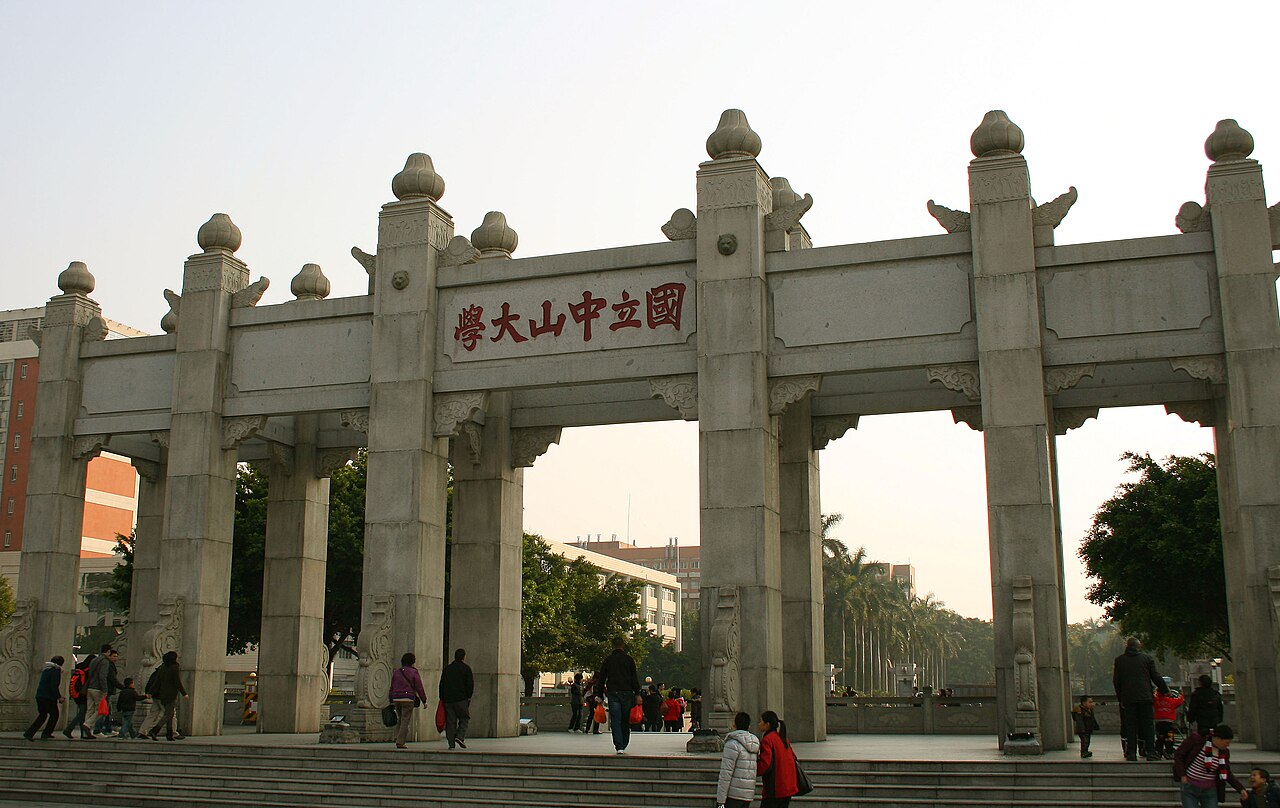
Computer Science and Technology Master's Program
Sun Yat-sen University (SYSU) offers Master's programs in Computer Science and Technology for international students. The university is a comprehensive research university located in China, with campuses in Guangzhou, Zhuhai, and Shenzhen. SYSU is committed to fostering talent and advancing scientific research. The Computer Science and Technology programs aim to cultivate high-level professionals with a strong theoretical foundation and practical skills in the field, contributing to the development of the digital economy and related sectors.

Computer Science and Technology Programs
Beijing Institute of Technology offers Master's level programs within the School of Computer Science and Technology, designed for international students. These programs provide in-depth knowledge and research opportunities in the field. The curriculum focuses on advanced topics and practical applications within computer science, preparing students for research and development roles.
Condensed Matter Physics
The Institute of Condensed Matter Physics at Shandong University focuses on advanced research in theoretical and experimental physics. The institute is responsible for the national key discipline of Condensed Matter Physics and hosts significant research facilities, including the State Key Laboratory of Crystal Materials and the Shandong Provincial Key Laboratory of Low-dimensional Materials. Research directions include condensed matter theory, exploring electrical, magnetic, and optical properties of organic solids; magnetism and spintronics, investigating materials like ferromagnetic semiconductors and nano-magnetic materials; and dielectric physics, covering ferroelectrics, thermoelectric materials, and advanced ceramics. The institute boasts a strong research team with numerous distinguished scholars and has a track record of undertaking national and provincial research projects.
Continuing Education

Continuing Education
Continuing Education Programs
Controllable Video Generation: A Survey
This survey provides a comprehensive overview of controllable video generation, a rapidly developing subfield of AI-generated content (AIGC). As AI models become more sophisticated, there's a growing need for methods that allow users to precisely control video output to match their intent. Current text-to-video models often fall short because text prompts alone are insufficient for complex or fine-grained requests. To address this, researchers are integrating non-textual conditions, such as camera motion or human pose, into existing video generation models to enable more accurate and flexible video synthesis. The survey systematically reviews the theoretical foundations and recent advancements in controllable video generation. It covers key concepts, common open-source video generation models, and delves into control mechanisms within diffusion models. Methods are categorized based on the types of control signals used, including single-condition, multi-condition, and universal controllable generation. The goal is to offer a clear understanding of the field's progress and future directions.

Cross-border E-commerce - Shanghai Jiao Tong University
This program focuses on the core elements required for success in the dynamic field of cross-border e-commerce. It explores a comprehensive framework covering market insight and positioning, efficient supply chain management, robust marketing strategies, technological support, regulatory compliance, customer experience optimization, and team building. The program aims to equip students with a systematic understanding of how these elements interact to determine a company's global competitiveness. Graduates will be prepared to navigate the complexities of international trade and digital commerce.

Digital Media Art
The Digital Media Art program at Beijing Normal University is designed for students interested in the intersection of art, technology, and interdisciplinary studies. In an era of global information technology revolution, this program explores how art functions across various disciplines, taking on new forms and applications. Students will develop foundational connections between art, sociology, natural sciences, and interactive technology, aiming to improve the coexistence of humans, art, and the information ecosystem. This program emphasizes understanding the historical evolution of art while developing abstract artistic thinking, enhancing visual expression, and improving narrative abilities. Students will gain an expanded understanding of natural sciences, psychology, and engineering technologies relevant to their chosen research directions. The curriculum fosters strong social literacy, enabling students to functionally integrate art knowledge with practical applications, develop cross-disciplinary art forms, and become leading practitioners in the future of art.
Doctoral programs

Doctoral Programs
Beihang University offers doctoral programs for international students, focusing on high-level academic pursuits. A significant portion of international students at Beihang are postgraduates, with a strong representation in master's and doctoral degrees. The university provides over 30 doctoral programs across a wide range of disciplines, including Science, Engineering, Economics, Management, Liberal Arts, Law, Medicine, and Interdisciplinary Studies. Many of these programs are taught in English, with Chinese-taught options also available. Doctoral studies at Beihang are typically completed within four years.

Doctoral Programs at Xiamen University
Xiamen University (XMU), founded in 1921 by Mr. Tan Kah Kee, a prominent overseas Chinese leader, is a leading university in China. It is recognized as a key university under the "211 Project", "985 Project", and the "Double First-Class" initiative. Situated by the sea in Xiamen, the university is known for its beautiful campus and comprehensive academic offerings across 35 schools and 17 research institutes. Several disciplines, including Chemistry, Materials Science, and Engineering, are ranked among the top 1% globally (ESI), with Chemistry, Marine Science, Biology, Ecology, Statistics, and Education selected for national world-class discipline development. XMU fosters international collaboration with 277 partner universities worldwide.
Doctorate degree programs
Electrical and Computer Engineering
The Bachelor of Engineering in Electrical and Computer Engineering at Shanghai Jiao Tong University's Pujiang International College is an interdisciplinary program designed to meet the growing global demand for professionals skilled in electrical engineering, computer engineering, and computer science. This program emphasizes both hardware and software technologies, equipping students with the ability to apply their classroom knowledge to solve real-world problems. The curriculum is jointly supported by the University of Michigan's EECS department and SJTU's School of Electronic Information and Electrical Engineering, and has received ABET accreditation. Students begin with a strong foundation in mathematics, physics, chemistry, engineering fundamentals, and computer programming during the first two semesters. These foundational courses are recognized and have credit equivalency with the University of Michigan's College of Engineering. After the second semester, students can specialize in Electrical and Computer Engineering. The program covers all core requirements of the University of Michigan's Electrical Engineering and Computer Engineering programs, including professional subjects, core courses, and advanced electives. The program provides students with fundamental theoretical concepts and technical principles in modern electrical and computer engineering. The flexible curriculum allows students to focus on various sub-disciplines such as analog and digital circuits, communication systems, control systems, integrated circuit design, micro-electromechanical systems, signal processing, computer architecture, computer networks, and embedded systems. Graduates are prepared for a wide range of career opportunities in fields like automotive applications, wireless communication, remote sensing, and the design and manufacturing of microprocessors and integrated circuits.

Electronic Information and Optical Engineering
The College of Electronic Information and Optical Engineering at Nankai University offers a Master's program focused on Electronic Information and Optical Engineering. This program aims to cultivate high-level, interdisciplinary talents equipped with solid theoretical knowledge and practical skills in fields such as microelectronics, electronic information engineering, communications engineering, and optoelectronic technology. Students will engage in advanced research and development, contributing to the innovation and progress of these technological areas.
Electronic Information Engineering
Nankai University offers a Master's program in Electronic Information Engineering. This program focuses on key areas within the field, preparing students for advanced studies and research. The college comprises several departments and institutes dedicated to microelectronics, electronics and engineering, electronic information engineering, communications engineering, optoelectronics technology and science, modern optics, and optoelectronic film devices and technology. Students will engage with faculty who are experts in their respective fields, contributing to a rich academic environment. The program aims to equip students with a strong theoretical foundation and practical skills in electronic information engineering.
Electronic Information Engineering
The Electronic Information Engineering program at Nankai University provides a comprehensive education in the rapidly evolving field of electronic information science and technology. This program aims to equip students with a strong foundation in theoretical knowledge and practical skills, preparing them for careers in research, development, and innovation within the global electronics industry. Students will engage with core concepts in microelectronics, communications, and optoelectronics, fostering a deep understanding of modern electronic systems. The curriculum is designed to bridge fundamental principles with cutting-edge applications. Through a combination of lectures, laboratory work, and project-based learning, students will develop expertise in areas such as signal processing, integrated circuit design, optical communication, and electronic device technology. The program emphasizes critical thinking, problem-solving, and collaborative work, essential attributes for success in this dynamic field. Graduates will be well-prepared to contribute to advancements in telecommunications, computer engineering, and various other technology-driven sectors.
Electronic Information Engineering
Electronic Science and Technology (Master of Engineering)
This Master of Engineering program in Electronic Science and Technology aims to cultivate applied professionals. The curriculum focuses on the fundamental theories and systematic expertise related to electronic devices as carriers of information and function. Students will gain in-depth knowledge in areas such as semiconductor optoelectronic devices, microelectronic devices and processes, integrated circuit design, and circuit system design. The program emphasizes understanding the development trends of new technologies and equips students with the skills for scientific research, independent technical work, and international collaboration.
Electronics and Engineering

Factor Analysis - Peking University
This program delves into Factor Analysis, a statistical method originating from early work on intelligence measurement. Its primary goal, similar to Principal Component Analysis, is to reduce the dimensionality of data by compressing information from multiple variables into a smaller set of derived variables called 'factors'. These factors are designed to represent underlying structures and group original variables, aiming for a more parsimonious and interpretable model. The course explores both R-type factor analysis, which reduces the number of variables while keeping observations constant, and Q-type factor analysis, which reduces the number of observations while preserving the variables. The curriculum covers the theoretical underpinnings of factor analysis, including the orthogonal factor model, its mathematical formulation, assumptions, and the interpretation of its components. Students will learn about factor loadings, commonalities, unique variances, and how these relate to the covariance structure of the observed variables. The program also examines the relationship between factor analysis and linear models, highlighting key differences in their coefficients and the nature of latent variables. Further modules address the estimation of factor models, including methods like Principal Component Method and Maximum Likelihood Estimation. Students will gain insights into the process of identifying and estimating factor loadings and unique variances, as well as techniques for rotating factors to achieve more meaningful interpretations. The course also draws comparisons with Principal Component Analysis, distinguishing their objectives, interpretations, and mathematical properties.
Finance (Corporate and Quantitative Finance)
This undergraduate program focuses on developing students with a strong outlook on life and values, practical work ability, and a consciousness for independent development and problem-solving. Graduates will possess a global vision, long-term career development goals, and a solid foundation in microeconomics and professional skills. The curriculum is interdisciplinary, combining corporate finance, computer science, and mathematics to prepare students for careers in corporate finance, quantitative finance, and financial technology.
Finance MBA
The SAIF Finance MBA program is designed to cultivate future leaders ready to excel in the evolving financial landscape. This part-time program is delivered entirely in English and spans 2.5 to 3 years, allowing professionals to advance their careers without leaving their current employment. Classes are offered across multiple campuses in Shanghai, Beijing, and Shenzhen, providing flexibility for students. SAIF's Finance MBA aims to support individuals seeking successful careers in finance. Regardless of your previous professional background, this program provides a pathway into the financial world. The curriculum is structured to enhance your knowledge and skills, preparing you for leadership roles in the finance industry.
Financial Time Series Analysis Lecture Notes
This program, referred to as 'Financial Time Series Analysis Lecture Notes,' delves into advanced statistical modeling techniques. A significant focus is placed on Hidden Markov Models (HMM), which are powerful tools for analyzing data where the underlying states are not directly observable. These models have broad applications across various fields, including biological research, pattern recognition, and financial modeling. The course material explores the mathematical underpinnings of HMM, including concepts like mixed distributions and Markov chains. It provides detailed explanations and examples, such as fitting models to earthquake data, to illustrate practical applications. The curriculum also covers essential statistical concepts like transition probabilities, stationary distributions, and likelihood functions, offering a comprehensive understanding of time series analysis from a statistical perspective.
Fine-grained Textual Inversion Network for Zero-Shot Composed Image Retrieval (FTI4CIR)
This research introduces a novel method called the Fine-grained Textual Inversion Network (FTI4CIR) designed for Zero-Shot Composed Image Retrieval (ZS-CIR). Composed Image Retrieval allows users to search for images using a combination of a reference image and a text description that specifies desired modifications. ZS-CIR aims to achieve this without requiring pre-annotated image-text triplets, addressing the challenge of expensive data annotation. The FTI4CIR network addresses limitations in existing ZS-CIR approaches that use a single pseudo-word token to represent an image. This can be too coarse to capture an image's full content. FTI4CIR proposes a more comprehensive approach by mapping an image into multiple textual representations: a subject-oriented pseudo-word token and several attribute-oriented pseudo-word tokens. This fine-grained mapping aims to more accurately represent the image in a textual format. Furthermore, FTI4CIR incorporates a tri-wise caption-based semantic regularization. This component works to align these fine-grained pseudo-word tokens with real-word token embeddings, guided by image captions generated using the BLIP model. The effectiveness of this method has been demonstrated through extensive experiments on three benchmark datasets, showing superior performance.
Foundation Program
The Foundation Program at Dalian University of Technology is designed for international students who wish to pursue undergraduate studies in China but do not yet meet the direct admission requirements. This program aims to enhance your Chinese language proficiency and foundational academic knowledge across various disciplines, preparing you for successful entry into a Bachelor's degree program at DUT or other Chinese universities. The curriculum includes intensive Chinese language courses, mathematics, and subjects relevant to your intended field of study. The program is delivered on-campus, providing an immersive learning environment where you can interact with local students and experience Chinese culture. Upon successful completion, you will be well-equipped to meet the academic and linguistic demands of higher education in China.
Graduate Degrees in Mathematics and Physics
The School of Mathematics and Physics at the University of Science and Technology Beijing (USTB) invites international students to apply for its Master's and Doctoral degree programs. USTB is committed to fostering innovative talent with a strong academic foundation, a sense of national identity, and a global perspective. The selection process for graduate studies is based on an 'application-assessment' method, ensuring fairness, comprehensive evaluation, and admission based on merit.

Graduate Program in Mathematics
The Yau Mathematical Sciences Center (YMSC) at Tsinghua University offers a PhD program in Mathematics designed to cultivate exceptional research talent. Established in 2012, the program focuses on both pure and applied mathematics, providing a rigorous academic environment for doctoral candidates. The curriculum emphasizes developing strong theoretical foundations, analytical skills, and independent research capabilities. Students work closely with faculty mentors to create personalized study plans and research projects, culminating in a dissertation and defense. The program aims to prepare graduates for advanced academic positions worldwide or impactful roles in education and research.
Graduate Programs
Central South University (CSU) offers a range of graduate programs for international students, including Master's and Doctoral degrees. Master's programs typically last for three years, while Doctoral programs extend to four years. To graduate, all students must successfully complete required credits, pass examinations, and defend their dissertations. Programs are available in both Chinese and English, with specific language proficiency requirements depending on the language of instruction and the discipline.
Graduate Programs
The Zhou Enlai School of Government at Nankai University was established in May 2004. It encompasses several departments and institutes, including Political Science, International Relations, Administrative Management, Sociology, Social Work and Social Policy, Social Psychology, and the MPA/MSW/MAP Center. The school offers a broad academic scope, covering four first-level disciplines: Political Science, Sociology, Public Management, and Psychology. Within these, there are 18 academic master's majors and 11 doctoral majors, along with multiple degree-conferring spots at both the doctoral and master's levels. Political Theory is a national key discipline, and Sociology is a key discipline in Tianjin.

Graduate Programs at South China University of Technology
South China University of Technology (SCUT) offers a comprehensive range of graduate programs, including Master's and Doctoral degrees, across a wide array of disciplines. With a strong emphasis on engineering and technology, SCUT also boasts robust programs in science, management, humanities, and more. The university is committed to fostering high-level talent and advancing scientific research, providing students with a rigorous academic environment and opportunities for innovation. Graduate studies at SCUT are structured to equip students with advanced knowledge and practical skills. The curriculum is designed to be comprehensive, covering both theoretical foundations and cutting-edge research. Students benefit from the guidance of experienced faculty and access to state-of-the-art facilities, preparing them for successful careers in academia, industry, and public service. SCUT's graduate programs are organized into various authorized disciplines, ensuring specialized training and research focus. The university actively engages in international exchange and collaboration, aiming to cultivate globally competitive graduates. Prospective students are encouraged to explore the diverse offerings and find a program that aligns with their academic and career aspirations.
Institute of Atomic and Molecular Physics
The Institute of Atomic and Molecular Physics at Shandong University focuses on research in atomic and molecular physics and related interdisciplinary fields. It contributes to the development of quantum physics theory, quantum open system dynamics, and the design of materials at the atomic and molecular level. The institute also investigates atomic and molecular processes on solids and surfaces, high-resolution spectroscopy, and quantum dynamics of molecules, including research related to Terahertz technology and the development of advanced spectrometers. Its work plays a significant supporting role in advancing the broader physics discipline at Shandong University.
Frequently asked questions
How many programmes are available in China?
+
Our catalogue lists 312 programmes at 32 universities in China.
How much does it cost to study in China?
+
Tuition ranges from roughly €2k to roughly €24k per year, making China one of the more affordable destinations for internationally recognised universities.
Which Chinese universities are well-regarded for international study?
+
Institutions in our catalogue include Nanjing University, Xiamen University, Tongji University, the University of Science and Technology of China, Xi'an Jiaotong University, and Central South University.
Are scholarships available for international students in China?
+
Yes. The Chinese Government Scholarship (CSC) is a major funding source that can cover tuition, accommodation, and a living stipend. Individual universities also offer their own merit-based awards.
What are typical entry requirements for Chinese universities?
+
Requirements include a recognised secondary or higher education qualification, English proficiency for English-taught programmes (IELTS or TOEFL), and sometimes a Chinese language proficiency certificate (HSK) for Chinese-medium programmes.