Master's in Arts & Humanities in Germany
Germany offers 19 Master's in Arts & Humanities programmes across 9 universities, with all listed programmes being tuition-free. Institutions such as the University of Münster, Europa-Universität Viadrina Frankfurt (Oder), Karlsruhe Institute of Technology, and Fachhochschule Dortmund are among the providers, offering postgraduate study in history, philosophy, language, cultural studies, and interdisciplinary humanities. Germany's public university system charges only a nominal semester administrative fee, making it one of the most affordable Master's destinations in Europe.
Augustana Hochschule Neuendettelsau and Fachhochschule Potsdam also feature in this listing. Many of these programmes are taught in German, though English-medium options exist at research universities. International students are encouraged to develop at least intermediate German proficiency (B2 level) to fully benefit from academic and social life in Germany.
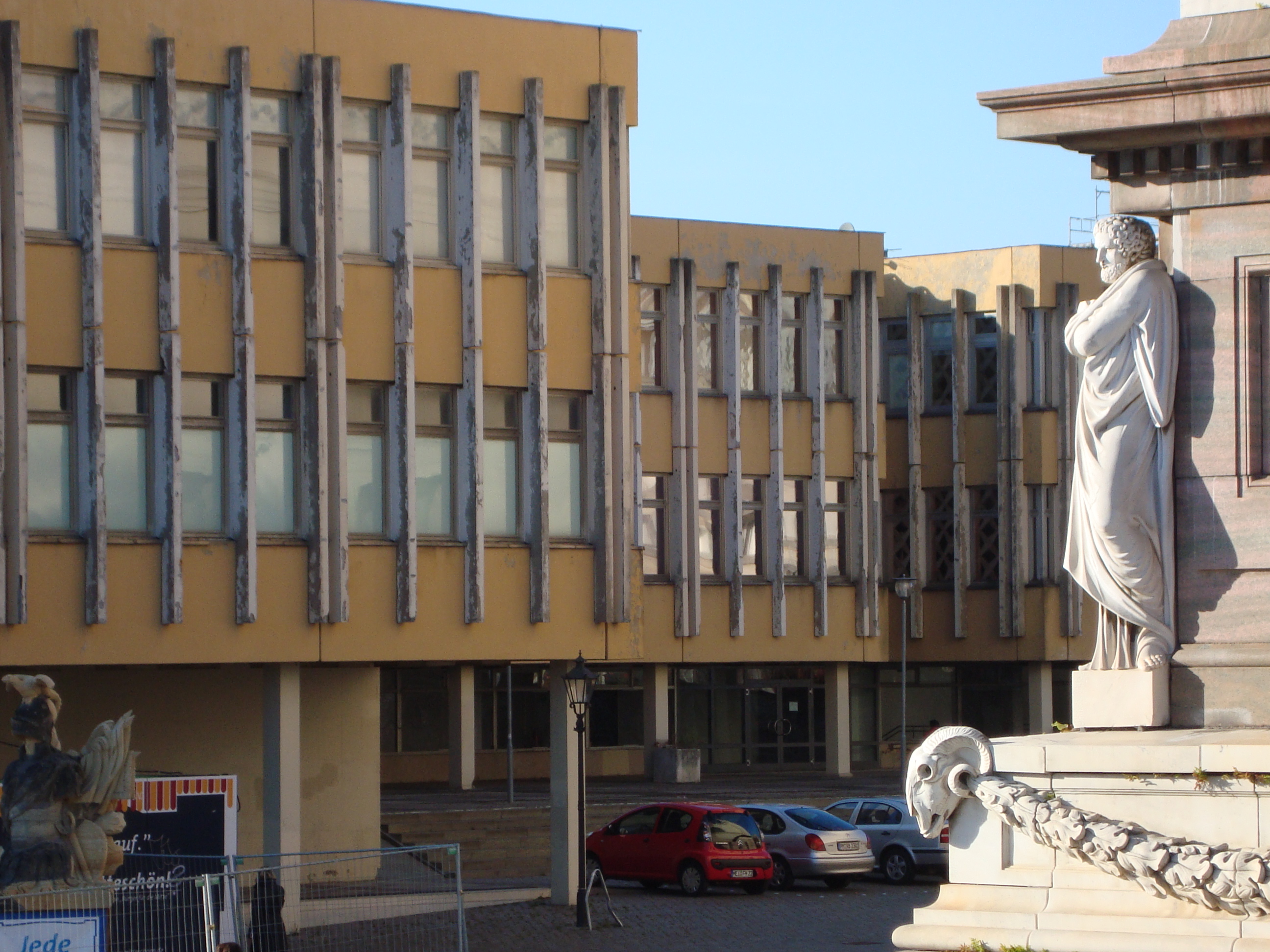
Archival Science (MA)
The Master of Arts (MA) in Archival Science is a part-time continuing education program designed to qualify you for higher archival service positions. It offers a unique blend of archival theory and practice, with a strong emphasis on scientific, information technology, and interdisciplinary skills. The program aims to equip you with competencies in archive management, project management, preservation, digital long-term archiving, and marketing, enabling you to systematically manage archival tasks under evolving professional and social demands. The curriculum is structured around a 'Potsdam model' that integrates information science with a high proportion of technical and scientific skills, complementing traditional archival training. You will engage in intensive learning through two three-day lecture blocks per semester, supported by an e-learning platform. The program is designed for professionals already working in archives, offering a pathway to advanced roles.
Arts in Community, M.A./M.F.A.
The Master's programme in Arts and Community (M.A./M.F.A.) at HKS Ottersberg offers a unique, interdisciplinary approach in Germany. You can pursue either a Master of Arts or a Master of Fine Arts degree. The program is designed for full-time study over one year or part-time over two years, with learning organised in intensive block weeks. The Master of Arts pathway focuses on art therapy, art education, or theatre pedagogy within social and clinical settings. The Master of Fine Arts pathway emphasizes artistic research and interventions in public and institutional spaces. Central to the program is a project-based approach where you will explore a socially relevant issue from both artistic and scientific perspectives. This project is independently planned, executed, and evaluated by you, fostering innovative individual and social skills. Seminars on scientific theory and research methods provide a strong academic foundation. You'll also develop skills in project management, supervision, and curation, with content tailored to specific target groups. Regular colloquiums and close mentoring ensure in-depth reflection and vibrant peer exchange.

Berufsbegleitender Studiengang ins Pfarramt
Biografisches und Kreatives Schreiben
Central and East European Studies
The Master's programme in Central and East European Studies at Europa-Universität Viadrina offers a unique interdisciplinary approach to understanding the diverse cultures, societies, history, and literature of Central and Eastern Europe. It combines perspectives from cultural studies, history, literature, social sciences, Jewish studies, and German studies to provide in-depth knowledge of this dynamic region. The programme aims to equip graduates with the skills to navigate and comprehend the complex interdependencies and future potentials of contemporary Europe.
Conservation and Restoration (MA)
The Master of Arts programme in Conservation and Restoration builds upon a bachelor's degree, offering advanced training for professionals in the field. It focuses on preparing graduates for roles in architectural monument preservation and the museum sector, equipping them with scientific methods and practical skills for complex conservation and restoration projects. The programme emphasizes interdisciplinary collaboration and independent scientific research.

European Culture and History of Ideas M.A.
The Master of Arts in European Culture and History of Ideas offers a specialized study in either Philosophy or History, or a combination of both disciplines. This program is designed for in-depth learning in small seminar groups, fostering close interaction with instructors. Over four semesters, you will earn 120 ECTS credits, developing comprehensive expertise in the methodological and thematic aspects of your chosen fields. The curriculum includes a compulsory interdisciplinary module, "Geisteswissenschaften interdisziplinär" (Humanities Interdisciplinary), alongside five elective modules from Philosophy and History. You will select two of these electives to tailor your studies to your specific interests. The program also incorporates a mandatory 8-week professional internship, providing practical experience in relevant cultural, administrative, or corporate settings. Opportunities for international experience are available through programs like Erasmus+ and Eucor – The European Campus, as well as international internships.
European University Viadrina Frankfurt (Oder) - Overview
The European University Viadrina Frankfurt (Oder) offers a unique educational experience focused on the interface between Eastern and Western Europe. With a strong emphasis on an all-European perspective and an international network, Viadrina aims to educate individuals who can address societal challenges through academically-based insights. The university fosters a close-knit community where students benefit from small class sizes and direct interaction with lecturers, preparing them to shape the society of tomorrow. Viadrina specializes in the fields of Digitalisation, Culture, Law, and Business, offering over 20 study programs and 25 international double degrees across its four faculties and schools. The university is committed to providing an individual study program that equips students with unique expertise, enabling them to navigate and contribute to a globalized world.
Germanistik Magister Artium (M.A.)
The Master of Arts program in Germanistik (German Studies) at the Karlsruhe Institute of Technology (KIT) offers a comprehensive exploration of medieval, early modern, modern, and contemporary literature within their cultural and media contexts. The program emphasizes a text- and culture-scientific approach, uniquely benefiting from KIT's strong science and technology environment, fostering productive synergies. Small seminar groups ensure close interaction with faculty. The standard period of study is four semesters (full-time), leading to the acquisition of 120 ECTS credits.
Kunstgeschichte (Art History) Master of Arts
The Master of Arts (M.A.) in Art History at Karlsruhe Institute of Technology (KIT) is a research-oriented and practice-based program. It aims to develop your critical thinking and practical skills within art studies, understood as visual studies. The program emphasizes analyzing artworks from traditional and new media, deciphering visual languages, and understanding artistic production within its theoretical and societal contexts. A unique aspect of the KIT program is its inclusion of architecture history, theory, and communication. The program is designed for a standard period of four semesters, during which you will earn 120 ECTS credits. You will build in-depth knowledge and engage in specialized methods of academic work. The goal is to enable you to achieve independent analytical-critical and practical skills in the entire field of art history and beyond, particularly in architecture. You can further specialize by choosing one of four profiles in the elective module area: Art and Society, Theory and History of Architecture, Transdisciplinary Studies, or Art and New Media. The curriculum includes theoretical and methodological foundations, research fields, applied science modules with practical exercises and excursions, and a final Master's thesis.
Language and Media Studies
This Master's program explores the complex relationship between language, media, and society. You will gain an understanding of how language and media influence public discourse, social dynamics, and power structures, examining contemporary issues like AI, social media, and digital communication. The program integrates theoretical, methodological, and empirical approaches from film and media studies with culturally oriented language research. Graduates will develop strong analytical skills to critically engage with the modern media landscape and shape interactions with digital, audiovisual, and linguistic phenomena.
Literary Studies: Aesthetics – Literature – Philosophy (M.A.)
This Master's program delves into the intricate relationships between rhetoric, aesthetics, media, and material practices, aiming to bridge aesthetics, literature, and philosophy through a cultural theory lens. It examines European literatures and philosophies within their historical and cross-cultural contexts, viewing literature not as a collection of national works but as a phenomenon with transcultural dimensions. The program encourages multi-perspective approaches to critical questions about the formation of European literary canons, their connection to other knowledge systems and media, and the dynamic interplay between philosophy and literature. It emphasizes a transnational, comparative, and intermedial approach, critically questioning concepts like identity and territory, and exploring the methodological significance of literature for cultural studies.
Master Biographical and Creative Writing
This Master's program focuses on the art and pedagogy of writing. You will explore your personal writing style and gain the educational skills needed to lead writing groups and support individuals. It is the first Master's program of its kind in the German-speaking world, established in 2006 and re-accredited multiple times. The five-semester, part-time program is designed for individuals who already hold a first academic degree. It prepares graduates to work with clients in various fields, including social work, preventative and curative health, professional coaching, supervision, cultural work, adult education, and psychotherapy. You will learn a wide range of creative methods for teaching writing, reflecting on your own biographical experiences and writing style, and developing didactic skills to guide both groups and individuals. The program also offers the opportunity to develop an independent research project for your Master's thesis.

Photography - Photographic Studies (Master of Arts)
This Master's program focuses on the intersection of photography, media, and society. It equips students with the skills to critically analyze and create visual content in an increasingly media-driven world. The program encourages independent project work, fostering both artistic expression and theoretical understanding of photographic practices and their societal impact. Graduates will be prepared for careers in various creative industries or for further academic pursuits.

Terminology and Language Technology (Master)
The Master of Arts program in Terminology and Language Technology (MATS) provides advanced, application-oriented study in the field of terminology and language technology systems. Building on scientific foundations, this four-semester program equips graduates with professional qualifications for conceptualizing and implementing these systems. It is offered by the Faculty of Information and Communication Sciences at the Südstadt campus. The program is designed for graduates of the Multilingual Communication bachelor's program at the ITMK of TH Köln, as well as graduates from other universities (including non-translator programs) who possess the necessary prerequisite knowledge and aptitude. The program is not admission-restricted and has a standard study period of 4 semesters, totaling 120 ECTS credits.
Theater and Digitality
The Master's program "Theater and Digitality" is an interdisciplinary, English-language program focused on the intersection of performing arts and digital technologies. It aims to equip students with skills to explore new forms of storytelling and theatrical experiences using innovative tools. The program embraces performers, narratives, stages, and technologies, encouraging critical thinking and creative application of digital advancements in art.
Theological Studies
Augustana Hochschule is the theological university of the Evangelical Lutheran Church in Bavaria. It offers a degree program in "Evangelical Theology" leading to the "Kirchliches Examen" (Church Examination). The institution also facilitates doctoral and post-doctoral research. Augustana Hochschule is recognized as equivalent to state theological faculties in Germany. The university emphasizes an integrated approach where teaching, learning, and campus life form a cohesive unit. Research and teaching are conducted under the favorable conditions of a campus university.
Frequently asked questions
How much does a Master's in Arts & Humanities cost in Germany?
+
All 19 listed programmes are tuition-free. Students pay only a semester administrative fee, typically €200–€400, which often includes a public transport pass.
Which German universities offer a Master's in Arts & Humanities?
+
Nine universities feature in this listing, including the University of Münster, Europa-Universität Viadrina Frankfurt (Oder), Karlsruhe Institute of Technology, Fachhochschule Dortmund, Augustana Hochschule Neuendettelsau, and Fachhochschule Potsdam.
Can international students apply to these German programmes?
+
Yes. Germany actively welcomes international Master's students. Most programmes require German language proficiency (B2 or C1); some programmes are available in English. Applications go through uni-assist or directly to the university.
What are the entry requirements for a humanities Master's in Germany?
+
A bachelor's degree (or equivalent) in a relevant humanities discipline is required. Some programmes require German language certification (TestDaF or DSH) and may assess the bachelor's GPA.
How do I apply for a Master's in Arts & Humanities in Germany?
+
Apply through uni-assist or directly via the university's portal. Key deadlines are typically January for summer semester and May–July for winter semester. Check language certification requirements early as test slots can be limited.