Political Science in Netherlands
The Netherlands offers 6 English-taught Political Science programmes across 4 institutions, including Universiteit Leiden, Erasmus University Rotterdam, and the University of Amsterdam. The Netherlands has a long tradition of international relations and governance scholarship, and these programmes draw students from across the globe to engage with European and global political processes.
These programmes are tuition-free for qualifying students — EU/EEA students pay the statutory Dutch tuition fee while non-EU international students should confirm rates directly with each institution. The country's internationally-oriented academic culture and English-language teaching make it an attractive destination for political science study in Europe.
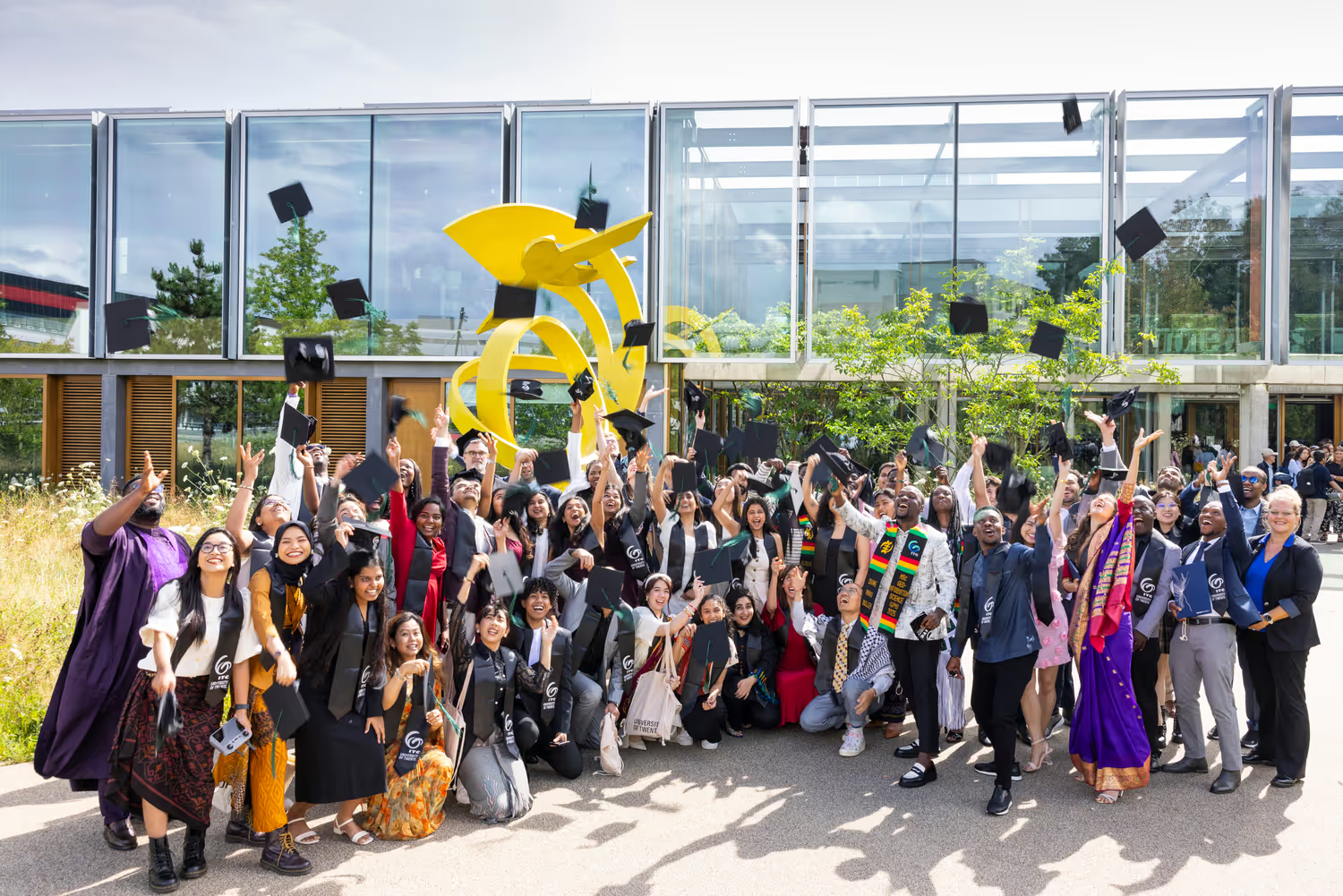
Climate Change Adaptation Policy Landscape, Institutional Arrangements, and Implementation in South Africa
This program focuses on the policy, institutional, and implementation aspects of climate change adaptation within South Africa. It examines the landscape of policies and governance structures at international, national, provincial, and local levels, aiming to build climate resilience and integrate adaptation strategies into development planning. The curriculum delves into understanding climate change impacts, risks, and vulnerabilities, and explores the mechanisms for mobilizing resources and fostering coordination across various sectors and government spheres. It also addresses the role of research, capacity building, and international cooperation in achieving South Africa's climate adaptation goals and meeting its global commitments. The program explores the evolution of climate change policy in South Africa, from early responses and international engagements to the development of comprehensive strategies like the National Climate Change Adaptation Strategy (NCCAS). It highlights the importance of a coordinated, multi-governance response, involving local government, sectoral policies, and national frameworks. The program also considers the legislative underpinnings, such as the Climate Change Bill, and their role in enabling a just transition to a low-carbon, climate-resilient economy and society. Ultimately, this program seeks to equip participants with the knowledge and understanding to contribute effectively to the implementation of climate change adaptation measures, enhancing resilience, and ensuring sustainable development in the face of a changing climate.

Gender and Sexuality (Political Science; Sociology)
The Master's in Gender and Sexuality at the University of Amsterdam is an interdisciplinary program that explores how gender and sexuality shape various aspects of society, from social structures and political representation to cultural initiatives and activism. This program is offered within either the Political Science or Sociology Master's degrees, allowing students to deepen their understanding of gender and sexuality through a specific disciplinary lens. You will engage with feminist and queer theory, critically analyze power dynamics, and develop sustainable perspectives on social issues in a global context. This program is ideal for students interested in understanding processes of inclusion and exclusion, scrutinizing truth claims, and examining everyday lives in a rapidly changing world. It provides a flexible and small-scale learning environment with an international focus, preparing you to apply your knowledge to policy, politics, cultural initiatives, and political activism. Upon completion, you will receive a Master of Science (MSc) degree in either Political Science or Sociology.
Governance of Migration and Diversity (Legal) LL.M.
This Master of Laws (LL.M.) program offers a comprehensive and multi-disciplinary approach to the legal aspects of migration and diversity. You will gain in-depth knowledge of the international and European legal frameworks governing migration, asylum, and non-discrimination. The program emphasizes understanding the law within its broader political, societal, and historical contexts, preparing you to address the complex legal challenges arising from global migration and increasing societal diversity. By studying at Leiden University, you will benefit from courses offered by leading experts across three universities (Leiden, Delft, Erasmus) and five academic disciplines. This interdisciplinary environment, coupled with a diverse international student body, provides a unique foundation for a professional network and a successful career in migration and diversity law. The program aims to equip you with the skills to analyze the impact of law on society and politics, and to contribute to effective migration regulation and inclusion.
Political Theory (Political Science)
The Master's programme in Political Theory at the University of Amsterdam offers a deep dive into core political concepts such as justice, legitimacy, and power. You will engage with complex theoretical and philosophical issues, learning to critically analyze current political contexts through the lens of social and political theory. This programme is designed for students passionate about applying abstract theory to pressing real-world political problems. Studying in a small, highly motivated group, you will benefit from close interaction with professors and peers. The program combines analytical rigor with policy relevance, preparing you to understand and contribute to contemporary political debates. The University of Amsterdam is recognized as one of Europe's top 10 institutions for studying politics, offering an international student body and a vibrant academic environment on its Roeterseiland campus.
Transforming Southern African Cities in a Changing Climate
This project, "Transforming southern African cities in a changing climate," is part of the Leading Integrated Research for Agenda 2030 in Africa (LIRA 2030) program. It aims to deepen the understanding of how cities in southern Africa can adapt to climate change in ways that promote equality, inclusivity, and justice. The research focuses on understanding the pathways to transformative adaptation, recognizing that climate change impacts are often exacerbated by rapid urbanization and existing social and economic inequalities. The project acknowledges that cities in this region face significant vulnerabilities to climate hazards like extreme heat, heavy rainfall, and drought, which are projected to intensify. By examining case studies in Durban and Harare, the project seeks to identify how to foster social and spatial inclusion, equitable economic opportunities, environmental sustainability, and climate resilience in urban environments. It emphasizes the need for research that is solutions-oriented and addresses global sustainability challenges.

Urban Governance of Inclusive Sustainable Cities
This Master's track focuses on how cities can effectively address pressing challenges such as inequality, housing shortages, and climate change, while ensuring equitable and inclusive outcomes for all residents. It offers a unique blend of urban policy, politics, and governance with advanced insights from urban planning and management, preparing you to be a leader in shaping future cities. The program is a joint effort between the Department of Public Administration & Sociology and the Institute of Housing and Urban Development Studies (IHS), combining academic expertise with practical application.
Frequently asked questions
How many Political Science programmes are available in the Netherlands?
+
6 English-taught Political Science programmes are listed across 4 universities in the Netherlands.
Which universities offer Political Science programmes in the Netherlands?
+
Universiteit Leiden, Erasmus University Rotterdam, and the University of Amsterdam are among the universities offering Political Science programmes.
How much does it cost to study Political Science in the Netherlands?
+
Some programmes are tuition-free for qualifying students; EU/EEA students pay the statutory Dutch tuition fee and non-EU students should check institution-specific fees.
Can international students apply for Political Science programmes in the Netherlands?
+
Yes, Dutch universities actively recruit international students and all listed programmes are taught in English.
What are the entry requirements for Political Science programmes in the Netherlands?
+
Requirements typically include a relevant bachelor's degree, strong analytical writing ability, and English proficiency (IELTS 6.5+ or equivalent).