Bachelor's in Data Science in United States
The United States lists 27 bachelor's Data Science programmes across 19 universities, and all listed programmes are currently tuition-free. Data science programmes combine statistics, computer science, and domain-specific applications, and the US remains the largest single market for data science graduates. Stony Brook University, the University of Massachusetts Amherst, and the University of Texas at Austin are among the institutions represented in this catalogue.
Florida Polytechnic University, Columbia College (SC), and California State University Channel Islands broaden the catalogue to include smaller and regionally focused public institutions alongside large research universities. The tuition-free status of listed programmes likely reflects their status as public in-state offerings; international students should verify whether they qualify for these fee structures, as out-of-state and international rates often differ significantly. Many US data science bachelor's degrees are STEM-designated, which can extend Optional Practical Training work authorisation for eligible graduates.

B.S. in Data Sciences

Bachelor of Science in Business Analytics

Bachelor of Science in Business Information and Analytics
The Bachelor of Science in Business Information and Analytics (BSB) at Purdue University Northwest is a STEM-designated program designed to equip students with the skills needed to strategize, plan, and optimize business operations. It focuses on leveraging data to capture new market opportunities and drive success in a technology-dependent business world. The curriculum balances general education, core business courses, and specialized analytics modules, culminating in a senior project that applies learned concepts to real-world challenges. This program offers a flexible path, allowing for double majors or minors with other business disciplines.
Bachelor of Science in Data Science
The Bachelor of Science in Data Science program equips you with the interdisciplinary skills needed to analyze large datasets and develop data-driven solutions for real-world problems across various industries like healthcare, transportation, and finance. You'll gain hands-on experience with powerful tools and techniques, preparing you for immediate roles in the field or further advanced study. The program emphasizes project-based learning, mentorship, and practical application, ensuring you are well-prepared for the evolving tech landscape.

Bachelor of Science in Data Science
Bachelor of Science in Data Science
California State University Channel Islands (CSUCI) is launching a new Bachelor of Science degree in Data Science starting in Fall 2025. This program prepares students for a rapidly growing field where professionals use mathematics, statistics, and computer science to transform raw data into actionable insights. Data scientists are crucial for organizations across all sectors, helping to inform decision-making processes and answer complex questions. The curriculum is designed with a focus on essential skills, allowing students to potentially pursue a double major in another area of interest due to a reduced unit requirement.
Bachelor of Science in Data Science
Bachelor's in Data Science
The Bachelor's in Data Science program integrates computer science, mathematics, and statistics with practical applications in business. This program equips you with the skills to collect, analyze, and interpret data, preparing you for a variety of roles in business, finance, energy, and telecommunications. You will gain expertise in areas such as deep learning, machine learning, data analysis, and automation. The curriculum emphasizes project-based learning and offers opportunities for real-world involvement through professional partnerships.

Behavioral Data Science Initiative
The Behavioral Data Science Initiative at the University of Texas at Austin aims to educate a new generation of graduates skilled in data science and grounded in psychological principles. This program focuses on developing the technical expertise and ethical understanding needed to address complex data challenges, particularly those involving human behavior, emotions, and intentions. By integrating human-centric approaches with data analytics, the initiative seeks to prepare students for careers in fields like market research, AI, and medical analysis, fostering a workforce capable of ethical progress and societal benefit.
Business Analytics
The Bachelor of Science in Business Analytics program equips students with the skills to navigate the complexities of the modern business world by integrating mathematical and statistical analysis with data science and management principles. This program is designed to prepare graduates for impactful roles in data-driven environments, fostering decision-making through the effective use of data. You will learn to apply analytical techniques to solve problems in areas such as big data management, marketing, finance, and innovation. Florida Poly's unique approach emphasizes a STEM-focused education within a small campus setting, ensuring personalized mentorship and practical experience. The curriculum is structured around project-based learning, culminating in a senior capstone design project, providing a comprehensive skill set for success in technology and data-intensive industries.

Business Analytics
The Bachelor of Science in Business Administration (BSBA) with a concentration in Business Analytics equips you with essential business knowledge and specialized analytical skills. This program integrates core business principles with data analysis techniques, preparing you for data-driven industries. You will learn to collect, interpret, and apply data to enhance business processes and support strategic decisions. This concentration offers two tracks: Operations Analytics, focusing on optimization, data mining, and statistical analysis for operational challenges, and Leadership, developing ethical leaders to drive organizational change. With ECPI's accelerated, year-round schedule, you can complete your BSBA in as little as 2.5 years.
Business Analytics

Business Analytics and Data Science, B.S.
The Bachelor of Science in Business Analytics and Data Science program at New Jersey City University equips students with the essential skills to manage, analyze, and interpret large datasets, enabling informed business decisions. This program is designed to meet the growing demand for professionals in data analytics and data science across various sectors like finance, marketing, retail, and accounting. It reflects NJCU's commitment to serving a diverse student body and adapting to contemporary challenges. The curriculum emphasizes practical application, using industry-standard software and real-world scenarios to solve common business data analysis problems. Students will also learn about the ethical considerations involved in handling potentially private data. Graduates will be well-prepared for roles as data scientists and may also be positioned to pursue the Certified Analytics Professional (CAP) certification.
Business Analytics and Data Science, B.S.
Business Analytics, B.S.
Business and Data Analytics Major
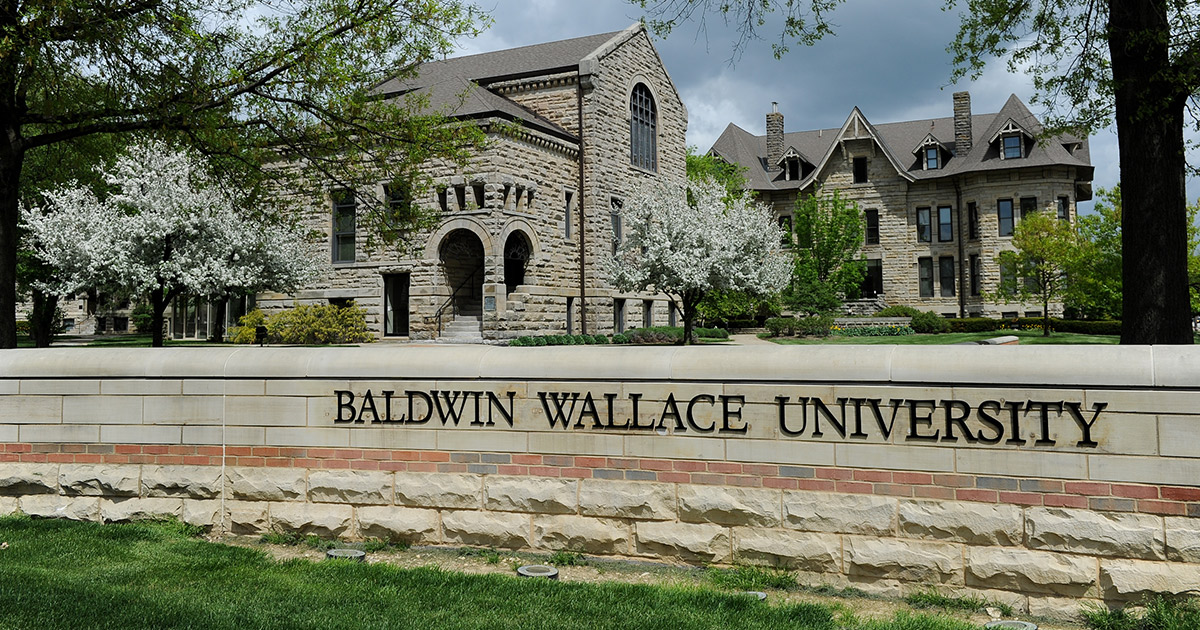
The Business and Data Analytics major at Baldwin Wallace University is a cutting-edge undergraduate program that combines core business principles with advanced analytical skills. Students will learn to leverage data for informed decision-making across various industries. This program is designed to develop critical thinking, problem-solving, communication, and quantitative proficiencies, preparing graduates for high-demand careers in fields that rely on data-driven insights. The curriculum covers statistical analysis, data mining, data visualization, and predictive modeling, alongside a deep understanding of business operations, strategy, and ethics.

Data Analytics
The Data Analytics program at Washington State University equips students with the skills to transform complex information into meaningful insights. This interdisciplinary program combines a liberal arts foundation with statistics, computing, and applied analysis. Students develop critical thinking, learn ethical data usage, and master clear communication. The curriculum focuses not only on data analysis but also on asking the right questions, identifying patterns, and presenting findings to diverse audiences. Through practical coursework, collaborative projects, a required internship, and a capstone project, graduates are prepared to apply data analytics across various industries and communities.

Data Science BS
The Data Science program at Stony Brook University equips students with the skills to analyze complex data, build predictive models, and communicate findings effectively. It combines fundamentals from mathematics, computer science, and statistics, using cutting-edge tools and algorithms to solve real-world problems. Graduates will be prepared to drive informed decision-making through insightful data interpretation.

Data Science, B.S.
The Data Science program at UC Davis offers a Bachelor of Science degree focused on computational, mathematical, and statistical reasoning for drawing conclusions from data. This interdisciplinary field can be applied to problems across various sectors, including agricultural, biological, engineering, medical, and social sciences. The program emphasizes the strong interdependence of theoretical and applied coursework in computer science, engineering, mathematics, and statistics, preparing students for quantitative data analysis in any field.
Data Science, B.S. at California State University Channel Islands
The Data Science major at California State University Channel Islands (CSUCI) offers a comprehensive education focused on the skills needed to collect, shape, store, manage, and analyze data for informed decision-making. This program integrates concepts from mathematics, statistics, and computer science, equipping students with the tools and techniques required for the entire data science project lifecycle. Students will learn essential programming languages like R, Python, and SQL, alongside foundational mathematical concepts from calculus and linear algebra, and statistical principles for interpreting uncertainty and identifying patterns. The curriculum also emphasizes data ethics, reproducibility, and effective communication of findings. Upon graduation, students will be well-prepared for careers in a wide array of industries, leveraging their strong analytical and quantitative skills to solve real-world problems and drive data-driven insights.

Institutional Effectiveness and Assessment (IEA)
The Department of Institutional Effectiveness & Assessment (IEA) at International Technological University (ITU) supports the university community and external stakeholders by providing crucial data and analytics. This includes information on students, faculty, staff, programs, finances, and institutional policies. The IEA department actively engages in research and analysis to gather data that promotes best practices throughout the ITU community. The data collected is officially reported to various state and federal agencies, as well as accreditation bodies and the public.

Molecular and Cellular Biology + Data Science, BS
The Molecular and Cellular Biology + Data Science program at the University of Illinois Urbana-Champaign offers a Bachelor of Science degree that integrates a strong foundation in biological sciences with essential data science skills. This program is designed to equip students with the knowledge to understand life at the molecular and cellular levels, along with the technical abilities to manage, analyze, and interpret the large datasets characteristic of modern biological research. Students will gain comprehensive preparation in areas such as molecular genetics, microbiology, biochemistry, physiology, and structural biology through coursework, laboratory classes, and research opportunities. The data science component focuses on providing the tools and training necessary for handling and interpreting biological data effectively. This dual focus prepares graduates for diverse career paths in healthcare, pharmaceuticals, government agencies, and research-intensive fields that rely heavily on data analysis.
Operations Research and Data Analytics
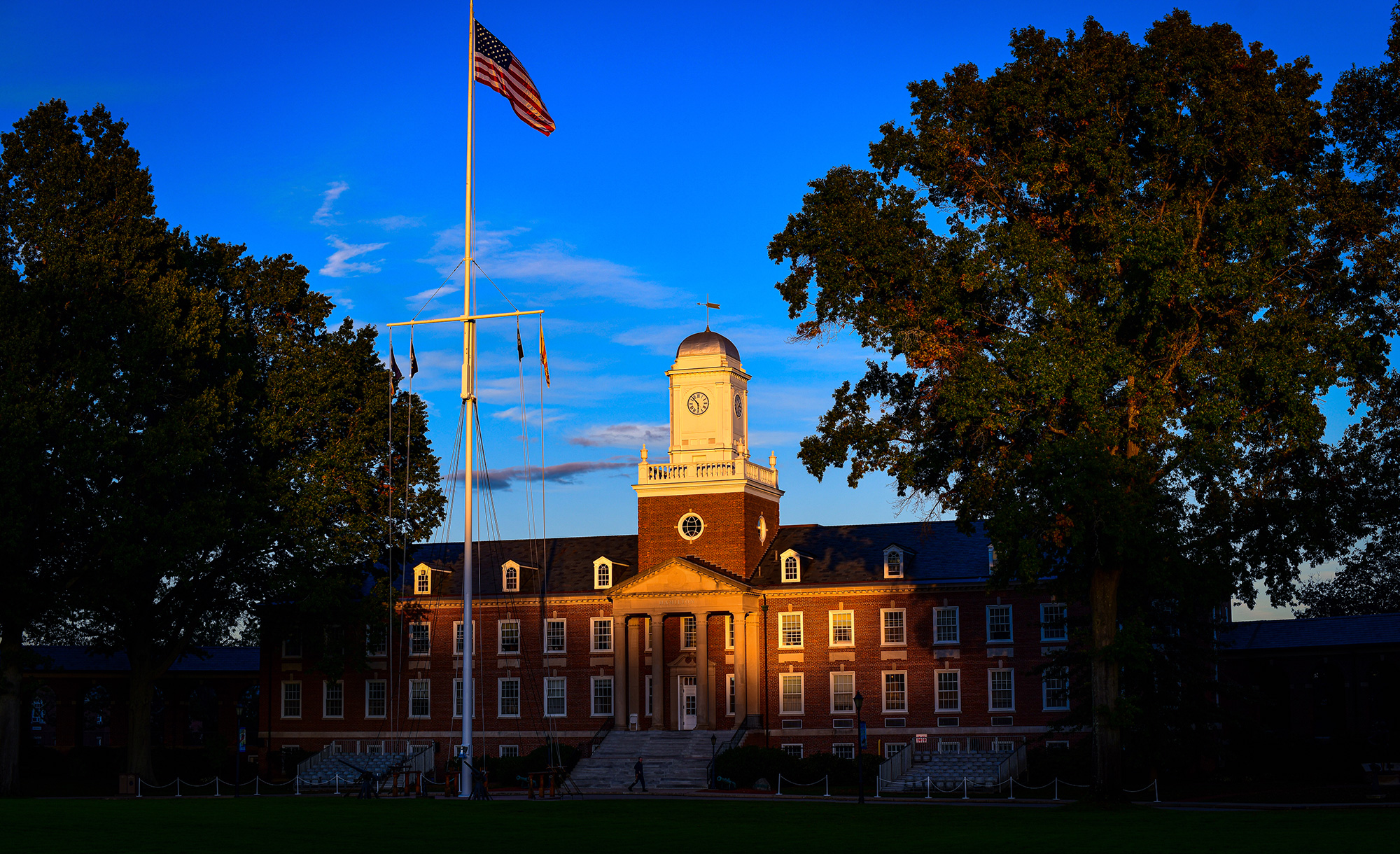
The Operations Research and Data Analytics (ORDA) major equips graduates with a strong foundation in mathematics, probability, statistics, and modeling. It focuses on using mathematical and statistical tools, combined with computer technology, to analyze complex problems and improve decision-making. Cadets learn to conceptualize and describe reality through mathematical models, analyze potential solutions, and effectively communicate their findings. The program emphasizes the practical application of mathematical concepts to real-world challenges, particularly within the context of the U.S. Coast Guard. Students gain experience in computer programming, data analysis, and utilize various statistical and optimization software. The curriculum allows for specialization in areas like Mathematics, Statistics, Computer Analysis, or Operations Research.
Frequently asked questions
How much does it cost to study Data Science in United States?
+
All listed programmes are currently tuition-free. Confirm any institutional or enrolment fees with the university directly.
Which universities offer Data Science in United States?
+
This catalogue includes 19 universities: Stony Brook University, Florida Polytechnic University, University of Massachusetts Amherst, University of Texas at Austin and 2 more. Browse individual listings to compare programmes and entry requirements.
Can international students apply to Data Science programmes in United States?
+
Yes — all 19 universities listed accept international applications. Requirements and deadlines differ by institution; contact each university directly for the most current information.
What are typical entry requirements for Data Science in United States?
+
Entry requirements vary by programme and level. Undergraduate applicants generally need secondary school qualifications equivalent to local standards and proof of English proficiency (for English-taught programmes). Postgraduate applicants typically need a relevant bachelor's degree, strong academic results, and may need standardised test scores or work experience.
How do I apply to Data Science programmes in United States?
+
Applications are submitted directly to each university. Browse the listings on this page, shortlist programmes that match your background, and follow the application instructions on each university's official website. Some institutions use centralised national application systems, so check whether your chosen university requires that route.