GERMANY · KAISERSLAUTERN
Fachhochschule Kaiserslautern
public · Founded 1971 · Languages: de
In short
Fachhochschule Kaiserslautern is a German university of applied sciences offering practice-oriented degrees with no general tuition fees. It is known for strong programs in Business and IT and provides access for students without a traditional Abitur, with multiple campuses in Rhineland-Palatinate.
Key facts
- Type
- Public
- Founded
- 1971
- Students
- 6,200
- International students
- 900
- Acceptance rate
- 60%
- Tuition (intl)
- €1–2k/yr
- Languages
- DE
- Location
- Kaiserslautern, Germany
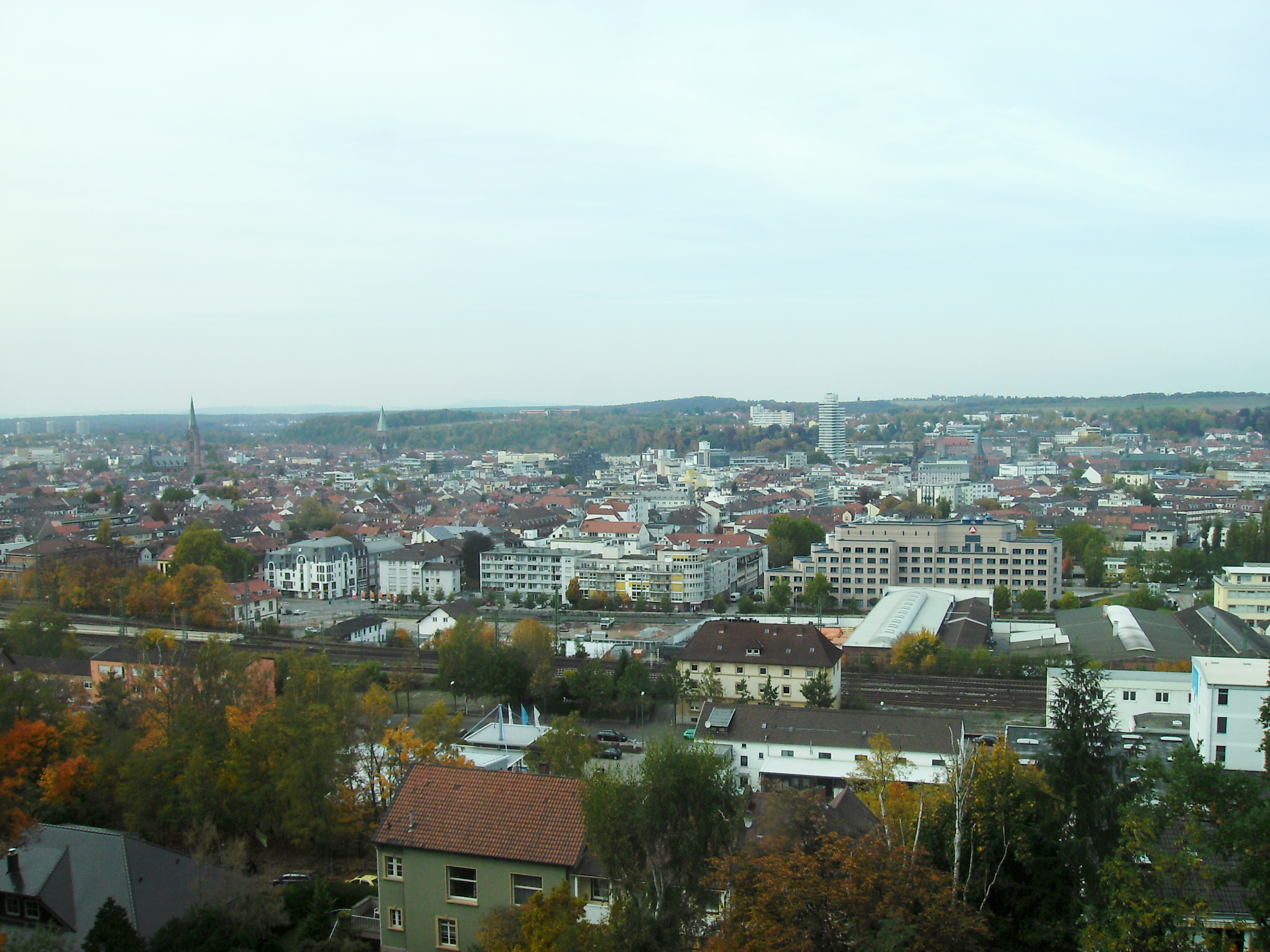
Fachhochschule Kaiserslautern, also known as Hochschule Kaiserslautern, is a university of applied sciences located in Germany. It offers a practice-oriented education across various fields, including business administration, IT, engineering, and design. The university is known for its strong regional presence and its focus on vocational pathways, including options for students without a traditional Abitur. The university emphasizes applied research and strong connections with industry, preparing students for successful careers. It has multiple campuses, including locations in Kaiserslautern, Zweibrücken and Pirmasens.
Why study here
- Excellent results in national rankings for specific programs like Business Administration and Business Informatics.
- Strong focus on practical application and industry relevance, preparing students for the job market.
- Opportunities for students without a traditional Abitur to pursue higher education, with the university being a leading choice in the region for this pathway.
- No general tuition fees and a low semester contribution, making study in Germany highly affordable.
- Several internationally oriented programmes, including options taught partly or fully in English.
Student life
Student life is spread across the Kaiserslautern, Zweibrücken and Pirmasens campuses, with active student bodies (AStA), sports groups and project teams. The compact campuses, affordable living and the surrounding Palatinate region offer a friendly study environment, while the included semester transport ticket makes it easy to explore Rhineland-Palatinate.
Fees
InternationalAs a public German university of applied sciences in Rhineland-Palatinate, the Hochschule charges no general tuition fees to international students.
HomeNo tuition fees for German and EU students; only the standard semester contribution applies.
LivingStudents should budget roughly EUR 800-1,000 per month for accommodation, food, insurance and personal expenses in Kaiserslautern or Zweibrücken.
Each enrolled student pays a modest semester contribution (Semesterbeitrag) of roughly EUR 250-300, which typically includes a regional transport ticket.
Admissions
Bachelor's entryA recognised higher education entrance qualification (Abitur or equivalent), or qualification as a professionally experienced applicant; German language proof (e.g. DSH/TestDaF) for German-taught programmes.
Master's entryA relevant recognised bachelor's degree; language proof appropriate to the language of instruction.
IELTS / TOEFL (for English-taught programmes)Typically IELTS 6.0 or TOEFL iBT 80; requirements vary by programme.
Rankings
CHE University Ranking 2026/27Excellent results for Business Administration and Business Informatics
University scholarships
DeutschlandstipendiumEUR 300 per month
Accreditation
State-recognised German public university of applied sciences (Hochschule fuer angewandte Wissenschaften); degree programmes are accredited under the German accreditation system.
For international students
GermanyStudent visa & funds
Non-EU/EEA students must obtain a national student visa (Type D) before arrival and then convert it to a student residence permit at the local Foreigners’ Authority (Ausländerbehörde). To prove financial self-sufficiency, most applicants open a blocked account (Sperrkonto) holding €11,904 — €992 per month for twelve months — an amount in effect since 2024 and unchanged for 2026. The blocked account caps monthly withdrawals at €992 so the funds last the year.
Working while you study
Non-EU international students may work up to 140 full days or 280 half-days per calendar year without approval from the Federal Employment Agency — an allowance raised from the previous 120/240-day limit under the 2024 skilled-immigration reform. A shift of more than four hours counts as a full day. Student-assistant roles at the university (Hiwi positions) generally fall outside this cap, and hours during semester breaks count toward the same annual allowance.
After you graduate
After completing a degree at a German university, non-EU graduates are entitled to an 18-month residence permit to seek work under the Residence Act, during which any employment is allowed. Separately, the Opportunity Card (Chancenkarte), introduced in June 2024, lets qualifying non-EU nationals enter to look for work for up to a year using a points system, with limited part-time work permitted. Recent German graduates qualify for the 18-month post-study permit directly, without the points test.
English tests
- IELTS6.0–6.5 for English-taught bachelor’s; 6.5–7.0 for most master’s
- TOEFL iBT80–90 for most programs; competitive universities (e.g. TUM) 88–95
- German (TestDaF/DSH)German-taught programs require TestDaF level 4 (TDN 4) or DSH-2
Main intakes
OctoberApril
Typical living cost
€1,050/month
Approximate all-in student budget; major cities run higher.
Programs
a selectionFachhochschule Kaiserslautern · Germany
Bachelor of Arts in General Business Administration
The Bachelor of Arts in General Business Administration (BWL) at Hochschule Kaiserslautern, Campus Zweibrücken, is designed for students interested in economic contexts and how companies operate. This full-time, on-campus program provides a strong foundation in business knowledge combined with practical application, preparing students for diverse careers in the business world. The curriculum covers all core areas of business administration, including accounting, controlling, taxes, marketing, sales, human resources, finance, and strategy. The program emphasizes real-world problem-solving through case studies, group work, and projects. Learning takes place in a personal atmosphere with small class sizes and individual support from professors with practical experience, fostering an environment where questions are encouraged and talents are nurtured. Graduates are well-prepared for various roles in marketing, controlling, HR, consulting, and management, or for further Master's studies.
Bachelor's
Level
Free
Tuition
21 mo
Duration
Fachhochschule Kaiserslautern · Germany
Wirtschaftsinformatik (Business Informatics) - Bachelor of Science
This Bachelor of Science program in Business Informatics (Wirtschaftsinformatik) equips you with expertise at the intersection of business administration and computer science. You will learn to bridge the gap between business needs and IT solutions, enabling you to drive innovation and digital transformation within organizations. The program focuses on practical application, preparing you for real-world challenges in the digital economy.
Bachelor's
Level
Free
Tuition
21 mo
Duration
Scholarships
for Germany full funding
The Software Lab (CISPA & University of Stuttgart)
CISPA & University of Stuttgart Software Lab PhD Scholarships
Open to applicants who hold or expect a Master's degree in Computer Science or a related field, with strong coding skills, an interest in large-scale software projects and the ability to write and present in English (no German required). Candidates should be passionate about high-quality academic research, willing to mentor undergraduate students, and have a long-term vision and persistence for deep research. Positions are filled on a rolling basis as suitable candidates are identified.
full
Funding
€60k
Max
Dec 31, 2026
Deadline
full fundingMunich School for Data Science (MUDS)
Munich School for Data Science (MUDS) PhD Scholarships
Open to international students of all nationalities with a strong academic background in computer science, data science, or a related field, or a degree in a domain science (such as life sciences, medicine, health, earth observation, or robotics) or interdisciplinary fields (such as geoinformatics or bioinformatics) with a strong data science emphasis. Applicants need a passion for applying state-of-the-art data science techniques to real-world scientific challenges. Selection is based on academic record, research potential, and motivation.
full
Funding
€55k
Max
May 6, 2027
Deadline
 full funding
Helmholtz-Zentrum Hereon, Institute of Hydrogen Technology
Helmholtz-Zentrum Hereon PhD Position in Materials Science and Mechanical Engineering
Open to applicants who hold a Master's degree in Materials Science, Mechanical Engineering or a related field, with strong knowledge of metallurgy, slip/twinning mechanisms and the mechanical behaviour of metals. Experience with magnesium (Mg) alloys, micro-compression or SEM techniques is an advantage. Candidates need strong problem-solving skills and the ability to work both independently and collaboratively in an interdisciplinary, international environment. The post is a salaried PhD position open to international applicants.
full
Funding
€55k
Max
May 11, 2027
Deadline
 full funding
Leibniz University Hannover
Leibniz University Hannover Soil Science PhD Scholarship
Open to applicants of all nationalities who hold a Master's degree in soil science, geosciences, environmental sciences or a closely related field, are proficient in written and spoken English, and are physically fit for extended fieldwork in tropical regions (Ghana and India). Experience with soil analysis, spectral tools and drone operations is an advantage but not mandatory.
full
Funding
€45k
Max
Aug 15, 2027
Deadline
full fundingForschungszentrum Julich
Forschungszentrum Julich Funded PhD Positions
Open to international applicants who hold a master's degree in Chemical, Mechanical or Electrical Engineering or a related field with strong academic performance, with experience in electrochemical modelling and simulation, knowledge of PEM and AEM electrolyser technology, skills in automation and data analysis (Python, LabVIEW), and proficiency in German and English.
full
Funding
€42k
Max
Dec 31, 2026
Deadline
full fundingAlexander von Humboldt Foundation
Alexander von Humboldt Research Fellowships (for Postdoctoral and Experienced Researchers)
For researchers from abroad — postdoctoral (normally within 4 years of a PhD) or experienced (within 12 years of a PhD) — to carry out a long-term research stay in Germany with a host of their choice. Selection is on academic record and research potential; applications can be submitted at any time.
full
Funding
€40k
Max
Nov 15, 2026
Deadline
Frequently asked questions
Are there tuition fees for international students at Fachhochschule Kaiserslautern?
+
As a public German university of applied sciences in Rhineland-Palatinate, Fachhochschule Kaiserslautern charges no general tuition fees to international students. All enrolled students pay a semester contribution of roughly EUR 250-300.
What are the living costs for students?
+
Students should budget approximately EUR 800-1,000 per month for accommodation, food, insurance, and personal expenses in Kaiserslautern or Zweibrücken. This estimate covers essential living costs.
What academic programs are highly regarded at Fachhochschule Kaiserslautern?
+
The university has received excellent results in national rankings for Business Administration and Business Informatics. These programs are known for their quality and relevance.
Does Fachhochschule Kaiserslautern offer opportunities for students without a traditional Abitur?
+
Yes, the university is a leading choice in the region for students without a traditional Abitur, offering pathways to higher education. They particularly welcome professionally qualified individuals.
What are the English language requirements for international students?
+
For English-taught programmes, students typically need an IELTS score of 6.0 or a TOEFL iBT score of 80, though specific requirements may vary by programme. You can find detailed information on the university's admissions pages.
Last updated