UNITED KINGDOM · LONDON
University College London
public · Founded 1826 · Languages: en
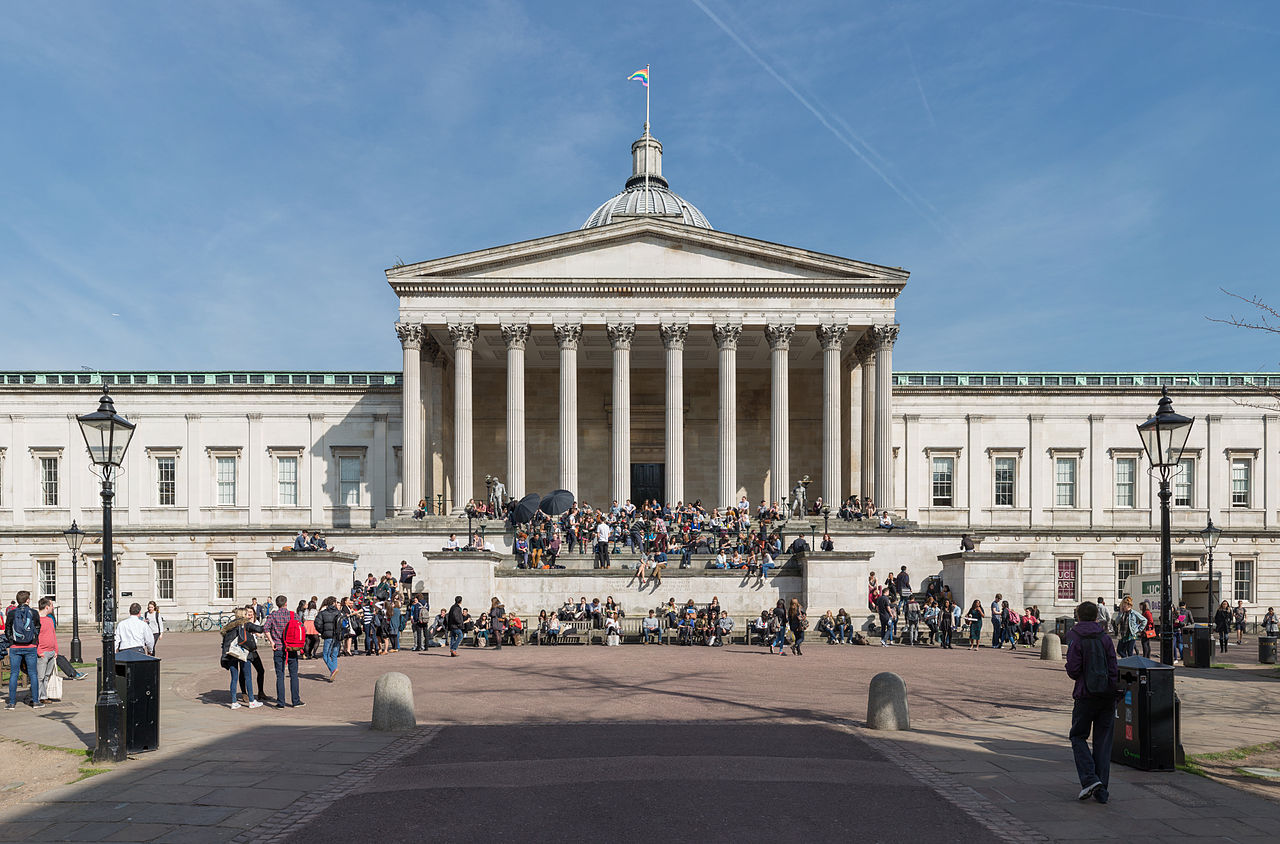
In short
University College London (UCL) is a world-renowned, top-10 research university in London, UK, offering a vast range of programmes to a diverse international student body. It provides a vibrant academic and social environment in one of the world's most dynamic cities.
Key facts
- Type
- Public
- Founded
- 1826
- Students
- 41,500
- International students
- 18,000
- Acceptance rate
- 6%
- Tuition (intl)
- €29–58k/yr
- Languages
- EN
- Location
- London, United Kingdom
University College London (UCL) is a world-renowned, top-tier research university located in the heart of London, United Kingdom. Founded in 1826 with a vision of open higher education for all, UCL has consistently championed a progressive and pioneering spirit, being the first university in London to admit students regardless of faith and later granting women access to higher education alongside men. Today, UCL boasts a thriving and diverse community with students from over 150 countries. UCL offers a vast array of academic programmes, including over 400 undergraduate courses and more than 700 graduate courses across 11 faculties. With 33 Nobel Prize laureates among its alumni and staff, UCL continues to lead in research and has built one of the strongest graduate employment networks in the world.
Why study here
- Access to a world-class education at a globally top-10-ranked university (QS #9 globally).
- Benefit from a diverse and international student body, with over 18,000 international students from 150+ countries.
- Study in the vibrant and opportunity-rich city of London, consistently ranked as a top student city worldwide.
- Join a university with a rich history of academic innovation and societal impact, including 33 Nobel laureates.
- Access comprehensive career support, including personalised coaching, employer events, and dedicated resources for global job searches.
- Engage with pioneering research across a wide range of disciplines, aimed at solving global challenges.
Student life
UCL offers a rich and supportive student experience. The university provides comprehensive support and wellbeing services, including expert staff for mental health, disability, and general wellbeing. Students have access to academic and personal development opportunities, including the ExtendED Learning program. UCL central London location provides unparalleled access to cultural attractions, social events, and diverse communities. The university boasts world-class museums, libraries, and art spaces. Various student societies and networks foster a collaborative and inclusive community, with specific initiatives for inclusive education and access to legal aid opportunities in the Faculty of Laws.
Fees
InternationalUndergraduate: GBP 24,000-38,000/year. Postgraduate Taught: GBP 25,000-50,000/year. Clinical programmes (MBBS) can exceed GBP 50,000/year. Equivalent to approx. EUR 28,000-57,000/year.
HomeUndergraduate: GBP 9,535/year (2025-2026 Home rate). Postgraduate Taught: GBP 14,000-38,000/year depending on programme. UK/EU-settled students pay the Home rate.
LivingLondon living costs are among the highest in Europe: approx. GBP 1,500-2,000/month (EUR 1,750-2,350) covering accommodation, food, transport, and personal expenses. UCL provides cost of living guidance and financial support for eligible students.
Every student is charged a fee for their studies at UCL. Fee schedules detail tuition fees for each programme for full-time and/or part-time study. Students must arrange for payment by published deadlines to continue their studies.
Admissions
Undergraduate ApplicationsInternational students apply via UCAS, following the same process as UK/EU students.
Graduate Taught ApplicationsA step-by-step guide to applying for graduate taught degrees, including information on application fees, is available online.
Graduate Research ApplicationsProspective research students are advised to contact their chosen department before applying.
Preparatory and Foundation CoursesUCL offers English Language courses and preparatory courses for undergraduate degrees for overseas students through CLIE.
UCL Pre-sessional English Courses (Level 1)Overall 65% and minimum 60% in each component
UCL Pre-sessional English Courses (Level 2)Overall 70% and minimum 65% in each component
UCL Pre-sessional English Courses (Level 3)Overall 70% and minimum 70% in each component
UCL Pre-sessional English Courses (Level 4)Overall 75% and minimum 70% in each component
IELTS AcademicTypically 6.5-7.0 depending on programme
TOEFL iBTTypically 92-100 depending on programme
Rankings
QS World University Rankings 20269
Best Global Universities 2025-20267
QS Sustainability Rankings 20261 in UK, 3 globally
Times Higher Education World Rankings 2025Top 22
Shanghai ARWU 2024Top 17
University scholarships
UCL Master's BursaryGBP 10,000 — for UK/Ireland domicile students with household income of GBP 42,875 or less
UCL Global Undergraduate ScholarshipCovers living costs and/or tuition fees — for international students from low-income backgrounds
UCL Global Master's ScholarshipCovers living costs and/or tuition fees — for international taught Master students from lower-income backgrounds
UCL Research Excellence Scholarship (UCL-RES)Full tuition fees + maintenance stipend + research costs — for doctoral students
Chevening ScholarshipFully-funded Master — for outstanding emerging leaders worldwide
Commonwealth ScholarshipCovers tuition, airfare, and living costs — for students from Commonwealth countries
Accreditation
UCL governance structure and charter ensure compliance with the requirements of good governance in higher education, in a responsible and transparent way. UCL is a member institution of the federal University of London and is regulated by the Office for Students (OfS). Professional programmes hold accreditation from relevant bodies (BPS, GMC, GDC, RIBA, Bar Council, etc.).
For international students
United KingdomStudent visa & funds
International students apply for the UK Student visa, which replaced the former Tier 4 (General) route. You need an unconditional offer from a licensed student sponsor and must show maintenance funds held for at least 28 consecutive days. As of November 2025 the requirement is £1,529 per month (for up to nine months) for courses in London and £1,171 per month for courses elsewhere, on top of tuition. Students who have already held a UK visa for 12 months, and nationals of certain low-risk countries, are exempt from evidencing the funds.
Working while you study
On a degree-level course at a licensed higher-education provider, you may work up to 20 hours per week during term time and full-time during official vacation periods; sub-degree courses are capped at 10 hours per week. There is no distinction between on-campus and off-campus work, but self-employment and working as a professional sportsperson or coach are not permitted. Once you have completed all course requirements you may work full-time until your visa expires.
After you graduate
Graduates of an eligible UK degree can apply for the Graduate visa (the Graduate Route) without needing an employer sponsor. As of 2026, bachelor’s and master’s graduates receive two years of open work permission and PhD graduates receive three years. Under the 2025 immigration reforms, applications made on or after 1 January 2027 will grant 18 months instead of two years for non-doctoral qualifications, while PhD holders keep three years.
English tests
- IELTSUG 6.0–6.5; PG 6.5–7.0; competitive/Russell Group courses up to 7.0–7.5
- TOEFL iBTUG 80–90; PG 90–100; top research universities 100+
- PTE AcademicUG 51–65; PG 59–75
Main intakes
SeptemberJanuary
Typical living cost
€1,400/month
Approximate all-in student budget; major cities run higher.
Programs
a selectionUniversity College London · United Kingdom
Ancient History MA
This intercollegiate Master's programme offers a deep dive into the ancient world, combining the expertise of UCL, King's College London, and Royal Holloway. You will develop specialized skills in areas such as archaeology, epigraphy, numismatics, and papyrology, alongside advanced training in textual criticism. The curriculum is designed to equip you with a critical understanding of the field and the tools necessary for further research. It also prepares you for careers in fields like the civil service, museums, heritage, and education. The programme is suitable for students with a relevant undergraduate degree looking to deepen their knowledge or for those aiming for PhD research.
Master's
Level
€41k
Tuition
12 mo
Duration
University College London · United Kingdom
Architecture MArch
The Architecture MArch at UCL's Bartlett School of Architecture is a professionally accredited Part 2 course designed to equip students with advanced design, technical, and theoretical skills necessary for professional registration as an architect in the UK. The program emphasizes a boundary-pushing approach, encouraging students to challenge conventional definitions of architecture and explore innovative socio-political, ecological, and material systems. More than half of the course is delivered through Design Units, providing intensive studio-based learning under the guidance of dedicated tutors. Students will engage with architecture as a discipline, practice, culture, and career, developing core skills in design, technology, history, theory, and professional studies. This course is ideal for aspiring architects seeking to enhance their skills and explore the multifaceted nature of architecture. Graduates are prepared for careers in leading architectural practices, urban design, furniture design, filmmaking, and more. The Bartlett School of Architecture is globally recognised, ranked #1 in the world for Architecture and Built Environment studies by QS World University Rankings 2025.
Master's
Level
€41k
Tuition
24 mo
Duration
University College London · United Kingdom
Bulgarian and Dutch BA
This four-year Bachelor of Arts (BA) degree programme allows you to become fluent in Bulgarian and gain a deep understanding of its history, culture, and geopolitics. Simultaneously, you will develop proficiency in the Dutch language and explore the history, culture, and societal aspects of the Netherlands and Flanders. Taught jointly by the School of Slavonic and East European Studies (SSEES) and the School of European Languages, Culture and Society (SELCS), this interdisciplinary program offers ample opportunities for comparative and intercultural studies within the humanities. You will engage with a diverse range of modules covering literature, linguistic traditions, history, sociology, philosophy, art, film, and other cultural elements associated with the languages you study. The curriculum is structured to build your language skills and cultural knowledge progressively over the first two years, followed by a mandatory year abroad in your third year, split between countries where Bulgarian and Dutch are spoken. The final year at UCL allows for advanced study and the potential to undertake a dissertation. This course is ideal for motivated students with a passion for languages and cultures, who are eager to explore beyond the standard curriculum and delve into the histories and traditions of Central and Eastern Europe. No prior knowledge of Bulgarian or Dutch is necessary, as the program is designed to accommodate beginners, but a strong enthusiasm for language learning and cross-cultural engagement is essential.
Bachelor's
Level
€37k
Tuition
48 mo
Duration
University College London · United Kingdom
Bulgarian and German BA
This Bachelor of Arts degree allows you to become fluent in Bulgarian and gain a deep understanding of the history, culture, and geopolitics of a significant region. Simultaneously, you will develop excellent linguistic competence in German while exploring Germanic literature, history, and film. The program is a collaboration between UCL's School of Slavonic and East European Studies (SSEES) and the School of European Languages, Culture and Society (SELCS), offering extensive opportunities for in-depth, comparative, and intercultural approaches to the humanities. You can choose from a wide array of modules covering literature, linguistic traditions, history, sociology, philosophy, art, film, and other cultural aspects related to the languages you are studying. The curriculum is structured to provide a comprehensive language education, regardless of your starting level, alongside a rich exploration of the associated cultures.
Bachelor's
Level
€37k
Tuition
48 mo
Duration
University College London · United Kingdom
Bulgarian and Ukrainian BA
This Bachelor of Arts degree provides an opportunity to become fluent in Bulgarian and gain in-depth knowledge of the history, culture, and geopolitics of the region. Concurrently, you will develop excellent Ukrainian language skills and explore the literature, history, and culture of Ukraine. Taught at UCL's School of Slavonic and East European Studies (SSEES), one of the UK's largest departments for the study of Central, Eastern and South-Eastern Europe, the Baltics, the Caucasus, and Central Asia, this programme offers a comprehensive linguistic and cultural education. You will spend your third year abroad, split between two countries where your chosen languages are spoken, gaining immersive experience. The curriculum balances language acquisition with cultural studies, covering literature, film, linguistics, and history from an interdisciplinary perspective. No prior knowledge of Bulgarian or Ukrainian is required; enthusiasm for language learning and cross-cultural engagement is key.
Bachelor's
Level
€37k
Tuition
48 mo
Duration
University College London · United Kingdom
Business and Sustainability MSc
This Master of Science (MSc) program focuses on how businesses can navigate and leverage sustainability challenges for growth. It combines research-led, applied teaching in sustainability science, policy, and business practices. Graduates will be equipped to make informed decisions and take responsible actions for environmental, social, and economic well-being. The course is designed for recent graduates, as well as early and mid-career professionals, who aspire to lead sustainability initiatives in business, government, or civil society. It emphasizes an interdisciplinary approach, integrating knowledge from environmental science, energy, resources, and management to address complex global challenges.
Master's
Level
€45k
Tuition
12 mo
Duration
Scholarships
for United Kingdom full funding
Wellcome Trust
Wellcome Discovery Awards
Open to established researchers and research teams with a proven record of research delivery who are based at, or will be hosted by, an eligible not-for-profit organisation in the UK, the Republic of Ireland, or an eligible low- or middle-income country (excluding India and mainland China). Projects must propose bold, transformative research aligned with Wellcome's mission to improve health. The award does not cover the lead applicant's own salary, and a researcher may lead only one active Discovery Award submission.
full
Funding
€4000k
Max
Nov 25, 2026
Deadline
full fundingThe Alan Turing Institute
Open Source AI Fellowship (UK)
Open to AI professionals and researchers who are legally eligible to work in the UK without sponsorship, have resided in the UK for at least 5 years (a security check is required), are employed by a UK-based organisation willing to support a 12-month secondment, and hold a PhD or equivalent professional experience in AI or a related discipline.
full
Funding
€98k
Max
Aug 18, 2027
Deadline
 full funding
Skoll Foundation / University of Oxford Saïd Business School
Skoll Scholarship for the Oxford MBA
Open to applicants of any nationality admitted to the full-time one-year Oxford MBA at Saïd Business School who can demonstrate a track record of entrepreneurial action creating positive social or environmental impact, and for whom the cost of the programme is a significant financial burden.
full
Funding
€95k
Max
Jan 8, 2027
Deadline
full fundingRhodes Trust
Rhodes Scholarship
For talented young people from around the world to undertake postgraduate study at the University of Oxford. Around 100 scholars are selected each year from more than 60 countries and constituencies; applications are made in your home country or constituency, each with its own age and eligibility rules.
full
Funding
€70k
Max
15d left
Deadline
 full funding
Gates Cambridge Trust
Gates Cambridge Scholarships
Open to citizens of any country outside the United Kingdom applying for a full-time postgraduate degree (PhD, MSc/MLitt, or one-year master's) at the University of Cambridge. Selection weighs academic excellence, a strong fit with the chosen Cambridge course, a clear commitment to improving the lives of others, and leadership potential.
full
Funding
€70k
Max
Dec 3, 2026
Deadline
full fundingAfrica Initiative for Governance (AIG), tenable at the Blavatnik School of Government, University of Oxford
Africa Initiative for Governance (AIG) Scholarships at the University of Oxford
Open to West African nationals (for example from Nigeria and Ghana) seeking to study the Master of Public Policy at the Blavatnik School of Government, University of Oxford. Applicants are generally aged between 25 and 45, hold a strong undergraduate degree (typically second-class upper or above), demonstrate leadership potential and a commitment to Africa's public sector, and intend to apply their learning in their home country's public service.
full
Funding
€65k
Max
Jan 9, 2027
Deadline
Frequently asked questions
What are the general tuition fees for international students at UCL?
+
Undergraduate tuition fees for international students range from approximately GBP 24,000 to 38,000 per year. For Postgraduate Taught programmes, fees are generally between GBP 25,000 and 50,000 per year. Clinical programmes can exceed GBP 50,000 annually.
What is the estimated cost of living for students in London?
+
Living costs in London are high, estimated at around GBP 1,500 to 2,000 per month. This estimate covers accommodation, food, transportation, and personal expenses. UCL offers guidance on living costs and financial support options.
Does UCL offer scholarships for international students?
+
Yes, UCL offers several scholarships for international students, including the UCL Global Undergraduate Scholarship and UCL Global Master's Scholarship, which can cover living costs and/or tuition fees for students from lower-income backgrounds. Other scholarships like Chevening and Commonwealth are also available.
How does UCL ensure English language proficiency for international applicants?
+
International students can demonstrate English language proficiency through accepted English language qualifications, such as IELTS Academic or TOEFL iBT, with scores typically ranging from 6.5-7.0 for IELTS and 92-100 for TOEFL iBT, depending on the programme. Alternatively, successful completion of UCL Pre-sessional English Courses is accepted.
What are UCL's rankings and reputation?
+
UCL is a globally recognized university, consistently ranked among the top institutions worldwide. It is currently ranked 9th in the QS World University Rankings 2026 and 7th in Best Global Universities 2025-2026.
Last updated