In short
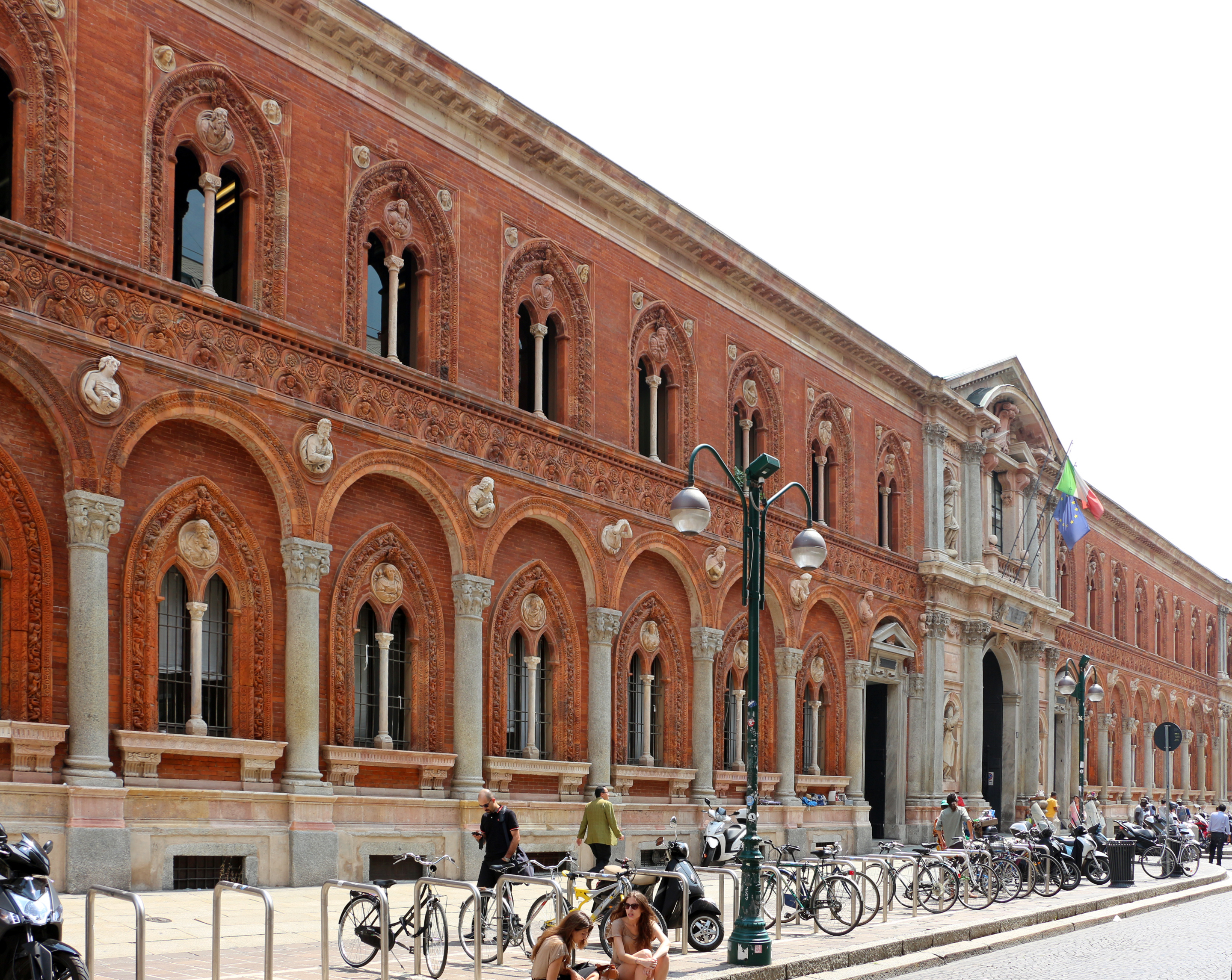
The University of Milan (La Statale) is a large public research university with over 65,000 students, ranked in the global top 280. It offers numerous English-taught Master's programs and is situated in the vibrant city of Milan, providing excellent career and cultural opportunities.
Key facts
- Type
- Public
- Founded
- 1923
- Students
- 65,234
- International students
- 5,500
- Acceptance rate
- 55%
- Tuition (intl)
- €1–5k/yr
- Languages
- EN, IT
- Location
- Italy
The University of Milan (UniMi), known as La Statale, is a major public research university founded in 1923 in central Milan, Italy. With over 65,000 students across 9 faculties and more than 160 degree programmes — from humanities and law to medicine, sciences, and agriculture — it is Italy's largest university by enrolment. Ranked among the global top 280 universities (QS), La Statale is internationally recognised for research excellence and offers dozens of Master's programmes taught entirely in English. Its Milan location provides students with access to one of Europe's most vibrant cities, a hub of fashion, finance, design, and culture.
Why study here
- Ranked in the global QS top 280 and among Italy's top 4 universities — strong recognition on the world stage.
- Dozens of Master's programmes taught entirely in English, ideal for non-Italian speakers.
- Located in central Milan, Europe's fashion and finance capital, with unmatched internship and career opportunities.
- Very affordable EU tuition starting at €146/year, with scholarships and fee waivers for qualifying students.
- Strong Erasmus+ network with 350+ European partner institutions for exchange programmes.
- Rich student life in a global city with world-class museums, opera, gastronomy, and nightlife.
Student life
Milan is one of Europe's most exciting student cities, and La Statale sits at its centre. Students have access to the Brera art district, La Scala opera house, the Duomo, and a thriving start-up and creative industry scene. On campus, the Collegio di Milano offers student housing, while MENSA university restaurants provide affordable meals. The Erasmus Student Network (ESN) is active on campus, organising events for international students. The university's central location means excellent public transport links to all areas of the city and beyond.
Fees
InternationalInternational students from outside the EU pay a first installment of €156 plus a variable second installment based on income bracket in their country. Total annual fees for some programmes can reach €4,500. Many non-EU students qualify for partial exemptions.
HomeEU/Italian students: first installment €146 (€130 regional tax + €16 stamp duty). Second installment is income-based (ISEE University); no-tax area applies for ISEE up to €30,000 for on-track students.
LivingLiving in Milan costs approximately €1,000–€1,500/month including student housing (€400–€700/month), food, transport, and personal expenses.
Tuition is split into two installments. Students with DSU grants are not reimbursed the first installment. Students with disability >66% pay only the €16 revenue stamp. Part-time enrolment option available.
Admissions
Bachelor's (Laurea Triennale)Secondary school diploma (Maturita or equivalent); some programmes have admission tests or subject requirements.
Master's (Laurea Magistrale)Relevant Bachelor's degree; many programmes require an interview or portfolio. English-language programmes require proof of English proficiency.
PhD (Dottorato di Ricerca)Master's degree plus research proposal; competitive selection with typically 2-4 places per programme.
IELTS AcademicB2 / 6.0 minimum for English-taught programmes (programme-specific)
TOEFL iBT80 minimum (programme-specific)
CEFR B1/B2Assessed via SLAM university language centre entry test
Rankings
QS World University Rankings 2024276
Times Higher Education 2024401
National Ranking Italy4
University scholarships
European Futures Scholarships€10,000 — awarded to 30 EU Master's students annually
MAECI Government ScholarshipsVaries; administered by Italian Ministry of Foreign Affairs for non-EU students
MUR-CRUI Protection ScholarshipsAnnual scholarship for students with international protection status in Italy
IUPALS Palestinian Student ScholarshipsFull scholarship: accommodation, meals, tuition + €4,000 stipend
Accreditation
The University of Milan is a public university operating under the Italian Ministry of University and Research (MUR). It is a member of the European University Association (EUA) and LERU (League of European Research Universities).
Programs
a selectionUniversity of Milan · Italy
Administration and Public Policy (APP)
The Master's degree program in Administration and Public Policy (APP) at the University of Milan offers advanced, interdisciplinary training in public management and policy analysis. It aims to equip students with a deep understanding of how local, national, and supranational public organizations function, and the skills to manage resources effectively within complex regulatory environments. The program focuses on developing expertise in policy design, implementation, and evaluation, alongside a strong grasp of international comparison standards. Graduates will be prepared to manage complex projects and initiatives, whether within public administrations or in organizations that support public policy development and implementation.
Master's
Level
—
Tuition
24 mo
Duration
University of Milan · Italy
Artificial Intelligence
The Bachelor of Science in Artificial Intelligence is a collaborative, international program offered by the Universities of Milano-Bicocca, Milano Statale, and Pavia. Taught entirely in English, this program will equip you with a deep understanding of the theoretical foundations, techniques, and applications of Artificial Intelligence (AI). You will gain interdisciplinary knowledge in computer science, mathematics, physics, statistics, and cognitive sciences, with a special focus on AI's core principles. The curriculum also includes ethical and legal training to ensure the socially responsible use of AI technologies. You will have the opportunity to specialize in areas that align with your personal interests, such as communication, automation, robotics, cognitive sciences, or physics technologies, preparing you for a future in a rapidly evolving field.
Bachelor's
Level
—
Tuition
36 mo
Duration
University of Milan · Italy
Artificial Intelligence for Science and Technology
This master's degree program, jointly offered by the University of Milan-Bicocca, the University of Milan, and the University of Pavia, focuses on Artificial Intelligence theories, techniques, and applications across various scientific and technological sectors. Taught entirely in English, the program aims to equip graduates with the skills to contribute to technological innovation, manage complex systems, and excel in international professional environments. The curriculum is designed for a two-year duration, requiring the acquisition of 120 ECTS credits. Upon completion, graduates receive a Master's Degree jointly awarded by the three participating universities, granting access to second-level master's programs and PhDs.
Master's
Level
—
Tuition
24 mo
Duration
University of Milan · Italy
Bioinformatics for Computational Genomics
The Bioinformatics for Computational Genomics (BCG) Master's Degree is a collaborative program offered by the University of Milan and Politecnico di Milano, taught entirely in English. This interdisciplinary program aims to train a new generation of genomic data scientists skilled in bioinformatics and the analysis of complex biomolecular data. You will gain a deep understanding of the molecular logic of living organisms and learn the statistical and computational approaches necessary to investigate genomes and their functions. The curriculum covers genome organization, gene expression regulation, experimental methods in genomics, bioinformatics analysis tools, algorithmic approaches, database technologies, and systems biology modeling. A compulsory internship in a research laboratory is a key component, leading to a final dissertation. Graduates will be prepared for roles in basic and applied research, capable of designing and executing large-scale genomic analyses, interpreting results, developing analytical tools, and potentially leading research projects.
Master's
Level
—
Tuition
24 mo
Duration
University of Milan · Italy
Biotechnology for the Bioeconomy
The Biotechnology for the Bioeconomy (BforB) Master's program focuses on equipping students with advanced knowledge of microbial and plant systems for applications in the bioeconomy. The bioeconomy is crucial for addressing global environmental challenges by reducing reliance on natural resources, promoting sustainable production of renewable resources, and transforming manufacturing. Biotechnology plays a key role in this by offering solutions for efficient biomass production, bioenergy generation from waste, environmental protection (bioremediation), green chemistry, and sustainable agri-food practices. This program provides students with a solid theoretical and practical foundation in molecular and cellular biology, with a special emphasis on multidisciplinary approaches. Graduates will gain expertise in analyzing biological macromolecules, understanding gene expression, and developing biotechnological processes for converting renewable raw materials, implementing bioremediation strategies, and advancing sustainable food and agricultural systems within a circular economy framework. The program is taught entirely in English, fostering an international learning environment and preparing graduates for opportunities in the global bioeconomy sector. The curriculum is designed to provide competencies applicable both within Europe and internationally, addressing the evolving needs of industries focused on sustainability and green technologies.
Master's
Level
—
Tuition
24 mo
Duration
University of Milan · Italy
Causal Inference and Policy Evaluation
This course introduces students to the fundamental concepts of causality and counterfactual impact evaluation. It covers statistical methods for assessing causality, including instrumental variables, difference-in-differences, regression discontinuity design, and randomized control trials. These methods are then applied to real-world examples in labor, education, and health economics to evaluate policies.
Master's
Level
—
Tuition
24 mo
Duration
Scholarships
for Italy full funding
Harvard University - Villa I Tatti, Center for Italian Renaissance Studies
Harvard University I Tatti Fellowships in Italy
Open to postdoctoral scholars and researchers who hold a PhD or equivalent terminal degree by the time of application. Research projects must align with the Italian Renaissance, art history, and cultural-exchange themes supported by Villa I Tatti. Open to international and domestic scholars from all countries; some fellowships target early-career or mid-career researchers depending on the programme.
full
Funding
€60k
Max
28d left
Deadline
 full funding
University of Urbino Carlo Bo
University of Urbino Carlo Bo PhD Scholarships
Open to international and domestic applicants from all countries holding (or about to hold) a qualifying master's-level degree for PhD admission. Selection is based on academic merit and the quality of the research project proposal; all academic fields offered in the doctoral call are welcome.
full
Funding
€24k
Max
Jun 10, 2027
Deadline
full fundingCarlo Cattaneo University (LIUC)
PhD Scholarships at Carlo Cattaneo University (LIUC)
Open to candidates of all nationalities who hold, or expect to hold by 31 October 2026, a Master's degree in economics, finance, engineering management, communication, or public administration (or an internationally equivalent qualification) with a minimum final grade of 95/110 or equivalent. Other backgrounds may be considered where academic and professional experience aligns with the programme's research themes.
full
Funding
€20k
Max
Jun 3, 2027
Deadline
full fundingSapienza University of Rome
Sapienza University of Rome PhD Scholarships
Open to international students from any country who hold (or will hold) a Master's degree or equivalent by the stated qualification date around 31 October 2026, and who demonstrate strong motivation and commitment to advanced research. Applications are made to the relevant doctoral programme within the new PhD cycle, with positions spread across the university's doctoral programmes.
full
Funding
€20k
Max
Jun 19, 2027
Deadline
full fundingUniversity of Modena and Reggio Emilia (UNIMORE)
UNIMORE PhD Scholarships
Open to applicants of all nationalities who hold a bachelor's or master's degree in a relevant field, can read and write in English, and are 40 years old or younger at the time of application.
full
Funding
€19k
Max
Jun 30, 2027
Deadline
full fundingPolitecnico di Milano
PhD Scholarships at Politecnico di Milano
Open to all international candidates (EU and non-EU) who hold, or will hold by enrolment, a Master's degree (or equivalent) recognised internationally. Applicants choose between Open Subject scholarships (research topic finalised after admission) and Thematic scholarships (pre-defined research themes selected before the deadline). All application documents must be submitted in English or Italian.
full
Funding
€19k
Max
May 29, 2027
Deadline
Frequently asked questions
What are the tuition fees for international students at the University of Milan?
+
International students from outside the EU pay a first installment of €156, with a variable second installment based on income. Some programs may reach €4,500 annually, but many non-EU students qualify for fee exemptions.
Does the University of Milan offer programs taught in English?
+
Yes, the University of Milan offers dozens of Master's programs taught entirely in English, making it an excellent choice for international students who are not fluent in Italian.
What are the general admission requirements for Master's programs?
+
For Master's programs, a relevant Bachelor's degree is required. Many programs may also require an interview or portfolio, and English-taught programs necessitate proof of English proficiency.
Can international students receive financial assistance or scholarships?
+
The University of Milan offers several scholarships, including the European Futures Scholarships for EU Master's students and MAECI Government Scholarships for non-EU students. Other specific scholarships are available for students with protection status or from Palestine.
What is the estimated monthly cost of living in Milan for students?
+
Living in Milan is estimated to cost around €1,000–€1,500 per month. This includes student housing, which ranges from €400–€700 per month, as well as food, transport, and personal expenses.
Last updated