
In short
The University of Tasmania (UTAS) is Australia's fourth-oldest university, recognized globally for its #1 ranking in Climate Action and strong research in marine and Antarctic science. It offers a unique island lifestyle with campuses across Tasmania and study centres in Melbourne and Sydney, providing a welcoming and affordable environment for international students.
Key facts
- Type
- Public
- Founded
- 1890
- Students
- 33,879
- International students
- 5,500
- Acceptance rate
- 65%
- Tuition (intl)
- €20–34k/yr
- Languages
- EN
- Location
- Hobart, Australia
The University of Tasmania is Australia's fourth-oldest university, founded in 1890, and the only institution on the island state of Tasmania. Globally recognised for world-leading research in marine science, Antarctic studies, and climate action — ranked #1 in the world for Climate Action by the Times Higher Education Impact Rankings for four consecutive years — UTAS offers a unique combination of academic rigour and extraordinary natural surroundings. With campuses in Hobart, Launceston, and Burnie, and study centres in Melbourne and Sydney, UTAS delivers diverse programmes in an accessible and welcoming environment.
Why study here
- Access world-leading research in marine and Antarctic science and climate action, with #1 global ranking in Climate Action (THE 2022–2025).
- Benefit from a collaborative and diverse research and learning environment with quality supervision.
- Experience a unique island lifestyle, combining urban amenities with close proximity to natural beauty and World Heritage areas.
- Enjoy a lower cost of living compared to mainland Australian cities, with affordable accommodation options.
- Become part of a welcoming community at the only university on the island of Tasmania.
Student life
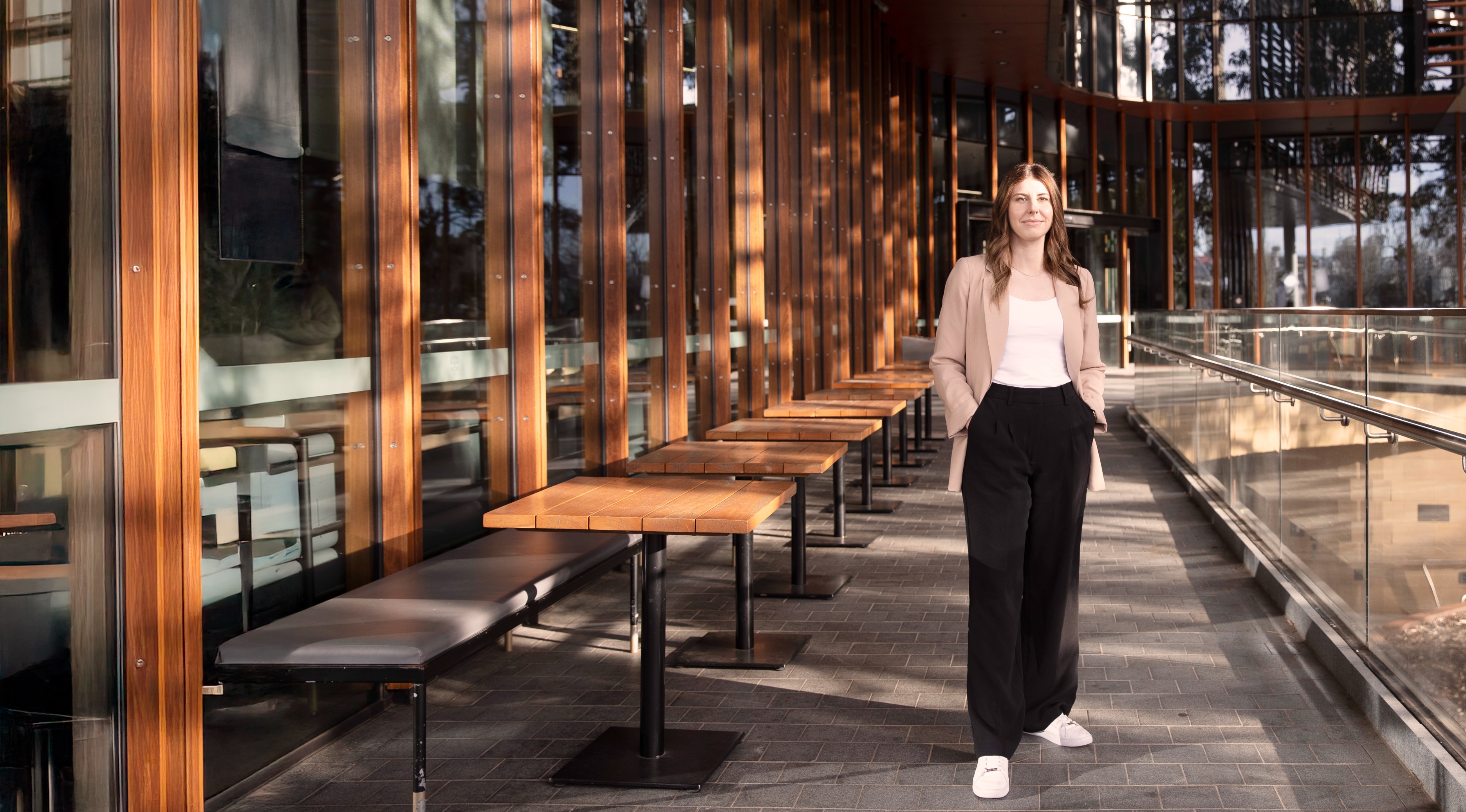
Tasmania offers a living experience unlike any other, where students can immerse themselves in vibrant city life, from arts festivals to World Heritage sites, all within a day. Campuses are located in bustling cities, fostering a creative, diverse, and welcoming community. The university encourages students to discover 'uni life' and explore the unique Tasmanian adventure. Students benefit from strong community ties, affordable living, and extraordinary access to wilderness, wildlife, and outdoor activities.
Fees
InternationalAnnual international tuition fees typically range from AUD 32,000 to AUD 52,000 (approx. EUR 20,000–32,000) depending on the programme. Medicine and law programmes are at the higher end of the range.
HomeDomestic Australian students pay Commonwealth Supported Place fees or full-fee rates depending on the programme and place type.
LivingEstimated annual living costs in Hobart: AUD 18,000–24,000 (approx. EUR 11,000–15,000), which is notably lower than Sydney or Melbourne. Tasmania offers affordable accommodation and a lower cost of living.
The university emphasises that costs should not be a barrier to university education and provides resources on financial support and scholarships. Early application is encouraged for scholarship consideration.
Admissions
UndergraduateCompletion of secondary schooling equivalent to Australian Year 12 with appropriate subject prerequisites.
PostgraduateRecognised bachelor's degree in a relevant discipline.
IELTS Academic6.0–7.0 depending on programme
TOEFL iBT60–94 depending on programme
PTE Academic50–65 depending on programme
Rankings
Times Higher Education Impact Rankings 2025#1 in Climate Action
Times Higher Education Impact Rankings 2024#1 in Climate Action
Times Higher Education Impact Rankings 2023#1 in Climate Action
Times Higher Education Impact Rankings 2022#1 in Climate Action
QS World University Rankings 2024390
University scholarships
UTAS International ScholarshipAUD 10,000 per year (merit-based)
Vice-Chancellor's Excellence ScholarshipUp to 50% tuition fee reduction
Research Training Programme (RTP)Full tuition + AUD 29,000 stipend/year for research degrees
Accreditation
The University of Tasmania is a public university recognised by the Australian government and the Tertiary Education Quality and Standards Agency (TEQSA).
For international students
AustraliaStudent visa & funds
International students need the Student visa (subclass 500), which requires a Confirmation of Enrolment from a CRICOS-registered provider, Overseas Student Health Cover, and a health and character check. Since May 2024 applicants must show financial capacity of at least AUD 29,710 for one year of living costs, plus first-year tuition and around AUD 2,500 for travel. Since March 2024 all applicants must also satisfy the Genuine Student (GS) requirement, which replaced the former Genuine Temporary Entrant test.
Working while you study
Student visa holders may work a maximum of 48 hours per fortnight while their course is in session — a cap re-introduced in July 2023 — and unlimited hours during official scheduled course breaks. Students enrolled in a master’s by research or a doctoral degree have no work-hour limit at any time. Work must not begin before the course start date.
After you graduate
Eligible graduates may apply for the Temporary Graduate visa (subclass 485) within six months of completing their studies. In the Post-Higher Education Work stream, bachelor’s and master’s (coursework) holders receive up to two years and master’s (research) or doctoral holders up to three years; regional study and the Australia–India trade agreement can add further time. The general age limit is under 35 at the time of application, rising to under 50 for research-degree holders.
English tests
- IELTSUG 6.0–6.5; PG 6.5–7.0; Group of Eight typically 6.5–7.0 with no band below 6.0
- TOEFL iBT79–100; UG 79–90, PG 90–100
- PTE Academic50–65; UG 58+, PG 65+
Main intakes
FebruaryJuly
Typical living cost
€1,600/month
Approximate all-in student budget; major cities run higher.
SourcesDepartment of Home Affairs — Student visa (subclass 500) · Study Australia — Student visa (subclass 500) work rights · Study Australia — Temporary Graduate visa (subclass 485) · IDP IELTS — Minimum IELTS scores for Australian universities · AECC — Cost of living in Australia for international students
Programs
a selectionUniversity of Tasmania · Australia
Advanced Practice
The Advanced Practice courses are designed for healthcare professionals seeking to enhance their leadership and critical thinking skills within a constantly evolving healthcare landscape. These programs offer flexible, online delivery to accommodate working professionals. They provide a strong foundation in interdisciplinary approaches, equipping you with knowledge and skills to make a greater contribution to healthcare and meet professional development requirements. The curriculum focuses on developing leadership capacity, combining core principles with specialized electives tailored to your career aspirations. The Master's degree component emphasizes refining research skills through a quality improvement project relevant to your workplace or career goals. Graduates will be prepared to lead positive change within the healthcare system. The specializations have been co-designed with the health industry to meet current needs. They allow you to deepen your expertise in areas such as Governance, Strategic Communication, Organizational Performance, or Workplace Psychology, among others, thereby progressing your career.
Master's
Level
—
Tuition
24 mo
Duration
University of Tasmania · Australia
Agribusiness
Bachelor's
Level
—
Tuition
—
Duration
University of Tasmania · Australia
Agribusiness
The University of Tasmania offers a Bachelor of Agriculture and Agribusiness designed to equip students with skills for leadership in the modern agrifood sector. This program blends agricultural production knowledge with business, economics, and food innovation, preparing graduates for diverse roles across the entire value chain, from farm to fork. Located in Northern Tasmania's agrifood hub, the degree emphasizes practical, industry-integrated learning through placements and real-world projects. Students can also choose an optional major in Sustainability. The program is delivered by the Tasmanian Institute of Agriculture (TIA), leveraging state-wide research and purpose-built facilities.
Bachelor's
Level
—
Tuition
36 mo
Duration
University of Tasmania · Australia
Bachelor of Arts
The Bachelor of Arts is a highly flexible degree at the University of Tasmania, allowing you to explore your academic interests and discover a wide range of potential career paths. You can delve into subjects you enjoyed in high school or explore entirely new fields. This program encourages intellectual curiosity and a lifelong pursuit of knowledge. You will develop critical thinking, research, and intercultural awareness skills, guided by academics who are leaders in their respective fields. The curriculum aims to equip you with the ability to approach cultural, environmental, and humanitarian challenges from multiple perspectives, fostering confidence and the capacity to make a positive impact. Through connections with government and industry, the program prepares graduates with sought-after skills for their future careers. The degree offers six core areas of focus: understanding global issues, interpreting arts and culture, supporting and empowering people, contributing to a just society, developing intercultural connections, and exploring the past to shape the future. It is also an ideal foundation for a double degree, with popular combinations including a Bachelor of Arts with a Master of Teaching or a Bachelor of Business, allowing for accelerated career development.
Bachelor's
Level
—
Tuition
36 mo
Duration
University of Tasmania · Australia
Bachelor of Economics
The Bachelor of Economics program explores how individuals, societies, and organisations make decisions regarding resource allocation and responses to incentives. This applied course focuses on contemporary economic and financial challenges, examining issues relevant to Tasmania, Australia, and the global landscape. You will delve into topics such as international trade, sustainable resource management, business strategy, and social issues like housing and healthcare, gaining a comprehensive understanding of decision-making processes at individual, firm, and government levels. Upon completion, graduates are equipped with strong analytical, data interpretation, and communication skills. The program fosters critical evaluation of economic problems and policy issues, encouraging collaborative and ethical considerations in economic decision-making. Graduates are prepared for diverse career paths in fields requiring economic literacy and analytical expertise.
Bachelor's
Level
—
Tuition
36 mo
Duration
University of Tasmania · Australia
Diploma of Creative Arts and Health
The Diploma of Creative Arts and Health explores the therapeutic benefits of creative arts, such as music, visual arts, and theatre, in promoting wellbeing. This interdisciplinary program investigates how these art forms can address challenges like mental health issues and improve the quality of life for individuals and communities. You will gain knowledge of innovative arts-based interventions in healthcare and community settings, while understanding the impact of arts on the brain and body within social and cultural contexts. The program encourages exploration of personal creativity and teaches international best practices for ethical and effective arts programs.
Diploma
Level
—
Tuition
12 mo
Duration
Scholarships
for Australia full funding
Australian Government - Department of Foreign Affairs and Trade (Australia Awards)
ASEAN-Australia Awards Scholarships
Open to citizens of eligible ASEAN countries (Brunei, Cambodia, Indonesia, Laos, Malaysia, Myanmar, Philippines, Singapore, Thailand, Vietnam and Timor-Leste) applying for a master's degree by coursework or research at an Australian university. Applicants need a strong academic record, leadership potential, relevant work experience and English proficiency, and must meet Australian visa and health requirements. Exact terms are set each cycle by the Australian Government.
full
Funding
€120k
Max
Apr 30, 2027
Deadline
full fundingForrest Research Foundation (Minderoo Foundation)
Forrest Research Foundation Post-doctoral Fellowships
Open to early-career post-doctoral researchers of any nationality and from all academic disciplines. Applicants must be in the final year of their PhD or no more than two years past PhD completion at the time of taking up the fellowship, be proficient in English, and meet the employment-eligibility conditions of the host Western Australian university. Fellows must reside at Forrest Hall in Perth for the full term and commit to mentoring Forrest Scholars, undertaking ambassadorial duties and providing leadership within Forrest Hall.
full
Funding
€90k
Max
May 31, 2027
Deadline
 full funding
University of Melbourne
Hansen Scholarship at the University of Melbourne
Australian citizens, permanent residents or holders of an Australian temporary or permanent protection visa who are enrolled in an Australian Year 12 or IB programme, aged 16-20 at application, with a predicted ATAR of 90+ (or IB equivalent) and demonstrated financial hardship (e.g. a family receiving Centrelink benefits). Asylum seekers are eligible for full fee remission.
full
Funding
€65k
Max
Mar 31, 2027
Deadline
full fundingAustralian Government (Department of Foreign Affairs and Trade)
Australia Awards Scholarships
Open to citizens of ~30+ eligible developing countries (mostly the Indo-Pacific), who are not married to/engaged to an Australian or NZ citizen, meet academic and English requirements, and commit to returning home for at least 2 years after study. Fields must align with the partner country's development priorities.
full
Funding
€60k
Max
Apr 30, 2027
Deadline
 full funding
University of Sydney
University of Sydney International Research Scholarship (USydIS)
For international students undertaking a postgraduate research degree (a master's by research or a PhD) at the University of Sydney. It covers tuition fees and a living-allowance stipend; applicants need a strong research background and a confirmed place and supervisor for their research project.
full
Funding
€45k
Max
13d left
Deadline
full fundingUniversity of Melbourne (School of Computing and Information Systems)
University of Melbourne CIS PhD Scholarship
Open to domestic and international students of all nationalities. Applicants must hold a Master of Computer Science from the University of Melbourne, apply for the Doctor of Philosophy – Engineering and IT (Computing and Information Systems) programme (DR-PHILEIT), and demonstrate strong academic performance, leadership, and research potential. A research proposal, a personal statement, and a letter of support from the proposed PhD supervisor are required.
full
Funding
€42k
Max
Jul 14, 2027
Deadline
Frequently asked questions
What are the annual tuition fees for international students at the University of Tasmania?
+
Annual international tuition fees typically range from AUD 32,000 to AUD 52,000, depending on the program. Medicine and law programs are at the higher end of this range.
What are the estimated living costs for students in Hobart?
+
Estimated annual living costs in Hobart are between AUD 18,000 and AUD 24,000. This is notably lower than in major cities like Sydney or Melbourne, offering affordable accommodation and a lower cost of living.
What are the main campuses of the University of Tasmania?
+
The University of Tasmania has main campuses in Hobart, Launceston, and Burnie. It also operates study centres in Melbourne and Sydney.
What are the English language requirements for international students?
+
English language requirements vary by program, with IELTS Academic scores typically ranging from 6.0–7.0, TOEFL iBT from 60–94, and PTE Academic from 50–65.
What academic programs is the University of Tasmania known for?
+
The university is globally recognised for world-leading research in marine science, Antarctic studies, and climate action, holding a #1 global ranking in Climate Action by the Times Higher Education Impact Rankings.
Last updated