In short
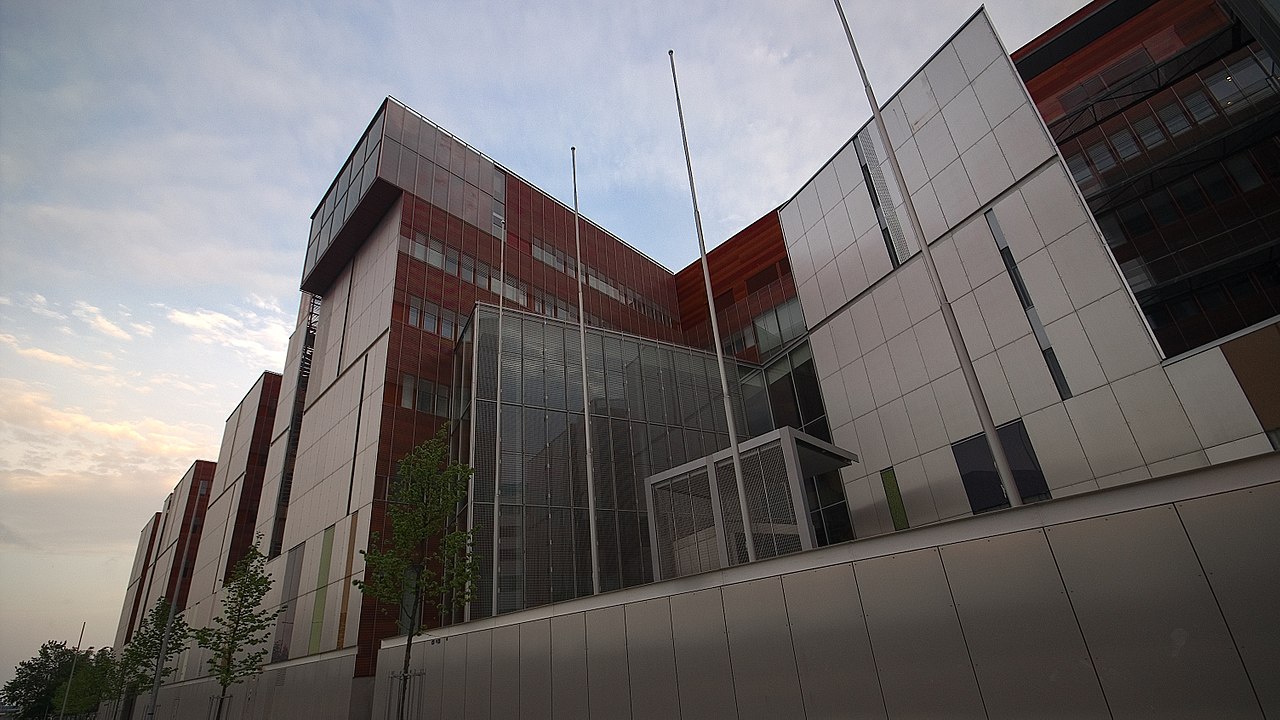
The University of Turku is a public research university in Finland offering over 150 English-taught programs. It provides a strong research environment and is ranked among the top universities globally and within Finland.
Key facts
- Type
- Public
- Founded
- 1920
- Students
- 25,000
- International students
- 3,000
- Acceptance rate
- 45%
- Tuition (intl)
- €10–18k/yr
- Languages
- EN, FI
- Location
- Finland
The University of Turku (UTU) is a vibrant multidisciplinary public research university founded in 1920 in Turku, southwestern Finland. With eight faculties and around 25,000 students, UTU offers programmes in humanities, social sciences, natural sciences, medicine, law, education, and technology. The university is internationally recognized for excellence in biodiversity, ecology, evolutionary biology, and information systems research, and maintains research partnerships in over 70 countries. UTU consistently ranks among Finland's top universities and is a proud member of the Coimbra Group of leading European research universities.
Why study here
- Over 150 degree programmes available, many taught entirely in English, catering to international students.
- World-class research environment with several Academy of Finland Centres of Excellence on campus.
- Ranked among the top 600 universities globally and top 6 in Finland.
- Strong industry links providing internship and career opportunities in Finnish and European companies.
- Turku is one of Finland's most student-friendly cities, offering affordable living and a rich cultural scene.
- Active international community with 3,000+ international students and exchange partnerships worldwide.
Student life
Turku is Finland's oldest city and its student capital in spirit, with tens of thousands of students shaping its culture. UTU students benefit from a thriving student association scene — the Student Union TYY organises events year-round, from academic gatherings to festivals. The city's compact size makes cycling and public transport easy, while Turku's archipelago, castle, and medieval cathedral add to its unique charm. Student restaurants on campus offer affordable meals, and on-campus sports facilities cater to a wide range of activities. Housing is available through student housing foundations at competitive rents.
Fees
InternationalNon-EU/EEA international students pay annual tuition fees typically ranging from €10,000 to €18,000 depending on the programme. EU/EEA students are generally exempt from tuition fees.
HomeEU/EEA students do not pay tuition fees at UTU. A small student union membership fee applies.
LivingLiving costs in Turku are approximately €900–€1,200 per month, covering student housing (€250–€500/month), food, transport, and personal expenses.
UTU Scholarship Programme offers partial tuition fee waivers of 50% or 100% for non-EU/EEA students admitted to Master's programmes.
Admissions
Undergraduate (Bachelor's)Completed upper secondary education equivalent to Finnish matriculation examination; specific subject requirements vary by faculty.
Master's DegreeRelevant Bachelor's degree (minimum 180 ECTS); minimum GPA requirements vary by programme (typically 3.0/5.0 Finnish scale or equivalent).
Doctoral ProgrammesCompleted Master's degree in a relevant field; research plan and supervisor agreement required.
IELTS Academic6.5 overall (no band below 5.5)
TOEFL iBT92 overall
PTE Academic62
Rankings
QS World University Rankings 2024601
Times Higher Education 2024601
National Ranking Finland6
University scholarships
UTU Scholarship Programme50% or 100% tuition fee waiver for non-EU/EEA Master's students
Finland Government Scholarship PoolVaries; administered by CIMO/OPH for doctoral and postdoc researchers
Accreditation
The University of Turku is a public university operating under the Finnish Universities Act and accredited by the Finnish Ministry of Education and Culture. It is a member of the Coimbra Group and the European University Association (EUA).
Programs
a selectionUniversity of Turku · Finland
Bachelor’s Degree Programme in Sustainable and Social Entrepreneurship
This Bachelor's programme focuses on developing leaders and entrepreneurs equipped with the skills to drive positive social, environmental, and economic impact. You will gain a strong understanding of business principles combined with in-depth entrepreneurship studies and multidisciplinary knowledge in sustainability and social issues. The programme emphasizes hands-on experience through connections with the business community and an Entrepreneurs-in-Residence program. You can also choose to study courses in Finnish and other languages. The Turku School of Economics, accredited by AACSB and ranked among the top 1% of business schools globally, offers a research-based learning environment. Graduates will be prepared to work as social entrepreneurs, managers in regenerative businesses, or experts in non-profit organizations focused on achieving the UN's Sustainable Development Goals. This programme is particularly suitable for students interested in creating new economic opportunities in regions transitioning from traditional industries. The programme structure includes basic studies in business, sustainability, and languages in the first year, followed by major studies in entrepreneurship and specialization in sustainable and social business in the second and third years. The final year also involves writing a Bachelor's thesis. Most courses have compulsory attendance, and it is a full-time program.
Bachelor's
Level
€10k
Tuition
36 mo
Duration
University of Turku · Finland
Degree Programme in Information and Communication Technology
Prepare to be at the forefront of developing future information societies with the Bachelor's Degree Programme in Information and Communication Technology. This program equips you with the latest knowledge and skills in ICT, focusing on how digitalization and artificial intelligence are transforming industries and societies. You'll gain expertise in using current and future technologies, preparing you for diverse work environments.
Bachelor's
Level
€10k
Tuition
36 mo
Duration
University of Turku · Finland
Doctoral Programme in Biology, Geography and Geology
The Doctoral Programme in Biology, Geography and Geology (BGG) at the University of Turku offers advanced, interdisciplinary training for natural science research. The program builds upon traditionally strong research areas including ecology, evolutionary biology, biodiversity, environmental science, physiology, genetics, physical geography, human geography, and geology. Students can pursue a Doctor of Philosophy degree in Biology, Environmental Science, Biodiversity Research, Geography (with specializations in physical geography, human geography, geoinformatics, and economic geography), or Geology.
PhD
Level
—
Tuition
48 mo
Duration
University of Turku · Finland
Doctoral Programme in Clinical Research
The Doctoral Programme in Clinical Research (DPCR) at the University of Turku focuses on advancing high-quality clinical research. It supports doctoral training in clinical medicine and related scientific fields, with a particular emphasis on enabling parallel doctoral and clinical training. While a basic degree in medical science is not a strict requirement, applicants with other degrees are welcome if their research interests align with medical questions or methods. Doctoral researchers within DPCR can pursue their degrees through various faculties, including Medicine, Social Sciences, Science, Technologies, and Turku School of Economics.
PhD
Level
Free
Tuition
48 mo
Duration
University of Turku · Finland
Doctoral Programme in Exact Sciences
The Doctoral Programme in Exact Sciences at the University of Turku offers a comprehensive pathway for advanced research across a wide range of scientific disciplines. This program allows students to pursue a PhD degree over 3-4 years, focusing on specialized research areas within physics, chemistry, mathematics, statistics, and learning analytics. The university provides a strong, multidisciplinary research environment with high-quality supervision, emphasizing the expertise and commitment of faculty to personalized doctoral research. International doctoral researchers benefit from a global research community, fostering collaborations and network building. Research within the program spans areas such as magnetism and superconductivity, quantum optics, cosmology, sustainable materials chemistry, drug development, theoretical and applied mathematics, statistical analysis, and learning analytics. The program is designed to equip students with advanced research skills and the ability to contribute significantly to their chosen fields. The University of Turku Graduate School (UTUGS) coordinates doctoral training, ensuring a high standard of education and research opportunities for all doctoral candidates.
PhD
Level
—
Tuition
48 mo
Duration
University of Turku · Finland
Doctoral Programme in History, Culture and Arts Studies
The Doctoral Programme in History, Culture and Arts Studies is an interdisciplinary program that combines historical approaches with cultural analysis and critical art studies. It aims to educate specialists in cultural change by integrating knowledge from 16 different research fields. The program offers high-quality international doctoral training, equipping candidates with the skills to work both independently and collaboratively, generate new critical knowledge, and communicate research findings effectively to diverse audiences.
PhD
Level
Free
Tuition
48 mo
Duration
Scholarships
for Finland tuition only funding
University of Oulu, Finland
University of Oulu Tuition Fee Scholarships
Open to fee-paying international (non-EU/EEA and non-Swiss) students admitted to an English-taught Bachelor's or Master's degree at the University of Oulu; the scholarship covers tuition and continues each year if the student completes at least 60 ECTS credits per academic year.
tuition only
Funding
€18k
Max
Jan 15, 2027
Deadline
 full funding
Fulbright Finland Foundation & University of Helsinki
Fulbright-University of Helsinki Graduate Award
Open to students from the United States, Finland and other countries who have been admitted to one of the University of Helsinki's two-year International Master's Degree Programs taught in English. Applicants must take part in the Fulbright Finland Foundation grant competition and separately apply for admission to the University of Helsinki, with final award selection made by the Fulbright Finland Foundation.
full
Funding
€18k
Max
Nov 30, 2026
Deadline
 living only funding
Finnish National Agency for Education (EDUFI)
EDUFI Fellowships (Finland Government Scholarship Pool)
For early-stage doctoral students and young researchers of any nationality to spend 3 to 12 months of their doctorate at a Finnish university. A Finnish host professor must invite and supervise the visitor and submits the application; the fellowship funds a research visit, not a full degree.
living only
Funding
€18k
Max
Oct 17, 2026
Deadline
partial fundingFinnish higher education institutions, supported by the Ministry of Education and Culture of Finland
Finnish Government Scholarships (University Finland Scholarships)
For non-EU/EEA international students who pay tuition fees in Finland and are applying for a fee-charging bachelor's or master's programme at a Finnish university or university of applied sciences. Each institution sets its own scholarship criteria, coverage, and deadline within its admission process.
partial
Funding
€15k
Max
Jan 15, 2027
Deadline
tuition only fundingUniversity of Eastern Finland (UEF)
University of Eastern Finland (UEF) Master's Scholarships
Open to international and domestic applicants to UEF Master's programmes. Applicants must hold a Bachelor's degree or equivalent, provide proof of English proficiency (IELTS, TOEFL, or equivalent), and meet all programme-specific requirements. Non-EU/EEA students pay a EUR 10,000 annual tuition fee against which waivers of 30%, 50%, or 100% are awarded by academic merit; no separate scholarship application is required.
tuition only
Funding
€10k
Max
Jan 21, 2027
Deadline
 full funding
Wellcome Trust
Wellcome Trust Fellowships and Grants (for international researchers)
For researchers at different career stages working on health-related science. Wellcome funds a family of fellowships and grants — early-career, career-development, and discovery awards, plus team and translational funding — each with its own eligibility, value, and call deadline. There is no single scholarship application; you apply to the specific scheme that fits your stage and project.
full
Funding
€3000k
Max
Rolling
Deadline
Frequently asked questions
What are the tuition fees for international students at the University of Turku?
+
Non-EU/EEA international students typically pay annual tuition fees ranging from €10,000 to €18,000, depending on the program. EU/EEA students are generally exempt from tuition fees.
Does the University of Turku offer scholarships for international students?
+
Yes, the UTU Scholarship Programme offers partial tuition fee waivers of 50% or 100% for non-EU/EEA students admitted to Master's programmes. The Finland Government Scholarship Pool is also available for doctoral and postdoc researchers.
What are the estimated living costs for students in Turku?
+
Living costs in Turku are approximately €900–€1,200 per month. This covers student housing, food, transport, and personal expenses.
What are the English language proficiency requirements for admission?
+
For English-taught programs, applicants typically need an IELTS Academic score of 6.5 overall (with no band below 5.5) or a TOEFL iBT score of 92. PTE Academic is also accepted with a score of 62.
What academic qualifications are needed for admission?
+
For Bachelor's programmes, an upper secondary education equivalent to the Finnish matriculation examination is required. For Master's degrees, a relevant Bachelor's degree (minimum 180 ECTS) is needed, and for Doctoral programmes, a completed Master's degree in a relevant field is necessary.
Last updated