Bachelor's in Environmental Sciences in Canada
Canada offers 16 Bachelor's programmes in Environmental Sciences across 7 universities, providing rigorous training in ecology, environmental management, earth sciences, and sustainability within one of the world's most biodiverse and ecologically rich countries. Institutions with listings include the University of Western Ontario, Trent University, Acadia University, St. Francis Xavier University, Trinity Western University, and North Island College. Tuition fees vary by programme — check individual listings for current figures.
Canadian environmental science programmes frequently incorporate field work and research in Canada's vast natural ecosystems, from boreal forests and the Great Lakes to Atlantic and Pacific coastlines. Graduates are well-positioned for roles in environmental consultancy, government agencies, and resource management. International students benefit from Canada's post-study work permits and strong environmental job market.

Aquatic Resources
Aquatic Resources
The Aquatic Resources Program (AQUA) at St. Francis Xavier University (StFX) offers an interdisciplinary approach to understanding water and its role in our environment. Combining perspectives from both natural and social sciences, the program fosters engagement with critical water resource issues, from local to global scales, encompassing both marine and freshwater systems. You will explore how water impacts our lives, from the food we consume to the health of the planet's oceans, and learn about its significance for living organisms and shaping our world. Students can pursue either a Bachelor of Arts (BA) or a Bachelor of Science (BSc) degree in Aquatic Resources. The program is delivered in-person and is housed within the Faculty of Arts and Faculty of Science, with the department dedicated to Aquatic Resources.

Bachelor of Arts in Geography & Environment

Bachelor of Business Administration – Accounting
North Island College offers a Bachelor of Business Administration (BBA) with a specialization in Accounting. This program is designed to provide students with a comprehensive understanding of accounting principles and practices, preparing them for a variety of roles in the field. The curriculum covers core business concepts alongside specialized accounting coursework, aiming to equip graduates with the analytical and technical skills needed to succeed in the accounting profession.
Bachelor of Science in Environmental Science
Bachelor of Science in Geography & Environment

Civil and Environmental Engineering
Western University's Civil and Environmental Engineering program provides a comprehensive education, preparing graduates for diverse careers in sectors such as consulting, government, resource industries, and even space exploration. The program is designed to equip students with the essential graduate attributes recognized by the Canadian Engineering Accreditation Board (CEAB), ensuring a high standard of professional readiness and opening doors to leadership and entrepreneurial opportunities.
Computer Science
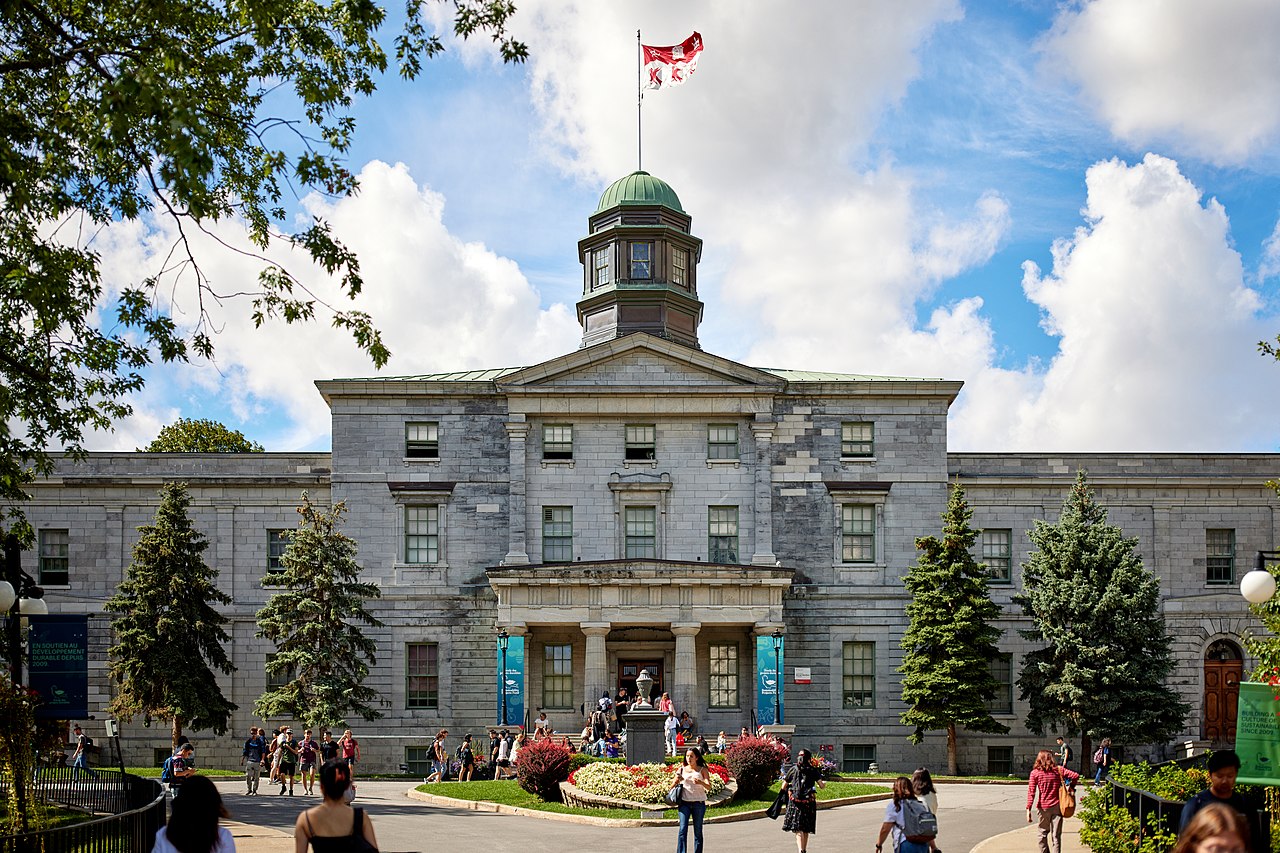
The program details for Computer Science at McGill University are currently unavailable due to a technical issue. Please try again later or contact the university directly for more information.
Environmental Programs
St. Francis Xavier University offers a range of environmental programs designed to address critical global issues. These programs are a core teaching and research strength at the university, allowing students to work closely with faculty who are leaders in the field. Students can pursue a Bachelor of Arts, Bachelor of Science, or a Bachelor of Arts and Science degree, all offering a well-rounded education with hands-on learning and research opportunities.
Environmental Science
Western University offers an interdisciplinary program in Environmental Science, bringing together expertise from various faculties including Science, Engineering, Social Science, Arts and Humanities, Information and Media Studies, Medicine and Dentistry, Business, and Law. This program focuses on addressing critical global issues such as biodiversity loss, water security, renewable energy, ecosystem health, natural disasters, and sustainable business practices. Students gain a broad understanding of environmental challenges through diverse perspectives and coursework.

Environmental Science and Studies
Trent University offers a Bachelor of Environmental Science/Studies (B.E.S.S.) degree, one of Canada's first ECO Canada accredited environmental programs. This degree provides a comprehensive approach to environmental study, drawing from both arts and sciences. You will gain a well-rounded education with opportunities for classroom learning, hands-on lab work, and field experience. The program focuses on understanding water, air, soil, and ecosystems, as well as the complex relationships between the environment, policy, planning, and social interactions. Graduates are prepared to analyze and solve environmental issues from multiple perspectives, using science, policy, and political insights to launch their careers. Students can explore a wide array of courses, including topics like Environmental Science and Politics, Canadian Environmental Policy, Community-Based Natural Resources Management, Pollution Ecology, Environmental Justice, and Climatic Change. The program emphasizes practical experience, offering guaranteed experiential learning opportunities throughout the degree. This includes community-based research projects, field experiences, and potential paid internships, allowing students to apply their knowledge to real-world issues and gain valuable professional experience before graduation.

Environmental Solutions
This interdisciplinary program combines environmental science, Indigenous knowledge, and social sciences to equip you with the tools to address critical environmental challenges like biodiversity loss and climate change. You will develop a holistic perspective by studying local and global environmental issues and learn skills highly valued in the current job market. The program offers a unique dual credential, leading to both a Bachelor of Science in Environmental Solutions from Laurentian University and a Graduate Certificate in Environmental Control from Cambrian College. This blend provides a strong scientific foundation, extensive field training, and a balanced view on social accountability and Indigenous perspectives on environmental health.

Environmental Studies BA
The Environmental Studies major at Canadian Mennonite University (CMU) offers an interdisciplinary approach to understanding the environment and sustainability. It equips students with the skills to identify, research, and address environmental and social justice issues. The program integrates natural sciences, social sciences, and humanities to provide a comprehensive perspective. Students will gain a foundational understanding of scientific principles related to climate, soil, water, and ecology. Social science components explore the links between economic, political, and social structures and their impact on the environment and resource management. The humanities aspect delves into how literature, philosophy, and theology can inform our understanding of environmental problems and contribute to finding solutions. This degree allows for personalization based on individual interests, drawing from CMU's diverse course offerings. Graduates are prepared to translate knowledge into action for environmental and societal benefit.
Geography & Environment
Explore the complex relationships between human societies and the environment through our Geography and Environment programs. You'll gain a comprehensive understanding of critical global issues such as climate change, biodiversity loss, urbanization, and poverty, drawing on strengths from both the Social Science and Humanities, and Natural and Applied Sciences faculties. Our location provides unique opportunities for hands-on field experience in diverse habitats and urban settings, complemented by training in modern Geographic Information Systems (GIS) technology.
Minor in Geography & Environment

Physics
Acadia University's Physics program offers a comprehensive undergraduate degree designed to help students understand the fundamental laws governing our universe, from the smallest particles to the largest celestial bodies. With a focus on small class sizes and student-centered learning, the program fosters a strong sense of community among students and faculty. Graduates develop critical thinking, problem-solving, and communication skills, preparing them for a diverse range of careers or further academic pursuits. The curriculum encourages interdisciplinary studies and offers unique opportunities for hands-on research.
Trent School of the Environment
The Trent School of the Environment (TSE) offers a comprehensive undergraduate learning experience, providing over a dozen degree programs and more than 100 environment-related courses. Students can choose from established programs or create a unique degree tailored to their interests. TSE combines the resources of a larger university, including access to leading scholars and advanced facilities, with a personalized, community-focused environment. Its unique 1400-acre campus features 11 nature areas, offering unparalleled hands-on learning opportunities in diverse ecosystems like forests, wetlands, and rivers.
Undergraduate Program in Marine and Freshwater Ecology
Women's and Gender Studies
The Women's and Gender Studies (WGST) program at Acadia University invites students to critically examine how gender and sexuality shape global societies and individual experiences. You will explore diverse topics such as social justice, culture, education, literature, psychology, history, science, and politics through a feminist lens. The program encourages questioning assumptions and developing innovative approaches to societal challenges, offering a robust interdisciplinary curriculum to foster a deep understanding of gender's impact. Students can choose from various program options including a Major, Double Major, Major with Honours, Double Major with Honours, or a Minor. The curriculum is rich with over 60 interdisciplinary courses, covering unique areas like Black Women and Politics, Environmental Justice and Equity, and Women in Science. The program emphasizes hands-on learning, research opportunities, and offers a co-op option, preparing graduates for impactful careers.
Frequently asked questions
How many Bachelor's in Environmental Sciences programmes are available in Canada?
+
There are 16 Bachelor's programmes in Environmental Sciences across 7 Canadian universities listed on this platform.
Which Canadian universities offer a Bachelor's in Environmental Sciences?
+
Options include the University of Western Ontario, Trent University, Acadia University, St. Francis Xavier University, Trinity Western University, and North Island College, among others.
How much does a Bachelor's in Environmental Sciences cost in Canada?
+
Tuition varies by programme and institution — check each listing for current fee information.
Can international students apply for Environmental Sciences Bachelor's programmes in Canada?
+
Yes; Canada welcomes international students to its environmental sciences programmes, who will need a Canadian study permit, English language proficiency evidence, and strong science preparation at secondary level.
What are typical entry requirements for a Bachelor's in Environmental Sciences in Canada?
+
Applicants need a high school diploma with relevant science subjects (biology, chemistry, geography), English or French language proficiency, and some universities may require calculus or senior-level science courses.