Data Science in United States
The United States offers 98 Data Science programmes across 51 universities, one of the broadest disciplinary footprints in the market given how recently the field formalised as a distinct subject. Providers include Johns Hopkins University, Carnegie Mellon University, New York University, Stony Brook University, the University of Virginia, and New College of Florida, spanning elite private research universities and public institutions alike. Tuition ranges from free up to roughly €76,000 per year — the upper end reflecting full-fee professional master's programmes at leading private universities.
Data Science degrees in the US blend statistics, computer science, and domain-specific applications. The field commands strong graduate employment outcomes and competitive salaries. Programmes range from Bachelor of Science tracks embedded in statistics or computing departments to dedicated Master of Science in Data Science degrees and, increasingly, professional doctorate programmes. Many offer part-time or online formats suited to working professionals.

B.S. in Data Sciences

Bachelor of Science in Business Analytics

Bachelor of Science in Business Information and Analytics
The Bachelor of Science in Business Information and Analytics (BSB) at Purdue University Northwest is a STEM-designated program designed to equip students with the skills needed to strategize, plan, and optimize business operations. It focuses on leveraging data to capture new market opportunities and drive success in a technology-dependent business world. The curriculum balances general education, core business courses, and specialized analytics modules, culminating in a senior project that applies learned concepts to real-world challenges. This program offers a flexible path, allowing for double majors or minors with other business disciplines.
Bachelor of Science in Data Science
The Bachelor of Science in Data Science program equips you with the interdisciplinary skills needed to analyze large datasets and develop data-driven solutions for real-world problems across various industries like healthcare, transportation, and finance. You'll gain hands-on experience with powerful tools and techniques, preparing you for immediate roles in the field or further advanced study. The program emphasizes project-based learning, mentorship, and practical application, ensuring you are well-prepared for the evolving tech landscape.
Bachelor of Science in Data Science
California State University Channel Islands (CSUCI) is launching a new Bachelor of Science degree in Data Science starting in Fall 2025. This program prepares students for a rapidly growing field where professionals use mathematics, statistics, and computer science to transform raw data into actionable insights. Data scientists are crucial for organizations across all sectors, helping to inform decision-making processes and answer complex questions. The curriculum is designed with a focus on essential skills, allowing students to potentially pursue a double major in another area of interest due to a reduced unit requirement.

Bachelor of Science in Data Science
Bachelor of Science in Data Science
Bachelor's in Data Science
The Bachelor's in Data Science program integrates computer science, mathematics, and statistics with practical applications in business. This program equips you with the skills to collect, analyze, and interpret data, preparing you for a variety of roles in business, finance, energy, and telecommunications. You will gain expertise in areas such as deep learning, machine learning, data analysis, and automation. The curriculum emphasizes project-based learning and offers opportunities for real-world involvement through professional partnerships.

Behavioral Data Science Initiative
The Behavioral Data Science Initiative at the University of Texas at Austin aims to educate a new generation of graduates skilled in data science and grounded in psychological principles. This program focuses on developing the technical expertise and ethical understanding needed to address complex data challenges, particularly those involving human behavior, emotions, and intentions. By integrating human-centric approaches with data analytics, the initiative seeks to prepare students for careers in fields like market research, AI, and medical analysis, fostering a workforce capable of ethical progress and societal benefit.
Big Data Certificate Online
The Big Data Certificate program at Maryville University is designed for individuals seeking to develop expertise in managing and analyzing large datasets. This online certificate program provides a focused curriculum on the principles and practices of big data, equipping students with the skills needed to thrive in data-driven fields. It is ideal for professionals looking to advance their careers or transition into data analytics and big data roles.
Business Analytics
The Bachelor of Science in Business Analytics program equips students with the skills to navigate the complexities of the modern business world by integrating mathematical and statistical analysis with data science and management principles. This program is designed to prepare graduates for impactful roles in data-driven environments, fostering decision-making through the effective use of data. You will learn to apply analytical techniques to solve problems in areas such as big data management, marketing, finance, and innovation. Florida Poly's unique approach emphasizes a STEM-focused education within a small campus setting, ensuring personalized mentorship and practical experience. The curriculum is structured around project-based learning, culminating in a senior capstone design project, providing a comprehensive skill set for success in technology and data-intensive industries.

Business Analytics
Business Analytics
The Bachelor of Science in Business Administration (BSBA) with a concentration in Business Analytics equips you with essential business knowledge and specialized analytical skills. This program integrates core business principles with data analysis techniques, preparing you for data-driven industries. You will learn to collect, interpret, and apply data to enhance business processes and support strategic decisions. This concentration offers two tracks: Operations Analytics, focusing on optimization, data mining, and statistical analysis for operational challenges, and Leadership, developing ethical leaders to drive organizational change. With ECPI's accelerated, year-round schedule, you can complete your BSBA in as little as 2.5 years.

Business Analytics and Data Science, B.S.
The Bachelor of Science in Business Analytics and Data Science program at New Jersey City University equips students with the essential skills to manage, analyze, and interpret large datasets, enabling informed business decisions. This program is designed to meet the growing demand for professionals in data analytics and data science across various sectors like finance, marketing, retail, and accounting. It reflects NJCU's commitment to serving a diverse student body and adapting to contemporary challenges. The curriculum emphasizes practical application, using industry-standard software and real-world scenarios to solve common business data analysis problems. Students will also learn about the ethical considerations involved in handling potentially private data. Graduates will be well-prepared for roles as data scientists and may also be positioned to pursue the Certified Analytics Professional (CAP) certification.
Business Analytics and Data Science, B.S.
Business Analytics, B.S.
Business and Data Analytics Major
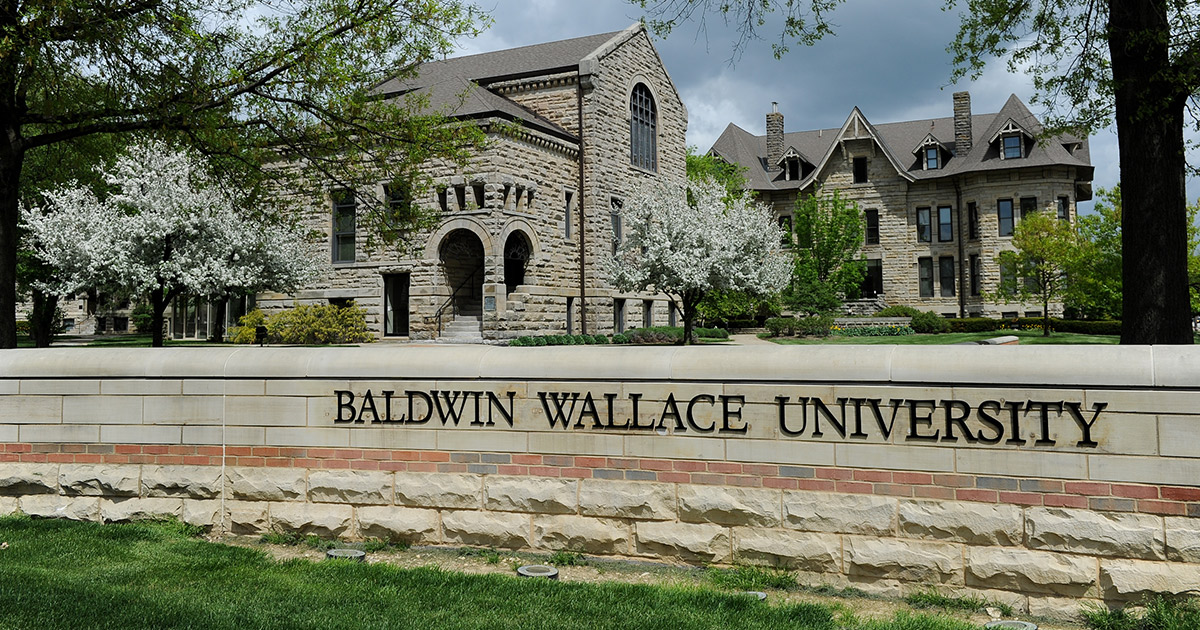
The Business and Data Analytics major at Baldwin Wallace University is a cutting-edge undergraduate program that combines core business principles with advanced analytical skills. Students will learn to leverage data for informed decision-making across various industries. This program is designed to develop critical thinking, problem-solving, communication, and quantitative proficiencies, preparing graduates for high-demand careers in fields that rely on data-driven insights. The curriculum covers statistical analysis, data mining, data visualization, and predictive modeling, alongside a deep understanding of business operations, strategy, and ethics.

Certificate in Decision Sciences
The Decision Sciences Certificate is designed for undergraduate students interested in understanding how people make choices in various contexts, including economic, political, and social situations. It offers an interdisciplinary approach, combining concepts from behavioral economics, game theory, machine learning, and neuroeconomics. This program aims to enhance your ability to communicate and collaborate across different academic fields, fostering a broader perspective for research beyond a single major.

College of Engineering Graduate Certificates
Western New England University's College of Engineering offers graduate certificate programs designed for working professionals seeking to advance their careers by developing new skills. These certificates can also serve as an alternative pathway to a master's degree, with credits earned being 'stackable' towards further study at WNE if a master's program is pursued within six years and with a grade of 'B' or higher. The programs are delivered in a hybrid format, allowing participation online, in-class, or a mix of both, across Fall, Spring, and Summer terms.

Data Analysis Workshop II
This workshop is designed for students who have a solid foundation in biostatistical concepts relevant to public health sciences and wish to enhance their data analysis skills. The course focuses on understanding and applying various analytical techniques to public health datasets. Through a computer lab setting, students will utilize Stata statistical software to master advanced data analysis methods. Key topics include analysis of variance, analysis of covariance, non-parametric methods for group comparisons, multiple linear regression, logistic regression, log-linear regression, and survival analysis.

Data Analytics
The Data Analytics program at Washington State University equips students with the skills to transform complex information into meaningful insights. This interdisciplinary program combines a liberal arts foundation with statistics, computing, and applied analysis. Students develop critical thinking, learn ethical data usage, and master clear communication. The curriculum focuses not only on data analysis but also on asking the right questions, identifying patterns, and presenting findings to diverse audiences. Through practical coursework, collaborative projects, a required internship, and a capstone project, graduates are prepared to apply data analytics across various industries and communities.

Data Science BS
The Data Science program at Stony Brook University equips students with the skills to analyze complex data, build predictive models, and communicate findings effectively. It combines fundamentals from mathematics, computer science, and statistics, using cutting-edge tools and algorithms to solve real-world problems. Graduates will be prepared to drive informed decision-making through insightful data interpretation.
Data Science Certificate
This online Data Science Certificate program at Maryville University is designed to equip students with foundational knowledge and practical skills in data analytics and interpretation. It focuses on preparing individuals for entry-level data science roles or to enhance their current career prospects with data-driven insights. The curriculum covers essential topics in data science, including data analysis, statistical methods, and the use of relevant tools and technologies. The program is delivered entirely online, offering flexibility for working professionals and students worldwide. Upon completion, graduates will be able to apply data science principles to solve real-world problems, contributing to informed decision-making in various industries.

Data Science MS
The Master of Science in Data Science program at NYU's Center for Data Science (CDS) is a highly selective program designed for individuals with a strong background in mathematics, computer science, and applied statistics. This intensive 36-credit program is structured for completion within two years of full-time study. It aims to equip students with advanced knowledge and skills to tackle complex data challenges across various fields. The curriculum emphasizes an interdisciplinary approach, fostering collaboration and innovation in the rapidly evolving domain of data science. Graduates are prepared for leadership roles in a field that is central to technological advancement and innovation.

Data Science, B.S.
The Data Science program at UC Davis offers a Bachelor of Science degree focused on computational, mathematical, and statistical reasoning for drawing conclusions from data. This interdisciplinary field can be applied to problems across various sectors, including agricultural, biological, engineering, medical, and social sciences. The program emphasizes the strong interdependence of theoretical and applied coursework in computer science, engineering, mathematics, and statistics, preparing students for quantitative data analysis in any field.
Data Science, B.S. at California State University Channel Islands
The Data Science major at California State University Channel Islands (CSUCI) offers a comprehensive education focused on the skills needed to collect, shape, store, manage, and analyze data for informed decision-making. This program integrates concepts from mathematics, statistics, and computer science, equipping students with the tools and techniques required for the entire data science project lifecycle. Students will learn essential programming languages like R, Python, and SQL, alongside foundational mathematical concepts from calculus and linear algebra, and statistical principles for interpreting uncertainty and identifying patterns. The curriculum also emphasizes data ethics, reproducibility, and effective communication of findings. Upon graduation, students will be well-prepared for careers in a wide array of industries, leveraging their strong analytical and quantitative skills to solve real-world problems and drive data-driven insights.

Data Science, M.S.
If you are intrigued by uncovering hidden insights from massive datasets, then UCO's Data Science program is designed for you. This Master of Science program is jointly offered by the Computer Science and Mathematics departments, providing a comprehensive education in the field. You will learn to extract meaningful patterns and knowledge from large volumes of data, a skill highly valued in today's data-driven world.

Data Science, MS
The Master of Science (MS) in Data Science is a collaborative program offered by the Departments of Statistics and Computer Sciences, administered by the Statistics Department. This program equips students with essential computational and statistical thinking skills. These abilities, when combined with domain-specific knowledge, enable graduates to tackle complex data-rich problems across various industries and fields. Graduates will develop the critical thinking, data management, processing, modeling, and analytical skills necessary to derive meaning and knowledge from data, while also learning to use data in responsible and ethical ways. The curriculum focuses on the rapidly evolving areas of applied statistical and computing research and practice. Graduates are prepared for roles as data analysts and data scientists, or to pursue further advanced studies in data science, statistics, computer science, or related quantitative fields.

Datamining the City I
Datamining the City I is a course offered within the Master of Architecture and M.S. Advanced Architectural Design programs. This course focuses on exploring urban environments through data analysis. It is typically offered in the Spring semester and runs for the full semester, granting 3 points. The course utilizes a combination of lectures and potentially studio work to investigate how data can be extracted, analyzed, and visualized to understand complex urban systems. Students will likely engage with methods of datamining to gain new perspectives on the built environment.

Geospatial Intelligence (GEOINT) Certificate Program
The United States Coast Guard Academy now offers an accredited Geospatial Intelligence (GEOINT) Certificate Program. This program prepares cadets to use geospatial information for strategic planning and decision-making in Coast Guard operations. Graduates with this certificate will possess valuable skills in analyzing imagery and data to identify patterns and solve complex problems relevant to national security and maritime operations.

IBM SkillsBuild – Data Analytics Certificate
This certificate program, developed in collaboration with IBM, provides foundational skills in data analytics. You will learn to analyze data, identify trends, and communicate insights effectively through visualizations. The program emphasizes practical application through real-world projects and hands-on exercises, covering the entire data analysis process from data preparation to drawing actionable conclusions. The skills gained are valuable for any career path that relies on data-driven decision-making.

Institutional Effectiveness and Assessment (IEA)
The Department of Institutional Effectiveness & Assessment (IEA) at International Technological University (ITU) supports the university community and external stakeholders by providing crucial data and analytics. This includes information on students, faculty, staff, programs, finances, and institutional policies. The IEA department actively engages in research and analysis to gather data that promotes best practices throughout the ITU community. The data collected is officially reported to various state and federal agencies, as well as accreditation bodies and the public.

Managerial Analytics Certificate
The Managerial Analytics Certificate is designed for undergraduates seeking to enhance their analytical skills for corporate roles in areas like management consulting, strategy, and planning. This program builds upon Northwestern's liberal arts foundation by teaching essential business analytical models crucial for strategic and tactical decision-making. Graduates will be equipped to analyze financial data, support merger and acquisition decisions, optimize supply chains, and make informed investment and pricing choices.

Master of Applied Statistics and Data Science (MASDS)
The Master of Applied Statistics and Data Science (MASDS) program at UCLA is designed for students seeking to develop strong quantitative and analytical skills. While a bachelor's degree is required, your undergraduate major does not need to be in statistics. The program values applicants with a solid foundation in quantitative subjects such as linear algebra, multivariate calculus, probability, statistics, and programming. While proficiency in R and Python is beneficial, it will be developed during the coursework. The MASDS program also places significant value on practical work experience, particularly in applying quantitative methods in research, business, or professional settings.

Master of Data Science (MDS)
Rice University offers a professional, non-thesis Master of Data Science (MDS) degree designed to equip interdisciplinary professionals with the skills to tackle real-world problems using data. The program emphasizes a blend of computational and statistical foundations, core data science methods, and specialized knowledge. Graduates will be prepared to collect, evaluate, interpret, and communicate data effectively for decision-making across various industries. The MDS program is taught by world-class faculty and provides both on-campus and online learning options, ensuring students receive the same high-quality education regardless of their chosen format. The curriculum is structured to provide a comprehensive understanding of data science, including core courses, specialization options, electives, and a capstone project. Students can choose to specialize in areas like business analytics, machine learning, or image processing (the latter currently only for on-campus students). Elective choices allow for further customization, with options in ethics, cybersecurity, and security/privacy. The program's learning outcomes focus on developing proficiency in the computational and statistical underpinnings of data science, applying core methods, solving complex problems with data, and communicating findings to diverse audiences. This interdisciplinary program is ideal for professionals seeking to enhance their data science expertise and apply it to their fields. The flexibility of online and on-campus delivery caters to different learning preferences and professional commitments. Graduates are prepared for in-demand roles in sectors ranging from science and healthcare to energy and manufacturing, where data-driven insights are increasingly critical.

Master of Science in Accounting with Data Analytics
UMass Boston's Master of Science in Accounting with Data Analytics (MSA) program is designed to advance your accounting career in today's data-driven world. You will gain advanced accounting knowledge and develop essential analytical skills to navigate complex financial landscapes influenced by AI and Big Data. Taught by experienced faculty, the program emphasizes practical application through internships and real-world case studies. This STEM-designated program prepares you for diverse roles in public, corporate, and government accounting, equipping you with the expertise to analyze accounting and financial data effectively. The MSA program is accessible through online, in-person, and hybrid formats, and international students benefit from potential eligibility for up to three years of Optional Practical Training (OPT), providing extended opportunities for job searching and career development.

Master of Science in Applied Data Science
The Master of Science in Applied Data Science program at the University of Southern California (USC) Viterbi School of Engineering is designed to equip students from diverse academic backgrounds with the essential skills for a career in data science. This program is available both on-campus and online, allowing flexibility for students. It caters to those with undergraduate degrees in computer science, other engineering or scientific fields, and even social sciences, provided they demonstrate a strong aptitude for math and science. Graduates will be proficient in data science techniques, programming (specifically Python), database management, big data infrastructure, machine learning, data mining, and applying these skills to solve real-world challenges.

Master of Science in Applied Sports Science Analytics
The Master of Science in Applied Sports Science Analytics program equips students with the skills to enhance athlete health, performance, and well-being through data-driven interventions. This interdisciplinary program combines expertise in exercise science, statistics, and data science, enabling graduates to analyze complex datasets and develop innovative applications for sports and human performance. The curriculum focuses on practical application, preparing students to work effectively with athletes, coaches, sports medicine professionals, and athletic organizations.

Master of Science in Biomedical Data Science and AI
The Master of Science in Biomedical Data Science and AI (MDSAI) program at Icahn School of Medicine at Mount Sinai addresses the growing need for skilled professionals who can analyze the vast amounts of biomedical data generated in healthcare. This program equips students with strong quantitative backgrounds to become leaders in precision medicine. You will learn to transform complex data into actionable insights, enabling advancements in customized treatments, biomedical image analysis, and the overall quality of healthcare delivery. The curriculum utilizes cutting-edge technology and access to large, electronic medical record-linked biomedical datasets.
Master of Science in Biomedical Data Science and AI Online (MDSAIO)
The Master of Science in Biomedical Data Science and AI Online (MDSAIO) program at the Icahn School of Medicine at Mount Sinai equips students with the skills to become leaders in biomedical data science. This 30-credit program leverages cutting-edge technology and extensive biomedical data resources to drive improvements in human health. Taught by Icahn School faculty, the curriculum emphasizes quantitative and computational skills, preparing students to tackle complex health challenges through the application of data science and artificial intelligence. The fully online program mirrors the rigor and academic standards of the on-campus offerings, allowing graduates to earn the same Master of Science degree. Students engage in live, instructor-paced sessions conducted in the Eastern Time Zone, fostering direct interaction with faculty and peers. The program is designed to enhance computational, mathematical, and statistical thinking, enabling students to analyze large datasets and derive insights from biomedical problems.
Master of Science in Business Analytics
The Master of Science (M.S.) in Business Analytics program at the University of Central Oklahoma's College of Business is a STEM-designated graduate program designed to equip students with the skills to analyze complex business data. This program focuses on transforming data into actionable insights that drive strategic decision-making. Graduates will be prepared to work with large datasets, apply advanced analytical techniques, and communicate findings effectively in various business contexts.
Master of Science in Business Analytics
The Master of Science in Business Analytics (MSBA) program at UC Davis addresses the growing demand for professionals skilled in leveraging large datasets and computational power to drive business insights and decisions. Graduates are prepared to fill the significant gap between the need for data-savvy professionals and the available talent pool. The program is designed as an investment in your future, with UC Davis providing financial assistance options to help manage program costs.

Master of Science in Business Analytics
The University of Washington Foster School of Business offers a Master of Science in Business Analytics (MSBA) program. This program is designed to equip students with the analytical and technical skills needed to leverage data for business decision-making. It focuses on applying cutting-edge research and technology within the industry, without requiring a thesis or research component. The curriculum is taught by nationally recognized faculty who are experts in their fields, ensuring a high-quality educational experience. The program aims to prepare graduates for impactful roles in the data-driven business landscape.

Master of Science in Business Analytics (MSBA)
The Master of Science in Business Analytics (MSBA) program at Carnegie Mellon University's Tepper School of Business is designed to equip students with the skills to drive data-informed decision-making in today's complex business landscape. This full-time, one-year program focuses on leveraging data to uncover insights, solve business challenges, and create future value. The curriculum emphasizes a blend of analytical techniques, technological tools, and business acumen, preparing graduates for impactful roles in various industries. The program considers all aspects of an applicant's background, including goals, professional experience, and academic achievements, in its holistic review process.
Master of Science in Business Analytics (MSBA)
The Master of Science in Business Analytics (MSBA) program at the University of Washington's Foster School of Business is a full-time, one-year program designed to equip students with the skills to succeed in the field of business analytics. Classes are held in the evenings and on weekends, making it accessible for those balancing other commitments. The program starts once a year in June and is delivered entirely in person on the Seattle campus. This program is ideal for individuals who have a strong quantitative aptitude, a bachelor's degree, and a desire to leverage data for business decision-making. The curriculum focuses on developing both analytical and communication skills, preparing graduates for a variety of roles in the data-driven business world. The program emphasizes a practical, hands-on approach to learning.

Master of Science in Business Analytics (MSBA)
The Master of Science in Business Analytics (MSBA) program at California Baptist University is designed to equip students with the skills to become data-driven business leaders. This STEM-designated degree merges advanced analytical techniques with essential business strategy, preparing graduates to transform complex data into actionable insights across various fields including marketing, finance, economics, logistics, and operations. The program emphasizes ethical reasoning and responsible leadership, grounded in a Christian worldview, ensuring graduates lead with integrity.
Master of Science in Business Analytics (MSBA)
The UCLA Anderson Master of Science in Business Analytics (MSBA) is a 15-month, on-campus program designed for individuals driven to apply data modeling, mathematics, and coding skills to solve complex business problems. This STEM-certified program equips you with the tools to extract insights from data, tell compelling data stories, and drive strategic business decisions. Graduates become invaluable assets to organizations seeking to leverage data for actionable strategies. The curriculum is taught by faculty who are leading researchers and practitioners in their fields, ensuring students are prepared for the evolving demands of the analytics industry. The program emphasizes ethical outcomes, reflecting the UCLA Anderson standard.
Master of Science in Business Analytics and Data Science
This Master of Science program in Business Analytics and Data Science is designed to equip students with the skills needed for careers in the rapidly growing field of data analytics. You will learn to gather, store, analyze, and interpret large datasets to support informed business decision-making. The program allows for specialization in areas like finance, marketing, logistics, and accounting, and its curriculum aligns with the Certified Analytics Professional (CAP) exam content.
Master of Science in Business: Analytics
The Master of Science in Business: Analytics (MSBA) program at the University of Wisconsin–Madison equips students with the skills to leverage data for critical business decision-making. This accelerated, STEM-designated degree focuses on turning data into actionable insights, preparing graduates for the demands of today's fast-paced world. The program fosters a collaborative learning environment within the highly ranked School of Business, known for its entrepreneurial spirit and world-renowned faculty.
Master of Science in Data Analytics
Master of Science in Data Analytics for Science
The Master of Science in Data Analytics for Science (MS-DAS) program at Carnegie Mellon University is designed for students with a background in scientific fields such as biology, physics, math, or chemistry who want to develop expertise in data analytics. This one-year program builds upon your existing scientific knowledge, equipping you with advanced skills in machine learning, computational modeling, and data visualization. The program is a collaboration between Carnegie Mellon's Mellon College of Science, Department of Statistics, and the Pittsburgh Supercomputing Center (PSC), offering a unique blend of academic rigor and access to cutting-edge high-performance computing resources. Unlike programs geared towards computer science graduates, MS-DAS focuses on applying data analytics techniques to solve complex problems within scientific domains. You will learn modern programming languages like Python, SQL, and R, and gain hands-on experience through a semester-long capstone project. This project allows you to work with industry partners on real-world data analysis challenges, fostering professional development and networking opportunities. Graduates are prepared for impactful careers in research and development across various sectors.

Master of Science in Data Science
Brown University offers a one or two-year Master of Science (Sc.M.) in Data Science program designed to equip students with both theoretical knowledge and practical experience in a rapidly evolving, data-driven world. The program prepares graduates for careers in data science, integrating foundational concepts from computer science, mathematics, and statistics with specialized domain knowledge. Students will gain expertise in essential areas such as machine learning, data mining, visualization, and data management. The curriculum emphasizes addressing key data science challenges, exploring ethical and societal implications, and applying knowledge to real-world problems through experiential learning opportunities.

Master of Science in Data Science
The Master of Science (MS) in Data Science program at the Halıcıoğlu Data Science Institute (HDSI) aims to equip students with the knowledge and skills necessary for data-driven tasks and to foster future researchers who can advance the field of Data Science. The program consists of formal courses and a choice between a thesis or comprehensive examinations for degree completion. Students will complete a total of twelve 4-unit courses, divided into Foundational (Group A), Core (Group B), and Elective (Group C) requirements. These ensure exposure to fundamental concepts, advanced topics, and current research or applications in Data Science. Foundational courses cover programming, data organization, linear algebra, probability, statistics, and optimization. Core courses build upon these fundamentals, with specific required courses and a selection of others. Electives allow for specialization within data science or in related fields, subject to advisor approval. Upon completion of coursework, students can pursue either a Thesis (Plan I) or a Comprehensive Examination (Plan II). The Thesis option involves 8-12 units of Thesis Research (DSC 299) under faculty guidance. The Comprehensive Examination option assesses a student's ability to apply data science knowledge across Machine Learning/Computing, Math/Statistics, and Systems/Algorithms, typically evaluated through specific course assignments or exams.
Master of Science in Data Science
Master of Science in Data Science
The Master of Science (MS) in Data Science program at NYU's Center for Data Science (CDS) is a rigorous 36-credit program designed for students with a strong background in mathematics, computer science, and applied statistics. This program can be completed in two years of full-time study and offers specialized tracks, including an Industry Concentration and a Data Science Track with focuses on Big Data, Mathematics and Data, and Natural Language Processing. There is also a Biomedical Informatics Track. The interdisciplinary approach to data science education, combined with world-class faculty and cutting-edge research opportunities, prepares graduates for dynamic careers. Located in New York City, a global center for technology and innovation, CDS boasts strong industry connections and internship opportunities. This provides students with valuable real-world experience and networking possibilities. The program aims to equip students with the skills needed to tackle complex data challenges and contribute to the evolving field of data science.

Master of Science in Data Science (MSDS)
The Master of Science in Data Science (MSDS) at Texas A&M University is an interdisciplinary program designed to prepare students for rewarding careers in the rapidly growing field of data science. Offered through a collaboration between the Departments of Computer Science and Engineering, Electrical and Computer Engineering, Mathematics, and Statistics, the program is housed within the Colleges of Engineering and Arts & Sciences. It provides a strong foundation in core areas such as mathematics, statistics, computer science, and machine learning, followed by customizable elective options. The MSDS program can be completed in three semesters, requiring 30 credit hours, making it suitable for both professionals seeking to upskill and students aiming for data-intensive research and projects.
Master of Science in Data Science in Biomedicine
The Master of Science (MS) in Data Science in Biomedicine program at UCLA provides advanced training in data science techniques specifically applied to the field of biomedicine. This program equips students with the skills to analyze complex biological and health-related data, fostering innovation in research and clinical practice. It is designed for individuals seeking to leverage data-driven approaches in biomedical discovery, diagnostics, and therapeutics.

Master of Science in Engineering in Data Science (MSE-DS) Online
The Master of Science in Engineering in Data Science (MSE-DS) Online is an advanced degree program offered by the University of Pennsylvania's School of Engineering and Applied Science. This program is designed for professionals seeking to deepen their expertise in data science, machine learning, and related fields. It offers a rigorous curriculum delivered entirely online, allowing students to balance their studies with professional and personal commitments. The program aims to equip graduates with the theoretical knowledge and practical skills necessary to tackle complex data challenges and drive innovation in various industries.
Master of Science in Health Data Science
The Master of Science in Health Data Science is a program designed to equip students with advanced skills in analyzing complex health data. Offered by the Department of Biostatistics, this program provides a strong foundation in statistical theory, computational methods, and the application of data science techniques to public health challenges. It is ideal for individuals seeking to leverage data for improved health outcomes and to advance research in the field.
Master of Science in Sport Management - Sport Analytics
This Master of Science program offers a specialized concentration in Sport Analytics, blending essential sports industry knowledge with advanced data science techniques. Designed for individuals passionate about sports and data, the curriculum focuses on leveraging data to drive strategic decisions in areas like performance, fan engagement, marketing, and finance within collegiate, professional, and amateur sports organizations. Graduates will be equipped to analyze complex datasets, utilize statistical models and visualization tools, and transform data-driven insights into actionable business plans that can reshape organizational operations.
Frequently asked questions
How many Data Science programmes are available in the United States?
+
There are 98 Data Science programmes across 51 US universities, covering bachelor's, master's, and doctoral level offerings in a field that spans statistics, computing, and applied analysis.
How much does Data Science study cost in the United States?
+
Tuition ranges from free (for some publicly supported or scholarship-covered options) up to roughly €76,000 per year for full-fee professional master's programmes at elite private universities.
Which universities offer Data Science programmes in the United States?
+
Notable providers include Johns Hopkins University, Carnegie Mellon University, New York University, Stony Brook University, the University of Virginia, and New College of Florida, among 51 institutions.
Can international students apply for Data Science programmes in the United States?
+
Yes. International students are actively recruited, particularly for graduate programmes; you will need English-language test scores, academic transcripts, and typically GRE scores for master's and doctoral applications.
What are the typical entry requirements for US Data Science programmes?
+
Undergraduate entry requires a high-school diploma with strong maths and science results; master's programmes generally require a bachelor's degree in a quantitative field such as statistics, maths, or computer science.