Study in Germany
Germany offers 733 programmes at 62 universities, and is particularly notable for its large number of tuition-free public universities — a major draw for budget-conscious international students. Prestigious institutions such as the Technical University of Munich sit alongside private providers including IU Internationale Hochschule GmbH and the Europäische Betriebswirtschafts-Akademie, covering both fully funded and fee-paying routes.
While many public university programmes charge only a nominal semester contribution, private institutions can charge up to roughly €36k per year. Institutions such as Fachhochschule Dortmund and Fachhochschule Lippe (Hochschule OWL) round out a landscape that places heavy emphasis on applied, career-relevant education through its Fachhochschule system. Germany is a strong destination for engineering, technology, and business programmes delivered in English.

Additional Qualification in Environmental Engineering: Emission Control and Hazardous Incidents
This program offers an additional qualification in Environmental Engineering, focusing on Emission Control and Hazardous Incidents. It is designed for students in technical degree programs who wish to integrate environmental aspects into their studies, enhance their career prospects in environmental fields, and contribute to sustainable business practices as an in-company environmental officer. The qualification provides the necessary expertise for roles such as environmental officers for emissions, water protection, and waste management, as well as for hazardous incident prevention. The program is offered by the Faculty of Liberal Arts and Sciences and is pursued alongside your main technical studies. Courses are recognized as elective subjects (AWP) within your primary degree and can also be taken individually. Upon successful completion of the required lectures, you will receive recognized certificates along with your Bachelor's degree.

Aerospace - Master of Science (M.Sc.)
The Master of Science in Aerospace program at the Technical University of Munich (TUM) is designed for students passionate about aircraft design and space exploration. It provides the knowledge and skills necessary to turn this fascination into a profession. The program addresses the increasing demands for environmental and noise protection in aviation, exploring new developments in automation and drive systems that enable innovative concepts like unmanned and electric aircraft. Graduates will be equipped to push these developments in both industry and academia.

Aerospace Engineering M.Sc.
The Master of Science in Aerospace Engineering program is designed for students seeking to advance their knowledge in the rapidly evolving field of aerospace. The program focuses on integrating established technologies with new advancements to address contemporary challenges in the industry. It emphasizes not only technical expertise but also the practical application of knowledge through teamwork and hands-on experience. Students will engage in various practical group projects, laboratory work, and extracurricular modules. This comprehensive approach aims to provide effective, enjoyable, and engaging training for a future career in one of the most fascinating technological sectors. The program equips graduates with the skills needed to contribute to the development of new, sustainable, and improved aerospace technologies.
Agricultural Biosciences
The Master of Science in Agricultural Biosciences at the Technical University of Munich (TUM) is an international program that delves into fundamental biological research to foster efficient and sustainable agricultural production for both crops and livestock. This interdisciplinary program uniquely integrates quantitative and computational approaches, providing a comprehensive understanding of biological mechanisms relevant to agriculture. It addresses critical societal challenges such as food security, natural resource preservation, and climate change mitigation. Students will gain in-depth knowledge of molecular, biochemical, and physiological processes essential for agricultural production. The curriculum is designed to equip graduates with the skills to optimize genetic improvement in crops and livestock, understand genotype-phenotype relationships, and manage complex data sets using predictive analytics. The program focuses on a generic approach, recognizing that many biological mechanisms are shared between plants and animals, and emphasizes both molecular and computational methods as foundations for innovation.

AI Engineering of Autonomous Systems (M. Eng.)
This Master of Engineering program focuses on the rapidly evolving field of Artificial Intelligence (AI) for Autonomous Systems. You will gain the skills to design, develop, and implement intelligent systems capable of learning, making decisions, and operating independently. The curriculum integrates core AI engineering methods with the foundational technologies of autonomous systems, including sensor networks, data fusion, data engineering, computing, and communication. The program emphasizes practical, hands-on experience, preparing you for the challenges and ethical considerations of developing autonomous technologies. Graduates will be well-equipped to contribute to industries being transformed by AI, such as mobility, production, logistics, agriculture, and medical engineering.
AI in Biomedicine
The Master of Science (M.Sc.) in AI in Biomedicine is an elite, research-oriented program offered jointly by the Technical University of Munich (TUM) and Friedrich-Alexander-Universität Erlangen-Nürnberg. This program addresses the growing need for data-driven technological innovations in healthcare, driven by demographic changes, increasing chronic diseases, and rising costs. It equips students to develop and implement AI-driven solutions responsibly within biomedical contexts. Positioned at the intersection of computer science, engineering, and medicine, the curriculum provides essential competencies to analyze complex medical data using advanced AI technologies. Students learn to translate data into actionable insights and apply them to clinically relevant scenarios, such as developing interpretable AI models for clinical decision support or mitigating bias in diagnostics. The program integrates ethical, legal, and societal considerations of AI in healthcare throughout the studies. Graduates will be experts in designing, developing, and managing innovative AI systems in biomedicine, from algorithmic design to clinical integration. This prepares them for diverse careers in academia, research and development in pharmaceutical, medical technology, and tech industries, strategic consulting, innovation management, or AI-driven biomedical startups.
Aircraft and Vehicle Informatics (B. Sc.)
The Aircraft and Vehicle Informatics Bachelor's program combines computer science principles with the specific demands of aircraft and vehicle industries. It addresses the critical role of software in modern mobility advancements like electric vehicles, autonomous driving, and drone technology. The program equips students with the skills to design, develop, and manage complex, networked software systems and their underlying infrastructure for aviation and automotive applications.
Alice Salomon University of Applied Sciences Berlin
Alice Salomon University of Applied Sciences Berlin (ASH Berlin) is a state university focused on Social Work, Health and Nursing, and Education. It is the largest of its kind in Germany within the SAGE network, offering a range of study programs designed to equip students for professional practice in social and health-related fields. The university emphasizes practical experience and interdisciplinary learning.
Angewandte Ernährungswissenschaft (Applied Nutritional Science)

Angewandte Sportwissenschaft (B.Sc.)
Applied Artificial Intelligence (B.Sc.)
The Bachelor of Science program in Applied Artificial Intelligence at Hochschule Konstanz (HTWG) offers a practical approach to AI education, emphasizing team projects and an integrated practical semester. You will gain sought-after skills for various AI-related professions, leading to excellent career opportunities across all industries. Study by Lake Constance and actively shape the digital future. Artificial Intelligence (AI) is already a significant part of our daily lives, used in search engines, digital voice assistants, and music streaming. It's also crucial for businesses to improve customer experience, provide quick support through chatbots, and detect fraud. This program equips you to professionally handle AI technologies, understanding that their effectiveness depends on how well they are understood and utilized. In this program, you will learn to understand the technical and mathematical foundations of AI, deploy AI as a tool, and select, apply, optimize, and further develop AI solutions for diverse industries and specific challenges. Key areas include mathematics, data science, programming, software development, deep learning, and the ethical and legal aspects of AI.
Applied Chemistry (AOS) B.Sc.
This Bachelor of Science program in Applied Chemistry at Fachhochschule Aachen focuses on both the fundamental principles of chemistry (organic, inorganic, physical) and future-oriented areas such as sustainability and innovation. Chemistry plays a vital role in everyday products and is essential for developing sustainable technologies. The program is practice-oriented, incorporating current research and industry topics to provide an applied learning experience. Graduates are sought after in various industries, including food, pharmaceuticals, and environmental technology, for their ability to develop innovative solutions.
Applied Chemistry (Bachelor of Science)
The Bachelor of Science program in Applied Chemistry equips students with foundational knowledge and practical skills for careers in the chemical industry and related sectors. It focuses on material chemistry, sustainable chemistry, and technical chemistry, preparing graduates for professional roles and further academic pursuits. The program emphasizes a hands-on approach with early laboratory training and integrates research-based learning to develop competencies in planning, executing, and evaluating complex chemical tasks. Graduates will possess essential skills for roles in research and development, process development, production, and marketing, with the ability to communicate effectively across different disciplines within the chemical value chain.
Applied Chemistry B.Sc. (dual)

Applied Computer Science – Smart Systems
This Bachelor of Science program in Applied Computer Science focuses on Smart Systems, blending software and hardware to create intelligent solutions for everyday life and industry. You will learn to control and network complex systems, from small DIY projects and smart homes to advanced applications like drone technology, smart cities, and smart grids. The curriculum includes practical projects in modeling, simulation, and mobile systems, providing insights into future-oriented technologies. This specialization is ideal for technically minded individuals interested in the intersection of software and hardware.
Applied Computer Science (Angewandte Informatik)
The Applied Computer Science Bachelor's program offers a broad and practical IT education with a focus on real-world applications. You will gain fundamental knowledge and have the opportunity to specialize in areas like Artificial Intelligence (AI), Internet of Things, Embedded Systems, or Software Engineering. The curriculum covers programming, digital technology, mathematics, and software modeling, preparing you for the evolving demands of the IT industry.
Applied Computer Science (B.Sc.)
This Bachelor of Science program in Applied Computer Science focuses on optimizing business processes through IT. You will learn to design, implement, and operate IT solutions, analyzing operational requirements and adapting or creating new software applications. The program offers two specializations: Business Informatics, focusing on corporate IT systems and business process analysis, and Agricultural Informatics, concentrating on agricultural data processing, AI, and robotics. Currently, courses are held at the Höxter campus, but there is a plan to relocate teaching to Lemgo in the medium term. The university will provide advance notice for any such changes. Graduates will contribute to the UN's Sustainable Development Goals, particularly in the area of industry, innovation, and infrastructure.
Applied Computer Science (B.Sc.)
This Bachelor of Science degree focuses on Applied Computer Science with an international outlook. It includes a mandatory semester abroad to prepare students for global career opportunities. The curriculum covers a broad spectrum of computer science topics, with specializations in cloud and mobile computing, intelligent systems, and digital media. Teaching methods incorporate lectures, exercises, seminars, group work, and practical laboratory courses. Students gain hands-on experience through projects, including robotics, interactive film design, and mobile application development, such as augmented reality apps. The program emphasizes project-oriented studies from the outset, with a significant portion of learning integrated into practical projects, often in collaboration with companies.
Applied Cyber Security (BSc)
The Bachelor of Science in Applied Cyber Security (ACS) program focuses on understanding, protecting, and defending digital systems. You will learn to analyze cyberattacks, secure IT infrastructures, and investigate digital incidents through practical exercises, projects, and case studies. The curriculum covers cyber security, ethical hacking, forensics, and security management, preparing you to become a specialist in shaping a secure digital future. The program emphasizes a blend of technical IT expertise with organizational, legal, and economic competencies, ensuring a holistic understanding of cyber security challenges.
Applied Entrepreneurship (Master of Arts)
The Applied Entrepreneurship Master's program is designed for individuals passionate about starting their own ventures or driving innovation within existing companies. This program combines theoretical knowledge with practical application, allowing you to develop your business ideas while pursuing your studies. It offers flexibility, with only a few required in-person days per week and additional digital content, making it suitable for those who are already working or developing their own startups. You will gain skills in areas like lean startup methods, business model development, marketing, sales, and leadership, preparing you for a future in entrepreneurship or innovation management.

Applied Environmental Informatics and Remote Sensing
The Bachelor of Science program in Applied Environmental Informatics and Remote Sensing focuses on understanding and analyzing the complex interactions between humans, nature, and technology using modern digital methods. This interdisciplinary program integrates environmental sciences, computer science, geosciences, geodesy, and remote sensing. You will gain a strong foundation in natural sciences and engineering while learning to use advanced tools for data acquisition and analysis, including geostatistical methods, remote sensing techniques, and artificial intelligence for large datasets. The program emphasizes practical application through exercises and lab work alongside lectures. You can specialize by choosing one of three profiles: Geodesy and Geoinformatics, Hydrology and Geoecology, or Applied Geosciences.
Applied Geosciences Bachelor of Science (B.Sc.)
The Bachelor of Science in Applied Geosciences at KIT focuses on understanding Earth's processes and applying geoscientific methods practically. You will learn how geological processes impact the environment, how resources are extracted, and how to analyze geoscientific data to address issues like environmental damage or climate change. The program covers fundamental geoscientific principles as well as specialized topics such as Hydrogeology, Engineering Geology, Geo-resources, and Geochemistry. KIT's approach emphasizes practical application. You will study soils, rocks, water, and minerals, and use geoscientific methods to solve real-world problems in areas like environmental engineering, geotechnology, and resource exploration. Expect a blend of laboratory work and fieldwork, preparing you for diverse roles in construction, energy, and environmental protection. You will develop strong methodical skills, enabling you to link geoscientific concepts and apply analytical and quantitative methods. The program aims to foster interdisciplinary thinking and problem-solving abilities. A mandatory 6-week professional internship is integrated into the curriculum, usually in the 6th semester. This practical experience is designed to expose you to industry needs and prepare you for the job market. The program also encourages international experiences, with opportunities for study abroad exchanges or individual courses. The final component of your Bachelor's degree is the Bachelor's thesis, a research-based project allowing you to apply and deepen your acquired knowledge and skills, with a maximum completion time of six months.
Applied Mathematics and Computer Science (dual) B.Sc.
This dual study program combines Applied Mathematics and Computer Science, preparing you for a career as a Mathematical-Technical Software Developer. You will earn both a Bachelor of Science (B.Sc.) and a vocational training certificate within three years. The program integrates theoretical studies with practical, hands-on experience at a partner company, allowing you to apply your knowledge to real-world projects from the start. More than 100 companies across various regions offer apprenticeships, providing you with a traineeship salary and excellent career prospects. The program emphasizes small class sizes for enhanced support and has a low dropout rate. Graduates are well-positioned for further academic pursuits, including Master's degrees.
Applied Mathematics and Computer Science M.Sc.
The Master's program in Applied Mathematics and Computer Science at FH Aachen, in cooperation with Forschungszentrum Jülich, delves into the core competencies that power modern applications like AI, search engines, medical imaging, and financial markets. You will gain scientifically grounded, practical skills with direct exposure to cutting-edge research. A significant advantage of this program is its close collaboration with Forschungszentrum Jülich, one of Germany's largest research centers, which houses one of the world's fastest supercomputers. This partnership offers numerous opportunities for project and thesis work within interdisciplinary teams tackling current challenges in energy, climate, medicine, mathematics, computer science, and data science. You will gain early experience in research-intensive environments and build valuable career connections. The curriculum is highly customizable, allowing you to specialize in one of three main areas: Applied Mathematics (analyzing complex systems with modern statistics, probability, and numerical methods), Data Science (data preparation, AI/machine learning model development, critical algorithm evaluation, and data-driven decision-making), or Practical Computer Science and Scientific Computing (designing and implementing sophisticated software and simulation systems, from distributed applications to high-performance computing and visualization).
Applied Nutritional Sciences (B.Sc.)
This Bachelor of Science program in Applied Nutritional Sciences (Angewandte Ernährungswissenschaft) combines scientific knowledge with practical application to equip you with the skills for effective nutritional counseling and therapy. You will learn to design, implement, analyze, and reflect on interventions for all age groups, contributing to health maintenance, quality of life, and positive disease management. The curriculum includes modules on food, sustainability, food trends, applied nutritional medicine, and consumer protection, preparing you for roles in interprofessional settings and the digital future of nutrition. The program emphasizes developing both your scientific understanding and practical competencies through projects and interactive seminars. It also covers related fields such as ethics, economics, law, sociology, pedagogy, and psychology of nutrition. The dual nature of the program suggests a strong connection between academic learning and practical experience, potentially involving industry partners. Students are encouraged to take an active role in shaping their healthy future and influencing the health and well-being of others. The curriculum aims to provide a solid foundation for a career focused on improving health outcomes through evidence-based nutritional strategies.
Applied Physics B.Eng.
Our world is rapidly evolving with new technologies emerging constantly. To develop innovative solutions and better products, we need well-trained specialists who can think interdisciplinary and systematically. The Applied Physics Bachelor of Engineering (B.Eng.) program combines fundamental physics education with practical engineering methods from electrical and mechanical engineering. You will gain a solid understanding of modern physics while developing skills in electronics, measurement and control technology, design and CAD, optics and laser technology, as well as simulation and data analysis. Studying on campus in small groups, with practical laboratory sessions, excursions, and industrial internships, ensures that your enthusiasm for creative problem-solving is nurtured, and theory directly translates into tangible results. Invent the technologies of the future with Applied Physics!
Applied Polymer Science M.Sc.
The Master of Science in Applied Polymer Science is designed for students with a strong interest in chemistry, particularly in the diverse applications of polymer materials and plastics. This program, offered by the Faculty of Chemistry and Biotechnology at FH Aachen University of Applied Sciences, provides a practical and application-oriented education. You will learn from professors and industry lecturers, preparing you effectively for the job market. Polymers are essential in many areas of modern life, from lightweight construction in aviation and coatings in paints, to medical applications and sustainable packaging solutions. The curriculum covers current research and development in polymers, including the use of renewable raw materials and biopolymers, ensuring you are well-equipped for a future in this dynamic field.
Applied Research in Engineering Sciences (M. Sc.)
The Master of Science in Applied Research in Engineering Sciences is an individualized study program designed to foster professional, methodological, and personal development. Unlike traditional master's programs, this 'research master's' features fewer modules, allowing students to dedicate significant time to engaging in exciting research projects. This hands-on approach ensures knowledge is deeply rooted, continuously expanded, and put into practice. Throughout the program, students receive consistent support from experienced mentors who act as reliable points of contact. The program prioritizes the student's interests, projects, and development, offering a supportive environment with structured project work and targeted theory teaching. Students are integrated into research groups from the outset, gaining access to modern laboratory infrastructure and participating in real research activities. This structure facilitates continuous exchange, orientation, and reliability, laying a strong foundation for academic success and future careers.
Architecture
The Master's degree program in Architecture at the Technical University of Munich (TUM) builds upon your foundational Bachelor's knowledge, allowing you to deeply explore and specialize in specific architectural fields. This program emphasizes design-oriented project work, preparing you for leadership roles in architecture and planning. You'll gain advanced skills in visualization, construction, architectural history, and theory, along with crucial social and interpersonal competencies for professional collaboration. Students can choose to define their study path with a mentor or select from four defined areas of concentration, each spanning four semesters. The curriculum is designed to foster a comprehensive understanding of the built environment and societal responsibility, equipping graduates to innovate and lead in a rapidly changing global architectural landscape.
Architecture (Bachelor of Arts)
This Bachelor of Arts program focuses on Architecture, providing a practice-based and subject-oriented education grounded in science. You will gain the skills necessary to design building structures from creative, technical, and economic perspectives, becoming a well-rounded professional. The curriculum aims to equip you with essential expert knowledge, technical expertise, and an appreciation for architectural design, preparing you to meet the prevailing standards in Germany and the EU. This degree also serves as a foundation for further studies or exchange programs with European universities.
Architecture (Bachelor of Arts)
This is a 6-semester Bachelor's degree program, marking the initial stage of architectural education. It is a foundational, broadly-focused program designed to introduce students to the core principles of architecture through a structured curriculum. Instruction is delivered in small groups by professors, supported by academic staff and lecturers. Studying in Cologne, a city with a 2,000-year history of architecture, offers ample opportunities for inspiration and engagement with the field. As a cultural hub in North Rhine-Westphalia, Cologne boasts impressive buildings, fascinating museums, and a unique local atmosphere.
Architecture (Part-Time)
Design buildings that construct the cities of the future and contribute to the climate transition. This practice-oriented, part-time Bachelor's program in Architecture allows you to discover your strengths and interests, whether in creative design, detailed construction, or planning with new materials. The program is modular and spans ten semesters, combining full-time study, a practical semester, and part-time study periods where you'll attend classes two days a week and gain practical experience in an office or company for the remaining three days. The final semester is dedicated to the full-time completion of your Bachelor's thesis.
Architecture & Design
FH Aachen offers degree programs in Architecture, Communication Design, and Product Design. These programs aim to blend creative expression with modern technologies and processes. Students can choose between Bachelor of Arts (B.A.) and Master of Arts (M.A.) degrees. Unless otherwise specified, all programs are taught in German.
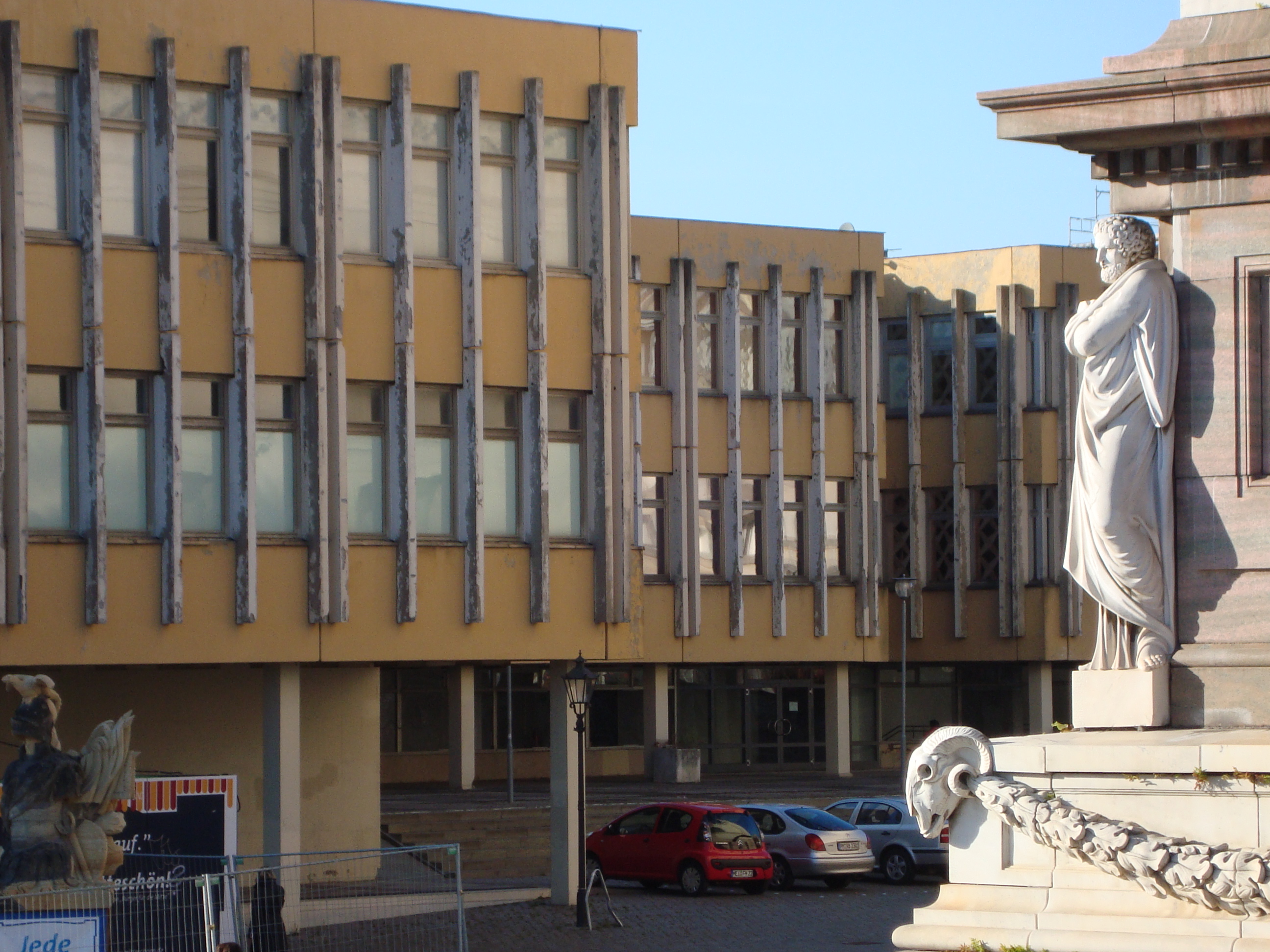
Architecture and Urban Design (BA)
This Bachelor of Arts program in Architecture and Urban Design focuses on the study of urban architecture, equipping you with the technical, cultural, and design fundamentals needed for responsible practice. The 8-semester program emphasizes the close relationship between design, theory, history, landscape architecture, and design. Its goal is to foster an independent, critical, and historically informed architectural perspective to address contemporary urban development challenges. You will learn to analyze and design buildings and urban spaces, considering both their historical context and future potential. The program encourages an understanding of architecture as a synthesis of technical, artistic, and social considerations.
Architecture and Urban Design (MA)
The Master of Arts in Architecture and Urban Design is a two-semester full-time program focused on strategies for planning and design within complex urban environments. It encourages a critical reflection of European urban culture, addressing issues from master planning to individual building design. The program emphasizes understanding and addressing challenges related to urban expansion, redevelopment, and densification, while also considering the preservation and integration of historical buildings. Students will engage in a continuous Master's project, often involving a specific European city or region, analyzing its historical, morphological, and architectural specifics. This process involves on-site research, analysis, and the development of design solutions at various scales. The program aims to equip students with the ability to identify, analyze, and creatively solve urban conflicts, fostering individual interpretation and collaborative project development. Graduates are prepared for a variety of career paths in architectural firms, planning offices, urban planning departments, and the real estate industry. The degree is internationally recognized and can qualify individuals for self-employed architectural practice globally. The program also provides a strong foundation for careers in academia, teaching, science, and research.
Architecture Bachelor of Arts
The Bachelor of Arts in Architecture program at HTWG Konstanz offers a solid and practical foundation in architecture over six semesters. This program is designed to equip graduates with the necessary skills for internships, entry-level positions, or further Master's studies. The curriculum balances creative design with technical and economic aspects, reflecting the diverse nature of architectural practice. Graduates will be well-prepared for the professional world, understanding that while the Bachelor's degree enables practical work, a Master's degree is typically required for the protected professional title of 'Architect' and for international recognition.
Architecture Bachelor of Science (B.Sc.)
The Bachelor of Science program in Architecture at the Karlsruhe Institute of Technology (KIT) focuses on the scientific and creative aspects of designing, shaping, and constructing buildings, as well as planning urban and landscape spaces. The program equips you with the foundational knowledge necessary for planning and realization, fostering your judgment regarding space, context, materials, construction, history, theory, application, economics, and sustainability. A core element of the curriculum is design theory, explored through thematic design studios. This is complemented by foundational courses in artistic, technical, historical, and social sciences. As you progress, you'll have opportunities to specialize and deepen your knowledge in areas of particular interest. The program aims to cultivate creative and critical thinkers capable of interdisciplinary work on complex challenges.

Architektur*
Archival Science (MA)
The Master of Arts (MA) in Archival Science is a part-time continuing education program designed to qualify you for higher archival service positions. It offers a unique blend of archival theory and practice, with a strong emphasis on scientific, information technology, and interdisciplinary skills. The program aims to equip you with competencies in archive management, project management, preservation, digital long-term archiving, and marketing, enabling you to systematically manage archival tasks under evolving professional and social demands. The curriculum is structured around a 'Potsdam model' that integrates information science with a high proportion of technical and scientific skills, complementing traditional archival training. You will engage in intensive learning through two three-day lecture blocks per semester, supported by an e-learning platform. The program is designed for professionals already working in archives, offering a pathway to advanced roles.
Archival Studies (BA)
Artificial Intelligence (M.Sc.)
Artificial intelligence is a rapidly advancing field with high demand for skilled professionals across all industries. This Master's program equips you with in-depth knowledge and practical skills in the latest AI methods, including deep learning for computer vision, language, and text understanding. You will also cover efficient data management and AI security. The program fosters intercultural competence and global networks through its international student body and offers a strong scientific foundation for those considering doctoral studies or research careers. The curriculum allows for specialization by selecting modules from related programs like Business Information Systems Engineering and Cloud Applications and Security Engineering.
Artificial Intelligence and Data Analytics (MSc)
The Master of Science in Artificial Intelligence and Data Analytics at Hochschule Neu-Ulm (HNU) focuses on transforming large, complex datasets into actionable knowledge for informed business decisions. This program equips you with the skills to build a 'data-based enterprise,' applicable in fields such as marketing, logistics, controlling, and customer relationship management.
Arts in Community, M.A./M.F.A.
The Master's programme in Arts and Community (M.A./M.F.A.) at HKS Ottersberg offers a unique, interdisciplinary approach in Germany. You can pursue either a Master of Arts or a Master of Fine Arts degree. The program is designed for full-time study over one year or part-time over two years, with learning organised in intensive block weeks. The Master of Arts pathway focuses on art therapy, art education, or theatre pedagogy within social and clinical settings. The Master of Fine Arts pathway emphasizes artistic research and interventions in public and institutional spaces. Central to the program is a project-based approach where you will explore a socially relevant issue from both artistic and scientific perspectives. This project is independently planned, executed, and evaluated by you, fostering innovative individual and social skills. Seminars on scientific theory and research methods provide a strong academic foundation. You'll also develop skills in project management, supervision, and curation, with content tailored to specific target groups. Regular colloquiums and close mentoring ensure in-depth reflection and vibrant peer exchange.
Arts Management and Cultural Work (B.A.)
This Bachelor of Arts program in Arts Management and Cultural Work offers a broad, interdisciplinary education. It combines insights from cultural, media, and social sciences with essential business administration and management knowledge. The program is designed to provide both theoretical understanding and practical application, preparing students for real-world challenges in the cultural sector through project-based learning.
Asian Studies and Management - Southeast and South Asia
This Bachelor of Arts program equips you with the professional, intercultural, and personal skills needed for a successful career in globally operating companies and organizations. Spanning three and a half years, the program focuses on developing expertise relevant to Southeast and South Asia. It is designed for full-time study and begins each winter and summer semester.

Auditing, Finance and Taxation - Master of Laws (LL.M.)
The Master of Laws (LL.M.) program in Auditing, Finance and Taxation is designed for graduates with a degree in business administration or law who wish to specialize in these complex fields. This interdisciplinary program combines legal, economic, and practical aspects to provide students with a comprehensive understanding of auditing standards, financial management, and tax law. It prepares graduates for advanced roles in auditing firms, financial institutions, and tax advisory services, equipping them with the analytical and problem-solving skills necessary for success in these demanding professions.
Automated Driving and Vehicle Safety (M.Eng.)
The Master's program in Automated Driving and Vehicle Safety focuses on the rapidly evolving field of future mobility. It equips students with in-depth knowledge in both engineering and computer science, essential for developing safe automated driving systems. The program aims to enhance students' theoretical and scientific understanding, preparing them for doctoral studies or research careers. While primarily taught in German, some courses are offered in English, reflecting the interdisciplinary nature of the field.
Automation & IT (Master)
The Master's program in Automation & IT is an interdisciplinary program designed for students with prior knowledge in information technology and automation. Taught entirely in English, this program aims to foster individual competency development and encourage intercultural exchange. Graduates are well-prepared for leadership roles, particularly in international companies, due to the growing convergence of IT and automation. The four-semester program focuses on key areas such as industrial communications, information security, and the integration of business information systems. This comprehensive curriculum equips students with the skills needed to excel in a field where technology and information systems are increasingly interconnected.
Automobilinformationstechnik
Automotive Engineering - Master of Science (M.Sc.)
The automotive industry is critical globally and is currently undergoing significant transformation. This Master's program equips you to analyze these changes, shape future developments, and create innovative solutions for mobility. You will gain a holistic understanding of vehicles, mobility systems, and their interdependencies, bridging mechanical, electrical, and software engineering. Graduates become interdisciplinary experts ready for leadership roles in the automotive sector, public service, or doctoral research.
Autonomous Vehicle Engineering
The Autonomous Vehicle Engineering Bachelor of Engineering (B.Eng.) program focuses on the rapidly evolving field of automated mobility. As vehicles become more connected and electrified, this degree prepares engineers to design and develop the systems that enable autonomous driving. The curriculum covers the core areas required for automated mobility: sensing the environment through advanced technologies, processing this information using software and intelligent algorithms to create driving strategies, and implementing these strategies safely through control of actuators (drive, steering, braking). This program emphasizes an international learning environment, bringing together students from diverse backgrounds to foster collaboration in global teams. Graduates will be equipped with expertise in computer science, sensor technology, control engineering, and machine learning, preparing them for a wide range of career opportunities in the automotive industry and related technology sectors.

AUTOSAR on Xen: Virtualized Real-Time Operating Systems with ARA
This project focuses on optimizing embedded systems by specializing the operating system itself through the Automatic Real-time Analyzer (ARA). The ARA performs static analysis to identify task interactions, and with the MultiSSE extension, it can analyze multicore AUTOSAR systems for static optimization. Modern embedded systems often partition hardware into virtualized domains for safety, allowing each domain to run its own isolated Real-Time OS or General-Purpose OS. This approach makes powerful central computing hardware feasible for time-critical software from various suppliers.
B.A. Gesundheits- und Sozialmanagement (Health and Social Management)
The Bachelor of Arts (B.A.) in Health and Social Management is offered by the Hamburger Fern-Hochschule, gemeinnützige GmbH. This distance learning program is designed for students who want to gain expertise in managing organizations within the health and social sectors. It provides a comprehensive understanding of business administration principles applied to these specific fields. The program aims to equip graduates with the necessary skills to navigate the complex and evolving landscape of health and social services management.

B.Eng. Brewing and Beverage Technology
If brewing is your passion and you want to actively shape the process, this Bachelor of Engineering program is for you. It goes beyond just beer, allowing you to apply your process optimization skills in a dynamic environment and respond to current consumer trends through product development and practical solutions. Graduates are well-prepared for the brewing industry and related sectors like plant and supplier industries, as well as other beverage industries. While the primary language of instruction is German, many specialized lectures are held in English, and national and international guest lecturers are involved. The program equips you with the natural and engineering science fundamentals for sustainable and efficient production, covering quality assurance, analytics, sensory evaluation, plant engineering, packaging, and digitalization to address industry challenges like resource conservation and energy reduction.

B.Sc. Business Informatics (Wirtschaftsinformatik)
The Bachelor of Science in Business Informatics is a fully online distance learning program designed for students interested in the intersection of business and information technology. This interdisciplinary program covers topics such as software development, databases, IT management, and digital technologies, alongside their business contexts. You will learn to analyze large data sets to inform management decisions, and transform workflows into efficient, digitalized business processes using automation and artificial intelligence. This program equips you with the skills to bridge the gap between IT and management. You will be prepared to support companies in strategic and operational digitalization, advise departments on technological issues, and contribute to solving the skilled worker shortage through digital transformation.
B.Sc. Wirtschaftspsychologie / Industrial and Organizational Psychology
This program combines economic principles with psychological insights to help you understand human behavior in a business context. You will learn to apply psychological knowledge in practical business situations and integrate it with management skills. The curriculum is designed to equip you with the tools to analyze and influence economic actors, ultimately contributing to company success. Graduates are prepared for roles at the intersection of business and psychology.
BA UX/UI Design
The BA UX/UI Design program focuses on the intersection of technology and design, preparing students to create user-friendly and engaging digital experiences. You will learn to combine technical skills with design principles to shape the future of digital products and services. The curriculum covers user experience, visual interface design, and the emotional interaction between humans and technology. This interdisciplinary approach ensures you gain a comprehensive understanding of the field.
Bachelor
Bachelor
Bachelor
Frequently asked questions
How many programmes are available in Germany?
+
Our catalogue lists 733 programmes across 62 universities in Germany.
How much does it cost to study in Germany?
+
Some programmes at public universities are tuition-free (students pay only a semester administration fee), while private institution fees can reach roughly €36k per year.
Which universities in Germany offer programmes to international students?
+
Notable institutions include the Technical University of Munich, IU Internationale Hochschule GmbH, Europäische Betriebswirtschafts-Akademie, Fachhochschule Dortmund, and Fachhochschule Lippe.
Can international students work while studying in Germany?
+
Yes. Non-EU international students are generally permitted to work up to 120 full days or 240 half-days per year alongside their studies.
What are typical entry requirements for German universities?
+
Requirements include a recognised secondary school leaving certificate (or equivalent), language proficiency in German or English depending on the programme's language of instruction, and, for some institutions, a blocked bank account demonstrating sufficient funds.